Cathedral of the Immaculate Conception

Springfield, IL

  • About
    • Contact Us
    • History of the Cathedral
    • Liturgical Schedules
    • Parish Staff
    • Register with Cathedral
    • Subscribe to the Cathedral eWeekly
  • Sacraments
    • Baptism
    • Becoming Catholic
    • Matrimony
    • Vocations
  • Ministry List
    • Adult Faith Formation
    • Cathedral Meal Train
    • Cathedral Online Prayer Wall
    • Cathedral Concerts
    • Family of Faith
    • Grief Share
    • Health and Wellness
    • Spiritual Resources
  • Stewardship
    • Stewardship: A Disciple’s Response
    • Stewardship Form
  • Support
    • E-Giving Frequently Asked Questions
    • Give Online
  • Sunday News
    • Announcements
    • Cathedral Weekly
    • Livestream Feed
    • Submit a Mass Intention Request
    • Weekly or Announcement Submission

Week of November 2

Monday, November 2

7am – Barbara J. McGrath
(Family & Friends)

5:15pm – Patria & Rufino Gotanco
(Joe & Hati Uy)

Tuesday, November 3

7am – Doris Drea
(Asher, Gittler, & D’Alba, LTD)

5:15pm – Irene Doellman
(Blessed Sacrament Parish)

Wednesday, November 4

7am – Mattie Hergenrother
(Thomas Hergenrother)

5:15pm – John Montgomery
(John Busciacco)

Thursday, November 5

7am – Anna A. Eleyidath
(Augustine Eleyidath)

5:15pm – Special Intention for Bianca
(D.A. Drago)

Friday, November 6

7am – Mary Priester
(Family)

5:15pm – Thomas Rapps
(Sharen & Kevin Post)

Saturday, November 7

8am – Deceased Members of the CCCW
(CCCW)

4pm – Dr. Eugene Stonikas
(William & Debra Stonikas)

Sunday, November 8

7am – Mary E. Steil
(Steil Family)

10am – For the People

5pm – David Paul Lucchesi
(Mary Lucchesi)
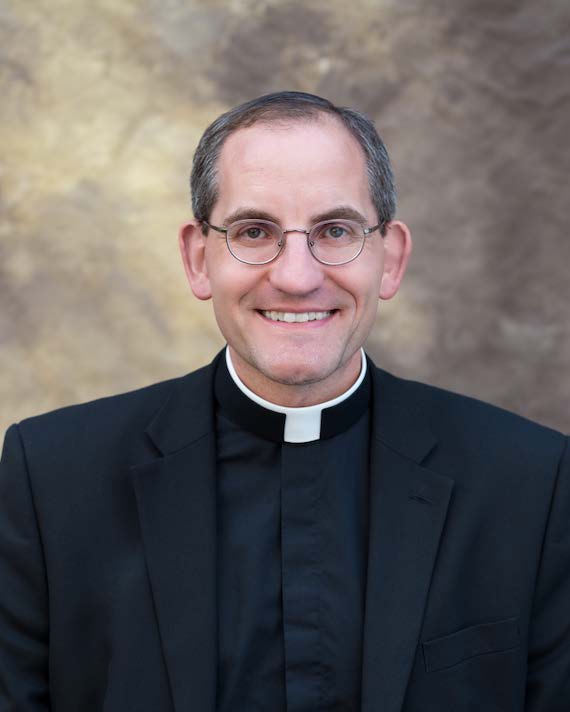
Sacramental Worldview

I recently completed reading from a book-length essay on the topic of Pastoral Strategies for an Apostolic Age.  On more than one occasion, the author brings up the concept of the sacramental worldview, a view which looks beyond what it seen to what is unseen but still is very much real.  In fact, those unseen realities hold the first place in the Christian vision, things such as God, angels, human souls, and Heaven.  Unfortunately, the author notes that the predominant modern vision is just the opposite – all that really matters is what is seen, what we can grasp in the here and now.  Resulting from this is an overemphasis on physical appearance, comfort, success, reputation, and having as many fun and interesting experiences as possible.

 If this is true (and I think we can probably agree that it is), then we should not be surprised by recent survey results that report that a large percentage of Catholics do not believe in the Real Presence of the Eucharist.  If we do not look at the Eucharist through a sacramental worldview, believing that behind what we see is something much greater, then all we see is a symbol.  And if all we see is a symbol with no deeper reality, then what is the big deal about going to Mass?  It can turn into only seeking that which is seen (or heard), and we judge our experience of the Mass on those things.  If the homily was too long, or uninteresting, we walk away disappointed.  If the temperature in the church was not to our liking, we walk away disappointed.  Never mind that the greatest miracle possible has just taken place in front of us, namely, Jesus Christ taking flesh in the form of bread and wine!  Not only that, He allows us to consume His very being as we receive Him in Holy Communion.  If we truly approached Mass with that sacramental worldview, I can guarantee that we would not be disappointed, because the Lord will always satisfy our deepest longings if we but open the eyes of our soul.

While our focus in not necessarily the Eucharist this month, I wanted to use it as an example of how a sacramental worldview (or lack thereof) has an impact on our lives.  All of the sacraments demand that worldview, to see beyond just the symbol and to grasp in faith the powerful working of Jesus in an invisible, though very real way.  While there is progress to be made, there are real signs of hope in our Cathedral parish.  As you may know, October is a month when we count the number of people at each Mass.  I have been pleasantly surprised to see that number increasing from week to week, a trend which I hope will continue.  We have also seen a consistent stream of penitents coming to the Sacrament of Reconciliation to seek God’s pardon and peace.  I know that I speak for all of the priests here that this brings us great joy, for to witness the powerful gift of God’s mercy in a person’s life is a true blessing, one we are privileged to be a part of as Christ’s human instruments.

Let us all pray that the Lord will open the eyes and ears of our souls to grasp the beauty of His working in us and though us in the sacraments, and indeed in every aspect of our lives.

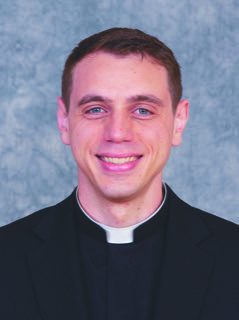
Father Alford     

The Great Sculptor

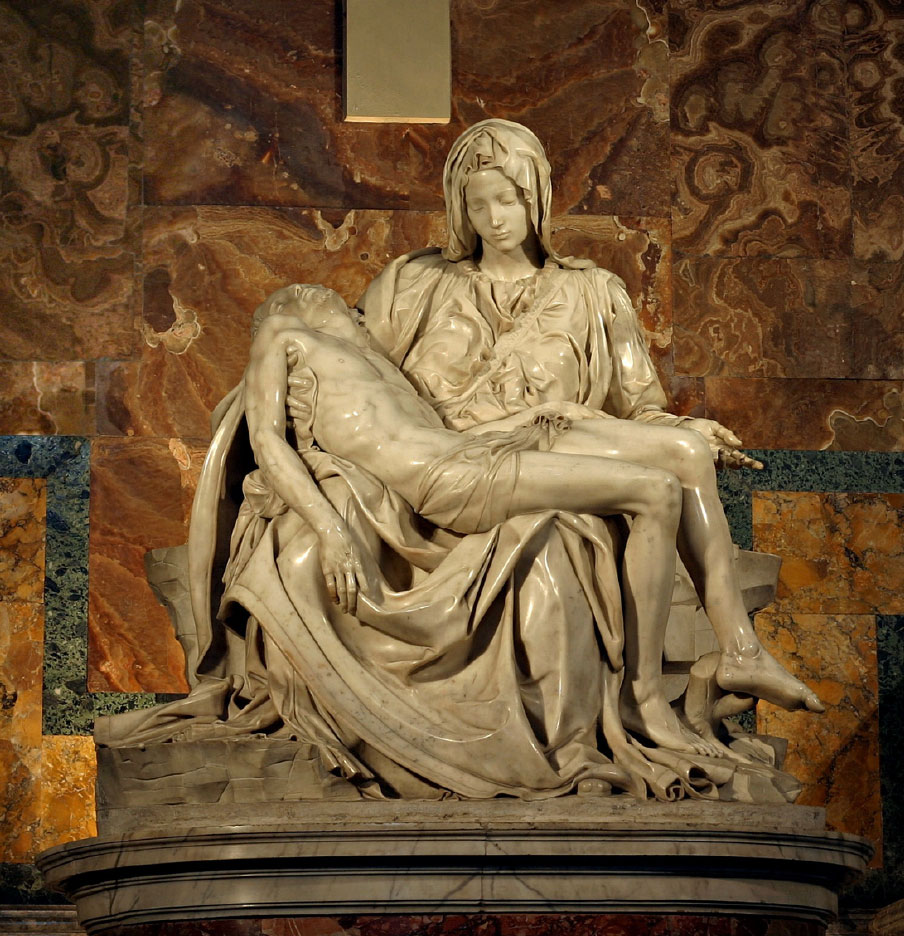
Michelangelo is probably the most well-known sculptor of all time. His Pieta has moved countless generations of Christians as we see Mary hold the dead body of Jesus in her arms. This is one of the greatest expressions of human suffering, seemingly captured in the beautiful white marble. Similarly, the statue of David depicts the ruddy youth ready for battle with Goliath, down to the finest detail of his artery bulging in his neck as he braces for battle. Surprisingly, these sculptures by Michelangelo have a lot to each us about the sacraments as we celebrate our last Sunday focusing on this in our articles. 

How does God use the sacraments to confer grace to his people? This was the topic of debate for some time in the Church. Some thought that the sacraments were simply an occasion for God to give grace directly from heaven, and the celebration of the sacrament was only asking God to do so. However, the sacraments are a more direct cause of our sanctification than this! We can say that the sacraments are an instrumental cause that God uses to give us grace. As odd as this might sound, God uses the sacraments as instruments of his grace, just like a sculpture uses a chisel as an instrument of his mind and hands. We know that the sacraments “work,” so to speak, whenever they are celebrated properly. Even if the priest is only half-heartedly saying the prayer of the Mass, or the formula for a baptism, the sacraments are still effective as instruments of God’s grace. 

A chisel by itself has no power to make a magnificent sculpture. Left to itself, a chisel will sit on the shelf where someone puts it, until the end of the world! This is because it is only an instrument and has no power without someone holding it. The same is true for any other instruments or tools that we use – they are only as effective as they are made to be by someone with the power of mind and will. By itself, the pouring of water has no power to forgive original sin. Every baby had water poured over his or her head during their first bath! But by itself, this washing does not have the power to forgive sin. The power of Jesus Christ comes from his Incarnation, Passion, Death, and Resurrection. This is what makes the sacraments powerful instruments of God’s love and saving grace. As the chisel was Michelangelo’s tool of choice, the sacraments are God’s tool of choice. He uses them to save us. When writing about Baptism and the story of Noah’s Ark, St. Peter said, “This prefigured baptism, which saves you now. It is not a removal of dirt from the body but an appeal to God for a clear conscience, through the resurrection of Jesus Christ” (NAB). In the simplicity of water poured, oil smeared, and a few words spoken, God’s saving action is taking place in the sacraments. What a masterpiece God is making out of us! 

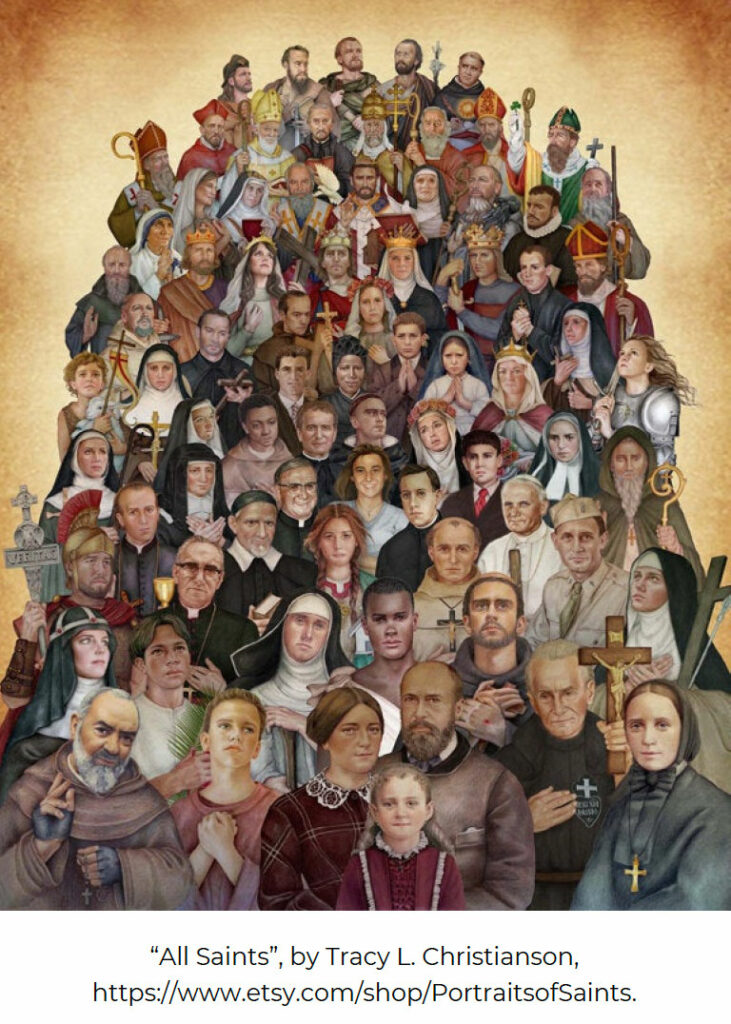
All the Saints: Count Them if you Can!

Feast Day: November 1st 

I know … the feast of All Saints is next Sunday, so why write on them this soon?  Well, for most solemn feast days (solemnities), we begin to celebrate them the evening before, and since this particular evening has the title, “All Hallows Evening”, shortened in our day to “Halloween”, it seems something we should talk about before its upon us!

Our story begins in Rome, Italy, with Pope Boniface IV, who on May 13th, 609 consecrated the greatest of Rome’s pagan temples, the Pantheon, previously dedicated to a whole pantheon of gods (Jupiter, Venus, and Mars), instead as a Christian Church, dedicated to “St. Mary and All the Martyrs.  And so began the Christian celebration of all the saints on May 13th.  Gregory III, moved the celebration to November 1st, because in 741AD he built a chapel St. Peter’s Basilica to house the relics of countless saints, a feast day that was expanded to the whole Church by Gregory IV another century later.

Some say that Pope Boniface chose the original date of May 13th because a Roman, pagan, festival of ghosts (Lemuria) happened on that day.  Problem: the Roman festival also happened on May 9th and May 11th, so it does not match perfectly, and there were deep Christian precedence for a late-spring feast for all the saints already. By the 3rd or 4th century, you have St. Ephrem celebrating All Saints on May 13th, Christians in Syria did so on the Friday after Easter, those in Antioch on the Sunday after Pentecost, which was the day chosen in Germany as well.  In other words, pretty much as soon as Christians were not persecuted anymore, and now that they had far too many martyrs to give each their own feast day, they started celebrating all the Saints on one big feast, about the time that it was warm enough outside to party.

Ok, so what about November 1st?  Some claim that Gregory III was just co-opting the Gaelic feast of Samheim to a more wholesome purpose.  They point to the bonfires, costumes, various foods, and recollection of dead ancestors that all eventually became part of that pagan feast.  But, it is a bit of a stretch since the Celts had similar feasts every quarter of the year, and furthermore, Samheim actually falls on October 31st.   The simpler explanation is that both pagans and Christians were equally apt to choose times of the year when there was both sufficient food, and still nice weather, to have a feast, and so we have November 1st.  

Our story now takes us to France, where in 998 AD, St. Odilo (an important abbot) added a feast on November 2nd to pray for the souls in purgatory: All Souls Day.  Five centuries later, as the Black Plague devastates Europe, there in France in particular, first in art and then in real life, they begin to dress up as various characters at different points between birth and death.  Humor in the midst of horrors is far better than hopelessness, or hatred.

Meanwhile, in Ireland, instead of costumes, we find households making various baked-goods, ostensibly placed outside for the dead, but soon enough, attracting the surrounding youngsters, who began to go door-to-door begging for treats.  It would be many more centuries before hollowed-out pumpkins/guards/squashes would be carved into ghoulish faces and lit from within, but perhaps autumn + baking + the need for light + the recollection of the dead started them in that direction.

Now we go to England, where on November 5th, 1605, a crazy Catholic named Guy Fawkes tried to blow up the (newly Anglican) British Parliament.  He was foiled.  The Anglicans were mad.  And so November 5th became a day when revelers would put on masks, and head to the nearest Catholic’s home demanding beer and cakes … or else.

And then, all those fine folks came to the USA, and the costumes, candies, and trick-or-treating melded into Halloween … and the Holy-Ones for whom all those festivities were intended meanwhile have been forgotten.  

Don’t forget them this Saturday evening.  Sanctity is more exhilarating than sugar, and the sacraments are more sustaining than sweets.

– Fr. Dominic Rankin has been a baptized Christian for 27 years, a communicant for 21 years, a confirmed Catholic for 14 years, and an ordained priest for 2 years.  He is working on receiving canonization, and would love for you to join him, but it could take a while.

Week of October 26

Monday, October 26

7am – Anna A. Eleyidath
(Augustine Eleyidath)

5:15pm – Glenn Brandt
(LouAnn & Carl Corrigan)

Tuesday, October 27

7am – Albert Crispi, Jr.
(John Busciacco)

5:15pm – Kim Howard
(Friends & Family)

Wednesday, October 28

7am – Stephen Richard
(Donna Berte)

5:15pm – Puring Garde
(Family)

Thursday, October 29

7am – John Noak
(Cinda Noak)

5:15pm – Irene Doellman
(Blessed Sacrament Parish)

Friday, October 30

7am – Deceased Members of the CCCW (CCCW)

5:15pm – Karen Howard
(Dick & Kay King)

Saturday, October 31

8am – Rev. Samuel Kothapalli
(Lenn Family)

4pm – George Zeigler
(William & Debra Stonikas)

Sunday, November 1

7am – For the People

10am – Charles & Mercedes Nesbitt (Kathy Frank)

5pm – Carol Ann Rapp
(Iris Miranda-Kirschner)

Prayer Wall – 10/19/2020

Please pray that that the truth be brought to light regarding the Coronavirus and that medical and public health interventions being enforced are guided by officials who have citizens best interests in mind. Precious blood of Jesus wash over this nation and world. Lamb of God have mercy on us.

Prayer Wall – 10/15/2020

please pray for poor old dog 10 y… to get adopted forever. Thanks

Season of Stewardship

Over the next few weeks, you will be receiving some information from Bishop Paprocki and myself regarding a diocesan initiative known as the Season of Stewardship.  The immediate reaction many have when we hear the word “stewardship” is that it is a nuanced way of asking for your money.  And while stewardship does include a financial element, to limit it to that is a failure on our part to grasp the beauty of this important concept which is so important to us as people of faith.

If you recall our Fourth Diocesan Synod, we placed a lot of emphasis on our call to discipleship.  In my mind, that is the key takeaway from the whole Synod, that we are called to embrace a personal relationship with Jesus Christ, out of which will flow everything else that is talked about in the Synod.  An intentional disciple is one who recognizes first that he or she is loved as a child of God.  An awareness of being known and loved personally by Our Lord can make a profound impact on our lives.  I love the following quote from Father Pedro Arrupe, SJ on this idea:

Nothing is more practical than finding God,
than falling in Love in a quite absolute, final way.
What you are in love with, what seizes your imagination,
will affect everything.
It will decide what will get you out of bed in the morning,
what you do with your evenings,
how you spend your weekends,
what you read, whom you know, what breaks your heart,
and what amazes you with joy and gratitude.
Fall in Love, stay in love, and it will decide everything.

Part of our faith formation topic for this month is: God is the source of all life.  As we embark on this Season of Stewardship together, we are invited to hear this theme as it applies to each of us in a particular way, and so we might reword the topic this way:  God is the source of my life.  Each of us can and should ask ourselves: “Does this statement reflect the reality of my life?  Do I recognize that everything I have is from Him and belongs to Him?”  When we come to the realization that God is the source and center of our lives, our response is one of gratitude, a gratitude that translates into a response of giving ourselves back to Him with everything – our time, our talent, our treasure – our entire lives.

May the Lord bless each of you with an awareness of God’s personal love for you as His beloved son or daughter, an awareness that will decide everything in your lives.

Father Alford     

Sacraments of Desire

I have often heard that “God is bound to the Sacraments, but he is not bound by the Sacraments.” This means that whenever a Sacrament is celebrated worthily according to the rite of the Church, he gives sacramental grace every time. He has bound himself by the covenant with his people which was sealed by his blood. However, God is free to give grace outside the sacraments, even to those who are not Christians. 

Is baptism necessary to go to heaven? Strictly speaking, the answer is “no.” There are billions of people in the world who have never been baptized, through no fault of their own, yet we can still have hope of their salvation. Christ died for all. However, the effect of baptism is necessary for salvation. Baptism forgives Original Sin (and all other sins for adults) and restores the life of God, sanctifying grace, in the soul. This effect can be received through a baptism of desire. This means that as long as a person is open to God’s grace, God will give this grace even without a person being physically baptized. One example of this is the Catechumens of the Church. Catechumens are seeking baptism and initiation into the Catholic Church. What happens if a Catechumen were to sadly pass away before his or her baptism? The Church has always believed that because of the Catechumen’s desire for baptism, God has already given this grace to their souls. Thus, they would be given a Catholic funeral with great hope that they are on their way to heaven. 

God can give grace however he would like to. After all, grace is his free gift to begin with! A common tradition in our Church is to receive a spiritual Communion. One blessing about our recent pandemic is that this tradition of spiritual communion has been popularized once again because many people still are not able to receive Communion at Mass. A spiritual communion involves making one’s desire for Holy Communion known to God. We believe that when we make this prayer in good faith, God gives us the graces that would ordinarily be given to us through reception of the Eucharist. There are several formulas floating around for this prayer, but here is a simple example: “Lord Jesus, I cannot at this time receive you in the Eucharist. However, I desire for you to come into my heart right now because I love you and desire to be with you.” We can have faith that God will always answer this prayer because he loves us! We can make this act of spiritual communion at any time, not just while watching a livestreamed Mass! 

One more “sacrament of desire” that it would be helpful to know about is the Sacrament of Penance. The only ordinary way in the Church to have our serious sins forgiven is through Confession. However, it is of the utmost importance that if we do happen to commit a serious sin, we turn to prayer immediately and express our love for God and sorrow for our sin. This is called an act of “perfect” contrition. This does not mean that we are perfect by any means, but it entails sorrow for our sins because of how they offend God and his love for us. When we do this, we can know that God has already forgiven our sin. However, we should still seek out Reconciliation at the first available opportunity, and we should not receive the Eucharist until we have done so. This practice of making an act of perfect contrition can give us a great sense of peace and avoid despair when we have fallen into sin.

God is so loving and as our Father in heaven, he gives us all that we need. When we desire his grace, he will answer this desire of our heart every time! 

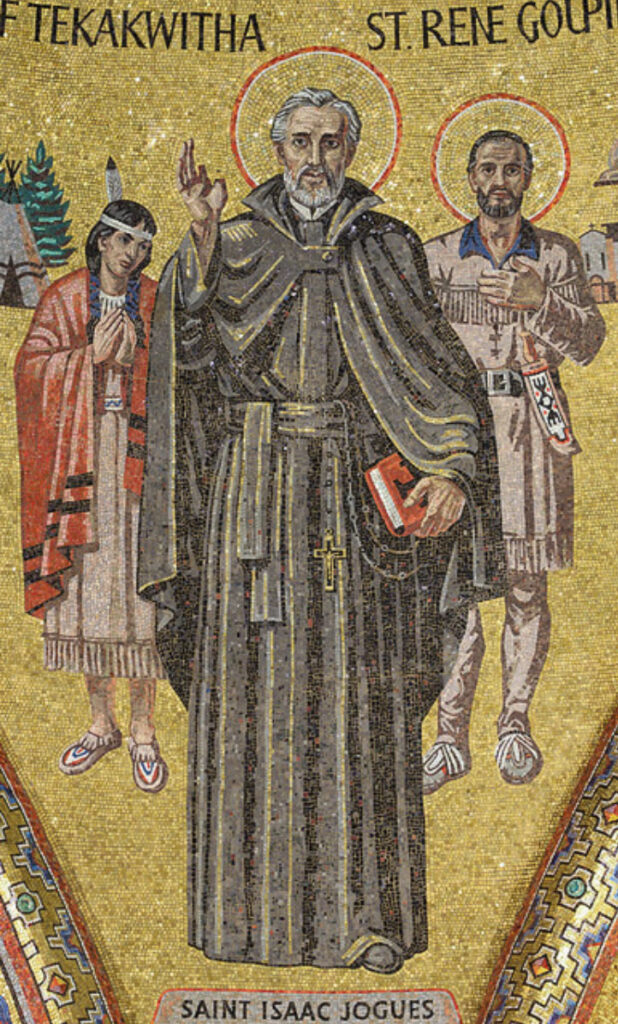
St. Isaac Jogues: A Eucharistic Life and Death

Feast Day: October 19th

North of Albany, NY and South of Montreal, Quebec lies a little lake nestled at the foot of the Adirondack mountains.  It has long had the nickname “the Queen of American Lakes” because of its picturesque and tranquil waters, surrounded every autumn by glorious orange and red foliage.  On the southern tip of this lake in 1755, English forces built Fort William Henry as an important step in their wresting control of the region from French control, a crucial move in the outcome of the French and Indian war (The Last of the Mohicans describes an event later in that struggle).  The English would eventually take control of the Northern part of the lake as well, including its waterway up to Lake Champlain, building the famous Fort Ticonderoga on that spot, and cementing the lake’s name as “Lake George” (after King George II).  Twenty years later, that fort would be the location of the first American offensive against the British of the Revolutionary War, and it would be the cannons the Green Mountain Boys captured from that fort that would later help lift the siege of Boston and turn the course of the war in the colonists favor.

But something greater than military victory was here.

That spot, between Lake George and Lake Champlain, a hundred years earlier, was the passage taken by a dozen canoes, carrying a few French Missionaries and a number of Huron Indians, returning with medical supplies from Quebec in 1642.  The Huron men and women trusted the white man in the black robe who guided the lead canoe downstream.  Ondessonk, they called him, “Bird of Prey”.  Who could have said that the cultured boy with a decent upbringing in France would find himself at 35 years of age surrounded so far from home by such a flock.  It had taken countless hours to grow accustomed to the uncomfortable crouch in that canoe, weeks to become the first white-man to hike over the Adirondacks and see Lake Superior, months to learn the languages and customs of these people he loved so dearly, and all of those prior 6 years to earn their trust.  

Then the silence of oars slipping in and out of the stream was split by bloodthirsty cries as Mohawk warriors rushed on them from the woods.  Isaac was the priest’s name, Isaac Jogues, and like his namesake, the son of Abraham, he could have escaped this sacrifice.  He was in the lead boat, he was strong and capable from those 6 arduous years, and he was already hidden from the sight of the attacking braves, but his love was not for himself but for his friends who had been captured, and his enemies who had captured them.  He had made the vow years before to give himself utterly to the call of Christ, and so he did not hesitate to sacrifice himself as a father for his children.  He would endure beatings, mockings, burns, frostbite, malnourishment, flogging, and the agonizing loss of his fingernails and thumb in the months to come.  Yet he still chose love.  Love continuously offered to his fellow prisoners – giving them the solace, natural and supernatural, that he could – as well as love and patience for his captors – gathering wood, offering them baptism, saving the life of a pregnant mother from drowning.  

Many months later, he was freed, smuggled out of the Mohawk camp and all the way back to Europe.  It was Christmas, 1643, when the bedraggled, battered, missionary arrived at the Jesuit residence in Rennes, France.  The Rector plied this stranger with questions about the missions of the new world, asking hesitantly “what about Fr. Isaac Jogues?”  Ondessonk must have smirked as he replied: “He is at liberty and it is he, Reverend Father, who speaks to you.”  The “living martyr” would receive accolades from the Pope, and permission to continue to celebrate the Eucharist despite his inability to follow all the rubrics of the Mass (because of his mangled hand).  But he would give all that up to return to the Iroquois, an ambassador of peace.  

3 years before he had merely faced a hard trek up to Quebec as he transversed those hills; now he faced likely death in ministering to the Mohawks.  It was the day before Corpus Christi as he stood on the banks of that beautiful lake once again, and so he named it “Lac du Saint Sacrement”, “The Lake of the Most Blessed Sacrament”.  For a man described as a “soul glued to the Blessed Sacrament”, who cried upon losing his hands, not from pain but from the seeming impossibility of ever again celebrating the Mass, the coming hardships were nothing compared to going without Holy Communion.

…It is this for which I beg Your Reverence to entreat Our Lord, and especially to remember at the altar a poor priest, who is about to remain 8 or 9 months without mass. It will be to me an increase of obligation to be, more than ever, my Reverend Father, your very humble and obedient servant in God
[Isaac Jogues, Letter from Montreal, September 12, 1646]

Yet he went anyway.  And though without the Eucharist for all those months, he lived in his own body and blood the same sacrifice that he hungered constantly to be united to.  His bravery was that of the ondessonk, his sacrifice that of the pelican, his consecration unwavering like Christ.

I shall depart in 2 or 3 days for the Iroquois journey. Still, for life, all in Our Lord.
[Isaac Jogues, Letter from 3 Rivers, September 21, 1646]

May we all give our lives as courageously, as lovingly, and as Eucharistically, as did St. Isaac Jogues.

– Fr. Dominic Rankin is a priest after Jesus Christ, seeking to be more like Him each day.

« Previous Page
Next Page »

Liturgy

Sunday Masses (unless noted differently in weekly bulletin)
Saturday Evening Vigil – 4:00PM
Sunday – 7:00AM, 10:00AM and 5:00PM

Weekday Masses (unless noted differently in weekly bulletin)
Monday thru Friday – 7:00AM and 5:15PM
Saturday – 8:00AM

Reconciliation (Confessions)
Monday thru Friday – 4:15PM to 5:00PM
Saturday – 9:00AM to 10:00AM and 2:30PM to 3:30PM
Sunday – 4:00PM to 4:45PM

Adoration
Tuesdays and Thursdays – 4:00PM to 5:00PM


CatholicMassTime.org

Parish Information

Parish Address
524 East Lawrence Avenue
Springfield, Illinois 62703

Parish Office Hours
Monday thru Thursday – 8:00AM to 4:00PM
Fridays – CLOSED

Parish Phone
(217) 522-3342

Parish Fax
(217) 210-0136

Parish Staff

Contact Us

Contact Us

Copyright © 2026 · Log in