Please pray for Christina who has been in intensive care for a week battling COVID-19.
Prayer Wall – 08/16/2020
Please pray for comfort and peace for my mother, Averil, who is in hospital with Parkinson’s complications.
The House of Prayer
“[F]or my house shall be called a house of prayer for all peoples.”
(Is. 56:7)
These are the words we hear at the conclusion of our First Reading for this Sunday’s Mass. In the Old Testament, the Temple was the central place of worship, of it was there where God’s presence dwelled in a special way (cf. CCC 576). As Catholics, we also read this passage with the awareness that these words also apply to our churches, which serve as the central place of our prayer and worship of God. And God is present in a special way in our churches, even more than in the Temple of Jerusalem, for He is present in His Body, Blood, Soul and Divinity in the Eucharist in our tabernacles.
With that in mind, it is sometimes surprising to me that our churches remain largely empty for the vast majority of time throughout the week. Sure, we have masses when people gather together to pray, but what about the rest of the hours? Jesus makes Himself a prisoner in the tabernacle, patiently waiting for us to come to pay Him a visit, spending some time in prayerful adoration in the place where He dwells in a special way. And while it is true that we can (and should) pray anywhere, there is nowhere more special to pray than in a Catholic church.
If you have never taken the opportunity to stop into our Cathedral church during the day to pray, I highly encourage you to do so. The peace that we experience when we step into the silence of this temple can be a profound experience. And since it is a house of prayer, spend some time in prayer in the presence of our Eucharistic Lord. You could spend some time in prayerful thanksgiving for the blessings you have received. You could offer prayers for the various intentions for which family and friends have asked you to pray. You could pray a decade (or more) of the Rosary. You could read a chapter from the Gospels. Or consider this beautiful little story shared by St. John Vianney:
Listen well to this, my children. When I first came to Ars, there was a man who never passed the church without going in. In the morning on his way to work, and in the evening on his way home, he left his spade and pick-axe in the porch, and he spent a long time in adoration before the Blessed Sacrament. Oh! how I loved to see that! I asked him once what he said to Our Lord during the long visits he made Him. Do you know what he told me? ‘Eh, Monsieur le Curé I say nothing to Him, I look at Him and He looks at me!’ How beautiful, my children, how beautiful!
Please know that this church is the Lord’s house, and He has made it a house of prayer for all peoples, especially we who are His sons and daughters. That makes this church your home, so please feel free to stop to pay a visit to the master of the house – He’s here waiting for you!
Father Alford is the Rector of the Cathedral and serves in the diocesan curia as the Vicar for Clergy, Consecrated Life, and Vocations.
Week of August 17
Monday – August 17
7am – Anna A. Eleyidath (Augustine Eleyidath)
5:15pm – Fiore Mercurelli (Trish Marriott)
Tuesday – August 18
7am – Mario Mercurelli (Trish Marriott)
5:15pm – Elsie Kokotovich (Premo & Kay Clay)
Wednesday – August 19
7am – Special Intention for Audrey & Mark Berte (Donna Berte)
5:15pm – Lawrence Jaros (Mike & Gertie Modrusic)
Thursday – August 20
7am – Special Intention for the Living and Deceased Members of the McDougal Families (Donna Berte)
5:15pm – Frank Orris, Jr. (Mary Firtos)
Friday – August 21
7am – Helene O’Shea (David L. O’Shea)
5:15pm – Special Intention for Bianca (D.A. Drago)
Saturday – August 22
8am – Ramon S. Simbajon (Lolita Klicker)
4pm – For the People
Sunday – August 23
7am – Mary Ann Midden (William Midden)
10am – Sr. Valeria, OSF (Rebecca & Woody Woodhull)
5pm – Joseph Glenn McFarland (Betty & Glen Rogers)
Farewell to Seminarian Ryan Kehoe
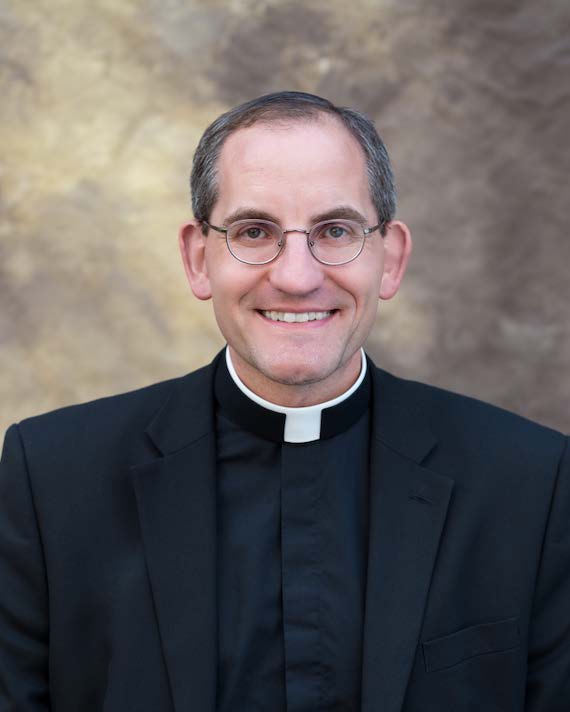
While speaking to others about living at the Cathedral, one of the first things I comment on is the blessing of living in a full house. For just over a month, we have had one bishop, four priests, and two seminarians living at the Cathedral Rectory. It has been a source of great joy to have so many of us around, sharing in various ways in the ministry of the parish and enjoying some great fraternity with one another.
As they say, though, all good things come to an end. This weekend will be the last one for one of our seminarians, Ryan Kehoe, who has been with us here since the pandemic caused all of our seminaries to send their men home early. Wanting to make their abrupt transition away from the seminary more manageable, we attempted to put pairs of seminarians together at various parishes. With the room available, it made good sense to send one of our seminarians here, and Ryan was the lucky one to come to join Grant Wilson who has been with us the entire year.
The new priests in the house affectionately refer to our seminarians as “the kids” and we joke about sending them back to school at the end of the summer. But we all will miss them very much as they have been an absolute delight to have around the rectory and the parish. I hope that many of you have had the opportunity to meet and interact with these two fine men.
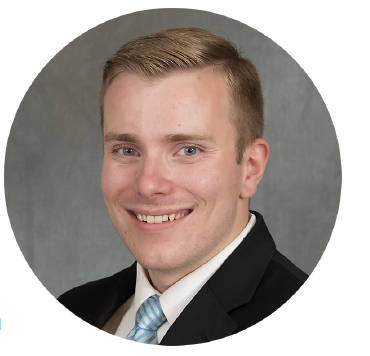
Since Grant will be with us a little longer, we can save our farewell for another time and I can write a few things about Ryan. He recently graduated from Bishop Simon Bruté College Seminary in Indianapolis. He is now moving on to theology at Kenrick-Glennon Seminary in St. Louis. For the next four years, Ryan will dedicate himself to being formed in four dimensions: intellectual, spiritual, pastoral, and human. This formation will lead, God-willing, to a man who is more closely configured to Christ, the Good Shepherd, whom He will seek to imitate in ministry to the people of God in our diocese.
Now that he has become a part of our Cathedral Parish family, I invite you to add Ryan to the list of your daily prayers, asking the Lord to give Ryan the graces to be totally open to the work He wants to do in his heart as he prepares for the priesthood. And please pray for all of our seminarians, for the chances are very good (almost guaranteed) that some of these men will serve here at the Cathedral as priests one day. Our prayers for them now will be for their benefit and ours.
Father Alford is the Rector of the Cathedral and serves in the diocesan curia as the Vicar for Clergy, Consecrated Life, and Vocations.
Week of August 10
Monday – August 10
7am – Mattie Hergenrother (Thomas Hergenrother)
5:15pm – Elsie Kokotovich (Premo & Kay Clay)
Tuesday – August 11
7am – Anna A. Eleyidath (Augustine Eleyidath)
5:15pm – Mathias Bates (The Bates Family)
Wednesday – August 12
7am – Deceased Members of the CCCW (CCCW)
5:15pm – Ralph Walter, Sr. (Jean Moss)
Thursday – August 13
7am – Joe Lauduskie (Jim & Sandy Bloom)
5:15pm – Lawrence Jaros (Shirley Sethaler)
Friday – August 14
7am – Mary Priester (Family)
5:15pm – Lemuel Moss (Jean Moss)
Saturday – August 15
8am – Mattie Hergenrother (Thomas Hergenrother)
4pm – Jim Steil (Steil Family)
Sunday – August 16
7am – Mary Ann Midden (William Midden)
10am – Helen Call (Rebecca & Woody Woodhull)
5pm – For the People
Update from Fr. Alford
Dear Parishioners and Friends of the Cathedral,
Just one month ago, our Cathedral parish experienced a major change with the departure of two beloved priests in Father House and Father Friedel and the arrival of three new priests, Father Chineke, Father Vahling, and myself. Of course, we are blessed that Father Rankin is still with us, though in a different capacity in his service to Bishop Paprocki. I know I speak for all of us past and present that we are all very grateful for your support during this time of transition. The new team of priests have thoroughly enjoyed meeting many of you and we look forward to continuing to do so in the coming weeks and months.
We are also approaching the two-month mark of the return of public masses here and throughout our diocese. Thanks be to God, everything seems to be going very smoothly. While the modifications to Mass have taken some getting used to, I think we have settled in well. While we all desire the return of various elements of the Mass, we must be prudent and cautious.
One slight modification that we will introduce beginning this weekend concerns music. For our Sunday liturgies at 4 PM on Saturday, and 10:00 am and 5 pm on Sunday, we will re-introduce the singing of the Responsorial Psalm and the Gospel Acclamation with the following modifications:
- The Responsorial Psalm will be sung by the cantor alone. After singing the response one time, the cantor will immediately proceed to the verses, without stopping between the verses, then concluding with the response. The congregation will not join in the response.
- The Gospel Acclimation will be similar in that the Alleluia will be sung by the cantor, followed immediately by the verse, then concluding with the Alleluia sung by the cantor alone. Again, the congregation will not join the Alleluia.
It is also helpful to be reminded of the practice we introduced concerning the reception of Holy Communion during this time:
- When coming for Holy Communion, please observe safe distancing by standing only on the spots marked on the floor by blue tape.
- When you approach the communion minister, please remain at the final marking. The minister will say “The Body of Christ”, to which you will respond “Amen”, after which you may approach the minister.
Finally, below you will find the general guidelines that were sent out by Father House two months ago. They would be worth your review as well:
- Masses will be celebrated using safe distancing practices. You may find that, for now, your favorite pew has been closed to achieve this practice. With the practice of safe distancing being used, masks will not be required for those coming for Mass, as long as safe distancing is respected. Those wishing to use masks for the entirety of their time in the Cathedral are free to do so. There will be chairs set up in the atrium for those who wish to attend Mass from there, but they will need to enter the Cathedral if they wish to receive Holy Communion.
- There will be music at the Sunday Masses but there will be no congregational singing. The music that is chosen will be done to lend itself to this temporary restriction and the parts of the Mass will be spoken. The hymnals and missalettes will be removed from the pews. At this time, there is to be no distribution of parish bulletins but please visit www.spicathedral.org where the weekly bulletin may be found.
- Distribution of the Precious Blood and the physical Sign of Peace will continue to not be offered at this time.
- Following Mass, the pews will need to be sanitized, therefore the faithful will not be allowed to congregate in the Cathedral or atrium, except for silent prayer. Parishioners who wish to visit with each other must do so outside in the open air.
- Given the size of the Cathedral church and overflow in the atrium, the normal size of our weekend Masses, and using a temporary seating capacity of 25%, it is not foreseen that any type of reservation system or lottery will need to be employed for those wishing to attend Mass.
- Thank you for your understanding and consideration of these realities that we must temporarily observe.
Having shared with you these temporary changes and practices, I remind you that:
- Bishop Paprocki’s general dispensation that lifts the obligation to attend Sunday Mass remains in effect. Those who choose not to attend Sunday Mass do not commit a grave sin.
- Those parishioners suffering from a contagious illness or who have been exposed to a contagious illness, such as COVID-19, are not to attend Mass. This observance should always be practiced, even outside of a pandemic.
- Those parishioners who are have greater health risks due to age or other factors as defined by the CDC are strongly asked to exercise prudence in prayerfully discerning their own Mass attendance at this time.
- The Sunday 10AM Mass will continue to be live streamed at www.dio.org/live.
Once again, we are grateful for your cooperation with the above measures. It is our greatest privilege as priests to celebrate Mass for you and with you. Please know of our continued prayers for you and our gratitude for your prayers for us. I remain
Sincerely yours in Christ,
Very Reverend Brian C. Alford
Rector
Week of August 3
Monday – August 3
7am – Barbara J. McGrath (Family and Friends)
5:15pm – Patrick Gibson (Fran Marks)
Tuesday – August 4
7am – Albert Crispi (John Busciacco)
5:15pm – William F. & Shirley Logan (Lisa Logan)
Wednesday – August 5
7am – Doris Drea (Asher, Gittler, & D’Aba, Ltd.)
5:15pm – Genevieve Bitschenauer (Barbara Bitschenauer)
Thursday – August 6
7am – Julie Kemp (Family)
5:15pm – Kenneth Elmo Rogers (Betty & Glen Rogers)
Friday – August 7
7am – Julie Kemp (Family)
5:15pm – Lawrence Jaros (Jim & Diane Seiz)
Saturday – August 8
8am – Helen Ziegler (William & Debra Stonikas)
4pm – Thomas Rapps (Ned & Janet Riordan)
Sunday – August 9
7am – John Montgomery (John Busciacco)
10am – For the People
5pm – Pat Matthews (Stanley & Thelma Rhodes)
Nothing Can Separate Us From the Love of Christ
 I continue to marvel at how the living Word of God in Sacred Scripture continues to speak to us with wisdom and relevance to our daily lives. In particular, the Second Readings we have been hearing from St. Paul’s Letter to the Romans have provided some much-needed encouragement for us during these challenging times. This week is no different, as we hear these words:
For I am convinced that neither death, nor life, nor angels, nor principalities, nor present things, nor future things, nor powers, nor height, nor depth, nor any other creature will be able to separate us from the love of God in Christ Jesus our Lord. (Rom 8:38-39)
A few months ago, I remember mentally inserting the word “coronavirus” into the list of those things that could not separate us from the love of God in Christ Jesus our Lord. At the time, there was so much uncertainty and fear, and these words rang out like a bell to break me out of my negative thinking and returned me to a place of hope.
If we are honest with ourselves, there is still a great deal of fear in our world about the coronavirus, not to mention the many other concerns that affect our lives. And when we are faced with these fears, we do well to hear these words of St. Paul and to bring this question to prayer: “Am I really convinced that nothing can separate me from the love of God in Christ Jesus?” Bring to the Lord whatever your anxiety is and insert it into the list above and be encouraged to move forward in hope.
It is important to note, however, that there actually is one thing that can ever separate us from the love of Christ – ourselves. Our unwillingness to accept His love by turning away from Him and freely choosing to sin pushes us away from His love, and in the case of mortal sin, we separate ourselves completely from His love. We can sometimes point to things outside of ourselves and claim that they are pulling us away from God, or that He is pulling Himself away from us, neither of which is true. He never stops offering His love to us and nothing that happens to us can break that bond.
Therefore, in addition to praying with the above passage, ask yourself: “When was the last time I went to confession?” Maybe I am in need of being drawn closer to His love (or restored to it in the case of mortal sin) which will have the effect of bolstering our faith in the belief that when we abide in His love in the state of grace, absolutely nothing can separate us from His love. His love has already won the victory, and that love promises us a share in His victory of eternal life for those who persevere in remaining in His love through grace.
Father Alford is the Rector of the Cathedral and serves in the diocesan curia as the Vicar for Clergy, Consecrated Life, and Vocations.
Prayer Wall – 07/28/2020
Please pray for my friend Lisa who was diagnosed with stage 3 colon cancer dear lord please help Lisa and her family get through this thank you amen