Please pray for the Cathedral Grief Share team and for our guests. May God bless the team with wisdom and mercy and may God grant the guests with comfort and healing. Come Holy Spirit!
Prayer Wall – 06/11/2020
Please pray that a parishioner’s parents grow closer to Christ.
Corpus Christi
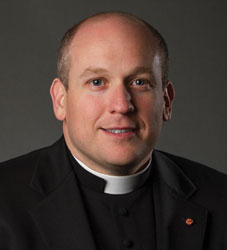 This weekend we celebrate the feast formally titled the Solemnity of the Body and Blood of Christ, but popularly known as Corpus Christi. Every time the Church gathers to celebrate the Mass, the Eucharist, which is the body, blood, soul, and divinity of our Lord, is at the center of our worship. We must avoid the danger of growing lax in our reverence and awe due to our familiarity with this great and wonderful sacrament, which is one reason why the Church dedicates a particular day of solemnity to focus solely on this mystery.
Personally, among the many sorrows of these months of pandemic has been the separation of the faithful from the Eucharist. The Eucharist is the life source of the Church, the ultimate manifestation of Christ’s presence among us, and it has been the strength of the faithful for the Church’s entire history. It is not a sign or symbol, because a sign or symbol points to another reality. The Eucharist is a reality because the Holy Spirit changes the humble gifts of bread and wine that we offer into the real presence of Jesus. In extreme circumstances spiritual communion serves as a solace and source of grace but it is not the same the physical manifestation of the Lord Jesus under the appearance of bread and wine. You may remember one of Coca-Cola’s past slogans of “It’s the real thing.” Truer words could not be said regarding the Eucharist.
Some of you may have attended an adult faith formation series last year with Fr. Stock on the 20th century American Catholic writer Flannery O’Connor. Amongst her writings is a letter where Flannery recounted being invited to a dinner party and feeling out of place in a group of she termed “intellectuals.” She went on to say that she said nothing all night until the conversation turned to the Church and the Eucharist and that her hostess talked about that, even though she had left the practice of the faith, she still thought that the Eucharist was a wonderful “symbol.” Having heard enough, Flannery recounted: I then said, in a very shaky voice, ‘Well, if it’s a symbol, to hell with it.’ That was all the defense I was capable of but I realize now that this is all I will ever be able to say about it, outside of a story, except that it is the center of existence for me; all the rest of life is expendable.
May we have the same grace that Flannery O’Connor did to recognize just how vital the Eucharist is for us. The Church should not have to impose an obligation on participating in Sunday Mass; the Eucharist should be incentive enough. The Eucharist has been the strength of martyrs, it has comforted the faithful over the centuries in the face of adversity, it is the source and summit of our life of faith, and the remedy for our mortality that will lead us to everlasting life. May we always approach the altar to receive this most precious gift with worthy hearts and lives.
Father Christopher House is the Rector of the Cathedral and serves in various leadership roles within the diocesan curia, namely Chancellor and Vicar Judicial.
The Presence of Christ
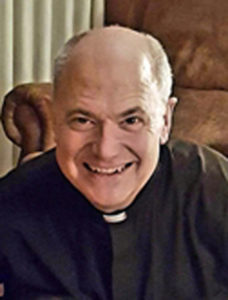 I have often referred to the older woman who lived across the street when I was growing up. She was a gentle soul named Pani. It was only until many years later that I learned that “Pani” really meant “Mrs. or Miss” in Polish! She would often speak of her life during the depression in Poland and of course, her experience of WWII. She and her husband had just gotten married when they both were carried off to different concentration camps. Neither knew the fate of the other for well over a year and she would speak of these days with great emotion and pain. I had no words and could only intently listen. I asked her what is was like to be separated for so long and she labored to communicate, in broken English, her feelings of loss, anxiety, fear and uncertainty. She waited, hoped and put her trust in God. Much to each of their surprise, an amazing, emotional, and triumphant reunion took place one day and they both realized that their fears and worries had no merit and they could be together again. It did not matter that all their physical possessions were gone; they had each other.
I asked her one day what became of the love she had for her husband during that time away and how it could be sustained. She remarked, without missing a step that it continued to grow and strengthen in her heart and soul. His love was alive in her and hers in him. They were never really apart. When they saw each other again it was as if time never passed and they continued on. The time of separation strengthened their love in so many ways. They were strengthened and given a strong resilience towards life’s disappointments and hurts. All this made their life together even more special. They appreciated each other all the more.
Many have been away from the Eucharist, the very Body and Blood of Christ, for a long time. Due to a dangerous pandemic, we were quickly separated from the physical reception of this eternal source and Presence of Love Incarnate, inspiration, and strength. As church teaching reminds us, as efficacious, beautiful, and grace filled the sacraments are, God is not bound by them. He always finds a way. Even through the pain of physical separation from the Body of Christ, the very Presence of God stirs and works in each member of the Body of Christ so that the Divine Image can still be revealed, and we can become precisely what we are meant to eat. The love relationship fostered with God cannot be taken or diminished in one who truly desires it and believes.
The community of believers receives through the gift of the Eucharist the power and the presence to touch and heal in the name of the One they desire to welcome within. So many wonderful Eucharistic blessings have taken place over the last several weeks. Families have been brought closer together, the hectic and frenzied pace of life has been put on hold for a bit, deeper conversations with those who matter the most have occurred, generosity toward those who are struggling, poor, and bearing the brunt of the pandemic’s economic fallout is being demonstrated, our dependence upon God is being realized, our need for community, social interaction and support confirmed, the earth is healing a bit, our call to solidarity is being realized and the list goes on and on in terms of how, even in spite of the absence of the physical reception of the Eucharist, God is inspiring, working, transforming, forming, and redeeming the world piece by piece. All these things and more bring hope to those who can easily fall into despair. They are lights in the midst of darkness.
Nothing can stop grace. But we also realize that separation, while bearable for a time cannot be allowed to last forever. We must connect again. My friend Pani needed to physically embrace her husband again in order for their love to continue to grow more deeply. We need to embrace the Eucharistic presence of God and our community of faith again in order to fully be who we are called to be. The sacred Eucharistic meal is a celebration of intimacy, the reunion of two loves in constant search of and longing for the other. What wonderful reunions are happening all over the world!
It is now within our grasp, especially after the experience we have endured and continue to endure, to change the way life is lived and to more intentionally put into practice the Beatitudes the Divine Guest has revealed. We are asked to be like Christ and work to create a world of sufficiency, not deficiency, where no longer does the greed of some create the want of others but where all of God’s children can find a home and a place at the table of life. The One who makes a home within calls us to live a life that transforms! It is time, more than ever, to allow the Eucharistic Presence of Christ to change us so that we can become real agents of change for others. People, our environment, and economic systems are hurting. We have to set our relationships with all things straight and allow justice, equity, peace, sustainability, accountability, and mercy order all things. This is the Eucharistic way.
If we see our relationship with the Body and Blood of Christ simply as something necessary for our personal salvation, then we are wrong. It is never just about me and what I think I need, want, and merit. If we really recognize Jesus in the Breaking of the Bread then we will also recognize him in the poor, the outcast, and all who cry out for healing and wholeness. What we do for them we do for Christ. The very presence of God touches the depths of the human soul and visits a part of us that no human being can ever hope to explore. We are God’s. It is out of that relationship that we live our life. It is to God that we have allegiance.
Throughout history we have hurt so many people in the name of progress. Throughout history we have trampled upon our environment in the pursuit of wealth and power. Throughout history we have done everything possible to live our lives without God. Throughout history we have forced so many people to conform to a certain way of thinking and persecuted them because they looked and believed differently than us. Have we learned any lessons during our time away? If so, then the reunions with the physical Presence of Christ that are happening all over the world ought to set all of us on fire with the transforming Presence and love of the Holy Spirit! In how we order our lives, set up our priorities, interact in the world, speak to others, and advocate to accomplish, what will people see? It is hoped that they see people who believe what they believe not simply for their own merit but because they truly desire to become the One they receive!
Fr. Mark Suslenko is Pastor of the Community of Ss. Isidore and Maria in Glastonbury, CT. Fr. Suslenko publishes reflection articles regularly to his parish’s blog.
How to Start Reading the Bible in 10 Steps
 I meet tens of thousands of people a year at different events. Most of them are Catholic Christians who want to start reading the Bible but don’t know where to start.
So if you’ve ever wanted to go deeper into God’s Word but haven’t known how to approach it, allow me to suggest a few tips (so you can learn from my mistakes).
Like anything else, if you want to build something … in this case, your knowledge and love for the Scriptures … you don’t just grab a hammer and some nails and start pounding. To ensure that you don’t just jump in and then quit out of frustration or confusion, there are certain things you can do to be more successful.
We’ll attack this on three levels … the tools, the blueprint, and the construction. By the end, you’ll have ten total steps to help you build a biblical fortress able to resist anything the devil can throw at you.
The Tools
Let’s start with three things you should do before you start studying.
- Pick a time, but not just any time. Commit to a daily time that you’ll open God’s Word but be sure it’s an intelligent time. If you’re really tired, for example, then reading the Bible once you’re in bed probably isn’t the best time. Pick a time when you’re totally awake so you can give your full attention.
- Pick a Bible that you can understand. Get yourself a good Catholic Bible (that way you have all seventy-three books), but if you don’t have one right now, that shouldn’t keep you from reading. The best translation today is the one that you already have. It’s important that your Bible is comfortable to read, light enough to take with you, durable enough to really use, and inexpensive enough that you don’t feel bad writing or marking in it. If you haven’t seen it … I highly recommend the Revised Standard Version—Catholic Edition for personal study, it’s great. You might also want to have a copy of the New American Bible, which is the translation we hear at daily Mass and on Sundays (NAB). Just remember, your Bible is like a telescope—it’s not meant to be looked at but, rather, looked through.
- Have other books that help you understand the Book. There’s a myriad of solid Catholic ancillary materials and resources to help you understand the Bible better—like those available through Ascension and from other fine Catholic publishers. It’s also great to have The Catechism of the Catholic Church handy, so you can use it as you study.
The Blueprint
Now here are three things you can do as you study:
- Pray, and then pray some more.
Before you open God’s Word, ask the author of that word—the Holy Spirit—to be present in a bold and fierce way. Quiet yourself, spend some time in silence, and hold the Bible in your hands as you pray. Ask God, through the power of his Spirit, to open your mind, your eyes, and your heart to his truth. Thank him for the gift of his Word, a gift that millions have given their lives to defend and to offer you the freedom to read and pray. It doesn’t have to be a long prayer but take some time … this is the most important step in Bible study. - Have a plan.
If you were planning on reading the Bible cover to cover … don’t. The Bible isn’t a novel; it wasn’t designed to be read from Genesis straight through to Revelation. We must learn the story of salvation history—and I cannot recommend The Great Adventure series of resources highly enough—whether you’re an adult (TGA) a teen (T3) or a middle school student (Encounter), we’ve got you covered!And after you catch the big picture of the Bible, then you can focus on smaller portraits. I’d pick one book that you are going to start in and make that book your focus for a while. If you are starting from scratch, I’d suggest the Gospel of Mark. St. Mark’s Gospel is the shortest and easiest to understand; you already know the main characters and plotline and its personal significance and relevance to your faith walk. The Gospels are the hinge-pin to the entire Bible, they’re a great place to start and get into that reading “rhythm.”
- Get the background.
If you do start in a Gospel, take the time to learn about who the author was, who he was writing to, and what the basic themes are of his Gospel account. Ask yourself what makes that specific account different than the other three. Don’t just jump into a letter of St. Paul without knowing what is going on in the city to which he is writing. If you are reading a prophet, know what was going on in his world at the time.
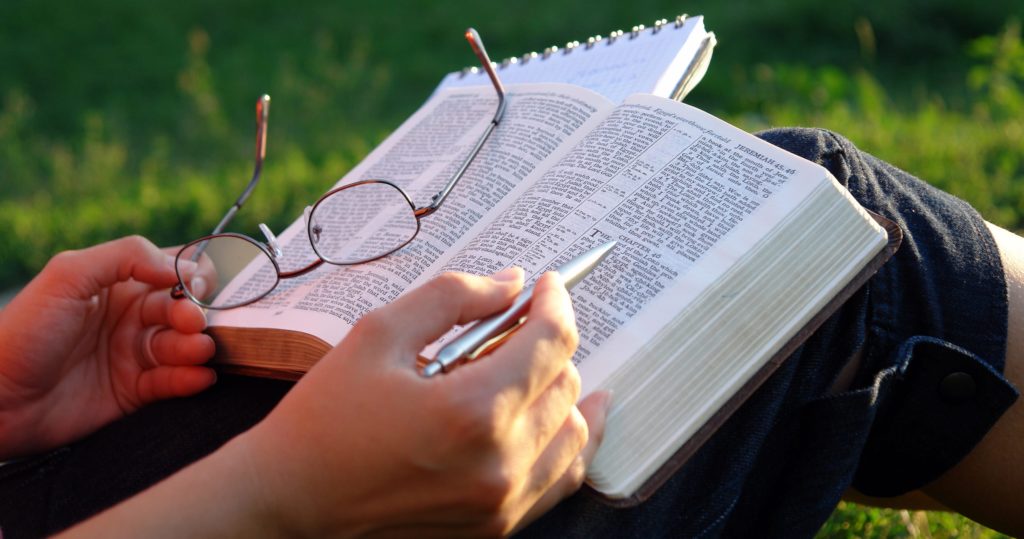
‘Where do I learn these things?’ you might ask. Read the Introduction to the Gospel on the pages preceding it. Use one of your additional books or resources to help you. When you know what is going on with the author and the audience, the words will jump out at you in a much different way and you will have better insight.
Building up Love for God’s Word
Finally, let’s discuss four pieces of wisdom you should remember while reading the Bible and beyond.
- Less is more.
Don’t just open up the Gospels and read until you get tired or for fifteen minutes because that’s what you committed to doing. Most Bibles break down the chapters into subchapters. If you began in the Gospel of Mark, for instance, you shouldn’t just start in verse 1 and continue through verse 45 (the end of the chapter). Instead, take verses 1-8 and spend fifteen minutes meditating on them. Take just verses 9-11 and meditate on them. That first chapter (the 45 verses) should be broken down into about ten different studies alone. Studying the Scriptures is not like driving across the country … it’s not about how much distance you cover in a set amount of time. Enjoy the time, roll down the windows, and take everything in. - Periods are there for a reason.
The periods at the end of each sentence are almost as much a gift as the words that precede them. Each little dot is an invitation to take a breath and reflect on what you just read and prayed. At each period, take a moment to envision the story that’s unfolding. If you are reading about the Baptism of Jesus (Mark 1:9-11), don’t just say ‘Hey cool, Jesus is getting baptized.’ Go deeper. At each period, put yourself more deeply into the story … at his baptism, where are you? Are you on the shore, on the mountain overlooking the scene or in the water right next to Christ? Is it hot out? Does the water smell bad? Is it noisy or peaceful? Let the story come alive. - Journal.
As you are writing and verses confuse you or questions arise, write them down in a journal. Don’t allow yourself to get hung up on tough verses. Scribble down the verse number with a question mark and keep moving. Later on you can search the footnotes, other books, or just ask someone who knows the Bible well for more help. The journal isn’t just for questions, though. You should also use it to write out reflections that the verses stir within you. Write down images God gives you in your imagination. Record key verses that stand out to you spiritually. God will reveal a great deal about yourself to you when you let him. - Put the Book down.
Don’t become a bookworm who never takes their eyes off of the page. The Bible is the Living Word (John 1:1-5, Hebrews 4:12). It lives and breathes well beyond the page that contains it. Share what you learn. Write out passages and post them up in your room, locker, or office. Email verses to people. Put them on the fridge. Just like the Eucharist, the Word should be taken, blessed, broken (down), and shared. The greatest gift you can give someone is to live a life that mirrors the Gospels … reflecting God in all you do. The second greatest gift is to invite others to peer into that mirror.
This Book Will Change Your Life
OK, so that’s a substantial start. Get the tools, pull together your blueprints, and start building your love for God’s Word. There are several ways to begin reading Scripture … these are just what I’ve found over the years to be the best, most realistic steps to begin and keep reading it daily.
And don’t just think that you have to study every time you open the Bible. It’s great if you set aside thirty to forty-five minutes every day to begin studying, but that doesn’t mean you can’t flip through the pages in other books like the Psalms, Proverbs, Sirach, Wisdom, Ecclesiastes, or in St. Paul’s letters … you’ll be blessed by all of them.
I also strongly recommend the Book of James in the New Testament. Romans is a gorgeous and extraordinarily well-written book but is sometimes a little ‘too deep’ for the biblical beginner. While Romans teaches us how to get to heaven, James teaches us how to live on earth (with people who might annoy you and try your patience). It’s great.
All I can tell you from my own experience is that the Word of God has changed my life. It has deepened my experience of the Eucharist, both at Mass and in Adoration. It has deepened my love for our Mother Mary and my gratitude for intercessory prayer and the communion of saints. It has deepened my love for the Church, the papacy, and basic human dignity. It has fueled a fire within me for truth, the need to proclaim it, defend it, and uphold it—especially in this morally relative culture. I pray it will do the same for you.
Mark Hart has helped transform Catholic youth and young adult Scripture study in parishes, homes, and classrooms with his wildly popular Bible study programs, T3: The Teen Timeline (for teens) and Encounter (for pre-teens), as well as Altaration (a program about the Mass for teens). Mark’s humor and his passion for Scripture are helping hundreds of thousands of Catholics, young and old, begin to read and study the Bible in engaging, fun, and relevant ways. A devoted husband and father of four, Mark is also the main author and presenter in The 99, A New System for Evangelization.
Announcements
Grief Share at Cathedral
The Cathedral of the Immaculate Conception in Springfield is hosting Grief Share, a weekly, faith-based, grief support group. If you, or someone you know, would like help and encouragement after the death of a spouse, child, family member, or friend, please join us beginning Thursday, July 2, 6:00pm-8:00pm in the Cathedral School Library (please enter through the atrium doors off 5th street parking lot). Grief Share runs for 14 weeks, but guests may join the series at any point and can pick up content they missed during the next cycle. For more information, please visit our website, (https://spicathedral.org/grief-share/) or contact Vicki Compton @ 217-522-3342 or or at [email protected].
BOLT! Vacation Bible School
We’re so excited to announce that BOLT VBS is coming to your house on July 7th! With minimal preparation, easy-to-follow instructions, and a video that leads your family step-by-step through each day, BOLT is designed to bring the fun and faith-formation of VBS to your home. Although we wish we could have VBS in person as we do every year, we are so excited to offer this program to our Cathedral families.
If you are interested in participating in BOLT VBS, please register your family by going to https://spicathedral.org/vacation-bibleschool-2020/. We will be reaching out to those who register with details regarding access to materials and how to run the program all from your home. Registration closes on June 15th, so sign up today! If you have any questions, please feel free to reach out to us by calling the Parish Office at 217-522-3342 or by emailing Haley at [email protected].
Dear Parishioners and Friends of the Cathedral,
For those who have not heard the happy news, with the lifting of the governor’s stay-at-home order, Bishop Paprocki has called for the resumption of public Masses in our diocese. The Cathedral will resume its regular Mass, Reconciliation, and Exposition schedule beginning with the 4PM Mass on Saturday, June 6th.
As you might imagine, there will be some changes in how we worship for the time being:
- Masses will be celebrated using safe distancing practices. You may find that, for now, your favorite pew has been closed to achieve this practice. With the practice of safe distancing being used, masks will not be required for those coming for Mass, as long as safe distancing is respected. Those wishing to use masks for the entirety of their time in the Cathedral are free to do so. There will be chairs set up in the atrium for those who wish to attend Mass from there but they will need to enter the Cathedral if they wish to receive Holy Communion.
- There will be music at the Sunday Masses but there will be no congregational singing. The music that is chosen will be done to lend itself to this temporary restriction and the parts of the Mass will be spoken. The hymnals and missalettes will be removed from the pews. At this time, there is to be no distribution of parish bulletins but please visit www.spicathedral.org where the weekly bulletin may be found.
- Distribution of the Precious Blood and the physical Sign of Peace will continue to not be offered at this time.
- Following Mass, the pews will need to be sanitized, therefore the faithful will not be allowed to congregate in the Cathedral or atrium, accept for silent prayer. Parishioners who wish to visit with each other must do so outside in the open air.
- Given the size of the Cathedral church and overflow in the atrium, the normal size of our weekend Masses, and using a temporary seating capacity of 25%, it is not foreseen that any type of reservation system or lottery will need to be employed for those wishing to attend Mass.
- Thank you for your understanding and consideration of these realities that we must temporarily observe.
Having shared with you these temporary changes and practices, I remind you that:
- Bishop Paprocki’s general dispensation that lifts the obligation to attend Sunday Mass remains in effect. Those who choose not to attend Sunday Mass do not commit a grave sin.
- Those parishioners suffering from a contagious illness or who have been exposed to a contagious illness, such as COVID-19, are not to attend Mass. This observence should always be practiced, even outside of a pandemic.
- Those parishioners who are have greater health risks due to age or other factors as defined by the CDC are strongly asked to exercise prudence in prayerfully discerning their own Mass attendance at this time.
- The Sunday 10AM Mass will continue to be live streamed at www.dio.org/live. Weekday Masses will no longer be live streamed after the morning Mass on Saturday June 6th. The daily live stream is done using a smart phone and tri-pod in front of the altar and this set up will not be practical with the resumption of weekday Masses with a congregation. Daily Mass can be found live streamed at many locations on the internet such as at www.ewtn.com/tv.
To say that these past months have been strange is an understatement, but thanks be to God that, in so many corners, we are able to resume some normalcy in our everyday living as we press forward. In all that we do, we need to exercise prudential judgment.
On a personal note, I know that Fathers Friedel and Rankin, along with myself, are happy to have this ability to worship with you again before our new assignments take effect with the priest personnel changes across the diocese on July 1st.
I pray that the Lord will continue to bless you and yours with good health and all good gifts. Let us be mindful of all those who are sick, suffering, unemployed or underemployed, or in need in any way. Let us also continue to pray for healing in our nation, that we may always have the grace to see people for who they are first and foremost, children of God. I remain
Sincerely yours in Christ,
Very Reverend Christopher A. House
Rector
A Unique and Dynamic Communion
There is an African folk tale about three blind men who examine an elephant to try to determine what sort of animal it might be. One grabs hold of the elephant’s tail and exclaims, “This creature is very like a rope.” The second man runs his hand over one of the tusks, declaring, “This creature is very like a spear.” Finally, the third man, patting the wide, solid side of the elephant, says, “This creature is surely a wall.”
Individually, each of the blind men grasped an aspect of the majestic creature, but their understanding was limited. But, by sharing their insights, they were given an understanding of elephants that none of them could have alone.
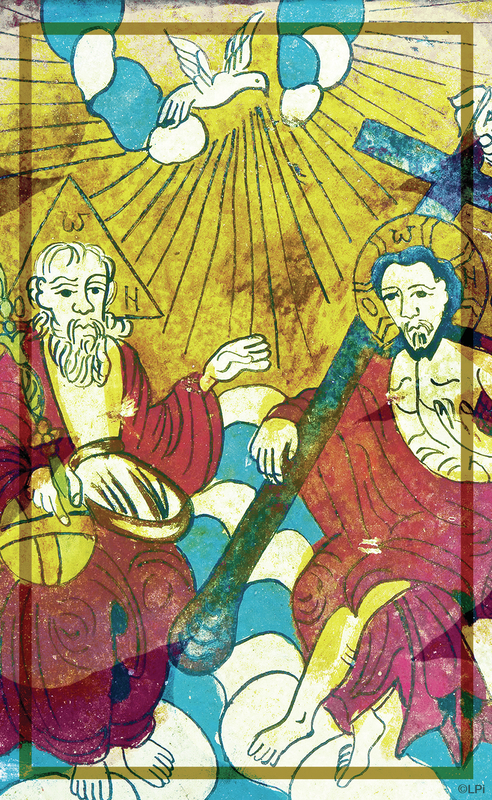
Like the experience of those three men, all of the Church’s various celebrations throughout the year work together to help us enter more deeply into the mysteries of salvation and the ways that God has been — and continues to be — at work in the world. This Sunday’s celebration honoring the Most Holy Trinity is no exception.
This special day honoring the Holy Trinity was, however, a fairly late addition to the Church’s cycle of seasons and feasts. In fact, Pope Alexander II (d. 1077) is said to have objected to having a special day to honor the Holy Trinity because, as he observed, the Holy Trinity is celebrated every Sunday and every day in the Church’s prayer. It was Pope John XII who made the Feast of the Holy Trinity part of the official liturgy of the Universal Church in 1334.
Falling as it does on the Sunday after Pentecost, this day honoring the Trinity brings together all the mysteries that we have celebrated during the seasons of Lent and Easter: the creative, saving, and sanctifying work of God that not only freed us from the powers of sin and death, but which also unites us as a community of faith — the Church.
The Solemnity of the Most Holy Trinity also reminds us that the God whom we adore is “one God in the Trinity” and “Trinity in unity” (from The Athanasian Creed), inviting us to consider that all of our relationships are reflections of that unique and dynamic communion that exists within God — the Father, the Son, and the Holy Spirit. By grace, we are constantly being invited to be part of that relationship, to live in the love of God.
We get a sense of this when we recall Jesus’ words to his disciples (recounted in the Sunday and weekday Gospels in the days before Pentecost) about his relationship with the Father and the Holy Spirit, whom he promised would come to his followers after his departure. In these beautiful texts, Jesus explains that the promised Spirit, “will take from what is mine and declare it to you.” But, as Sister Barbara Reid, O.P., notes, “What is Jesus’ is also what is the Father’s as Jesus asserts, ‘Everything that the Father has is mine.’ There is no ‘yours and mine’ in the Godhead — only ‘ours,’ as the three interweave in a communion of love in which there is no possessiveness,” (from Abiding Word, Year A).
In the end, our celebration of Trinity Sunday is an invitation for us to continue to move beyond our selves and our own sense of “mine.” In the Mystery of the Most Holy Trinity, God continues to bless us — in the ongoing act of creation, in the freely given gifts of healing and redemption of Christ, and the life-giving Spirit that inspires faith, hope, and love — and invites us to receive the graces and gifts he so freely gives. As Henri Nouwen reflected in Sabbatical Journey,
I am deeply convinced that most human suffering comes from broken relationships. Anger, jealousy, resentment, and feelings of rejection all find their source in conflict between people who yearn for unity, community, and a deep sense of belonging. By claiming the Holy Trinity as home for our relational lives, we claim the truth that God gives us what we most desire and offers us the grace to forgive each other for not being perfect in love.
Trinity Sunday reminds us that we are called to extend that invitation to others by sharing what we have received
A Benedictine monk for nearly 11 years, Br. Silas Henderson, SDS, is an author, retreat leader, and catechist, and former managing editor of Deacon Digest Magazine and Abbey Press Publications. You can find more of Br. Henderson’s blogs at www.fromseason2season.blogspot.com.
Announcements
Grief Share at Cathedral
The Cathedral of the Immaculate Conception in Springfield is hosting Grief Share, a weekly, faith-based, grief support group. If you, or someone you know, would like help and encouragement after the death of a spouse, child, family member, or friend, please join us beginning Thursday, July 2, 6:00pm-8:00pm in the Cathedral School Library (please enter through the atrium doors off 5th street parking lot). Grief Share runs for 14 weeks, but guests may join the series at any point and can pick up content they missed during the next cycle. For more information, please visit our website, (https://spicathedral.org/grief-share/) or contact Vicki Compton @ 217-522-3342 or or at [email protected].
BOLT! Vacation Bible School
We’re so excited to announce that BOLT VBS is coming to your house on July 7th! With minimal preparation, easy-to-follow instructions, and a video that leads your family step-by-step through each day, BOLT is designed to bring the fun and faith-formation of VBS to your home. Although we wish we could have VBS in person as we do every year, we are so excited to offer this program to our Cathedral families.
If you are interested in participating in BOLT VBS, please register your family by going to https://spicathedral.org/vacation-bibleschool-2020/. We will be reaching out to those who register with details regarding access to materials and how to run the program all from your home. Registration closes on June 15th, so sign up today! If you have any questions, please feel free to reach out to us by calling the Parish Office at 217-522-3342 or by emailing Haley at [email protected].
For other important information and announcements, please visit https://spicathedral.org/blog/category/announcements/.
Scripture & Tradition: The Story & the Life
The Bible. For some, the very words evoke feelings of warmth and wisdom, but for many Catholics today, the Bible can be chronologically confusing and its meaning hard to grasp. How tragic this is in light of the fact that as Pope Leo XIII said, “Scripture is a Letter written by our Heavenly Father” to his children for the purpose of revealing himself to them.
Those who come to the Holy Bible for the first time could expect to open at the beginning of Genesis and read on through to Revelation with the same ease and excitement as reading the novel Gone With The Wind. But it doesn’t take the novice long to figure out that the Bible doesn’t read like a popular novel. In fact, it isn’t put together as a sequential narrative; rather the books are grouped by literary types. Consequently, the once-excited inquirer puts the untapped treasure back down on the coffee table with a sigh of “what’s the use?”

History of Salvation and the World
An important challenge facing the reader is to find and understand the basic storyline of salvation history within the Bible’s pages. We are not talking at this stage about understanding detail, but rather grasping the scope of the divine story, the “big picture.” The Bible, although made up of many stories, contains a single story. In a nutshell, it is about God and his relationship with mankind, the most complex part of his creation, and the true object of his love and affection. It is mankind that would betray God, and yet God, in turn, would die for.
Starting with the first chapters of Genesis on through the book of Revelation, God gradually reveals his plan to re-establish the broken relationship between himself and his treasured creation. It is only in God’s revealed plan that mankind once again finds its intended purpose for being “because man is created by God and for God; and God never ceases to draw man to himself. Only in God will he find the truth and happiness he never stops searching for” (Catechism of the Catholic Church, 27).
It is important for the modern Catholic to understand that, although the Bible is a mystery on one level, it is also a book of history. There should be no misunderstanding—it is true history as opposed to cleverly devised tales. Pope Paul VI said in the Second Vatican Council document, Directorium Catechisticum Generale (Sacred Congregation for the Clergy):
“the history of salvation is being accomplished in the midst of the history of the world.”
The Bible gives a wide range of examples of how through word and deed God has entered the life of his people.
The Narrative Approach
The difficulty facing Bible readers is how to make this personal yet ancient story of salvation history come alive. They must discover the critical plot and, through the guidance of the Church, understand its meaning in order to make it their own story. Dei Verbum emphasizes the importance of using the contemporary literary form to search out the meaning of the Sacred Scriptures:
“To search out the intention of the sacred writers, attention should be given, among other things, to ‘literary forms.’ For truth is set forth and expressed differently in texts which are variously historical, prophetic, poetic, or of other forms of discourse. The interpreter must investigate what meaning the sacred writer intended to express and actually expressed in particular circumstances by using contemporary literary forms in accordance with the situation of his own time and culture.” (DV 12)
The first step to understanding the Bible chronologically as a story is to identify which of the seventythree books are of historical nature. The term “historical” refers simply to those books that keep the story moving from one event to another. Not all books in the Bible are historical accounts, some are poetic in nature, some are wisdom literature, and some prophetic. The historical books provide us with continuity or give us an ordered account of connected events from Genesis to Revelation. This is called the narrative approach and was common among early Church Fathers such as St. Ambrose and St. Augustine.
Becoming Christian
There are twelve historical books in the Old Testament and, for the sake of simplicity; two historical books in the New Testament (Genesis, Exodus, Numbers, Joshua, Judges, 1 & 2 Samuel, 1 & 2 Kings, Ezra, Nehemiah, 1 Maccabees, Luke and Acts). These books provide the narrative structure on which all the other books hang.
Flowing from the written word, the Catechism moves into the second pillar, the sacraments and liturgy. What are the sacraments and liturgy in relation to the written word? The sacraments and Liturgy provide us with the means of entering the story declared in the Creed, the first pillar.
“From the time of the apostles, becoming a Christian has been accompanied by a journey and initiation in several stages.” CCC, 1229
Certain essential elements will always have to be present: a proclamation of the Word, acceptance of the gospel entailing conversion, a profession of faith, and baptism itself. Throughout this faith journey, the sacraments provide direct encounters with Christ, resulting in the grace of God, which is the life of the Trinity. The new believer travels through initiation (baptism, confirmation and the Eucharist) and participates in the sacraments of healing (penance and anointing of the sick), and service (holy orders and marriage).
Life in Christ
Once the new believer is initiated into the story (Creed) through the sacraments they move into life in Christ, the third pillar of the Catechism. What is life in Christ in relation to the Creed, Liturgy, and sacraments? Life in Christ is our personal and communal script on how to live. Because the Church is the body of Christ, we live the life of Christ in the world. In this pillar we learn about the moral life, virtues, sin and our relationship with society. With the Ten Commandments as a backdrop, we learn how to conduct ourselves along the journey of faith.
Prayer
Prayer, which makes up the fourth pillar of the Catechism, provides us with the guidelines to fortify a close personal relationship with God. There are several wellsprings where Christ awaits us to enable us to drink deeply of the Holy Spirit; the Word of God, the Liturgy and the theological virtues.
Through prayer we can drink more deeply from the Word of God and participate more fully in the sacramental life. It is in prayer that our bond with God grows deeper and with an understanding of the three previous pillars, our understanding of revelation becomes more profound.
This is the third and final installment in the Scripture & Tradition series. It was published on the Great Adventure Blog, the Ascension Blog’s former home, on April 19, 2015. Both previous installments were also published in last week’s Weekly, which can be found on our Cathedral website.
Jeff Cavins is passionate about helping people understand Scripture and become disciples of Jesus Christ. Though he was born Catholic, Jeff went to Bible school and served as a Protestant minister for twelve years before reverting to the Catholic Faith. He then quickly became a leading Catholic evangelist and author. Jeff is best-known for creating The Great Adventure Bible study programs published by Ascension, which have been used by hundreds of thousands of people to engage in Scripture in a life-changing way. In addition to The Activated Disciple, some of his other recent projects include his podcast, The Jeff Cavins Show, and the Great Adventure Bible studies, Ephesians: Discover Your Inheritance, and Wisdom: God’s Vision for Life.