 Well, here we are in the “new normal” of COVID-19. And we don’t know how long it’s going to be before things change.
We have to strive to be strong and to be together (in spirit, of course). This indeed will test our character, our strength, and our coping mechanisms, and will really show what we’re made of. And the better we learn to handle ourselves in this time of isolation, the more bearable these days will be.
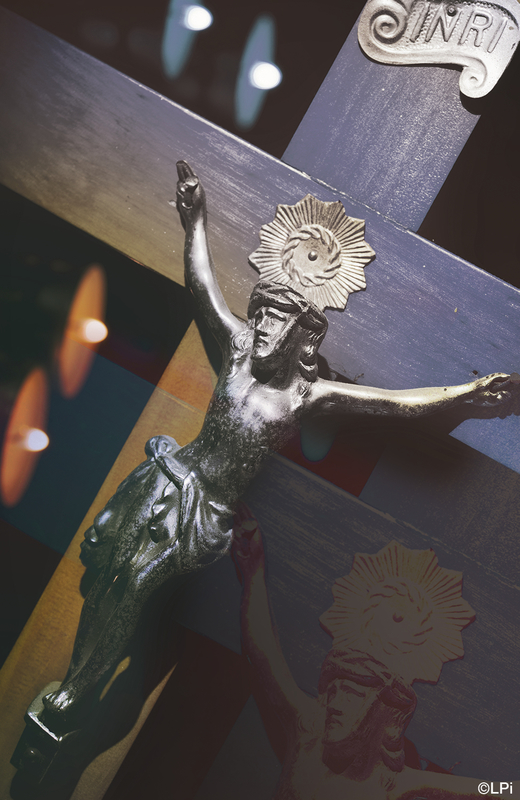
If, however, it seems our lives are beginning to unravel and/or spiral out of control, we would do well to remember that there is someone who can still be our Rock. His name is Jesus Christ. The blessing of having our Catholic faith is that we know this. But what about those who don’t? Perhaps this could be a significant moment in history for us to help people come to desire him more than ever before. This, of course, will be influenced by the degree to which we radiate peace and joy amid this time of great suffering and upheaval.
If our lives are seen as attractive (in the ways not of this world), people might be more open to Jesus, as a result of first becoming more open to us. Hopefully, authentic relationships may develop through which a person might choose to eventually take a leap of faith. And we want people to take that leap, for after doing so, what might seem like unbearable suffering can be seen in a new light.
 How Faith Transforms What We “See”
In my own life, I was moved by the attractive example of others, opened my heart to Christ more, began to taste his love in a new way, and began to trust him more than I ever had before. This made it easier for me to cooperate with God’s grace, which brought about blessings beyond measure (and much healing). This brought me to realize that God’s plan for me was better than my plan, and that made me want to know God more intimately, and to cooperate with him (and his graces) more profoundly.
The after-effects of that journey, however, is that I can now see how I am handling myself during this isolation a lot better than if this were to have happened years ago, before my conversion. And today, not only am I able to make this time bearable, but I can also make it fruitful. And regardless of the degree of suffering, you can too.
Entering A New State
The reason for that is because I learned that I could use those experiences to enter more deeply into the Passion of Christ. With all due respect to the profound suffering that people are experiencing, in due time, and with due support, we can choose to enter his passion out of love for him. In doing so, we can more profoundly unite our hearts and our sufferings to his and can begin to walk with Christ in a more intimate way. This might be easier said than done, but it is still something we can set our sights upon as a target.
Through that, however, we can come to see our purpose in a whole new way. Ultimately, of course, our purpose is to work for the salvation of souls. But if we embrace suffering and unite our hearts to the Lord, we can gain a better understanding of what that actually will look like in our lives, and how our choice to do that might impact others in a positive way. Through that, over time, we can gradually shift from wherever we are, into a state of mission—befitting of furthering the Kingdom of God. In that state of mission, we can come to see the suffering is no longer just an occurrence, but rather is an occurrence that we can transform into something better. And that “something better” is penance.
Carrying Our Crosses
If we become engaged in this mission, we ought to not expect that the crosses we are carrying will just go away. Rather, we ought to expect to gain the strength to carry them, and to carry them well, not with resentment and or bitterness, but rather with interior joy and peace—hopefully eventually to the point where it attractively radiates outward from within us. How we get there isn’t to do with the type of sufferings we are faced with during our lives—or whether they become alleviated—but rather is to do with whether we are willing to change our thinking, such that we can willfully accept sufferings as penance instead of experiencing and wasting the suffering altogether.
In other words, if we change our thinking to see that our sufferings can be given as a gift to God by being transformed into a form of penance, then enduring those sufferings can be seen through that new lens; the lens of charity. And when we willfully endure penance with the joy of knowing we are giving the gift of our hearts to the Lord (not that we should seek out the suffering to bring this about), that penance can be used for the good of all humanity; for the eternal salvation of souls!
What a profound gift to give!
A Renewed Sense of Purpose
In transforming our way of thinking like that, we can become renewed with a sense of purpose that will last our entire lives. Also, it will give us the confidence to embrace future inevitable sufferings with courage so we can serve in even a greater capacity.
And that points us to greater intimacy with Christ—in a complete, consistent, and forever type of love.
So, when suffering seemingly becomes too great, or at any point leading up to that threshold, perhaps we can remember that complete, consistent, and forever love, and courageously embrace our sufferings as a penance.
If enough people strive to enact this degree of charity, the face of the entire world would be forever changed for the better.
Hudson Byblow is a Catholic speaker and writer who presents at conferences throughout Canada and the United States. He shares his personal testimony to clergy, schools, and parishes and consults for various Catholic agencies, speakers, and educators. He focuses on his story of overcoming trauma while pursuing greater self-honesty and truth. Today he strives to elevate the conversation through clear language while revealing the joy of living chastely in his newfound freedom in the Lord. His website is www.hudsonbyblow.com.
 Do you ever feel that life is unfair? Though we understand that injustice and inequity exist, there is an underlying assumption that if we believe in God, or better yet get God on our side, then the scales of justice and fairness will somehow be tipped in our favor. God will intervene to set things right. The image we often carry of God is one of an all-powerful and grand fixer. But, if we listen carefully to Sacred Scripture and study faith tradition, this is not who God is at all. Our second reading this weekend gives us a great perspective to pursue. “Christ also suffered for you, leaving you an example that you should follow in his footsteps. He committed no sin and no deceit was found in his mouth.” If we look to the passion of Christ, we clearly see a God who does not eradicate or sidestep injustice and great suffering but embraces them. If the idea is to somehow get God to remove these painful stumbling blocks from our path, then we would have been given this as the example to follow. Instead, we have been brought through insults, unjust accusations, intense suffering, ridicule and death.
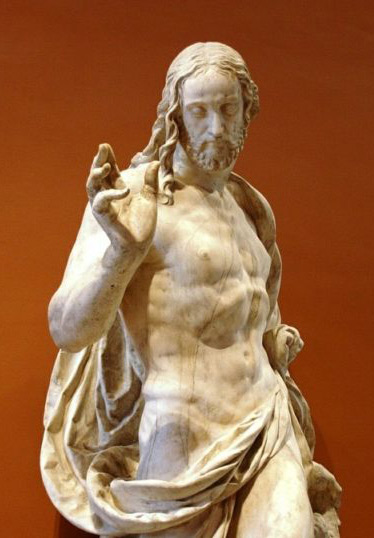
 Jesus kept himself intact as he went along the path of the cross. It was this anchored integrity, rooted in a relentless relationship he had with his Father that kept him from anger, bitterness, retaliation, defensiveness, and self-pity. His strong resolution to endure this pain brought him to the place where all pain empties into, the Resurrection. The abundant life Jesus desires us to have is our resurrected life! It is not the promise of an easy meal ticket through this earthly one but the glory of transformation and new life to come. This is where the Good Shepherd’s example leads us. It’s not about finding green and safe pastures here. Believing in Jesus as the Good Shepherd isn’t some form of spiritual “bubble wrap” we roll around ourselves to protect us from all of life’s evils and hardships. This is nowhere near the idea. It certainly was not how the original disciples saw things and the way their lives played out didn’t reflect a God who shielded them from all injury and harm. They encountered quite the opposite. But, they followed the example of their Good Shepherd.
 The Cathedral Council of Catholic Women and the Knights of Columbus Council #16126 are offering scholarships to students who are:
 On this Third Sunday of Easter, the Gospel keeps us on that first Easter Sunday, this time placing us on the road to Emmaus. We are not sure where the exact location of Emmaus was as there were multiple towns named Emmaus that are mentioned in the Scriptures. From St. Luke’s Gospel, we know that the town was outside of Jerusalem about seven miles, not too far since these two disciples were able to make it there in one day’s journey.