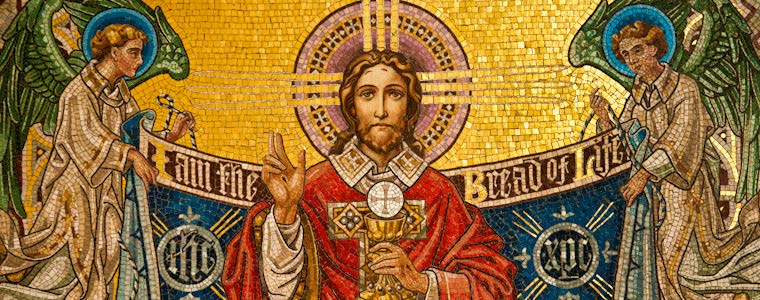
 This weekend we celebrate the feast formally titled the Solemnity of the Body and Blood of Christ, but popularly known as Corpus Christi. Every time the Church gathers to celebrate the Mass, the Eucharist, which is the body, blood, soul, and divinity of our Lord, is at the center of our worship. We must avoid the danger of growing lax in our reverence and awe due to our familiarity with this great and wonderful sacrament, which is one reason why the Church dedicates a particular day of solemnity to focus solely on this mystery. The Eucharist is the life source of the Church, the ultimate manifestation of Christ’s presence among us, and it has been the strength of the faithful for the Church’s entire history. It is not a sign or symbol, because a sign or symbol points to another reality. It is itself a reality because the Holy Spirit changes the humble gifts of bread and wine that we offer into the real presence of Jesus.
Two years ago at Father Braden’s first Mass, the rector of Saint Meinrad Seminary preached and in his homily he recounted a wonderful story told by the 20th century American Catholic writer Flannery O’Connor. In a letter, Flannery recounted that she was invited to a dinner party and how she felt out of place in a group of “intellectuals.” She goes on to say that she said nothing all night until the conversation turned to the Church and the Eucharist and that her hostess talked about that, even though she had left the practice of the faith, she still thought that the Eucharist was a wonderful “symbol.” Having heard enough, Flannery stated: I then said, in a very shaky voice, ‘Well, if it’s a symbol, to hell with it.’ That was all the defense I was capable of but I realize now that this is all I will ever be able to say about it, outside of a story, except that it is the center of existence for me; all the rest of life is expendable.
May we have the same grace that Flannery O’Connor did to recognize just how vital the Eucharist is for us. The Eucharist has been the strength of martyrs, it has comforted the faithful over the centuries in the face of adversity, it is the source and summit of our life of faith, and the remedy for our mortality that will lead us to everlasting life.
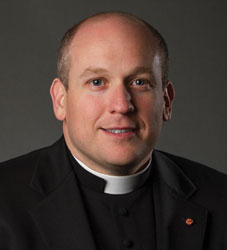
Father Christopher House is the Rector-Pastor of the Cathedral and serves in various leadership roles within the diocesan curia, specifically Chancellor and Vicar Judicial.
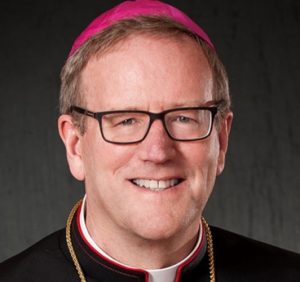 Bishop Barron (B): I think skepticism is not a bad attitude, and I think it’s good for college students to be skeptical. That’s how you learn. If you don’t ask questions, and you don’t wonder about things, you’re not going to make any progress. So, I’m not against it at all. I think it’s really healthy. However, we’ve got to be skeptical of our skepticism. If you take it too far, it becomes uncritical, and it becomes a block to real knowledge. I would say, “Yeah, unleash your skepticism about a lot of things—including skepticism. Be skeptical of the secularist ideology, because sometimes it’s as though [people said], “Oh no, that’s fine, no one should ever question secularism.” That’s the default position. Actually, I would be just as skeptical about that as about anything else. So, yes to skepticism, but not so far that it blocks your access to reality. The danger with excessive skepticism is that you end up living in a very, very narrow space, this little tiny world that you have control over. And that just makes your life cramped.
 In fact, in every area of life, including the most basic things, something like faith or trust is operative. In this regard, Newman says that even that you know who your parents are—can you absolutely prove that with apodictic certitude? Or are you taking it on the testimony of lots and lots of people [who] you’ve come to trust? You trust in GPS systems—have you verified it before you set out on your journey, or are you accepting on faith that this is based on the work that a lot of people have done? So, there’s an analogy between religion and the role that faith plays, and the role that faith plays in the sciences.
 Discussion is impossible with someone who claims not to seek the truth, but already to possess it. (Romain Rolland)
 You rocked the earth, split it open;
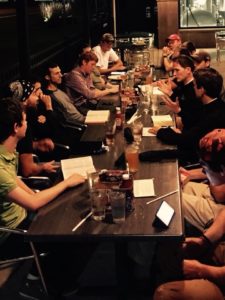 We also give thanks for the five new priests who were ordained this weekend for our diocese and we pray that God will lavish them with his grace at the beginning of their priestly lives. Among them is Father Dominic Rankin who spent the summer of 2016 with us here at the parish. Father Dominic will offer a Mass of Thanksgiving here at the regular 5PM Mass on Sunday, June 3rd. Please come and celebrate with us at that Mass next Sunday evening.
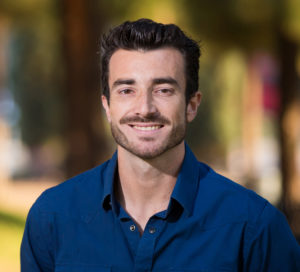 Silence. It can be a reservoir of flowing peace and nourishing grace. It can call to mind our cherished identity, compelling us to respond to God and others with that same, first love he has shown us. Or it can be cold and sterile, a state of abandonment, loss, frustration and sorrow. It’s in the silence that we can choose to trust in his loving presence or his aching absence. We all know of people—maybe even ourselves at times—who turn away from God because in a time of great need they were met with the cold, bitter sound of only their own cries and tears. It’s an experience, I imagine, we can all relate to on some level.