 The season of Lent is a special time for Catholics. In almost every sphere of life, those who take something seriously come up with a plan. Championship sports teams, flourishing businesses, triumphant political campaigns and successful individuals all teach us a powerful lesson: Those who get results are generally the ones with better strategies implemented with perseverance.
That’s true, too, of the spiritual life, which is too important to wing. So much of our happiness, in this world and in the next, depends on whether we have a plan, whether it’s adequate to form us in holiness, and whether we make and keep the commitment to follow that plan. Lent is a time for Catholics to get back to the basics and make resolutions to prioritize what is truly important. We need to ensure, however, that our resolutions are commensurate to the task.
Pope Benedict used to stress that Lent is not about making minor course corrections in our lives, but about experiencing a radical and total conversion. It’s a moral exodus in which we give up the easy superficiality in which we live and resolve to adopt faithfully, step by step, Christ’s own path. It’s meant to be a Passover from mediocrity to sanctity; from being a part-time disciple to inserting ourselves fully into Christ’s paschal mystery; dying to ourselves so that Christ can truly live within us.
Lent, in short, is meant to help us recalibrate our entire existence and propel us toward becoming the Christians that our faith calls us to be. Our resolutions ought to reflect this. Will giving up candy for 40 days really make us holy? What about filling up a rice bowl with loose change or adding three extra Hail Marys at the end of the day? Such resolutions are, I think, equivalent to a professional athlete’s thinking he can train for the upcoming season by lifting five-pound barbells and watching Richard Simmons’ videos!
Lent, rather, is the “acceptable time” to get radical and put out into the deep, to overcome the temptation to become spiritual sissies in the resolutions we make, because if we’re wimps in the annual “spiritual boot camp” of Lent, then it’s almost impossible for us to have the spiritual discipline to live by Christ’s high standards throughout the rest of the year.
On Feb. 1, Pauline Books & Media published a book I wrote entitled, Plan of Life, in which I tried to give an overview of the training for holiness to which St. John Paul II challenged the Church in his pastoral plan for the third Christian millennium. It’s an adaption of what future priests receive in seminaries, religious are given during novitiate, and members of the more recent movements and ecclesiastically-approved institutions for lay faithful gain through their ongoing formation. It tries to cover everything from getting up to going to bed and making the most of the time in between.

Sandy desert in Egypt at the sunset
At the beginning of Lent, we can focus on the basic Christian plan, what Jesus emphasizes for us every Ash Wednesday in the Gospel: praying, fasting and giving alms. In these practices of prayer, self-discipline and self-giving, Jesus summons us to follow him by imitating his bold example of praying and fasting in the desert for 40 days and nights and in giving himself to others to the last drop of his blood. Just as the devil tempted Adam and Eve in the Garden and Jesus in the desert, so he seeks to tempt us to disorder our relationship with ourselves, others and God.
Fasting, almsgiving and prayer are the respective antidotes. The more we fast and prioritize spiritual nourishment over material food, the less vulnerable we will be to being tempted by bread and earthly pleasures. The more we sacrifice ourselves and our belongings for others’ good, the less prone we will be to giving in to the devil’s seductions to seek power or control over them. The more we pray to God and hunger to know and do his will, the less assailable we will be to the devil’s trap presumptuously to force God’s hand.
Pope Benedict used to stress that Lent is not about mak ing minor cour se corrections in our lives, but about experiencing a radical and total conversion. In addition to being a great remedy against the seductions of the Evil One, these three traditional practices are also a great means to help us reorder our relationship to God, our neighbor and appetites.
First, prayer. If God is truly first in our lives, we will want to commit to making the loving dialogue with God our foremost priority. Rather than squeezing him into our day when we have time, we resolve to center our whole lives on him. Some Lenten resolutions to do this would be to come to daily Mass, “stay awake” with him in Gethsemane through Eucharistic adoration or a daily Holy Hour, pray the Stations of the Cross on Fridays, or try to attend a Lenten mission or retreat.
Second, fasting. Many of us, though believers, live like materialists, laboring harder to stock our refrigerators than to nourish ourselves spiritually.
Fasting helps us to say No to the devil’s temptations to prioritize our stomachs over our souls. It allows us to subordinate our bodily desires and needs to those of the Spirit, to control our desires rather than let them control us. The fast I ordinarily recommend is threefold: to drink mainly water throughout Lent, give up condiments on food (salt, pepper, sugar, butter, ketchup, salad dressing), and forsake sweets and snacks between meals. That’s a type of fast that not only is healthy, but at the end of 40 days will fill you with the discipline that it takes to be a disciple!
Third, almsgiving. Our biggest spiritual cancer often flows from selfishness or egocentrism. That is why the Lord commands us to give alms; to look toward others’ needs, not just our own; to love others in deeds and not just wish them well; and to take responsibility for others’ welfare, for as often as we fail to do something for them, we fail to care for Christ (Matthew 25:45).
How charitable should we be? We should try to give more than our surplus time or resources, but extend ourselves like the widow with her mite, something that will conform us to Christ’s standard of loving generosity. We should also be deliberate about our charity, not just engaging in “random acts of kindness,” but having a concerted game plan of self-sacrifice, just as Jesus had one toward us from before the world’s foundation.
Like baseball players have spring training to get back to the basics after a winter off, so Lent is the time for Christians to get back to the building blocks of a life built on Christ.
Championships often depend on the work done to form the habits that lead to greatness. Catholics would similarly profit from using Lent to jump-start the plan to form the habits that lead to virtue and ultimately to the eternal “Hall of Fame.”
Father Roger J. Landry is a priest of the Diocese of Fall River, Massachusetts, who works for the Holy See’s Permanent Observer Mission to the United Nations in New York. Father Landry is the national chaplain of Catholic Voices USA. His homilies are posted each week at saintanthonynewbedford.com and he is the author of Plan of Life: Habits to Help You Grow Closer to God.
 I’m not big on jewelry, but one thing you might notice about me is that I always wear a crucifix around my neck. It is not a cross, but a crucifix. There is a reason for that. In fact, I want to share three reasons why I wear a crucifix.
 Almsgiving is more than just allocating surplus funds to a charitable organization or cause. More is expected of us than that! Think of almsgiving as acts of generosity that enable the performance of the corporal and spiritual works of mercy. It is through the corporal and spiritual works of mercy that we show ourselves to be faithful, rather than accidental, disciples.
 The first reading from the Book of Genesis and the passage from the Gospel of Mark that are both given to us for this First Sunday of Lent may appear to have no relationship to each other but that is not the case. As we begin this holy season, one of the themes that is presented to us is the call for the renewal of baptismal grace in each one of us. Immediately in the first reading we are given an allusion to something great that is to come: baptism.
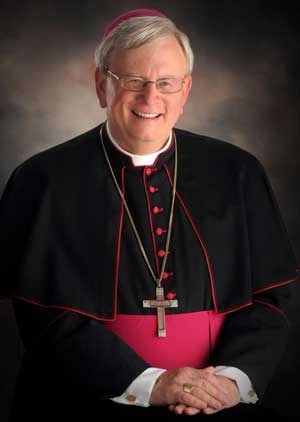 Bishop David L. Ricken of Green Bay, Wisconsin, former chairman of the Committee on Evangelization and Catechesi s of the U.S. Conference of Catholic Bishops (USCCB), offers “10 Things to Remember for Lent”:
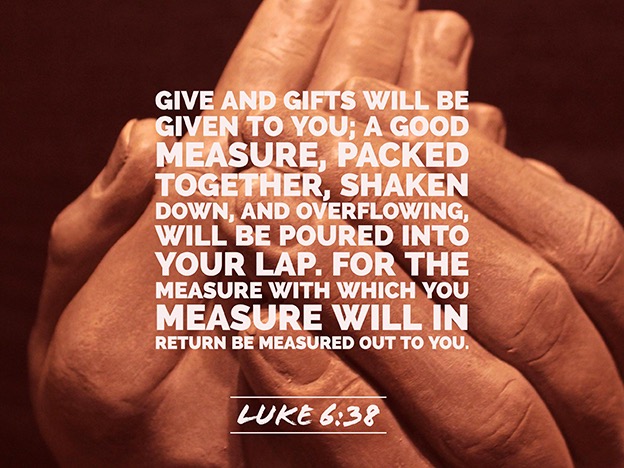
 We’ve probably all received an unexpected gift or act of love. Perhaps this past Christmas someone we didn’t know very well— and from whom we didn’t expect anything—brought us a gift or wrote us a nice card. Since we didn’t expect it, we may feel uniquely loved and valued. We’re touched by the act, possibly more so than gifts by our loved ones, which we expect on some level. The urge breaches to do something nice for that person, to offer them something tangible as well—to remit payment for the free, unexpected act of kindness. Since they did something nice for me, surely I must do something similar in return.
 We do not know who wrote the Book of Job, but it was likely written between the 7th and 5th centuries BC. The book centers on numerous tragic events that happen to Job, who himself is a good and holy man, and these events are the source of great suffering for him. The book contains varying discourses from Job, his neighbors, and finally from God. In the first reading for this Fifth Sunday in Ordinary Time, we hear of Job’s frustration, sorrow, and even anger at the events that have happened to him and the direction that his life has taken. Towards the end of the book, God speaks to Job in a wonderful, vivid discourse, reminding Job, and us, that God’s ways are far beyond us. At the end of the book, God makes all things right for Job, yet there is one thing in reading the Book of Job that you will find lacking: an answer to the question of why do bad things happen to good people.
 As cited in the Catechism (No. 2043), the Precepts of the Church maintain that each person has the duty to support the material needs of the Church. Of course a person fulfills this obligation according to his abilities. The Code of Canon Law also states, “The Christian faithful are obliged to assist with the needs of the Church so that the Church has what is necessary for divine worship for apostolic works and works of charity end for the decent sustenance of ministers” (No. 222). However, the Church does not mandate a “tithe” as such of any percentage of income or other resource.
 The Torah laws prescribe the offering of tithes A person offered to God, or “tithed,” one-tenth of the harvest of grain of the fields or the produce of fruit of the trees, one-tenth of new pressed wine and oil, and every tends firstborn animal of herd or flock (Leviticus 23 30-33. Deuteronomy 12:17. 14:22-29). Such tithing recognized that God had graciously bestowed these blessings upon man, and man in return offered a thanksgiving sacrifice of one-tenth of the “first fruits.”
 Although we may not have a rule of tithing, we do have the duty to support the needs of the Church, whether at the international, diocesan or parish level. Each of us should evaluate what we do “give back to God” through our support of the Church and charitable organization. For example, we should ask, “Do I give to God each week at least what I spend on entertainment, such as movies? Do I give to God at least one hour’s worth of my 40 hour pay check?” St. Paul in his Second Letter to the Corinthians (8:1-7) praised the generosity of the faithful in Macedonia: “In the midst of severe trial their overflowing joy and deep poverty have produced an abundant generosity According to their means — indeed I can testify even beyond their means — and voluntarily, they begged us insistently for the favor of sharing in this service to members of the church. “Each of us should be more of a “tither” than a “tipper” in returning a portion of our bounty back to God.