 I would like to revisit last Sunday’s Gospel reading. Last Sunday we heard our Lord say that love of God and love of neighbor are the summation of all the law and prophets. In light of this truth, where does love of self enter into the equation?
Love of God and love of neighbor is not possible without love of self. Now, do not read what I have not written. There is a distinction between love of self and being in love with oneself; the former must be embraced and the latter must be avoided. Love of God and love of neighbor will not be fully possible without a healthy, holy, and balanced love of self. So, what does love of self-look like?
There are three components to the human person: body, mind, and soul. All three components must be taken care of as best as possible. St. Irenaeus teaches us that, ”the glory of God is man fully alive.” In light of this, am I fully alive in the eyes of God?
Contemporary culture has been known to be too concerned at times with the human body, but even though society may overemphasize the body, that doesn’t mean that the Christian should neglect it. I’ve often joked that one of the things that I look forward to in the resurrection of the dead on the last day is the gift of a glorified body. While there is nothing wrong with that hope, I still need to do my part to take of my body here and now. The body is holy. The Church teaches us that the body is the temple of the Holy Spirit and it is to be honored even in death. Am I honoring God by taking care of my physical person?
The human mind is a wonderful reflection of our creating God who himself is the ultimate intellect. The mind is one of the areas in which we are created in the image of God in that we have reason and the ability to choose between right and wrong. The mind is an awesome mystery that we will most likely never fully understand. All that being said, it too needs to be taken care of and nurtured. Our intellects need to be allowed to expand and our mental and emotional health must be taken care of. Do we take time to learn new things about God, our neighbors, and ourselves? Do we seek to avoid stress? Do we seek balance in our daily living?
Finally, there is the soul which, along with the mind, is what reflects the divine in each of us. Unlike the body and the mind, the soul is made to be eternal. The soul must be open to God’s grace so that it may be continually transformed into a clearer reflection of God. Make no mistake; the overall health of the human person will suffer if the soul is not well. Do I pray daily? Do I make time for God apart from Sunday Mass? Am I actively seeking to grow in holiness?
There is only one of you. There will never be another one of you and no one can take your place. No one is an accident. The fact that you are is the direct result of God’s will and you have a purpose in building up the Kingdom of God here and now. Think about that fact and how wonderful that is. In light of that truth, love yourself. Take care of yourself: eat well, sleep well, avoid stress, stay away from harmful behaviors and unhealthy relationships, and pray always. If you don’t love yourself, you will never be able to fully answer God’s call to love him and your neighbor.
God loves you; you must love yourself too
 Due to the inexhaustible human capacity to come with excuses, I would like to begin this article by saying that there is no better time to start reading scriptures than right now. The scriptures, however intimidating they may seem, can provide for us deeper insight into the human experience and our relationship with our creator. The Holy Bible contains the story of our salvation and narratives that help us understand who God is, who we are, and the relationship between us. The parables that Jesus told to his contemporaries are just as relevant to the lives of twenty-first century Americans as they were for first century Israelites. The Bible can speak to our hearts and help us through the many experiences that life brings our way from the greatest of joys to the deepest of sorrows. For many, the question of where to begin might raise an issue when deciding to dive into the scriptures. The short answer is, anywhere, but it certainly helps if we have some more direction than that. Many people find it fruitful to begin with the Book of Genesis, or the Psalms, or the Gospels. No Matter where we begin, finding a good Catholic Study Bible can absolutely help us when we first approach scriptures. Knowing the context that each book was written, who it was written to and why it was originally written give us important details that can help us understand what the book is attempting to convey and what that means in our own lives. We must never forget however, that the scriptures don’t only let us know things about God but can truly allow us to know God. Our study of scripture should never be divorced from praying with the scriptures because prayer is the means by which we come to know our God: Father, Son and Holy Spirit. Asking the Lord in prayer to guide our reading of the Bible and bring us closer to him through it can absolutely enhance our experience of spending time with the scripture. This can certainly make our journey through the bible a much slower experience but that it not necessarily a bad thing. We must have patience with ourselves and understand that reading the bible is less about finishing the book and more about coming to know the story of our salvation and truly growing in our relationship with the Lord.
 Part I
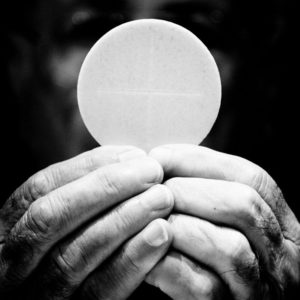 The Eucharist is the great sign and agent of this expansive communion of charity. “Because the loaf of bread is one, we, though many, are one body, for we all partake of the one loaf” (1 Cor 10:17). Here people enjoy a unique union with Christ and, in him, with one another. Here his love—indeed, his very self— flows into his disciples and, through them and their practice of stewardship, to the entire human race. Here Jesus renews his covenant-forming act of perfect fidelity to God, while also making it possible for us to cooperate. In the Eucharist, Christians reaffirm their participation in the New Covenant; they give thanks to God for blessings received; and they strengthen their bonds of commitment to one another as members of the covenant community Jesus forms.