Cathedral of the Immaculate Conception

Springfield, IL

  • About
    • Contact Us
    • History of the Cathedral
    • Liturgical Schedules
    • Parish Staff
    • Register with Cathedral
    • Subscribe to the Cathedral eWeekly
  • Sacraments
    • Baptism
    • Becoming Catholic
    • Matrimony
    • Vocations
  • Ministry List
    • Adult Faith Formation
    • Cathedral Meal Train
    • Cathedral Online Prayer Wall
    • Cathedral Concerts
    • Family of Faith
    • Grief Share
    • Health and Wellness
    • Spiritual Resources
  • Stewardship
    • Stewardship: A Disciple’s Response
    • Stewardship Form
  • Support
    • E-Giving Frequently Asked Questions
    • Give Online
  • Sunday News
    • Announcements
    • Cathedral Weekly
    • Livestream Feed
    • Submit a Mass Intention Request
    • Weekly or Announcement Submission

Nothing Can Separate Us From the Love of Christ

I continue to marvel at how the living Word of God in Sacred Scripture continues to speak to us with wisdom and relevance to our daily lives. In particular, the Second Readings we have been hearing from St. Paul’s Letter to the Romans have provided some much-needed encouragement for us during these challenging times. This week is no different, as we hear these words:

For I am convinced that neither death, nor life, nor angels, nor principalities, nor present things, nor future things, nor powers, nor height, nor depth, nor any other creature will be able to separate us from the love of God in Christ Jesus our Lord. (Rom 8:38-39)

A few months ago, I remember mentally inserting the word “coronavirus” into the list of those things that could not separate us from the love of God in Christ Jesus our Lord. At the time, there was so much uncertainty and fear, and these words rang out like a bell to break me out of my negative thinking and returned me to a place of hope.

If we are honest with ourselves, there is still a great deal of fear in our world about the coronavirus, not to mention the many other concerns that affect our lives. And when we are faced with these fears, we do well to hear these words of St. Paul and to bring this question to prayer: “Am I really convinced that nothing can separate me from the love of God in Christ Jesus?” Bring to the Lord whatever your anxiety is and insert it into the list above and be encouraged to move forward in hope.

It is important to note, however, that there actually is one thing that can ever separate us from the love of Christ – ourselves. Our unwillingness to accept His love by turning away from Him and freely choosing to sin pushes us away from His love, and in the case of mortal sin, we separate ourselves completely from His love. We can sometimes point to things outside of ourselves and claim that they are pulling us away from God, or that He is pulling Himself away from us, neither of which is true. He never stops offering His love to us and nothing that happens to us can break that bond.

Therefore, in addition to praying with the above passage, ask yourself: “When was the last time I went to confession?” Maybe I am in need of being drawn closer to His love (or restored to it in the case of mortal sin) which will have the effect of bolstering our faith in the belief that when we abide in His love in the state of grace, absolutely nothing can separate us from His love. His love has already won the victory, and that love promises us a share in His victory of eternal life for those who persevere in remaining in His love through grace.

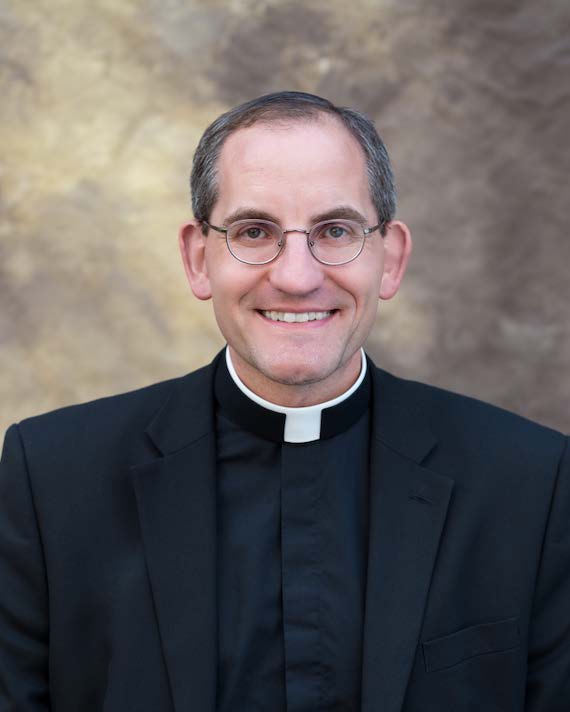
Father Alford is the Rector of the Cathedral and serves in the diocesan curia as the Vicar for Clergy, Consecrated Life, and Vocations.

Omnia in Bonum

“We know that all things work for good for those who love God, who are called according to his purpose.” (Rom 8:28)

These words from the Second Reading for this 17th Sunday in Ordinary Time are wonderfully encouraging words for us as Christians to hear. They remind us of the beautiful truth that the Lord is always working for our good, even when the circumstances of our lives seem to contradict that truth.

I do not intend to try to explain the theology of God’s unchanging providential will and how our free will relates to that plan. Just thinking about that can drive even the most astute theologian crazy! Rather, I would like to propose that we reflect on this truth as it has unfolded in our lives. Every one of us has encountered struggles, and while we may have not enjoyed them at the time, we usually come away from those experiences having learned some valuable lessons, lessons which help us as we move on in our lives. This is a basic proof for the validity of the words I referenced above from St. Paul.

As Christians, we are invited to have this belief not just after the fact, but before and during the events of our lives. In other words, when we anticipate something difficult that lies ahead for us, we should be reminded of this promise and know that no matter how difficult the future may be, God can use that in our lives for our good. And when we are in the midst of trials, we can face them with that supernatural perspective that we who love God believe that He has not abandoned us and that He can and will lead us to a place of good.

In all of this, we must remember that the good the Lord brings about is not necessarily according to our definition of good. The good of which St. Paul speaks is the good of our growing in holiness, which sometimes requires purification of our sinfulness. That can be painful, but it is always directed toward helping us to be more like Christ. Even when our trails mean suffering and possibly even death, our faith invites us to be reminded that our greatest good is not to be found here in this life, but it awaits us in the glory of Heaven. It was from that supernatural outlook that led St. Paul to write earlier in this same chapter of his Letter to the Romans: “I consider that the sufferings of this present time are as nothing compared with the glory to be revealed for us.” (Rom 8:18)

So as we face the ups and downs of life this week, maybe we could have these words in our hearts: “All things work for the good…omnia in bonum”, serving as an act of faith that helps us to be reminded that God our loving Father is always aware of our circumstances and is preparing good gifts for us, His beloved children.

Father Alford is the Rector of the Cathedral and serves in the diocesan curia as the Vicar for Clergy, Consecrated Life, and Vocations.

St. Mary Magdalene

A few weeks ago, I came across an article that Cardinal Timothy Dolan, Archbishop of New York, wrote in the June 28th issue of THE WALL STREET JOURNAL. In the article, he recounted an incident from several years ago when he was set to dedicate a church under the patronage of St. Peter. A person objected with the following words: “Why would you name a Church after such a coward, a sinner who denied even knowing the Lord when Jesus needed him most, at the hour of His arrest and crucifixion?” Dolan responded to the person in the following way: “But you’re a proud parishioner at St. Mary Magdalene Church. She was sure not a paragon of virtue for a chunk of her life. Yet, by God’s grace, she became a radiant, inspirational saint.”

This Wednesday (July 22), the Church celebrates the feast day of this radiant, inspirational saint. I think Cardinal Dolan hits the nail on the head by inviting us to see how, by God’s grace, nobody is exempt from the possibility of becoming a saint. Even though most people around St. Mary Magdalene had dismissed her and given up on her, the Lord never did. Jesus did not see in her a sinner – He saw in her a woman created by God, made in His image and likeness. He saw somebody who was broken and instead of turning away, He drew close to her and gave her the healing gift of His Divine Mercy. As a result of that, her life was changed, and she became the saint who had the privilege of being the first to see the Risen Lord after His Resurrection.

The story of St. Mary Magdalene is instructive for us on two levels. On the personal level, it reminds us that we are not defined by the sins of our past. Even if others (or ourselves) have turned away from us, the Lord has not. He continues to pursue us and desires to remind us that we are His beloved children and that He longs to grant us His healing mercy. And with His grace, we too can become saints! On the relational level, St. Mary Magdalene’s story invites us never to give up on others. When we see the faults and failures of others, we can be quick to criticize and even demonize them, even to the point of thinking they are not fit for the Kingdom of Heaven. In those moments, we are invited to look upon others with the gaze of Christ, the gaze He had for St. Mary Magdalene, and the gaze He has for us. That gaze in one that sees the goodness of each person and the possibility of their undergoing a life-changing conversion through the power of God’s grace.

I am sure that you can think of some examples of those whom you find it hard to see as living a saintly life at this point in their lives. Say a special prayer for them this week, asking for the intercession of St. Mary Magdalene, that they will accept the invitation from our Lord to embrace His healing mercy and be set on the path that will one day lead them to join the elect in the Kingdom of Heaven.

Father Alford is the Rector of the Cathedral and serves in the diocesan curia as the Vicar for Clergy, Consecrated Life, and Vocations. 

Share in the Glorious Freedom of the Children of God

When I was a newly ordained priest, I spent a fair amount of time teaching in the Catholic high school connected to the parish to which I was assigned. At the end of one of the classes, one of the students commented to me that I had said a certain phrase multiple times during the class. She did not mean to be disrespectful and I realize that she must have felt comfortable enough with me to share the feedback, so after some initial defensiveness, I felt grateful to know my tendency to repeat things.

That incident early on in my ministry has made me more self-aware, which is a good thing. And I find that when I reflect on my preaching, I notice a theme that I keep repeating, not so much because it is an unconscious space filler, but because it is so central to how I look at our faith. The theme is divine filiation, which means that we are adopted sons and daughters of God. We receive this adoption on the day of our Baptism, and the bond is rooted more deeply when we receive Confirmation.

When teaching His disciples how to pray, He invited them to begin by calling this important truth to mind as they begin with the words: “Our Father.” (Mt 6:9) I will sometimes give that as a penance in the confessional, asking the person to pray the Our Father, pausing on those first two words, considering how God looks upon them with delight as a loving Father. St. Ignatius of Loyola, founder of the Jesuits and a spiritual master, encourages that in beginning to pray, one should “consider how the Lord my God looks upon me.” (Spiritual Exercises, #75) We may be tempted to think that He looks upon us with indifference or even disappointment, but the fact of the matter is that He looks upon us with great love, for we are His beloved children. These two practices may sound rather simple, but they are indeed powerful. I would invite you to give them a shot this week and see if they don’t help you in embracing this key identity more fully.

In our Second Reading for this Sunday’s Mass, St. Paul speaks about how we are invited to “share in the glorious freedom of the children of God.” (Rom 8:21) I spoke about that theme this past Sunday in the homily that I preached at all of the masses. I had mentioned that as the clergy of the Cathedral have the great privilege of helping you to live that freedom more fully in your lives through our ministry to you. Below is a beautiful short reflection for your meditation on what it means to live this gift of spiritual childhood:

Don’t try to be grown-up. A child, always a child, even when you are dying of old age. When a child stumbles and falls, nobody is surprised; his father promptly lifts him up.
When the person who stumbles and falls is older, the immediate reaction is one of laughter. Sometimes this first impulse passes and the laughter gives way to pity. But older people have to get up by themselves.
Your sad experience of each day is full of stumbles and falls. — What would become of you if you were not continually more of a child?
Don’t want to be grown-up. Be a child; and when you stumble, may you be lifted by the hand of your Father-God. (St. Josemaría Escrivá, The Way, #870)

Father Alford is the Rector of the Cathedral and serves in the diocesan curia as the Vicar for Clergy, Consecrated Life, and Vocations.

From the Rector

“In all circumstances give thanks, for this is the will of God for you in Christ Jesus.” (1 Thess 5:18)

This is the passage that has been in my mind for the past several weeks as I have been preparing for my transition to this new assignment here at the Cathedral. In fact, my final bulletin article at my previous parish, St. Jude Parish in Rochester, began with this same verse, as I shared with my former parishioners my gratitude to have been a part of their lives for the past four years.

This weekend, as I spend my first weekend with you as the new Rector, I continue to give thanks to God. First of all, I give thanks for the wonderful leadership of Father House who served you so faithfully for the past six years. I have the privilege of working closely with Father House at our Catholic Pastoral Center and I know full well what big shoes I have to fill, but I am grateful that he has done a great deal to ease my transition through his leadership to you and his friendship to me.

I give thanks to Bishop Paprocki, the Pastor of our diocese and of this Cathedral Church, for entrusting me with the daily pastoral care of our Cathedral Parish. I am grateful to have the blessed distinction of being the first priest ever ordained by Bishop Paprocki and it has been my privilege to serve him in various capacities for most of my priesthood. Now I have the opportunity to serve with him and on behalf of him in this place that is so dear to both of us.

I give thanks for the privilege of having two newly-ordained priests join us here at the Cathedral. I have had the joy of serving Father Chineke and Father Vahling as their Vocation Director throughout their years of seminary formation. Their dedication to their formation was inspiring to witness. I have no doubt that their dedication was fueled by their desire to share their gifts with the people of God that they would one day serve as priests. Now, all of us will be the grateful recipients of the fruit of that hard work as they share the love of Christ with us here at the Cathedral.

Finally, I give thanks that I am coming back to the Cathedral, a place that is familiar to me. Many priests have some anxiety about moving to a new parish as there is so much to learn in a new assignment. While I have much to learn, I am much more at ease coming here because of my history with this parish. As you may remember, I lived in residence here for three years while I served as Bishop Paprocki’s Priest Secretary and Master of Ceremonies. While I did not have as much involvement as the priests assigned here, this was still my home and I felt very welcomed by you throughout that time. Even before my arrival, I have received that same warm welcome. I thank God in advance for the many opportunities of serving you in the future.

Father Alford is the Rector of the Cathedral and serves in the diocesan curia as the Vicar for Clergy, Consecrated Life, and Vocations. 

Until Next Time, Here or in Heaven

Last Sunday our own Father David Beagles offered his first Mass of Thanksgiving at the 10AM Sunday Mass and I was privileged to be asked by Father David to preach at it. In my opening comments I spoke of two weddings that I had been a part of in the past few weeks as well as Father David’s ordination with five other priests on the previous Friday evening. None of those events went as many had thought they would, but, nonetheless, God’s purposes were still achieved. As I come to my last weekend as rector of the Cathedral, in a world that has been turned upside down over the past three months or so, I find myself in the same boat. The chance to say good-bye and thank you is rather limited, but, as with so many moments in life, we simply have to

do what we can in the moment.

I have been a priest for eighteen years and nine and a half of those years have been here at the Cathedral: three and half the first time around and now ending six years as rector. There have been ups and downs, joys and sorrows, victories and defeats, but, all in all, the good and the graces have far outweighed the moments of testing and challenge. I was ordained a deacon and a priest in the Cathedral church. I sat on the restoration project’s steering committee. I remember those fifteen months when we made our way either to Sacred Heart or Blessed Sacrament churches for Masses. I witnessed the glory of the rededication of the church and I experienced the heartbreak of having to decide that the mission of our school could not continue on any longer. I have been blessed to see new ministries and faith formation opportunities take shape in our parish these last few years because God is good and always working to renew his Church. Simply put, Cathedral is a part of who I am. It is a part of my spiritual DNA and nothing will ever change that.

I wish to thank Bishop Paprocki for the honor of being entrusted with the care of the Mother Church for these past years. I wish to thank Fathers Seth, Marty, Braden, Wayne, Michael and Dominic, the six priests who faithfully served you with me these past six years; to watch them grow in their priesthood from the very beginning has been a great honor for me. I thank Deacon Larry and Deacon Scott for their constant assistance and for their counsel to me in seeking what God was asking of us as a parish. I thank Grant and Ryan, our present seminarian interns, and those before them. My gratitude goes to the parish staff, to Lisa, Jan, Mark, Sr. Francella, Vicki, Haley, and Erick, as well as to all who have formerly served this parish in my time as rector. In a special way I wish to thank Bill Vogt for his loving care of this parish and its priests. Since my first days in the seminary, Bill has been a part of the Cathedral and his generous hospitality continues to help make it a home for the many priests and seminarians who find themselves here.

Finally, my thanks to all of you. Whether you are a parishioner who is involved in multiple parts of the parish’s life or the anonymous Mass goer who regularly comes to the Cathedral. For the smiles, greetings, gratitude, encouragement, trust, and openness that you have shared with me over these years, I thank you. Priests come and go but you remain. The clergy have an effect on parish life, but the parish exists because of the faithful so never be afraid to take ownership of it because it is yours. I expect you to continue to be a center of faith and hospitality. If not, I will be sorely disappointed. Know that wherever I am asked to go, I will carry the Cathedral parish in my heart and prayers, especially when I go up to the altar. With love and gratitude, I ask our good Lord and the Blessed Mother, our patroness, to continue to abundantly bless you and yours. I look forward to seeing you again in normal times or, if not, then God-willing in the Kingdom of Heaven.

Father Christopher House is the Rector of the Cathedral and serves in various leadership roles within the diocesan curia, namely Chancellor and Vicar Judicial.

My Deepest Gratitude

To the Cathedral family, I want to extend a very warm “Thank You” for all you have done for me in the past two years at this assignment. You have had the burden (I hope it’s been mostly light!) of forming my priestly heart, as this was my first pastoral assignment as a priest. I’ll never forget all that you have done for me, and all that you’ve taught me about how to love as a priest loves. Know that my prayers for all of the beautiful people I have met here continue as I go to Decatur–and I earnestly ask your continued prayers for those poor souls in Decatur that have to deal with me as their pastor now! Please do keep in touch, and we will see each other in the Eucharist.

Peace, Fr. Friedel

Congratulations Father Beagles!

In the midst of working to return to normal living, the diocesan church, as well as our parish family, was given multiple blessings on Friday evening, June 19th, with the ordination of six new priests and one new deacon. Among those being ordained to the Priesthood of Jesus Christ was one of our own: Father David Beagles.

As you know, for the past several years Father David has been studying at Sacred Heart Seminary in Hales Corners, Wisconsin, just outside of Milwaukee. The past five years have been a time for him to be formed more and more after the heart of Jesus, the Good Shepherd. For many years, Father David has been a loving and faithful son of this parish, serving as a weekday Mass server before his departure for studies. If you talk to members of the faithful in other parishes where Father David has served during his time in the seminary, you will find the same consistent comments: loving, compassionate, gracious, generous, faith-filled, and kind.

We give thanks to God that Father David answered the Lord’s call and that God’s grace has led him to this awesome moment. How blessed we are in our brother, the son of the Cathedral Parish. Father David will soon be moving to St. Francis Solanus Parish in Quincy as the parish’s parochial vicar. Father David, along with his new pastor, Father Steven Arisman, will have the challenge and blessing of being the first diocesan priests to serve the people of St. Francis in the parish’s 160-year history, succeeding the Franciscan Friars.

Along with Father David, the Cathedral’s two new and incoming parochial vicars were also ordained: Father Peter Chineke and Father Dominic Vahling. Please pray for these men and all those ordained with them as they prepare for their first assignment. I know that Father Peter and Father Dominic will serve this parish well.

One of the on-going effects of the pandemic is our inability at present to offer Father David a proper celebration for his ordination. For those who may wish to send him well wishes or a token of congratulations, you may do so by through the Cathedral office, either by mail or by dropping it off; we will see that it finds its way to Father David.

Additionally, we had also hoped to have a celebration for Bishop Paprocki this Sunday evening as Monday, June 22, marks the tenth anniversary of his installation as the ninth bishop of our diocese; that event will be celebrated by the faithful at a later date. Nonetheless, please remember Bishop Paprocki in your prayers that the Lord will continue to strengthen him with the graces needed to be a good and faithful shepherd and successor of the Apostles.

These few months have been trying for many of us in many ways yet God continues to pour out his goodness and grace. These celebrations are proof of that fact. May we have hearts and lives open to receive the good things that God wishes to bestow on us in every season!

Father Christopher House is the Rector of the Cathedral and serves in various leadership roles within the diocesan curia, namely Chancellor and Vicar Judicial.

Corpus Christi

This weekend we celebrate the feast formally titled the Solemnity of the Body and Blood of Christ, but popularly known as Corpus Christi. Every time the Church gathers to celebrate the Mass, the Eucharist, which is the body, blood, soul, and divinity of our Lord, is at the center of our worship. We must avoid the danger of growing lax in our reverence and awe due to our familiarity with this great and wonderful sacrament, which is one reason why the Church dedicates a particular day of solemnity to focus solely on this mystery.

Personally, among the many sorrows of these months of pandemic has been the separation of the faithful from the Eucharist. The Eucharist is the life source of the Church, the ultimate manifestation of Christ’s presence among us, and it has been the strength of the faithful for the Church’s entire history. It is not a sign or symbol, because a sign or symbol points to another reality. The Eucharist is a reality because the Holy Spirit changes the humble gifts of bread and wine that we offer into the real presence of Jesus. In extreme circumstances spiritual communion serves as a solace and source of grace but it is not the same the physical manifestation of the Lord Jesus under the appearance of bread and wine. You may remember one of Coca-Cola’s past slogans of “It’s the real thing.” Truer words could not be said regarding the Eucharist.

Some of you may have attended an adult faith formation series last year with Fr. Stock on the 20th century American Catholic writer Flannery O’Connor. Amongst her writings is a letter where Flannery recounted being invited to a dinner party and feeling out of place in a group of she termed “intellectuals.” She went on to say that she said nothing all night until the conversation turned to the Church and the Eucharist and that her hostess talked about that, even though she had left the practice of the faith, she still thought that the Eucharist was a wonderful “symbol.” Having heard enough, Flannery recounted: I then said, in a very shaky voice, ‘Well, if it’s a symbol, to hell with it.’ That was all the defense I was capable of but I realize now that this is all I will ever be able to say about it, outside of a story, except that it is the center of existence for me; all the rest of life is expendable.

May we have the same grace that Flannery O’Connor did to recognize just how vital the Eucharist is for us. The Church should not have to impose an obligation on participating in Sunday Mass; the Eucharist should be incentive enough. The Eucharist has been the strength of martyrs, it has comforted the faithful over the centuries in the face of adversity, it is the source and summit of our life of faith, and the remedy for our mortality that will lead us to everlasting life. May we always approach the altar to receive this most precious gift with worthy hearts and lives.

Father Christopher House is the Rector of the Cathedral and serves in various leadership roles within the diocesan curia, namely Chancellor and Vicar Judicial.

The Presence of Christ

I have often referred to the older woman who lived across the street when I was growing up. She was a gentle soul named Pani. It was only until many years later that I learned that “Pani” really meant “Mrs. or Miss” in Polish! She would often speak of her life during the depression in Poland and of course, her experience of WWII. She and her husband had just gotten married when they both were carried off to different concentration camps. Neither knew the fate of the other for well over a year and she would speak of these days with great emotion and pain. I had no words and could only intently listen. I asked her what is was like to be separated for so long and she labored to communicate, in broken English, her feelings of loss, anxiety, fear and uncertainty. She waited, hoped and put her trust in God. Much to each of their surprise, an amazing, emotional, and triumphant reunion took place one day and they both realized that their fears and worries had no merit and they could be together again. It did not matter that all their physical possessions were gone; they had each other.

I asked her one day what became of the love she had for her husband during that time away and how it could be sustained. She remarked, without missing a step that it continued to grow and strengthen in her heart and soul. His love was alive in her and hers in him. They were never really apart. When they saw each other again it was as if time never passed and they continued on. The time of separation strengthened their love in so many ways. They were strengthened and given a strong resilience towards life’s disappointments and hurts. All this made their life together even more special. They appreciated each other all the more.

Many have been away from the Eucharist, the very Body and Blood of Christ, for a long time. Due to a dangerous pandemic, we were quickly separated from the physical reception of this eternal source and Presence of Love Incarnate, inspiration, and strength. As church teaching reminds us, as efficacious, beautiful, and grace filled the sacraments are, God is not bound by them. He always finds a way. Even through the pain of physical separation from the Body of Christ, the very Presence of God stirs and works in each member of the Body of Christ so that the Divine Image can still be revealed, and we can become precisely what we are meant to eat. The love relationship fostered with God cannot be taken or diminished in one who truly desires it and believes.

The community of believers receives through the gift of the Eucharist the power and the presence to touch and heal in the name of the One they desire to welcome within. So many wonderful Eucharistic blessings have taken place over the last several weeks. Families have been brought closer together, the hectic and frenzied pace of life has been put on hold for a bit, deeper conversations with those who matter the most have occurred, generosity toward those who are struggling, poor, and bearing the brunt of the pandemic’s economic fallout is being demonstrated, our dependence upon God is being realized, our need for community, social interaction and support confirmed, the earth is healing a bit, our call to solidarity is being realized and the list goes on and on in terms of how, even in spite of the absence of the physical reception of the Eucharist, God is inspiring, working, transforming, forming, and redeeming the world piece by piece. All these things and more bring hope to those who can easily fall into despair. They are lights in the midst of darkness.

Nothing can stop grace. But we also realize that separation, while bearable for a time cannot be allowed to last forever. We must connect again. My friend Pani needed to physically embrace her husband again in order for their love to continue to grow more deeply. We need to embrace the Eucharistic presence of God and our community of faith again in order to fully be who we are called to be. The sacred Eucharistic meal is a celebration of intimacy, the reunion of two loves in constant search of and longing for the other. What wonderful reunions are happening all over the world!

It is now within our grasp, especially after the experience we have endured and continue to endure, to change the way life is lived and to more intentionally put into practice the Beatitudes the Divine Guest has revealed. We are asked to be like Christ and work to create a world of sufficiency, not deficiency, where no longer does the greed of some create the want of others but where all of God’s children can find a home and a place at the table of life. The One who makes a home within calls us to live a life that transforms! It is time, more than ever, to allow the Eucharistic Presence of Christ to change us so that we can become real agents of change for others. People, our environment, and economic systems are hurting. We have to set our relationships with all things straight and allow justice, equity, peace, sustainability, accountability, and mercy order all things. This is the Eucharistic way.

If we see our relationship with the Body and Blood of Christ simply as something necessary for our personal salvation, then we are wrong. It is never just about me and what I think I need, want, and merit. If we really recognize Jesus in the Breaking of the Bread then we will also recognize him in the poor, the outcast, and all who cry out for healing and wholeness. What we do for them we do for Christ. The very presence of God touches the depths of the human soul and visits a part of us that no human being can ever hope to explore. We are God’s. It is out of that relationship that we live our life. It is to God that we have allegiance.

Throughout history we have hurt so many people in the name of progress. Throughout history we have trampled upon our environment in the pursuit of wealth and power. Throughout history we have done everything possible to live our lives without God. Throughout history we have forced so many people to conform to a certain way of thinking and persecuted them because they looked and believed differently than us. Have we learned any lessons during our time away? If so, then the reunions with the physical Presence of Christ that are happening all over the world ought to set all of us on fire with the transforming Presence and love of the Holy Spirit! In how we order our lives, set up our priorities, interact in the world, speak to others, and advocate to accomplish, what will people see? It is hoped that they see people who believe what they believe not simply for their own merit but because they truly desire to become the One they receive!

Fr. Mark Suslenko is Pastor of the Community of Ss. Isidore and Maria in Glastonbury, CT. Fr. Suslenko publishes reflection articles regularly to his parish’s blog.

How to Start Reading the Bible in 10 Steps

I meet tens of thousands of people a year at different events. Most of them are Catholic Christians who want to start reading the Bible but don’t know where to start.

So if you’ve ever wanted to go deeper into God’s Word but haven’t known how to approach it, allow me to suggest a few tips (so you can learn from my mistakes).

Like anything else, if you want to build something … in this case, your knowledge and love for the Scriptures … you don’t just grab a hammer and some nails and start pounding. To ensure that you don’t just jump in and then quit out of frustration or confusion, there are certain things you can do to be more successful.

We’ll attack this on three levels … the tools, the blueprint, and the construction. By the end, you’ll have ten total steps to help you build a biblical fortress able to resist anything the devil can throw at you.

The Tools
Let’s start with three things you should do before you start studying.

  1. Pick a time, but not just any time. Commit to a daily time that you’ll open God’s Word but be sure it’s an intelligent time. If you’re really tired, for example, then reading the Bible once you’re in bed probably isn’t the best time. Pick a time when you’re totally awake so you can give your full attention.
  2. Pick a Bible that you can understand. Get yourself a good Catholic Bible (that way you have all seventy-three books), but if you don’t have one right now, that shouldn’t keep you from reading. The best translation today is the one that you already have. It’s important that your Bible is comfortable to read, light enough to take with you, durable enough to really use, and inexpensive enough that you don’t feel bad writing or marking in it. If you haven’t seen it … I highly recommend the Revised Standard Version—Catholic Edition for personal study, it’s great. You might also want to have a copy of the New American Bible, which is the translation we hear at daily Mass and on Sundays (NAB). Just remember, your Bible is like a telescope—it’s not meant to be looked at but, rather, looked through.
  3. Have other books that help you understand the Book. There’s a myriad of solid Catholic ancillary materials and resources to help you understand the Bible better—like those available through Ascension and from other fine Catholic publishers. It’s also great to have The Catechism of the Catholic Church handy, so you can use it as you study.

The Blueprint
Now here are three things you can do as you study:

  1. Pray, and then pray some more.
    Before you open God’s Word, ask the author of that word—the Holy Spirit—to be present in a bold and fierce way. Quiet yourself, spend some time in silence, and hold the Bible in your hands as you pray. Ask God, through the power of his Spirit, to open your mind, your eyes, and your heart to his truth. Thank him for the gift of his Word, a gift that millions have given their lives to defend and to offer you the freedom to read and pray. It doesn’t have to be a long prayer but take some time … this is the most important step in Bible study.
  2. Have a plan.
    If you were planning on reading the Bible cover to cover … don’t. The Bible isn’t a novel; it wasn’t designed to be read from Genesis straight through to Revelation. We must learn the story of salvation history—and I cannot recommend The Great Adventure series of resources highly enough—whether you’re an adult (TGA) a teen (T3) or a middle school student (Encounter), we’ve got you covered!

    And after you catch the big picture of the Bible, then you can focus on smaller portraits. I’d pick one book that you are going to start in and make that book your focus for a while. If you are starting from scratch, I’d suggest the Gospel of Mark. St. Mark’s Gospel is the shortest and easiest to understand; you already know the main characters and plotline and its personal significance and relevance to your faith walk. The Gospels are the hinge-pin to the entire Bible, they’re a great place to start and get into that reading “rhythm.”

  3. Get the background.
    If you do start in a Gospel, take the time to learn about who the author was, who he was writing to, and what the basic themes are of his Gospel account. Ask yourself what makes that specific account different than the other three. Don’t just jump into a letter of St. Paul without knowing what is going on in the city to which he is writing. If you are reading a prophet, know what was going on in his world at the time.

‘Where do I learn these things?’ you might ask. Read the Introduction to the Gospel on the pages preceding it. Use one of your additional books or resources to help you. When you know what is going on with the author and the audience, the words will jump out at you in a much different way and you will have better insight.

Building up Love for God’s Word
Finally, let’s discuss four pieces of wisdom you should remember while reading the Bible and beyond.

  1. Less is more.
    Don’t just open up the Gospels and read until you get tired or for fifteen minutes because that’s what you committed to doing. Most Bibles break down the chapters into subchapters. If you began in the Gospel of Mark, for instance, you shouldn’t just start in verse 1 and continue through verse 45 (the end of the chapter). Instead, take verses 1-8 and spend fifteen minutes meditating on them. Take just verses 9-11 and meditate on them. That first chapter (the 45 verses) should be broken down into about ten different studies alone. Studying the Scriptures is not like driving across the country … it’s not about how much distance you cover in a set amount of time. Enjoy the time, roll down the windows, and take everything in.
  2. Periods are there for a reason.
    The periods at the end of each sentence are almost as much a gift as the words that precede them. Each little dot is an invitation to take a breath and reflect on what you just read and prayed. At each period, take a moment to envision the story that’s unfolding. If you are reading about the Baptism of Jesus (Mark 1:9-11), don’t just say ‘Hey cool, Jesus is getting baptized.’ Go deeper. At each period, put yourself more deeply into the story … at his baptism, where are you? Are you on the shore, on the mountain overlooking the scene or in the water right next to Christ? Is it hot out? Does the water smell bad? Is it noisy or peaceful? Let the story come alive.
  3. Journal.
    As you are writing and verses confuse you or questions arise, write them down in a journal. Don’t allow yourself to get hung up on tough verses. Scribble down the verse number with a question mark and keep moving. Later on you can search the footnotes, other books, or just ask someone who knows the Bible well for more help. The journal isn’t just for questions, though. You should also use it to write out reflections that the verses stir within you. Write down images God gives you in your imagination. Record key verses that stand out to you spiritually. God will reveal a great deal about yourself to you when you let him.
  4. Put the Book down.
    Don’t become a bookworm who never takes their eyes off of the page. The Bible is the Living Word (John 1:1-5, Hebrews 4:12). It lives and breathes well beyond the page that contains it. Share what you learn. Write out passages and post them up in your room, locker, or office. Email verses to people. Put them on the fridge. Just like the Eucharist, the Word should be taken, blessed, broken (down), and shared. The greatest gift you can give someone is to live a life that mirrors the Gospels … reflecting God in all you do. The second greatest gift is to invite others to peer into that mirror.

This Book Will Change Your Life
OK, so that’s a substantial start. Get the tools, pull together your blueprints, and start building your love for God’s Word. There are several ways to begin reading Scripture … these are just what I’ve found over the years to be the best, most realistic steps to begin and keep reading it daily.

And don’t just think that you have to study every time you open the Bible. It’s great if you set aside thirty to forty-five minutes every day to begin studying, but that doesn’t mean you can’t flip through the pages in other books like the Psalms, Proverbs, Sirach, Wisdom, Ecclesiastes, or in St. Paul’s letters … you’ll be blessed by all of them.

I also strongly recommend the Book of James in the New Testament. Romans is a gorgeous and extraordinarily well-written book but is sometimes a little ‘too deep’ for the biblical beginner. While Romans teaches us how to get to heaven, James teaches us how to live on earth (with people who might annoy you and try your patience). It’s great.

All I can tell you from my own experience is that the Word of God has changed my life. It has deepened my experience of the Eucharist, both at Mass and in Adoration. It has deepened my love for our Mother Mary and my gratitude for intercessory prayer and the communion of saints. It has deepened my love for the Church, the papacy, and basic human dignity. It has fueled a fire within me for truth, the need to proclaim it, defend it, and uphold it—especially in this morally relative culture. I pray it will do the same for you.

Mark Hart has helped transform Catholic youth and young adult Scripture study in parishes, homes, and classrooms with his wildly popular Bible study programs, T3: The Teen Timeline (for teens) and Encounter (for pre-teens), as well as Altaration (a program about the Mass for teens). Mark’s humor and his passion for Scripture are helping hundreds of thousands of Catholics, young and old, begin to read and study the Bible in engaging, fun, and relevant ways. A devoted husband and father of four, Mark is also the main author and presenter in The 99, A New System for Evangelization.

« Previous Page
Next Page »

Liturgy

Sunday Masses (unless noted differently in weekly bulletin)
Saturday Evening Vigil – 4:00PM
Sunday – 7:00AM, 10:00AM and 5:00PM

Weekday Masses (unless noted differently in weekly bulletin)
Monday thru Friday – 7:00AM and 5:15PM
Saturday – 8:00AM

Reconciliation (Confessions)
Monday thru Friday – 4:15PM to 5:00PM
Saturday – 9:00AM to 10:00AM and 2:30PM to 3:30PM
Sunday – 4:00PM to 4:45PM

Adoration
Tuesdays and Thursdays – 4:00PM to 5:00PM


CatholicMassTime.org

Parish Information

Parish Address
524 East Lawrence Avenue
Springfield, Illinois 62703

Parish Office Hours
Monday thru Thursday – 8:00AM to 4:00PM
Fridays – CLOSED

Parish Phone
(217) 522-3342

Parish Fax
(217) 210-0136

Parish Staff

Contact Us

Contact Us

Copyright © 2025 · Log in