Cathedral of the Immaculate Conception

Springfield, IL

  • About
    • Contact Us
    • History of the Cathedral
    • Liturgical Schedules
    • Parish Staff
    • Register with Cathedral
    • Subscribe to the Cathedral eWeekly
  • Sacraments
    • Baptism
    • Becoming Catholic
    • Matrimony
    • Vocations
  • Ministry List
    • Adult Faith Formation
    • Cathedral Meal Train
    • Cathedral Online Prayer Wall
    • Cathedral Concerts
    • Family of Faith
    • Grief Share
    • Health and Wellness
    • Spiritual Resources
  • Stewardship
    • Stewardship: A Disciple’s Response
    • Stewardship Form
  • Support
    • E-Giving Frequently Asked Questions
    • Give Online
  • Sunday News
    • Announcements
    • Cathedral Weekly
    • Livestream Feed
    • Submit a Mass Intention Request
    • Weekly or Announcement Submission

How to Trust God When You’re Filled With Doubt and Disappointment

Like so many high school seniors, I had a plan for how the rest of my life would go. Since eighth grade, I had been completely in love with the idea of attending the U.S. Naval Academy. I felt a call to serve God by serving my country. I spent my last year and a half of high school applying to get in, forming my academic schedule around the classes the selection committee encouraged, and choosing my extracurriculars accordingly. I made it to the last stage of the application process and then, suddenly, didn’t get in. After stretching myself thin and shaping my life to be the perfect applicant, the plans I had made fell apart.

When the rejection email came, I was sitting in my blue Prius in the parking lot at the gym, listening to a Christian radio station. After I read the email, I turned the radio off. I had been praying so fiercely for so long. I prayed that I would attend the U.S. Naval Academy. I prayed for the wisdom to know if this was where God wanted me to go. Through all of this prayer, I genuinely believed that God’s will was for me to be accepted. So when the rejection came, I felt like God had disappointed me. I immediately began trembling and tears filled my eyes. In a moment of pure reflex, I called my mom and told her what happened. She kept her voice steady and reassuring, but I knew she had started crying too.

Before pulling out of that parking lot to go home, I turned the Christian radio station back on. It didn’t seem very significant at the moment, but in retrospect, it was a step toward deciding that I wouldn’t give up on God because of my disappointment, but instead lean into him.

The months that followed were difficult. I didn’t really have time to process any of the disappointment and confusion I was feeling. I had one month to choose a college. Even though my own plans were derailed and my heart was broken, I could still feel that God was present. As I shared the news that I didn’t get in, I was treated with tender compassion and sympathy. Friends sat with me in the library for hours, making lists of pros and cons at new schools and brainstorming career paths. Even friends whom I hadn’t seen in months were sympathetic and supportive. With only two weeks left to spare, I chose Siena College as my destination for the fall. Sitting in the car with my mom, driving home from my last college visit, I was suddenly overcome with this feeling that God wanted me to go to Siena. I couldn’t quite explain it, and while there were several things I really did like about the school, the feeling that God wanted me there helped me make my final decision.

With every new day at Siena, I find another reason why I’m meant to be here. During orientation weekend, I met Sam, who has now been my best friend and my boyfriend for a year. He supported me through a very difficult freshman year, filled with family deaths, depression, and other challenges. Along with Sam and other new friends, Siena has given me the opportunity to grow in my faith and to continually discern what God wants me to do in the future. After having a concrete plan for so long, I’m finally able to be okay with not knowing exactly what’s coming next. I’ve learned that when I feel lost, God knows where he’s leading me, and that God will put people in my path to help me along the way. By trusting in God, I was able to find joy in the present moment and plan for the future while surrendering it to his will, and truly meaning it. Today, as I’m making a new plan for the future, I find joy in taking hikes with my family, in the relationship I’m building with Sam, and in the friendships I’ve made at Siena.

Recently, I was at Sunday Mass when one of the readings was about the healing of Jairus’ daughter in the Gospel of Mark. In this reading, Jesus says to the little girl in need of healing, “Talitha koum,” meaning “Little girl, I say to you, arise.” This line struck a chord with me. It brought me back to how I felt last year when the time came for me to pack up and leave for college. I felt like Jesus was standing by my bedside as I laid there helplessly, unable to move. I still didn’t feel like I was ready to move on from the heartbreak of being denied from the Naval Academy; I hadn’t even been able to process the loss fully. I felt as though I couldn’t try again or stand without fear of falling and at that moment, Jesus said to me, “Talitha koum.” Even though I couldn’t see the path ahead, I felt God was guiding me where I needed to go.

In my rejection from my dream school, God didn’t give me the answer I preferred, but it was the answer I needed. It’s incredible to look back and see that had my plans worked out, I would most likely have never met my community of friends at Siena. I’ve had opportunities that I never would have had otherwise. My experience has taught me that it’s okay to make plans, but it’s even better to make them with an attitude of surrender. And if those plans don’t work out, I know that God will be there to remind me, “Talitha koum.”

Kelsey Baron enjoys writing about her faith and speaking on the subject of chastity. In her free time, she can be found hosting friends at her family’s house on Lake Wallenpaupack, rocking her Birkenstocks around Siena College, and praising God through song on her ukulele.

5 Creative Ways to Bring Lent Practices to Life

In the past, I never paid much attention to Lent. The little I had heard about this season in the Church just led me to believe that Lent was a time of personal austerity, when you weren’t supposed to enjoy things (especially chocolate!). It seemed to me that Lent was mainly about following outward restrictions. But in the last couple of years as I’ve drawn deeper into my faith, I’ve begun to realize that Lent is an important season that prepares us spiritually for the joy of Easter. Of course, sacrificing a favorite food or pastime and giving to others during Lent are important ways to engage with the themes of the season, and I’ll try to do both this year.

However, I’m learning that it’s not so much about following the same rituals year after year, but about opening ourselves to an increased understanding of the true meaning of the crucifixion and the resurrection, and sharing that with others. So by adding a deeper spiritual dimension and creativity to my Lent practices, I feel that my preparations during Lent will enhance the celebration of Easter and all that it means.

And nowadays there are many creative ways to recognize Lent. Last year, I was given two huge (and delicious) cakes, both from kind church friends who’d each decided to bake a cake every day during Lent and give it away. This was their way of giving something to others as a reminder of how God loves us. So, this year I’ve decided to pay more attention to Lent as a season of repentance and renewal. I’ve been looking for more creative ways to bring Lent to life in my daily devotions. If you’re considering what to do during Lent, these ideas might inspire you.

Make your own cross
Making a cross to act as a centerpiece for prayer and worship can actually be quite an easy craft. It can be as simple as binding two pieces of stick together and hanging it on the wall or displaying it in a prominent position. A cross made from recycled materials can look very beautiful, like one made from clothespins, and the whole family can get involved in prayerfully crafting one for your home. If you’re keen on DIY, you could make a more sophisticated cross, such as one made from different colored woods. Or consider a fabric cross, like a stunning patchwork cross, or perhaps embroider a stitched cross.

A couple of years back, my adult daughter took part in a “Peaced Together” course, focusing on how beauty can come out of brokenness. One week, she made a stunning mosaic cross from crockery shards. It reminded her that even though she’d been through some difficult times and was in some ways “broken,” beauty could still shine through.

Meditate with symbols of the season
Having a focus for prayer, Bible reading and meditation can be very helpful. Lent in a Bag is a perfect example. This set of meditations features a rock, sand, a human figure and a candle placed in a fabric, paper or plastic bag. Each object is accompanied by a Bible verse and reflection prompts. For example, “Sand represents Jesus’ 40 days in the wilderness. What wilderness experiences have you lived through? What did you learn?” Lent in a Bag could be used for individual or communal prayer. For example, you could invite family members or friends to choose a symbol and share its significance to them.

Look at visual prompts
Displaying small Lent-related objects around the home (or even at your workplace if it’s appropriate) is another way to bring the season to life. Our church once gave out a large nail to each member as a reminder of Christ’s sacrifice – I taped mine to the freezer door so I saw it multiple times each day. Images are also great for this. Consider some of the events in the last few weeks of Jesus’ life, and find some pictures to remind you of them. Choose one each day and display it in a clip frame or on a pinboard. Each time you notice it, spend a moment in reflection about its significance for you or offer a short prayer to God.

Use a Lent calendar
A calendar is a wonderful way to keep track of your devotions during Lent. The Busted Halo Lent “Fast, Pray, Give” calendar features a daily inspirational quote and a concrete action to take each day, such as donating to a charity, volunteering your time, or attending a weekday Mass. A calendar for coloring each day is also a good way to focus your thoughts and prayers. Praying With Color has several printable calendars including a spiral, boxes, and a stained glass window, together with instructions to get you started. Or, why not make your own calendar? Take a large sheet of paper and divide it into 40 squares. Then, use one square a day – you could stick photos of people you’ll be praying for, draw a Lenten symbol, or add a scripture verse each day. You can even engage the family in planning what to put in each day’s square.

Keep a Lent journal
Many people find that keeping a written journal during Lent is a valuable way of recording what they discover over the weeks. Some like to take a deeper dive into the Bible reading for the day or imagine they’re an observer at key events in Jesus’ ministry. But often, a prompt makes the process easier, especially if you’re new to spiritual journaling. Amy Brooks, blogger at Prayer, Wine and Chocolate, has a thought-provoking prompt for each day of Lent that I always find useful.

So as I observe Lent this year, I intend to be as creative as possible, both to enhance my appreciation for Christ’s sacrifice and also to share that appreciation for God’s love with others around me. Maybe you could consider introducing some new and creative ways to observe Lent in your home too!

Elizabeth Manneh is a freelance writer, sharing her time between the UK and The Gambia, West Africa. She’s written for many publications, including Huffington Post, ReadersDigest.com, and The Good Men Project. She’s on a lifelong exploration to find ways of bringing God into all aspects of her everyday life.

Trust In His Promises

Experiencing anxiety when someone we love is ill can be extremely difficult. As faithful people, often our first (and best) response is to seek the Lord’s help. Waiting for an answer to that prayer can also be anxiety-producing. It must have seemed so confusing to Mary and Martha, knowing how much Jesus cared for their brother, that he would delay coming to his assistance.

Jesus loved the family from Bethany, but he loved the Father more. Not only did he know all would be well, but more importantly, it was also to be an opportunity to glorify Him in the delayed response. In the reading from Romans, St. Paul reminds us we are not just flesh, but also spirit. Jesus demonstrates through his response to Lazarus’ illness and death the importance of answering prayers ordered to renew, strengthen, and heal the spirit over physical healing. Though He promises Lazarus’ illness will not end in death, and it does not … eventually, Lazarus, like all of us, does indeed die. Jesus’ discussions with both Mary and Martha in today’s Gospel illuminate how His answer to our prayers should first and foremost lead us to deeper faith and hope in Heaven.

Remember, Martha is the sister upset, during Jesus’ previous visit to Bethany, that her sister is sitting at his feet instead of helping with the work of serving. She is taught, then, by the Master, of the need to balance our service and work with making time for the essential work of prayer. She’s taken his words to heart. Martha demonstrates her strength of faith within the anxiety and grief of her brother’s illness and death. Although devastated at the loss of her brother, she clings to her faith in the resurrection.

Later in the Gospel Martha says to Jesus, “‘I know he will rise, in the resurrection on the last day.’ Jesus told her, ‘I am the resurrection and the life; whoever believes in me, even if he dies, will live, and everyone who lives and believes in me will never die. Do you believe this?’ She said to him, ‘Yes, Lord. I have come to believe that you are the Messiah, the Son of God, the one who is coming into the world’” (John 11:21-27).

As we pray and the answers do not come, we can feel abandoned or punished by God. Like Martha, we must cling to the truth and enter as she does into dialog with Jesus. Prayer is the vehicle of that dialog. Simply put, prayer is a conversation. Remember, it is meant to be a two-way discussion. How can we hear God when he seems quiet or distant? We can turn to the Scriptures; it is the Word of God.

Martha draws from the promises of Scripture to seek comfort in her brother’s death. She recalls the promise of the resurrection, her own faith strengthened by her ability to learn from her earlier conversation with Jesus to balance work and faith life. Her words demonstrate she has learned the blessings that come from stepping away from the constant doing, to be with him and listen, since her initial encounter with Christ.

The better part Mary chose during his visit to Bethany, was to sit at the feet of Jesus. Mary acted aware of our need to turn to Jesus in prayer, to listen, await, and most of all, trust in His promises. The promise that he loves us, is always with us, and he can bring good into every situation in our lives. Above all, God is to be glorified in all things.

Allison Gingras is the founder of ReconciledToYou.com — where she shares her Catholic Faith and Relationship with Jesus with laughter and honesty, and how it is lived in the everyday, ordinary of life! Allison hosts A Seeking Heart with Allison Gingras recorded on FB Live Mondays 12:30 pm et; and distributed through Breadbox Media. Her newest project is the Stay Connected Journals for Catholic Women, published through Gracewatch.Media. Allison works for WINE: Women In the New Evangelization. As their WINE Steward she oversees and facilitates the online aspect, aka the Virtual Vineyard, including WINE Book Clubs.

Blind By Choice

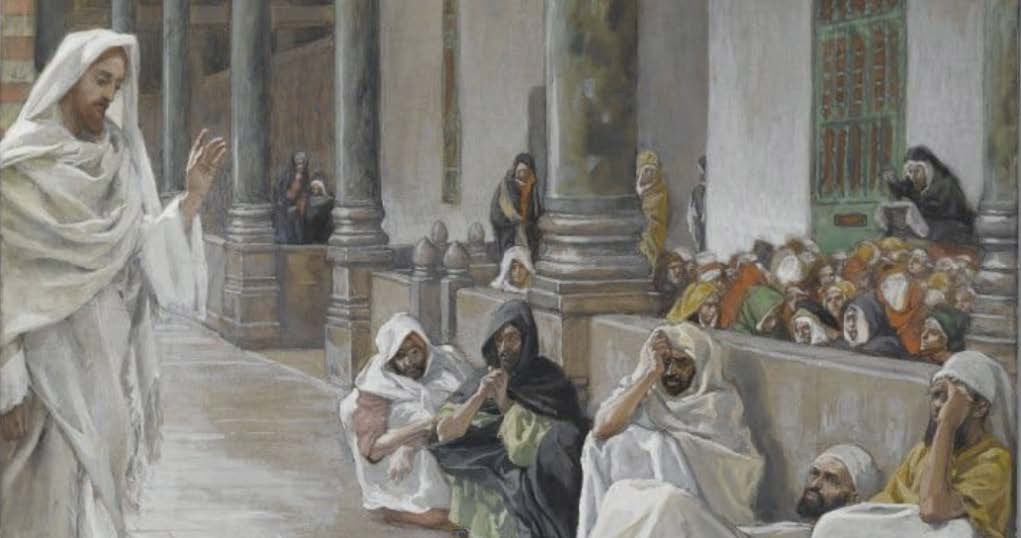
After the Passion Narratives in the four Gospels, this Sunday’s Gospel from John of the healing of the man born blind is both the longest and probably the most action-packed of all Gospel passages proclaimed at Mass. This passage is made up of rapid movement and interchanges between the Lord and His disciples, the Lord and the man born blind, the man once healed being interrogated by the Scribes and Pharisees, then the Scribes and Pharisees interrogate the man’s parents followed by a second interrogation of him, Jesus’s encounter with the man, and finally Jesus’s rebuke of the Scribes and Pharisees. What becomes clear in these interchanges is that there are two simultaneous journeys happening: one is moving towards the Light and one is moving away from the Light.

The man whom Jesus heals is said to have been blind from birth. The disciples assume, as was normative for the time, that his blindness was the result of sin, perhaps that of the man’s parents. The Lord tells them that his blindness is so that the glory of God might be revealed. This points to an interesting aspect of John’s Gospel. In Matthew, Mark, and Luke, Jesus’s miracles are always noted as the result of Jesus being moved with compassion for someone or for a group; in John, the miracles, or, rather, signs, that Jesus performs are not due to his compassion (which surely was not lacking), but to show the glory of God.

Another fascinating aspect of this passage is that Jesus is actually not a main actor. He is the one who animates the scene by healing the man but we see the man himself as the central evangelist. The man does not know who Jesus is but he knows that He must be of God because of what Jesus has done for him. In spite of the bullying and intimidation visited on him by the Scribes and the Pharisees, the man only becomes more persistent in wanting to know more about the man who healed him. Greater than the opening of the man’s eyes, is that his heart is opened to a new experience of faith. He professes his faith in Jesus and becomes the Lord’s disciple. He begins to walk by the light that is Jesus.

While the man born blind journeys closer and closer to the light that is the Lord Jesus, we see the Scribes and the Pharisees going in the opposite direction. They are comfortable and safe with a belief that God only works within specific parameters, only within the dictates of the law given by the Lord through Moses. They cannot accept that while God may choose to bind Himself to the law, He is never bound by the law. The law is given to lift people up to God, to help them on the journey to Him; but the Scribes and the Pharisees all too often saw the law as an end unto itself and thus made it an idol. The law is good, but God is also able to bring about good outside of the law or beyond it. Ultimately, the Scribes and the Pharisees see Jesus as a threat. They choose to blind themselves to the manifestation of the power of God in Jesus’s actions because to accept the truth of Jesus’s actions will mean that they have to change and they simply are not willing to do so.

Do we fall into the same traps at times? In our heart of hearts, do we at times know the truth that God is seeking to convey in our lives but we find it easier to “turn a blind eye” rather that acknowledging that maybe we are holding on to something that is contrary to God’s will or what God is asking of us? May the Lord heal us of any spiritual blindness and grant us the grace to not be afraid to see life by His light and to walk in his ways.

Father Christopher House is the Rector of the Cathedral and serves in various leadership roles within the diocesan curia, namely Chancellor and Vicar Judicial.

How Does Loving One’s Enemies Work, Really?

A friend of mine and I were comparing notes on how challenged we feel, sometimes, to offer real forgiveness to friends and family, and the question of enemies.

“Jesus said we are to forgive without limit,” my friend said, “but does that mean we’re supposed to keep putting ourselves out there to be victimized by people who really know how to hurt us and seem to enjoy doing it?”

It’s a conundrum, isn’t it? We are supposed to love everyone, forgive “unto seventy times seven” (Matthew 18:21-22), and we know that forgiveness is essential to our spiritual health, even if— in some cases—some people just feel like they prefer the tormentor’s role in our personal narratives. “To forgive is to set a prisoner free and discover that the prisoner was you,” writes the theologian Lewis Smedes, and he’s completely right.

Loving everyone is downright difficult and none of us can do it perfectly except the Lord and those saints he has so graced. My friend and I acknowledged it, but she couldn’t let it go, and wondered, “Doesn’t that mean the person we’re avoiding is our enemy? Aren’t we not supposed to have enemies?”

Her question reminded me of a what a Benedictine nun says to a novice in Rumer Godden’s In This House of Brede: “We may quarrel, we may find ourselves going down another staircase to avoid meeting some particular nun, but in times of stress…[we are all there for one another.]”

That, it seems to me, is the essence of how we are to handle difficult relationships. It speaks of a charity that does not put people too frequently in each other’s way (and tempt them into a needless, unhappy exchanges), yet is still helpful, when help is really needed, and without resentment or a desire for recognition. It puts enmity to the side for the sake of the greater good.

When I was a little girl, I used to take some comfort from Jesus’ command to “love your enemies”; the fact that he used the word “enemies” seemed like a clear acknowledgment that they exist and are a normal part of life. It almost seemed like Jesus was giving us tacit permission to have enemies, to make a place for enemies within our lives, as though they could be compartmentalized and shoved into an unused storage portion of our soul. When someone explained that “loving one’s enemies” meant little more than “not wishing them ill,” I felt like I had figured it all out: I could have my enemies, and as long as I didn’t actually wish evil on them, I was set for heaven.

That was how I rolled for about twenty years, until I actually heard someone use the word “enemy” when speaking about another. I had asked a woman in the office why she was so aggravated with a fellow we worked with. “I’ll tell you why,” she steamed at me, “because that man is my enemy. If he were dying in the street, I would walk right by him.”

Coming from the mouth of a woman I generally found to be pleasant and generous in nature, these were some of the most chilling words I had ever heard; they literally gave me goosebumps. I asked what the man could possibly have done to have earned such a vehement condemnation, and she said, with a terrible expression, “He complained about one of my kids not being friendly on the phone.” It was one of those uncomfortable light-bulb moments, when one realizes that complacent ideas from our youth can no longer work and demand reassessment. I had turned the notion of enemies into the equivalent of a benign spot on a spiritual X-ray: nothing to worry about, no threat to the soul. That was incorrect. The evidence before my eyes, demonstrated in the dark, tense expression of my coworker and her brutish tone, hit me like a swift punch to the solar plexus; with breathtaking clarity I understood that to entertain the concept of “having an enemy” was to give it room to grow. No benign practice, this was instead a path to spiritual malignancy—a true cancer that could kill the soul.

Jesus did indeed recognize that there are such things as enemies—and we are not meant to wander through our lives reckless and unaware of what or who can threaten us or do us harm. Certainly, we should not turn a blind eye to evil, which is the true enemy.

But Jesus’ command to love those we perceive to be our enemies is actually a tool for discernment, and for our own salvation. To love our enemies means a great deal more than to simply not wish evil upon them; it means making a conscious effort to find a path to our own mercy, for their sake and our own. That path is found, Jesus tells us, through prayer:

“Love your enemies and pray for those who persecute you” (Mt 5:44).

My workplace friend had made an enemy of a man who presumed to criticize her child. That might seem a trivial thing, but we do not know the whole of anyone else’s story. Perhaps her child was mildly autistic and his weak phone manners were actually part of a long process of victories and setbacks that had left her with no tolerance for picky critiques. Perhaps the man— her enemy—had been bullied by a parent into caring overmuch about social niceties and was knee-jerk and unthinking in his complaint.

The woman’s real enemy, though, was the creation of her seething resentment, which was wounding her, not him. To pray for the man’s good would ultimately have helped her to discern thoughtlessness from real evil, and brought a measure of peace. We all wrestle with what forgiveness demands of us. We may forgive someone with an authentic intention of mercy, truly meaning our words, and yet also pointedly desire to distance ourselves from them as much as possible in order to protect that forgiveness from predictable future assaults that might strain charity. Some relationships are simply toxic beyond sense or permission, and in those circumstances—especially if we know we have made numerous good-faith attempts to reach out and really seek peace—we can take Jesus’ advice to “shake the dust off” our feet” (Matthew 10:14) and move on, just as he told his apostles to do when made unwelcome.

This is one way, at least for a moment, a day, or a year, to maintain our sense of forgiveness and our desire to promote peace—in the world and in our lives—without feeling oppressed by a sense that we have not done enough. New opportunities to hone our forgiveness skills will always come.

Elizabeth Scalia is a Benedictine Oblate and author of several books including the award-winning Strange Gods: Unmasking the Idols in Everyday Life (Ave Maria Press) and Little Sins Mean a Lot (OSV). Before joining the Word on Fire team as a Editor at Large, she served as Editor-in-Chief of the English edition of Aleteia, and as Managing Editor of the Catholic section of Patheos.com. Elizabeth also blogs as “The Anchoress” at www.theanchoress.com. She is married, and living on Long Island.

Lessons Through Illness

Recently, I spent a few days in hospital with a serious illness. Thank God I have recovered fully, but it could have been worse—even fatal. Such a brush with death makes you think deeper and changes your perspective. You move into a different space that is already occupied by millions of sick people whose plight you were aware of but did not consider as much as you should. Here I share a few thoughts from this experience of illness and how it impacts on our call to evangelize.

We hear much about the institutions of society that are the shapers of culture—the media, universities, politics, TV, the internet, movies, art, music, literature, etc. It may seem odd to describe hospitals as shapers of culture, but the truth is that they not only care for people who are sick but remind society that we human beings are weak, limited, and vulnerable. They ground us in what’s true—namely, that we are mortal and that suffering is part of our existence, despite modern attempts to avoid it. In those days in hospital, I felt in intimate contact with what is real, with an acute sense of my own mortality. For this I was grateful. Sickness evaporated illusions of invincibility and any traces of pride that makes you think that sickness occurs to others but not to me. I also appreciated how every moment we exist is a miracle given to us by God’s grace. There are millions of parts of the body, and if one of them stops working, our well-being and lives are under threat. At all times we depend on the harmony of all the component parts to work together to stay healthy and well. Such a harmony we take for granted so often. Only when illness strikes do we appreciate this unity of the body and its connection with the soul.

Through all this time of illness, I felt that God was close. In fact, I felt that he was close in the measure that I saw myself with a new understanding of human fragility. My illness was a disruption, a breakthrough of grace, a shattering of presumptions, and a new appreciation of the miracle of life that God gives us at every moment. I began to appreciate those beautiful words of St. Augustine as he recounted Jesus’ meeting with the woman taken in adultery (John 8:1-11): “the two of them remained alone: mercy with misery” (On the Gospel of John, 33, 5). I sensed that God through Christ has united himself to our humanity, even when we are sick. I also thought of the times when Jesus himself may have been sick, even though the Gospels don’t mention those moments. I contemplated his compassion for the sick when he moved into their space in order to reach them out of love.

I also began to understand that the separation between this life and eternal life, mortality and immortality, is but a narrow stream. So often we think of death as something in the future, in the far distance. We mistakenly think of the life hereafter as something that awaits us only when we die. In contrast, sickness teaches us that death is not a distant stranger but a friend that walks by our side. The truth is that we are always, even those who are most healthy and fit, only a hair’s breath from death. This is not meant to scare us but to anchor us in what’s true and what is real.

God’s providence decrees that we are on this side of the narrow stream instead of the other, for now. Every time I walk on the beach near my house, I am reminded of this truth. As I walk on the shore, I see the land on my left and the sea on my right as I walk on the margin between them. Looking at the sea reminds me of eternity, of God, and of the communion of saints who are intimately close. Looking at the land symbolizes this life—all that I know and all that is familiar to me. Walking along the beach is like walking side by side with both worlds that interpenetrate as the waves of the sea meet the shore. It is a metaphor that teaches how we are at once grounded in this world but always transcending it to a higher world that we are also connected to.

Another insight I had at the time of illness is the power of intercessory prayer born of solidarity with fellow patients. If you break your arm, it may be painful and inconvenient, but when you meet someone in the hospital suffering from cancer, your broken arm is put in perspective. You begin to see your own sickness in solidarity with others more gravely ill and through faith offer up your suffering out of love for them.

Again, Jesus himself is our inspiration as our priest. On the way to Calvary and on the cross, the Lord moved into spaces occupied by the lost, the sinner, and those in terrible pain. He made his own the experience of severe suffering so that he could reach others in the depths of their pain. As Hebrews puts it:

“It was only right that God who creates and preserves all things, should make Jesus perfect through suffering in order to bring many children to share his glory” (Heb. 2:10).

In the light of this, I began to realize that being ill was not a suspension of my priesthood but an intense expression of it, inspired by Jesus our High Priest, who never stops interceding for us by moving into our space out of loving solidarity and compassion. And because he unites himself to us in our illness, he changes us to become more loving people like himself. In times of suffering, St. Elizabeth of the Trinity invites us to “believe that at those times he is hollowing out in your soul capacities to receive him, capacities that are, in a way, as infinite as he himself. Try then to will to be wholly joyful under the hand that crucifies you” (Letter 249).

Sickness can and does hollow out our pride to make more space for God. It also moves us into a new space where we are close to our brothers and sisters who are weak, afraid, and in need of hope.

The experience of illness has strengthened my desire to evangelize and to make Christ known and loved. But perhaps in a different way than before. The light of the Gospel needs to be shared from within our fragile and mortal existence that is sustained by God’s providence at every moment of every day. The Good News is that God has united himself to our humanity even when we are ill. Our sick bodies are still the receptacle of God’s presence and transforming power. A close encounter with death might be scary, but it makes us more grateful for every day and warns us never to take life for granted. None of us have a right to tomorrow. And while we exist in space and time, we know that eternal life with God and his saints is very close. The good that comes from illness is that we are closer to our brothers and sisters who are weak, sick, and vulnerable. We offer them the Good News of God’s love not from a distance but with them and as one of them. I thank God for my recovery and thank him for these valuable lessons learned through illness.

Fr. Billy Swan is a priest of the Diocese of Ferns, Ireland. He holds a degree in chemistry and worked for a number of years for a pharmaceutical company before entering seminary. Ordained in 1998, he served for four years as an associate pastor before further studies in Rome where he was awarded a Licentiate and Doctorate in Systematic Theology from the Gregorian University. He served for four years as the Director of Seminary Formation at the Pontifical Irish College, Rome. He is currently based at St Aidan’s Cathedral, Enniscorthy, Co. Wexford.

Going the Extra Mile

So often in life, people are concerned about the minimum requirements. What is the minimum I must do to get a certain grade? What is the minimum I need to do to receive the Sacrament of Confirmation? What exactly do I have to do to make my boss happy?

This concern does not stop with everyday life but continues into our relationship with God. What exactly is required of me for salvation? How much time, talent, and treasure are enough? Jesus does not call us to this way of life, but instead to a life of unbounding generosity and surrender. Jesus said, “If anyone forces you to go one mile, go with him two miles.” The minimum requirement is one mile; however, we are not to be disciples of minimum requirements and checking off boxes. We are to go the extra mile because that is how we bear witness to the transforming power of Jesus Christ. That is how we change lives and share the grace and love we have received in abundance. Nothing ever changes by doing the minimum. There is no real glory given to God by responding to His call with the minimum.

Imagine a world where all of us good stewards give without ceasing and go far beyond the minimum requirements. Our world would be a very different place. So, what is stopping us?

Tracy Earl Welliver is currently the Director of Parish Community and Engagement for LPI where he manages the company’s coaching and consulting efforts. He has spoken on and coached dioceses, parishes, and individuals on stewardship, engagement, strengths, and discipleship all over North America, Australia, and New Zealand.

The Well of Mercy

Ten years ago this past December, we celebrated the rededication of the Cathedral Church. At that time, I was the diocesan Master of Ceremonies so I was tasked with overseeing the actual dedication ritual. This was the first dedication of a church for me and the fact that it was the Cathedral made it even more special and also more nerve-racking. There are different prayers and ritual actions that compose the rite and that make for a beautiful celebration. The central prayer is the actual prayer of dedication. In studying the text of the prayer, I remember being struck by one specific line in the prayer: here may the waters of Baptism overwhelm the shame of sin.

This Third Sunday of Lent presents us with the story of the Woman at the Well as recorded in St. John’s Gospel. The story is rich in details that should be noticed. The disciples have gone into the town to buy food. Jesus remains, alone, at a well to rest. It is an odd place to rest being that it is noon and the hottest time of the day, but none of this is by accident, just as Jesus’s encountering the Samaritan woman is not a matter of chance.

The woman comes to the well. No one goes to fetch water at noon; water is fetched either early in the morning or in the evening so as to avoid the sun and the heat. Yet, here this woman approached the well and encountered the Lord who was waiting for her. In the course of the conversation we come to understand that the woman is in a relationship that is contrary to God’s law. While some people today might be inclined to brush off the woman’s circumstance, 2000 years ago the woman would have been faced with shame and being ostracized from the community; thus, why the woman is going to the well at noon when no one is around.

Jesus meets the woman where she is. He engages her in a way that brings her sin into the light without condemning her or seeking to shame her. While He asks her for a drink of water, He is actually thirsting for her faith and an openness to His grace and mercy. He wants the same from us.

As we continue through this holy season of Lent, may we heed the Lord’s call to return to the grace of our baptism, to leave the old life of sin behind, as well as the shame and guilt that it brings. I want to invite you to take advantage of the sacrament of Reconciliation offered here at the Cathedral or in any parish. I am especially inviting you if you find that you are carrying the burden of sin, shame, and guilt, and don’t seem to know how to lay them down. Reconciliation is the well of mercy where the Lord Jesus is waiting for all of us. Come and meet the Lord, allow Him to wash you clean and to remind you that you are loved, that you belong to Him, and that no sin can ever change that fact.

We are not the sum of our weaknesses and failures, we are the sum of the Father’s love for us and our real capacity to become the image of His Son Jesus. -Pope St. John Paul II

Father Christopher House is the Rector of the Cathedral and serves in various leadership roles within the diocesan curia, namely Chancellor and Vicar Judicial.

The Charism of Mercy

Today’s Gospel of the woman at the well is one of my favorites. Jesus knew everything about her, everything that she had done – and loved her. The woman, who may have had a shameful past, went to the well at noon when no others would be there, and Jesus, man and a Jew, spoke to her about God’s love; the water of eternal life. How she must have felt when Jesus turned his loving attention on her!

The charism of mercy empowers a Christian to be a channel of God’s love through hands-on, practical deeds of compassion that relieve the distress of those who suffer and help them experience God’s love. Disciples with this charism are drawn to people who may be ignored or rejected by society. They identify with the pain of those who are suffering or oppressed and seek to comfort them with the love of Jesus through their actions. Though they feel the pain of others deeply, they do not find working with the needy depressing or draining but rather compelling and fulfilling. They feel privileged to be allowed to minister to the poor and readily see and delight in the greatness of heart and soul that those who suffer often possess.

Possible expressions of this charism include social worker, missionary, prison minister, social justice activist, food pantry or shelter volunteer, pastoral worker or medical professional. If the Holy Spirit has granted you this special gift, you will not be content organizing or merely supporting assistance efforts, you will be drawn to hands-on service for relieving the suffering of others. If this describes you, the world is desperately in need of you and your gift.

Vicki Compton is the Coordinator of Faith Formation and Mission at the Cathedral of the Immaculate Conception in Springfield, Illinois.

How Novenas Keep Me on Track With My Lenten Promise

I’ve always struggled with daily prayer — I don’t have the self-discipline to commit to something every day. So, as a way to get better at prayer and to deepen my relationship with God, I made daily prayer my Lenten promise for several years. It did not go well. I’d get off on the right foot but quickly start missing days, and by the end of Lent, feel like a failure. I kept trying year after year, but I kept falling short.

I needed a strategy to make good on my Lenten promise. And I found it in novenas.

A novena, as the name implies, is a nine-day prayer dedicated to a specific cause and usually to a particular saint or Our Lady. I had done a few novenas before, including a diocesan novena offered for couples struggling with infertility, miscarriage, and infant loss leading up to the feast day for Our Lady of Guadalupe.

I’m still not perfect at daily prayer, but last year during Lent I was more focused than I had been in the past. Here’s why: Novenas gave me something to say each day.

The hardest part of writing is facing a blank page. The hardest part of praying (sometimes) is figuring out what to say. I often fell into reciting memorized prayers out of obligation and laziness. I needed something to guide me forward so that my Lenten promise didn’t turn into me going through the motions and not actually growing closer to God.

Novenas often feature repeated phrases with a variation of the prayer intention each day and also room to make more personal intentions. This prayer structure gave me a thematic text that I could contemplate each day and space to think about who or what I was personally praying for. The nine days kept me on track and starting a new novena after I’d finished one gave me the variety I needed to stay inspired during the whole season of Lent.

Novenas helped me focus on others during Lent. Another prayer trap I’d fall into was staying confined to my personal bubble and selfishly praying for what I wanted. Because novenas revolve around a specific intention, they pushed me to think about people I knew who were struggling and could use my prayers.

I started with a novena for a fellow parishioner whose spouse was battling cancer. Then I prayed for a relative who was struggling with infertility. Novenas also include larger, more societal intentions as well, the perfect example being a novena I found for accountability, transparency, and healing in the sexual abuse crisis.

Being more focused on others encouraged me to keep praying. I wanted to finish each novena for the person or cause it was dedicated to, but once I started, I found I always had someone or something additional to pray for.

Novenas taught me more about saints. In the Catholic tradition, there are at least 10,000 saints — that’s a lot! The last time I studied the saints was during my Confirmation prep. So when I was looking for novenas, I researched the patron saints of various causes and the saints themselves.

I prayed to Saint Peregrine, the 13th-century Italian patron saint of cancer patients, who was miraculously cured of a cancerous growth in his foot (and whose novena was also dedicated to other, more metaphorical cancers in society).

I prayed to Saint Gianna Beretta Molla, the 20th-century Italian patron saint of mothers, physicians, and unborn children who had been a pediatrician in her earthly life. This was extra special because a good friend of mine has a daughter named Gianna and because the person for whom I was praying had some things in common with Saint Gianna.

The novena for the abuse crisis introduced me to several saints, including Saint Charles Lwanga, the 19th-century Ugandan patron saint of youth and Catholic action, and Saint Dymphna, the seventh-century Irish patron saint of the nervous, emotionally disturbed, mentally ill, and those who suffer neurological disorders.

My experience using novenas during Lent made prayer more accessible and gave me a new tool I could use in my prayer life during the rest of the year as well. Whether joining a community novena or following one on my own, novenas give me the words that, with faith and intention, help open my heart to God.

Megan Stolz is a writer, editor, and owner of Megan Stolz Editorial. In her free time, she enjoys reading, traveling, singing alto in a community choir, and tweeting. She lives in the Washington, DC, metro area with her husband, kids, and cat.


As you continue on your Lenten journey, please remember that the Cathedral offers several opportunities to enrich your spiritual life through prayer. Adoration is held on Tuesdays and Thursdays from 4:00pm to 5:00pm, and Stations of the Cross is held on Fridays during Lent immediately following the 5:15pm Mass. Daily Mass is offered Monday through Friday at 7:00am, 12:05pm, and 5:15pm and Saturdays at 8:00am.

« Previous Page
Next Page »

Liturgy

Sunday Masses (unless noted differently in weekly bulletin)
Saturday Evening Vigil – 4:00PM
Sunday – 7:00AM, 10:00AM and 5:00PM

Weekday Masses (unless noted differently in weekly bulletin)
Monday thru Friday – 7:00AM and 5:15PM
Saturday – 8:00AM

Reconciliation (Confessions)
Monday thru Friday – 4:15PM to 5:00PM
Saturday – 9:00AM to 10:00AM and 2:30PM to 3:30PM
Sunday – 4:00PM to 4:45PM

Adoration
Tuesdays and Thursdays – 4:00PM to 5:00PM


CatholicMassTime.org

Parish Information

Parish Address
524 East Lawrence Avenue
Springfield, Illinois 62703

Parish Office Hours
Monday thru Thursday – 8:00AM to 4:00PM
Fridays – CLOSED

Parish Phone
(217) 522-3342

Parish Fax
(217) 210-0136

Parish Staff

Contact Us

Contact Us

Copyright © 2025 · Log in