Please pray that that the truth be brought to light regarding the Coronavirus and that medical and public health interventions being enforced are guided by officials who have citizens best interests in mind. Precious blood of Jesus wash over this nation and world. Lamb of God have mercy on us.
Prayer Wall – 10/15/2020
please pray for poor old dog 10 y… to get adopted forever. Thanks
Season of Stewardship
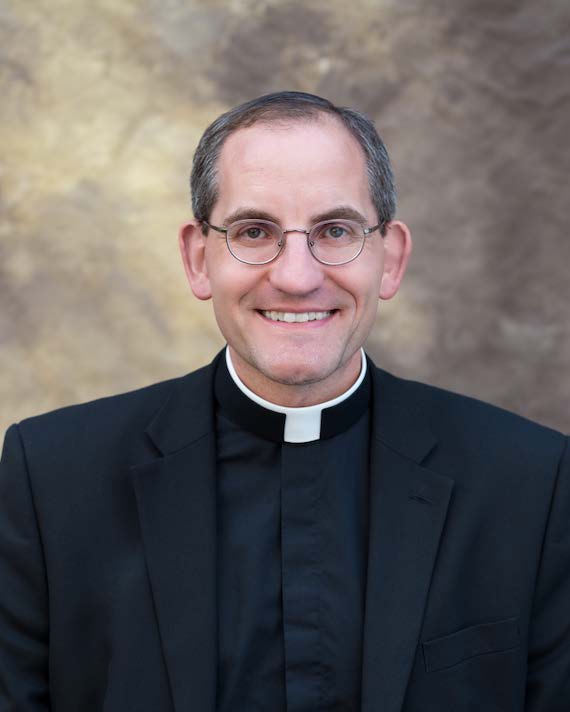
Over the next few weeks, you will be receiving some information from Bishop Paprocki and myself regarding a diocesan initiative known as the Season of Stewardship. The immediate reaction many have when we hear the word “stewardship” is that it is a nuanced way of asking for your money. And while stewardship does include a financial element, to limit it to that is a failure on our part to grasp the beauty of this important concept which is so important to us as people of faith.
If you recall our Fourth Diocesan Synod, we placed a lot of emphasis on our call to discipleship. In my mind, that is the key takeaway from the whole Synod, that we are called to embrace a personal relationship with Jesus Christ, out of which will flow everything else that is talked about in the Synod. An intentional disciple is one who recognizes first that he or she is loved as a child of God. An awareness of being known and loved personally by Our Lord can make a profound impact on our lives. I love the following quote from Father Pedro Arrupe, SJ on this idea:
Nothing is more practical than finding God,
than falling in Love in a quite absolute, final way.
What you are in love with, what seizes your imagination,
will affect everything.
It will decide what will get you out of bed in the morning,
what you do with your evenings,
how you spend your weekends,
what you read, whom you know, what breaks your heart,
and what amazes you with joy and gratitude.
Fall in Love, stay in love, and it will decide everything.
Part of our faith formation topic for this month is: God is the source of all life. As we embark on this Season of Stewardship together, we are invited to hear this theme as it applies to each of us in a particular way, and so we might reword the topic this way: God is the source of my life. Each of us can and should ask ourselves: “Does this statement reflect the reality of my life? Do I recognize that everything I have is from Him and belongs to Him?” When we come to the realization that God is the source and center of our lives, our response is one of gratitude, a gratitude that translates into a response of giving ourselves back to Him with everything – our time, our talent, our treasure – our entire lives.
May the Lord bless each of you with an awareness of God’s personal love for you as His beloved son or daughter, an awareness that will decide everything in your lives.
Father Alford
Sacraments of Desire
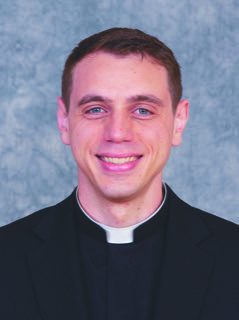
I have often heard that “God is bound to the Sacraments, but he is not bound by the Sacraments.” This means that whenever a Sacrament is celebrated worthily according to the rite of the Church, he gives sacramental grace every time. He has bound himself by the covenant with his people which was sealed by his blood. However, God is free to give grace outside the sacraments, even to those who are not Christians.
Is baptism necessary to go to heaven? Strictly speaking, the answer is “no.” There are billions of people in the world who have never been baptized, through no fault of their own, yet we can still have hope of their salvation. Christ died for all. However, the effect of baptism is necessary for salvation. Baptism forgives Original Sin (and all other sins for adults) and restores the life of God, sanctifying grace, in the soul. This effect can be received through a baptism of desire. This means that as long as a person is open to God’s grace, God will give this grace even without a person being physically baptized. One example of this is the Catechumens of the Church. Catechumens are seeking baptism and initiation into the Catholic Church. What happens if a Catechumen were to sadly pass away before his or her baptism? The Church has always believed that because of the Catechumen’s desire for baptism, God has already given this grace to their souls. Thus, they would be given a Catholic funeral with great hope that they are on their way to heaven.
God can give grace however he would like to. After all, grace is his free gift to begin with! A common tradition in our Church is to receive a spiritual Communion. One blessing about our recent pandemic is that this tradition of spiritual communion has been popularized once again because many people still are not able to receive Communion at Mass. A spiritual communion involves making one’s desire for Holy Communion known to God. We believe that when we make this prayer in good faith, God gives us the graces that would ordinarily be given to us through reception of the Eucharist. There are several formulas floating around for this prayer, but here is a simple example: “Lord Jesus, I cannot at this time receive you in the Eucharist. However, I desire for you to come into my heart right now because I love you and desire to be with you.” We can have faith that God will always answer this prayer because he loves us! We can make this act of spiritual communion at any time, not just while watching a livestreamed Mass!
One more “sacrament of desire” that it would be helpful to know about is the Sacrament of Penance. The only ordinary way in the Church to have our serious sins forgiven is through Confession. However, it is of the utmost importance that if we do happen to commit a serious sin, we turn to prayer immediately and express our love for God and sorrow for our sin. This is called an act of “perfect” contrition. This does not mean that we are perfect by any means, but it entails sorrow for our sins because of how they offend God and his love for us. When we do this, we can know that God has already forgiven our sin. However, we should still seek out Reconciliation at the first available opportunity, and we should not receive the Eucharist until we have done so. This practice of making an act of perfect contrition can give us a great sense of peace and avoid despair when we have fallen into sin.
God is so loving and as our Father in heaven, he gives us all that we need. When we desire his grace, he will answer this desire of our heart every time!
St. Isaac Jogues: A Eucharistic Life and Death

Feast Day: October 19th
North of Albany, NY and South of Montreal, Quebec lies a little lake nestled at the foot of the Adirondack mountains. It has long had the nickname “the Queen of American Lakes” because of its picturesque and tranquil waters, surrounded every autumn by glorious orange and red foliage. On the southern tip of this lake in 1755, English forces built Fort William Henry as an important step in their wresting control of the region from French control, a crucial move in the outcome of the French and Indian war (The Last of the Mohicans describes an event later in that struggle). The English would eventually take control of the Northern part of the lake as well, including its waterway up to Lake Champlain, building the famous Fort Ticonderoga on that spot, and cementing the lake’s name as “Lake George” (after King George II). Twenty years later, that fort would be the location of the first American offensive against the British of the Revolutionary War, and it would be the cannons the Green Mountain Boys captured from that fort that would later help lift the siege of Boston and turn the course of the war in the colonists favor.
But something greater than military victory was here.
That spot, between Lake George and Lake Champlain, a hundred years earlier, was the passage taken by a dozen canoes, carrying a few French Missionaries and a number of Huron Indians, returning with medical supplies from Quebec in 1642. The Huron men and women trusted the white man in the black robe who guided the lead canoe downstream. Ondessonk, they called him, “Bird of Prey”. Who could have said that the cultured boy with a decent upbringing in France would find himself at 35 years of age surrounded so far from home by such a flock. It had taken countless hours to grow accustomed to the uncomfortable crouch in that canoe, weeks to become the first white-man to hike over the Adirondacks and see Lake Superior, months to learn the languages and customs of these people he loved so dearly, and all of those prior 6 years to earn their trust.
Then the silence of oars slipping in and out of the stream was split by bloodthirsty cries as Mohawk warriors rushed on them from the woods. Isaac was the priest’s name, Isaac Jogues, and like his namesake, the son of Abraham, he could have escaped this sacrifice. He was in the lead boat, he was strong and capable from those 6 arduous years, and he was already hidden from the sight of the attacking braves, but his love was not for himself but for his friends who had been captured, and his enemies who had captured them. He had made the vow years before to give himself utterly to the call of Christ, and so he did not hesitate to sacrifice himself as a father for his children. He would endure beatings, mockings, burns, frostbite, malnourishment, flogging, and the agonizing loss of his fingernails and thumb in the months to come. Yet he still chose love. Love continuously offered to his fellow prisoners – giving them the solace, natural and supernatural, that he could – as well as love and patience for his captors – gathering wood, offering them baptism, saving the life of a pregnant mother from drowning.
Many months later, he was freed, smuggled out of the Mohawk camp and all the way back to Europe. It was Christmas, 1643, when the bedraggled, battered, missionary arrived at the Jesuit residence in Rennes, France. The Rector plied this stranger with questions about the missions of the new world, asking hesitantly “what about Fr. Isaac Jogues?” Ondessonk must have smirked as he replied: “He is at liberty and it is he, Reverend Father, who speaks to you.” The “living martyr” would receive accolades from the Pope, and permission to continue to celebrate the Eucharist despite his inability to follow all the rubrics of the Mass (because of his mangled hand). But he would give all that up to return to the Iroquois, an ambassador of peace.
3 years before he had merely faced a hard trek up to Quebec as he transversed those hills; now he faced likely death in ministering to the Mohawks. It was the day before Corpus Christi as he stood on the banks of that beautiful lake once again, and so he named it “Lac du Saint Sacrement”, “The Lake of the Most Blessed Sacrament”. For a man described as a “soul glued to the Blessed Sacrament”, who cried upon losing his hands, not from pain but from the seeming impossibility of ever again celebrating the Mass, the coming hardships were nothing compared to going without Holy Communion.
…It is this for which I beg Your Reverence to entreat Our Lord, and especially to remember at the altar a poor priest, who is about to remain 8 or 9 months without mass. It will be to me an increase of obligation to be, more than ever, my Reverend Father, your very humble and obedient servant in God
[Isaac Jogues, Letter from Montreal, September 12, 1646]
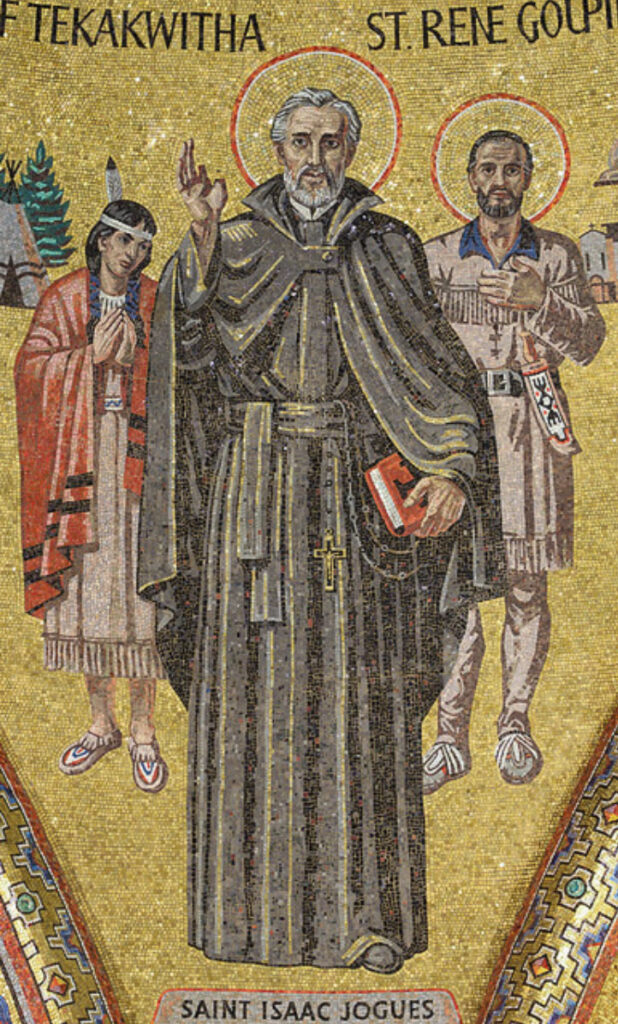
Yet he went anyway. And though without the Eucharist for all those months, he lived in his own body and blood the same sacrifice that he hungered constantly to be united to. His bravery was that of the ondessonk, his sacrifice that of the pelican, his consecration unwavering like Christ.
I shall depart in 2 or 3 days for the Iroquois journey. Still, for life, all in Our Lord.
[Isaac Jogues, Letter from 3 Rivers, September 21, 1646]
May we all give our lives as courageously, as lovingly, and as Eucharistically, as did St. Isaac Jogues.
– Fr. Dominic Rankin is a priest after Jesus Christ, seeking to be more like Him each day.
Week of October 19
Monday, October 19
7am – Alice Lucasey
(Family)
5:15pm – William Minder
(LouAnn & Carl Corrigan)
Tuesday, October 20
7am – Vincenzo Giannone
(Jeannette Giannone)
5:15pm – Deceased Members of the CCCW
(CCCW)
Wednesday, October 21
7am – Lawrence Bussard
(Connie Bussard)
5:15pm – Richiusa & Leo Families
(Family)
Thursday, October 22
7am – Dorothy Huber
(Huber Family)
5:15pm – Kathleen Porter
(Dick & Kay King)
Friday, October 23
7am – Anna A. Eleyidath
(Augustine Eleyidath)
5:15pm – Frances Klein
(Andrew & Cheryl Klein Family)
Saturday, October 24
8am – Edward Hergenrother
(Thomas Hergenrother)
4pm – Lawrence Bussard
(Connie Bussard)
Sunday, October 25
7am – Mary Ann Midden
(William Midden)
10am – Charlotte Cullin
(Sue Warner)
5pm – For the People
Jesus 2020
Last week I was driving somewhere and one of the many signs on the side of road caught my attention. The sign simply said: “Jesus 2020” Wondering if this was just a random sign, I did what every good detective does – look it up on Google. I found that thousands of these signs have been shipped throughout the country. In an article on the campaign, I read the following from one of the organizers: “People need Jesus with everything that’s going on…He’s the only one that we can count on. He’s the one that keeps his promises. He’s already the winner.”
I do not mean to suggest by bringing this to your attention that our upcoming election is not important. It definitely is. And if you are hoping that I might write something that will tell you how to vote, then you can stop reading now. For good, sound, Catholic guidance, I invite you to review Bishop Paprocki’s Catholic Times column from September 20, 2020. All of his columns can be found at https://ct.dio.org/bishops-column My point in bringing this sign and its campaign up is to encourage all of us to keep our eyes fixed on Jesus during these challenging times. We recently heard the story of St. Peter walking on the water toward Jesus. We know the story. As long as Peter kept his eyes fixed on Jesus, he was able to walk across the waters. However, as soon as his attention turned to the wind and the waves around him, he began to sink. The lesson is so timely for us. We can so easily get fixed on the commotion related to the election, or the pandemic, or whatever anxiety-creating event is going on in our lives or in the world, that we feel ourselves being pulled down, sinking as it were. But when we keep our eyes fixed on Christ, praying each day, reading the Scriptures, going to Mass, we will find that the winds do not overwhelm us, because we know that Jesus is there, He will not let us sink, no matter what happens.
Some may read this as sidestepping the whole issue and may even consider it cowardly for me not to speak up or speak more strongly on certain issues related to the election. As I said, our shepherd has provided us some good direction on forming our consciences and acting accordingly. While I am concerned about the future of our country, I am more immediately concerned about your souls, and the good of our parish community. Elections have a way of dividing people and it can get downright nasty with the things we say and think about others. Let’s not let the division and anxiety of our world get to us, drawing our attention from the true center, Jesus Christ.
In the end, if ours eyes are not fixed on Christ and we are not casting a vote for Him each and every day of our life, in every aspect of our life, we have more to be concerned about than the outcome of an election. So yes, get to know the issues, form your conscience, but do not take your eyes off of Christ, because if you are not in that relationship with Him, you will begin to sink, and no government leader or party can save you from that – only Jesus can rescue you, and only in Him can we truly hope.
Father Alford
Which sacrament is the best?
It may seem a little silly to ask which sacrament out of the seven is the best. After all, all seven sacraments are good and necessary for the life of our Church, and all seven were started by Jesus Christ himself when he walked on earth with his disciples. Why do we need to compare them? It is important to distinguish between the role the different sacraments have in our journey of faith, from beginning to end, to better understand the gift that God is giving us in each one.
Some might say that baptism is the best sacrament because it is the first received. Baptism opens the door to the other six sacraments, and Baptism removes Original Sin from the soul and gives the person divine life within. Some might say that Confession is the best sacrament because this is how serious sins are forgiven through the absolution of the priest. Some might say that Matrimony is the most important because through it, new life is brought into the world. Some may even say that Holy Orders is the best because this passes on the authority of the Apostles and allows our Church to even have the sacraments through our priests. These are all valid reasons as to why each sacrament of the Church is good and even essential. However, there is one that surpasses all the rest: the Eucharist.
You may have heard the Eucharist referred to as the “Most Blessed Sacrament.” Describing this Sacrament as the “Most Blessed” is not just overly pious language or an exaggeration. It actually is the most blessed out of all the sacraments. In six of the sacraments, God imparts his divine grace to us when we receive the sacraments in good faith. However, in the Sacrament of the Eucharist, God imparts himself to us. In the Eucharist, we receive an abundant outpouring of grace by receiving the actual body and blood of our Creator. We can rightly say that we worship the Sacrament of the Eucharist because the Eucharist is God Himself. While Baptism is an amazing sacrament, we would never say that we somehow worship this sacrament. We truly do worship the Eucharist, especially in the celebration of the Mass. This worship can be continued through Eucharistic adoration, when the consecrated Host is placed on the altar in a monstrance for all to revere. We worship the Eucharist every time we genuflect toward the tabernacle, which contains the Eucharist in reserve.
We can even better understand the other six sacraments in how they prepare us to receive the Eucharist. We receive Baptism as the beginning of our Christian initiation so that we can receive the ultimate sacrament of initiation – the Eucharist. Holy Orders is such a crucial sacrament for our Church because it is through this sacrament that we are able to continue receiving the Eucharist. The first job of the priest when he is ordained is to pray for the Church by offering the Mass. The Sacrament of Reconciliation forgives our sins so that we are once again able to receive the Eucharist worthily at Mass.
In heaven, we will no longer need the sacraments because our earthly pilgrimage will be completed. However, our worship of God in the Eucharist is the beginning of our eternal worship of God in heaven, which will never have an end. The Holy Eucharist is truly the Most Blessed Sacrament. This week, try to make a special visit to Jesus as he waits for us in the tabernacle.
St. Ignatius of Antioch: Fire-Bearer
Feast Day: October 17th
Peter had been the first apostle to reach the large Roman city of Antioch, north of Jerusalem, outside Judea, in Syria. It was a bustling, large, pagan place, the fourth largest city in the entire Roman Empire, and, with a population above 250,000, it was not only was double the size that Springfield is now, it was also a perfect place for the Gospel to begin its march out to the whole world. The Galilean fisherman must have already been overwhelmed by the distance the Word of Christ had come in those first years after the resurrection. Could he have imagined that that crazy city would be the first place the followers of Christ would be called “Christians”? How could he have predicted that within 10 years Paul and Barnabas would convert to Christianity, and would depart from that very city on their missions to the Greek-speaking world? Far less could he look 20 years ahead to his martyrdom in Rome itself, fulfilling Christ’s words back on the beach of the Sea of Tiberias, when Jesus told His beloved burly fisherman that “when you are old, you will stretch out your hands, and another will fasten your belt for you and carry you where you do not wish to go…” [John 21:18] Or, that in 200 years, 100,000 of those people in Antioch would be Christian.
But perhaps he knew a little boy named Ignatius.
Ignatius was a young child there in Antioch around the time that Peter was there, and as a good friend of a disciple of Peter, St. Polycarp, it is possible that Peter met him. Some even say that Peter picked the boy out to be his successor as bishop of Antioch one day. Either way, it is from his role as bishop of that important city, that Ignatius got his famous surname, “Ignatius of Antioch”. But I want to tell the story of another name he has: Ignatius Nurono, translated: Ignatius Fire-Bearer. Many attributes must have contributed to his having this nickname: his tireless proclamation of the Gospel, his lifelong witnessing to Christ’s resurrection, his fearless embracing of martyrdom … but I think above all this nickname came from his relentless proclamation that the piece of unleavened bread he held in his hands each Lord’s day, became Jesus Christ Himself in the Blessed Sacrament. He bore the fire of Christ in all his boldness, but never more than the humble consecration at Mass. It is not by chance that this is the man who would first use “Eucharist” to refer to Christ’s sacramental Body and Blood, nor that he first referred to the Church as “Catholic”, for to him these were just two parts of the same mysteries, two aspects of the same reality.
I write boldly to your love, which is worthy of God, and exhort you to have but one faith, and one preaching, and one Eucharist. For there is one flesh of the Lord Jesus Christ; and His blood which was shed for us is one; one loaf also is broken to all, and one cup is distributed among them all: there is but one altar for the whole Church, and one bishop, with the presbytery and deacons, my fellow- servants. Since, also, there is but one unbegotten Being, God, even the Father; and one only-begotten Son, God, the Word and man; and one Comforter, the Spirit of truth.
[St. Ignatius of Antioch, Letter to the Philadelphians, Chapter 4.]
The unity of the Church is found in the unity of her members around Christ, in His Vicar, and His bishops, but most of all in His Body and Blood. This is why the Eucharist is the “source and summit” of our faith, the foundation of all the sacraments, and the greatest treasure that we have. Every other sacrament streams out from this Most Blessed Sacrament: different gleams from the same Light, different gifts from the same Lord, different sparks from the same Fire.
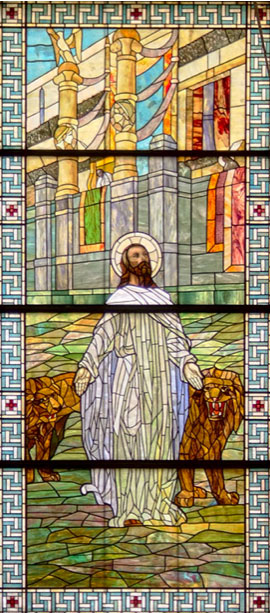
Want unity? Want courage? Want faith? Want love? Rely on Christ in the Eucharist. Prepare yourself and your families to receive Him well. Bear that fire boldly. Ignatius did.
His last letter was written to the Christians of Rome, as he followed in St. Peter’s footsteps to his own martyrdom in the arena: “The only thing I ask of you is to allow me to offer the libation of my blood to God. I am the wheat of the Lord; may I be ground by the teeth of the beasts to become the immaculate bread of Christ.” [Letter to the Romans, Chapter 4]. May we too, by the intercession of St. Ignatius, be united, inspired, and transformed into the Immaculate Bread of Christ.
– Fr. Dominic Rankin, as of this writing, has celebrated the Holy Mass nine hundred and forty seven times, and has been re-ignited every time by a new flicker of the flame of love from Christ’s Heart that constantly seeks to set us all alight.
Week of October 12
Monday, October 12
7am – Doris Drea
(Asher, Gittler & D’Alba, Ltd.)
5:15pm – William F. & Shirley Logan
(Lisa Logan & Lori Motyka)
Tuesday, October 13
7am – Lemuel Moss
(Jean Moss)
5:15pm – Norman & Eileen Rovey
(Family)
Wednesday, October 14
7am – Special Intention for Juli Rose
(Donna Berte)
5:15pm – Mary Ann Merano
(LouAnn & Carl Corrigan)
Thursday, October 15
7am – Anna A. Eleyidath
(Augustine Eleyidath)
5:15pm – Irene Doellman
(Blessed Sacrament Parish)
Friday, October 16
7am – Norma Fairweather
(Andrew & Cheryl Klein)
5:15pm – Special Intention for Bianca
(D.A. Drago)
Saturday, October 17
8am – Ralph Walter, Sr.
(Jean Moss)
4pm – John Montgomery
(John Busciacco)
Sunday, October 18
7am – John & Edith Bakalar
(John Busciacco)
10am – For the People
5pm – Stephani Sandidge
(Sue Sandidge)