Cathedral of the Immaculate Conception

Springfield, IL

  • About
    • Contact Us
    • History of the Cathedral
    • Liturgical Schedules
    • Parish Staff
    • Register with Cathedral
    • Subscribe to the Cathedral eWeekly
  • Sacraments
    • Baptism
    • Becoming Catholic
    • Matrimony
    • Vocations
  • Ministry List
    • Adult Faith Formation
    • Cathedral Meal Train
    • Cathedral Online Prayer Wall
    • Cathedral Concerts
    • Family of Faith
    • Grief Share
    • Health and Wellness
    • Spiritual Resources
  • Stewardship
    • Stewardship: A Disciple’s Response
    • Stewardship Form
  • Support
    • E-Giving Frequently Asked Questions
    • Give Online
  • Sunday News
    • Announcements
    • Cathedral Weekly
    • Livestream Feed
    • Submit a Mass Intention Request
    • Weekly or Announcement Submission

Going the Extra Mile

So often in life, people are concerned about the minimum requirements. What is the minimum I must do to get a certain grade? What is the minimum I need to do to receive the Sacrament of Confirmation? What exactly do I have to do to make my boss happy?

This concern does not stop with everyday life but continues into our relationship with God. What exactly is required of me for salvation? How much time, talent, and treasure are enough? Jesus does not call us to this way of life, but instead to a life of unbounding generosity and surrender. Jesus said, “If anyone forces you to go one mile, go with him two miles.” The minimum requirement is one mile; however, we are not to be disciples of minimum requirements and checking off boxes. We are to go the extra mile because that is how we bear witness to the transforming power of Jesus Christ. That is how we change lives and share the grace and love we have received in abundance. Nothing ever changes by doing the minimum. There is no real glory given to God by responding to His call with the minimum.

Imagine a world where all of us good stewards give without ceasing and go far beyond the minimum requirements. Our world would be a very different place. So, what is stopping us?

Tracy Earl Welliver is currently the Director of Parish Community and Engagement for LPI where he manages the company’s coaching and consulting efforts. He has spoken on and coached dioceses, parishes, and individuals on stewardship, engagement, strengths, and discipleship all over North America, Australia, and New Zealand.

Important Mass Changes

Dear Parishioners and Friends of the Cathedral,

As of today, March 18th, out of concern for the common good of all in our community and beyond, Bishop Paprocki has suspended the public celebration of all Masses and the sacraments effective immediately. Mass is still being celebrated daily but only in private. For detailed information and on-going updates from the diocese, please visit www.dio.org/coronavirus.

Concerning the Cathedral, the church will be open every day for private prayer from 8:00AM to 5:00PM. Individual confessions will continue to be offered every day from 4:00PM to 5 :00PM, in the Reconciliation room, and observing the proper distance norms as recommended by the CDC. Mass will be livestreamed on the Cathedral’s Facebook page at 7:00AM each morning which will then be available for replay. We are working on seeing if it can be made available to the Cathedral’s webpage. There are also other places on the internet where Mass can be viewed such as EWTN and Bishop Barron’s Word on Fire Ministries.

Please remain updated by visiting the Cathedral webpage, www.spicathedral.org, the Cathedral’s Facebook page, and the diocesan website which I listed above. The parish office remains open and the Cathedral clergy and staff remains here to serve you. Please do not hesitate to reach out to the staff if you or someone else that you know is in need.

To say that we are all in unchartered waters is an understatement and that we are in an historical moment that we would have preferred pass us by. I am reminded of a dialogue between Frodo and Gandalf in Tolkien’s book The Fellowship of the Ring. Frodo laments to Gandalf that he is in possession of the Ring of Power which he must seek to destroy out of fear that it will be used to wreak unspeakable evil. Frodo says to Gandalf: I wish the Ring had never come to me. I wish none of this had happened. Gandalf responds: So do all who live to see such times, but that is not.for them to decide. All we have to decide is what to do with the time that is given to us.

In His great love, while God has bound Himself to the sacraments, He is not bound by the sacraments. Though the sacraments are the primary ways God makes His grace abundant in the Church, please do not doubt that He will continue to pour out His grace and love in other ways into your life and into the lives of all who seek Him: Place your trust in Him.

As always, but especially in this time, I commend all of us to the love and care of Mary, our Blessed Mother and the Immaculate Conception, that she may enfold us in the mantle of her protection. Finally, please know of my love and prayers for all of you.


Very Reverend Christopher A. House
Rector

The Well of Mercy

Ten years ago this past December, we celebrated the rededication of the Cathedral Church. At that time, I was the diocesan Master of Ceremonies so I was tasked with overseeing the actual dedication ritual. This was the first dedication of a church for me and the fact that it was the Cathedral made it even more special and also more nerve-racking. There are different prayers and ritual actions that compose the rite and that make for a beautiful celebration. The central prayer is the actual prayer of dedication. In studying the text of the prayer, I remember being struck by one specific line in the prayer: here may the waters of Baptism overwhelm the shame of sin.
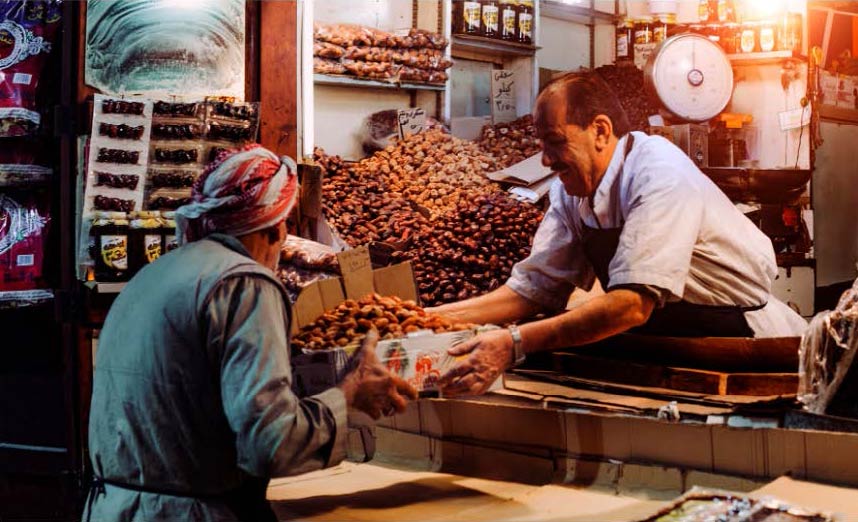

This Third Sunday of Lent presents us with the story of the Woman at the Well as recorded in St. John’s Gospel. The story is rich in details that should be noticed. The disciples have gone into the town to buy food. Jesus remains, alone, at a well to rest. It is an odd place to rest being that it is noon and the hottest time of the day, but none of this is by accident, just as Jesus’s encountering the Samaritan woman is not a matter of chance.

The woman comes to the well. No one goes to fetch water at noon; water is fetched either early in the morning or in the evening so as to avoid the sun and the heat. Yet, here this woman approached the well and encountered the Lord who was waiting for her. In the course of the conversation we come to understand that the woman is in a relationship that is contrary to God’s law. While some people today might be inclined to brush off the woman’s circumstance, 2000 years ago the woman would have been faced with shame and being ostracized from the community; thus, why the woman is going to the well at noon when no one is around.

Jesus meets the woman where she is. He engages her in a way that brings her sin into the light without condemning her or seeking to shame her. While He asks her for a drink of water, He is actually thirsting for her faith and an openness to His grace and mercy. He wants the same from us.

As we continue through this holy season of Lent, may we heed the Lord’s call to return to the grace of our baptism, to leave the old life of sin behind, as well as the shame and guilt that it brings. I want to invite you to take advantage of the sacrament of Reconciliation offered here at the Cathedral or in any parish. I am especially inviting you if you find that you are carrying the burden of sin, shame, and guilt, and don’t seem to know how to lay them down. Reconciliation is the well of mercy where the Lord Jesus is waiting for all of us. Come and meet the Lord, allow Him to wash you clean and to remind you that you are loved, that you belong to Him, and that no sin can ever change that fact.

We are not the sum of our weaknesses and failures, we are the sum of the Father’s love for us and our real capacity to become the image of His Son Jesus. -Pope St. John Paul II

Father Christopher House is the Rector of the Cathedral and serves in various leadership roles within the diocesan curia, namely Chancellor and Vicar Judicial.

The Charism of Mercy

Today’s Gospel of the woman at the well is one of my favorites. Jesus knew everything about her, everything that she had done – and loved her. The woman, who may have had a shameful past, went to the well at noon when no others would be there, and Jesus, man and a Jew, spoke to her about God’s love; the water of eternal life. How she must have felt when Jesus turned his loving attention on her!

The charism of mercy empowers a Christian to be a channel of God’s love through hands-on, practical deeds of compassion that relieve the distress of those who suffer and help them experience God’s love. Disciples with this charism are drawn to people who may be ignored or rejected by society. They identify with the pain of those who are suffering or oppressed and seek to comfort them with the love of Jesus through their actions. Though they feel the pain of others deeply, they do not find working with the needy depressing or draining but rather compelling and fulfilling. They feel privileged to be allowed to minister to the poor and readily see and delight in the greatness of heart and soul that those who suffer often possess.

Possible expressions of this charism include social worker, missionary, prison minister, social justice activist, food pantry or shelter volunteer, pastoral worker or medical professional. If the Holy Spirit has granted you this special gift, you will not be content organizing or merely supporting assistance efforts, you will be drawn to hands-on service for relieving the suffering of others. If this describes you, the world is desperately in need of you and your gift.

Vicki Compton is the Coordinator of Faith Formation and Mission at the Cathedral of the Immaculate Conception in Springfield, Illinois.

How Novenas Keep Me on Track With My Lenten Promise

I’ve always struggled with daily prayer — I don’t have the self-discipline to commit to something every day. So, as a way to get better at prayer and to deepen my relationship with God, I made daily prayer my Lenten promise for several years. It did not go well. I’d get off on the right foot but quickly start missing days, and by the end of Lent, feel like a failure. I kept trying year after year, but I kept falling short.

I needed a strategy to make good on my Lenten promise. And I found it in novenas.

A novena, as the name implies, is a nine-day prayer dedicated to a specific cause and usually to a particular saint or Our Lady. I had done a few novenas before, including a diocesan novena offered for couples struggling with infertility, miscarriage, and infant loss leading up to the feast day for Our Lady of Guadalupe.

I’m still not perfect at daily prayer, but last year during Lent I was more focused than I had been in the past. Here’s why: Novenas gave me something to say each day.

The hardest part of writing is facing a blank page. The hardest part of praying (sometimes) is figuring out what to say. I often fell into reciting memorized prayers out of obligation and laziness. I needed something to guide me forward so that my Lenten promise didn’t turn into me going through the motions and not actually growing closer to God.

Novenas often feature repeated phrases with a variation of the prayer intention each day and also room to make more personal intentions. This prayer structure gave me a thematic text that I could contemplate each day and space to think about who or what I was personally praying for. The nine days kept me on track and starting a new novena after I’d finished one gave me the variety I needed to stay inspired during the whole season of Lent.

Novenas helped me focus on others during Lent. Another prayer trap I’d fall into was staying confined to my personal bubble and selfishly praying for what I wanted. Because novenas revolve around a specific intention, they pushed me to think about people I knew who were struggling and could use my prayers.

I started with a novena for a fellow parishioner whose spouse was battling cancer. Then I prayed for a relative who was struggling with infertility. Novenas also include larger, more societal intentions as well, the perfect example being a novena I found for accountability, transparency, and healing in the sexual abuse crisis.

Being more focused on others encouraged me to keep praying. I wanted to finish each novena for the person or cause it was dedicated to, but once I started, I found I always had someone or something additional to pray for.

Novenas taught me more about saints. In the Catholic tradition, there are at least 10,000 saints — that’s a lot! The last time I studied the saints was during my Confirmation prep. So when I was looking for novenas, I researched the patron saints of various causes and the saints themselves.

I prayed to Saint Peregrine, the 13th-century Italian patron saint of cancer patients, who was miraculously cured of a cancerous growth in his foot (and whose novena was also dedicated to other, more metaphorical cancers in society).

I prayed to Saint Gianna Beretta Molla, the 20th-century Italian patron saint of mothers, physicians, and unborn children who had been a pediatrician in her earthly life. This was extra special because a good friend of mine has a daughter named Gianna and because the person for whom I was praying had some things in common with Saint Gianna.

The novena for the abuse crisis introduced me to several saints, including Saint Charles Lwanga, the 19th-century Ugandan patron saint of youth and Catholic action, and Saint Dymphna, the seventh-century Irish patron saint of the nervous, emotionally disturbed, mentally ill, and those who suffer neurological disorders.

My experience using novenas during Lent made prayer more accessible and gave me a new tool I could use in my prayer life during the rest of the year as well. Whether joining a community novena or following one on my own, novenas give me the words that, with faith and intention, help open my heart to God.

Megan Stolz is a writer, editor, and owner of Megan Stolz Editorial. In her free time, she enjoys reading, traveling, singing alto in a community choir, and tweeting. She lives in the Washington, DC, metro area with her husband, kids, and cat.


As you continue on your Lenten journey, please remember that the Cathedral offers several opportunities to enrich your spiritual life through prayer. Adoration is held on Tuesdays and Thursdays from 4:00pm to 5:00pm, and Stations of the Cross is held on Fridays during Lent immediately following the 5:15pm Mass. Daily Mass is offered Monday through Friday at 7:00am, 12:05pm, and 5:15pm and Saturdays at 8:00am.
Remember and Be Transformed

“Jesus took the loaves, gave thanks, and distributed them to those who were reclining, and also as much of the fish as they wanted.”—John 6:11



Did you know that our word “Lent” comes from the Old-English word for “springtime?” This gives us a wonderful insight into what the days between Ash Wednesday and Holy Thursday are all about: a season when faith and the virtues of the Christian life grow and flower within our hearts and souls. But, as Ash Wednesday approaches each year, one of the first questions we Catholics ask is, “What should I give up for Lent?” And it’s a fair question because, as we know, penance is a part of Lent.

So, how do you or your family and friends answer this question? Do you give up social media? Television? Chocolate, or another favorite food? Soft drinks, coffee, or alcohol? While it’s true that taking a break from any of those can be good for us, we also have to ask ourselves if these sacrifices are really helping us to grow in our lives as Christians. Lent isn’t only about doing penance. We have to think of other opportunities for “good works” during the Lenten Season.

The traditional works of prayer, almsgiving, and fasting help us focus our attention on what is most important in life. If we can think of our Lenten penance as a “good work” to be taken on and shift our focus away from what we “give up,” we will find that our Lenten prayer and devotions will be richer and more fruitful. As Henri Nouwen has reminded us: “Lent is a time of returning to God… a time of refocusing, of re-entering the place of truth, of reclaiming our true identity.”

But, there’s more at stake because, as we reflect on all of this, we have to remember that Lent isn’t an end in itself. The purpose of the season of Lent is to help us prepare for Easter when we will renew our baptismal commitment.

In the first centuries after Jesus, those individuals who wanted to become Christians spent months and even years preparing for Baptism, which almost always took place in a special ceremony on the night before Easter. That night was anticipated by a time of prayer and fasting so that the soon-to-be Christians would be as ready as they could be to receive the gifts of Baptism, Confirmation, and Eucharist. This is the origin of Lent. (Our contemporary process of the Rite of Christian Initiation of Adults (RCIA) is built around this model of initiation.) Those Christians who were already baptized would also pray and fast as they prepared to renew their own commitment to Christ by renewing their baptismal promises on Easter Sunday.

If we keep the themes of Baptism and discipleship in mind as we consider the value of fasting and sacrifice, we quickly realize that fasting isn’t about just giving up something we enjoy. After all, there isn’t any real spiritual value in giving up chocolate or soft drinks. The point of fasting is that we give up something that we enjoy to help us pay better attention to our deeper hungers and desires.

Each one of us lives with needs—physical needs and the need for love, security, and community—that we often bury or try to hide by filling our lives with “stuff” and relationships that can never really make us happy or give us peace. And so, Lenten fasting means that we set aside those things with which we selfmedicate so that we can be free to recognize what our real hungers and desires are—including our desire for God. Only God can truly satisfy the deepest desires and needs of our hearts.

These ideas of baptismal renewal and our deepest hungers are at the heart of our readings on this 3rd Sunday of Lent. As we hear the story of the woman at the well, we are being invited to remember our own Baptism and to think about how our lives have been—and are being—transformed by the Living Water of Jesus. Our prayer, fasting, and works of charity and mercy should be helping us become more aware of how the grace of Baptism is at work within us.

In the end, every Easter Sunday we are given an opportunity to renew the promises of our Baptism. This means rededicating ourselves to live as Christians in the world, and to continuing the mission of Jesus, especially for the poor and those in need. The 40 days of Lent are a time for us to get back to the basics of who we are as followers of Jesus.

A Benedictine monk for nearly 11 years, Br. Silas Henderson, SDS, is an author, retreat leader, and catechist, and former managing editor of Deacon Digest Magazine and Abbey Press Publications. You can find more of Br. Henderson’s blogs at www.fromseason2season.blogspot.com.

Children of the Covenant

This Sunday’s first reading from the Book of Genesis tells us about God’s promise to Abraham that He would make of him a great nation. This promise was because of the covenant that God made with him. Abraham was not the first person that God made a covenant with. Before Abraham, God made a covenant with Noah after the flood and God would later make other covenants with Moses and David. Finally, through the Prophet Jeremiah, God makes a promise of a greater covenant still to come and we find that covenant is made and fulfilled in our Lord Jesus Christ.

So why does this particular act with Abraham stand out? As God fashions His covenant with Abraham in Genesis, He promises to make of him a great nation, but He goes further in promising Abraham that their bond will be unique and personal. A covenant is more than an agreement or a series of promises; a covenant is a sacred relationship.

The covenant that God made with the children of Israel through Abraham is not undone but rather perfected in Jesus Christ and we have been made partakers of that same covenant. This Christian covenant is both corporate and personal, and we are brought into this sacred relationship through baptism. In baptism, we are chosen by God and rescued from the power of sin and death. In this wonderful sacrament the promise made to Abraham is also made to us individually: I will be your God and you will be mine.

As with any other form of agreement or contract, a covenant’s value is only as good as each party’s resolve to keep it. The good news for us is that God’s resolve is infinite which is why His covenants are everlasting. God does not relent in his love and He is forever true to His word. What about us? What about our resolve to keep our part of the covenant? I doubt that any of us if asked, would say that our resolve to maintain our relationship with the Lord is anything but resolute; our words may say that, but what does the lived reality of our daily lives say? Are we living up to our side of the covenant each day?

Through the guidance of the Holy Spirit, the Church has this sacred season of Lent. This season is an invitation from a loving and merciful Lord to examine our lives, our part of the covenant, and truly reckon with ourselves if we are living up to our part of the agreement, maybe only somewhat, or maybe not really at all. The journey of Lent is a call to return to the grace that was given to us at baptism, when God made a covenant with us individually and thus made us corporate members of Christ’s Mystical Body, the Church. In this weekend’s second reading, St. Paul says to each of us through Timothy “bear your share of hardship for the Gospel.” We must be ready and willing to do our part in this covenant relationship with the Lord, and the Good News continues because God’s goodness is never outdone as Paul reminds us that God gives us the strength to do it.

Father Christopher House is the Rector of the Cathedral and serves in various leadership roles within the diocesan curia, namely Chancellor and Vicar Judicial.

Encouragement

In today’s second reading, St. Paul greets Timothy with encouraging words:

“Beloved, bear your share of hardship for the gospel with the strength that comes from God.”

All Christians are called to encourage one another. But those with the charism of encouragement are empowered to be an effective channel of God’s love by strengthening and healing individuals in remarkable ways through his or her presence and words.

Encouragers are exceptional nurturers and interested in the unique needs of individuals. People who are troubled or uncertain frequently seek them out for conversation and report that their lives have been changed for the better after spending time talking. Encouragers are exceptionally good listeners and feel energized and deeply connected to God when they are listening and talking to someone about personal issues.

If you are the one in your family or friend group who everyone calls when they need to discuss a personal crisis, you may have a charism for encouragement. But remember, the manifestations of charisms are only evident when you know Christ personally and have made the decision to follow him. It is then that you’ll begin to see how the Holy Spirit has equipped you to be the face of Christ to the world.

Vicki Compton is the Coordinator of Faith Formation and Mission at the Cathedral of the Immaculate Conception in Springfield, Illinois.

Always Be Ready to Give a Reason for Your Hope

As I write this, I’m fresh off the experience of an epic five-week road trip with my son Adam. While the art and science of traveling 7,500 miles with a 19-year-old in a MINI Cooper is fodder for a blog post, I spent much of our adventure pondering a single Bible verse. In 1 Peter 3:15, the apostle offers encouragement to the faithful of his time:

“Always be ready to give an explanation to anyone who asks you for a reason for your hope.”

In the following verse, Peter teaches that their evangelization be tempered with gentleness and respect, and delivered with a clear conscience.

As we drove across the magnificent U.S. and into beautiful Canada on our excursion, Adam and I made literally scores of new friends along the road. It often happens that within a line or two of introduction, I share that I am a Catholic. My faith is as central to my being as my brown eyes or my vocation to motherhood. It defines me as a person, informs my actions, and lays foundation for my life’s greatest goals. And over the past few weeks I’ve found that venturing outside my comfort zone and into new venues provides a fresh perspective on those three words at the heart of 1 Peter 3:15: “Always be ready”.

Are You Ready?
With so much national news attention on our Church these days, I met folks in certain parts of the country who didn’t know a single Catholic, but were intrigued by what they’d heard of late about us. In separate conversations, I chatted with new non-Catholic friends who were following Pope Francis on Twitter or had heard about the Church’s humanitarian responses in Iraq, Syria and along the southern borders of our country.

These opening salvos, often delivered in a somewhat defensive manner, were an opening for me to share a bit about the Church I love and the God I serve. But I’ve learned to tread carefully in such moments. It’s easy, when someone asks us questions like this, to misperceive the motivation behind it.

Avoid Those Social Media Smack-downs
In some cases, we may hear their question as an attack and respond in similar fashion. If you’ve ever been involved in sharing your faith in a venue such as Facebook, you know how unproductive these types of dialogues can be. (In these moments, I try to remind myself of St. Peter’s instruction towards gentleness and respect.) We might hear a question about our faith and understand that behind it wait many other questions— deeper and more subtle—from new friends who are lost and seeking something in their lives. They may recognize in us something they desire for themselves: a sense of the peace, happiness, and grace that we experience as Christians. A simple, “What’s up with that pope of yours?!” delivered with a laugh could actually be an invitation to share the true reason for our hope.

But we may be sorely tempted to laugh back, dodge the bullet, and simply move the conversation along to safer pastures. In those moments, we fail to “always be ready”. We may avoid the temporary discomfort that accompanies sharing our faith, but we have also lost a golden opportunity to share the hope that is within us. It’s almost as though he foresaw twenty-first century “Evangelism 101” moments: the messiness of a Facebook faith smackdown, a Catholic combox war on a blog, or even the ugliness that can come up at a family dinner when one present has a disdain for our Church.

And in these verses, Peter provides exactly what I need to enable me to “always be ready”. By reminding me to “sanctify Christ as Lord” in my heart, St. Peter helps me to lay a firm foundation for these moments. For me, such sanctification isn’t an easy onestep process, but rather a day-to-day journey of prayer, reception of the sacraments, and trust in God’s ultimate wisdom and providence. I won’t claim that I’m successful every time an opportunity to share my faith presents itself, but these days I am making it a high priority to “always be ready.”

You Weren’t Made for Fear
The words that come after my favorite three (“always be ready”) in 1 Peter 3:13-15 hold the key ingredients to being ready when such opportunities present themselves:

“Now who is going to harm you if you are enthusiastic for what is good? But even if you should suffer because of righteousness, blessed are you. Do not be afraid or terrified with fear of them, but sanctify Christ as Lord in your hearts.”

Often, in praying with these verses, I marvel how St. Peter could have written something thousands of years ago that could be so relevant to the challenges I face today as a believer.

Now Over to You:
Have you ever had a friend or relative ask you a question that gave you the chance to share your faith? How did you reply?

Lisa M. Hendey is the Founder of CatholicMom.com and the author of The Grace of Yes and A Book of Saints for Catholic Moms. Lisa writes in multiple Catholic venues and maintains an active speaking calendar, presenting on faith, family, technology and evangelization topics. Visit her at www.LisaHendey.com.

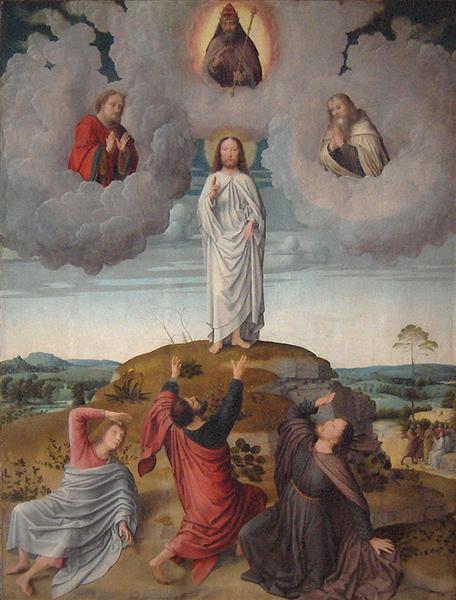
Transfiguring Our Spiritual Lives

The Story of the Transfiguration maps out some steps we need to take in our journey of prayer. First, we must climb the mountain; second, we must look upon Jesus; and third, we must go back down the mountain to tell others what we have seen.

First, we must climb the mountain. Before revealing his glory to Peter, James, and John, Jesus leads them up a high mountain. Climbing a mountain takes a good deal of effort. There’s always the danger of falling off a cliff or running into a wild animal. Also, the higher one climbs, the thinner the air is and the harder it becomes to breathe.

The apostles’ experience teaches us something profound about the spiritual life. God often does not reveal himself until we are willing to make the hard journey up the mountain. That mountain could be a sin that we have to overcome, an unhealthy relationship, or sickness. Every challenge we experience is an invitation from God to climb the mountain so that He can reveal His glory to us. We may not understand why God has put those obstacles in our path and made things so hard for us. However, if we ask Him, He will give us the strength to endure whatever may come. And, with time, we will see and be amazed by God’s mercy.

The second truth of the spiritual life which the Transfiguration teaches us is that we are meant to see the vision of God. Unlike the apostles, we do not see Jesus face to face. How, then, do we get a glimpse of him in all his glory? The central and most important way is in the Mass. At every Eucharist, the Risen Lord is truly present in our midst. When the readings are proclaimed, it is Jesus’ voice that we hear. When we receive the Eucharist, we touch the body of the Risen Lord just as the apostles did, and we are transformed by him.

For that reason, the Sunday Mass is an indispensable part of our Christian life and spirituality. While it is very good to read the Bible, pray the rosary, and contemplate the beauty of nature, none of those activities compare with the gift offered us in the Eucharist. While those activities can give us some insight into Jesus and his love, they cannot actually give us Jesus himself as the Eucharist does. There is no substitute for the real, life-changing encounter we have with the Risen Lord in the Sacrament of his Body and Blood which we receive every Sunday.

The third truth of the spiritual life is that we cannot stay on the mountain. We have to go back down to witness to others the Jesus we have come to know.

The experience the apostles had of Jesus was overwhelming. It filled them both with awe and fear. Understandably, Peter does not want it to end. He wants to stay there, camping out with Jesus, Elijah, and Moses forever. But Jesus does not allow it. The vision of his glory comes to an abrupt end, and he leads them back down the mountain to continue preaching the good news and healing the sick.

Many times, when we are praying and feeling God’s presence all around us, we do not want it to end. We want to stay basking in the warmth of God’s love. That is entirely natural because we were created to praise God and never feel so much “at home” as when we are praying. But it is not enough. The spiritual life is never just a private affair. From worship, we must go into service. We must come down the mountain and point out the way to encounter God to others so that they may share our joy.

Douglas Sousa, S.T.L. is an author for Liturgical Publications, Inc., and writes reflections on various topics, including reflections on Sunday readings.

« Previous Page
Next Page »

Liturgy

Sunday Masses (unless noted differently in weekly bulletin)
Saturday Evening Vigil – 4:00PM
Sunday – 7:00AM, 10:00AM and 5:00PM

Weekday Masses (unless noted differently in weekly bulletin)
Monday thru Friday – 7:00AM and 5:15PM
Saturday – 8:00AM

Reconciliation (Confessions)
Monday thru Friday – 4:15PM to 5:00PM
Saturday – 9:00AM to 10:00AM and 2:30PM to 3:30PM
Sunday – 4:00PM to 4:45PM

Adoration
Tuesdays and Thursdays – 4:00PM to 5:00PM


CatholicMassTime.org

Parish Information

Parish Address
524 East Lawrence Avenue
Springfield, Illinois 62703

Parish Office Hours
Monday thru Thursday – 8:00AM to 4:00PM
Fridays – CLOSED

Parish Phone
(217) 522-3342

Parish Fax
(217) 210-0136

Parish Staff

Contact Us

Contact Us

Copyright © 2026 · Log in