Cathedral of the Immaculate Conception

Springfield, IL

  • About
    • Contact Us
    • History of the Cathedral
    • Liturgical Schedules
    • Parish Staff
    • Register with Cathedral
    • Subscribe to the Cathedral eWeekly
  • Sacraments
    • Baptism
    • Becoming Catholic
    • Matrimony
    • Vocations
  • Ministry List
    • Adult Faith Formation
    • Cathedral Meal Train
    • Cathedral Online Prayer Wall
    • Cathedral Concerts
    • Family of Faith
    • Grief Share
    • Health and Wellness
    • Spiritual Resources
  • Stewardship
    • Stewardship: A Disciple’s Response
    • Stewardship Form
  • Support
    • E-Giving Frequently Asked Questions
    • Give Online
  • Sunday News
    • Announcements
    • Cathedral Weekly
    • Livestream Feed
    • Submit a Mass Intention Request
    • Weekly or Announcement Submission

Liturgy of the Eucharist Parts I & II

Part I

Last Sunday we looked at the structure Liturgy of the Word, how the readings of the Mass rotate, and how there are other parts to the Liturgy of the Word besides the readings. This Sunday we focus on the first part of the Liturgy of the Eucharist, which many of the faithful understand as the heart of the Mass.

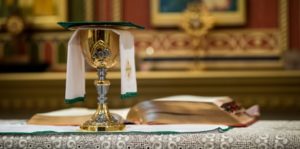
Having offered the Prayer of the Faithful (petitions), the Liturgy of the Eucharist begins with the offertory where the altar is prepared and gifts of bread and wine, along with gifts from the faithful for the work of the Church and care of the poor, are offered. At the altar, a small amount of water is mingled with the wine by the priest or, if present, deacon. This goes back to the ancient practice of having to cut the wine with water if the wine was too strong. Today, this action is retained symbolically to show the mingling of our human nature in the divine person of Jesus. The first prayers that the priest prays over the bread and wine are known as the Berachot prayers (Blessed are you, Lord God…). These prayers are a reminder of Jewish table prayers and are reflective of the Jewish influences on the original structure of the Mass.

Following the Berachot prayers, which may be prayed out loud or privately, the gifts, altar, and people may be incensed on feasts and solemnities. At the end of the preparation of the gifts, the celebrant washes his hands. Again, this act is taken from an ancient practice where the priest at one time had to wash his hands out of necessity, having received crops and even livestock, that were brought forward by the faithful as gifts at the Mass. Today, the celebrant washes his hands as a sign of his desire to have his heart and life purified from sin.

After the offertory is complete, the priest invites the faithful to beseech God to receive the offering of bread and wine, as well as our very lives, and that it may be pleasing to him. Finally, the Prayer Over the Offerings is prayed. This prayer is specific for the day or feast. Next week we will look at the structure and form of the Eucharistic Prayer.

Part II

Last time in the Weekly we looked at the first part of the Liturgy of the Eucharist. This week we are looking at the Eucharistic Prayer which follows the Preparation of the Gifts. The Eucharist prayer starts with the Preface which itself begins with the dialogue between the priest and the assembly and ends with the Holy, Holy which itself is the prayer of the angels found in the Book of the Prophet Isaiah. The Preface is variable and reflects the church season or a specific feast and is marked by the tone of thanksgiving for God’s goodness and grace.

Following the Holy, Holy (the Sanctus), the main part of the Eucharistic prayer begins. There are four main Eucharistic prayers that are generally chosen from as well as nine other ones for specific needs or occasions. All of the Eucharistic prayers follow the same structure beginning once again with praise following the Sanctus and then moving to epiclesis by which the power of the Holy Spirit is called down so that the bread and wine may become the Eucharist. The institution narrative and Consecration immediately follows the epiclesis. Here the celebrant, standing in the person of Christ, speaks Christ’s words at the Last Supper by which, through the power of the Holy Spirit, the bread and wine become the body, blood, soul, and divinity of Jesus. The Consecration ends with the people’s acclamation following the priest announcing “the mystery of faith.”

The Eucharistic prayer continues with the anamnesis which means to remember. Here, God the Father is asked to look upon the sacrifice offered and to remember, then and always, the sacrifice offered by his Son for us, and finally to accept the offering. Following the anamnesis are various intercessions offered for the Church: for her leaders, for all the faithful, and for the faithful departed. The Eucharistic prayer culminates in the doxology by which the glory of God is proclaimed as the Eucharist is elevated by the priest and deacon. The great Amen is the assembly’s response to this declaration.

Following the Eucharistic prayer is praying of the Lord’s Prayer and the Sign of Peace where we make sure to be at peace with our neighbor before approaching the altar. The assembly then receives the gift of the Eucharist and the Mass concludes with the closing prayer, blessing, and dismissal.


Chapter IV. Stewardship of the Church

Chapter IV: Stewardship of the Church

This week we are highlighting Chapter IV: Stewardship of the Church in the USCCB Pastoral Letter on Stewardship. This chapter explores how stewardship is expressed as a community or in solidarity with each other. Many of you reading this are stewards; you pray with us on Sundays, serve during Mass or volunteer in a program, and give generously to the Parish Mission. In times of trouble, struggle, joy, or anticipation, your Parish family surrounds you with the support and prayers you need. Here at Cathedral, we offer Mass intentions, post prayer request on the Cathedral Women Facebook page, offer service to the communion through the Knights of Columbus or CCCW, we educate our youth through the Parish School of Religion or Cathedral School, we support all these important ministries and more through the generosity received in the offertory basket or at our fundraisers. We are a stewardship Parish, which calls each of us to pray, serve, and give!

Excerpt from Stewardship: A Disciple’s Response, USCCB

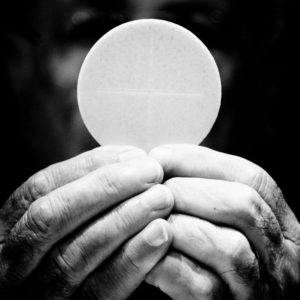
The Eucharist is the great sign and agent of this expansive communion of charity. “Because the loaf of bread is one, we, though many, are one body, for we all partake of the one loaf” (1 Cor 10:17). Here people enjoy a unique union with Christ and, in him, with one another. Here his love—indeed, his very self— flows into his disciples and, through them and their practice of stewardship, to the entire human race. Here Jesus renews his covenant-forming act of perfect fidelity to God, while also making it possible for us to cooperate. In the Eucharist, Christians reaffirm their participation in the New Covenant; they give thanks to God for blessings received; and they strengthen their bonds of commitment to one another as members of the covenant community Jesus forms.
And what do Christians bring to the Eucharistic celebration and join there with Jesus’ offering? Their lives as Christian disciples; their personal vocations and the stewardship they have exercised regarding them; their individual contributions to the great work of restoring all things in Christ. Disciples give thanks to God for gifts received and strive to share them with others. That is why, as Vatican II says of the Eucharist, “if this celebration is to be sincere and thorough, it must lead to various works of charity and mutual help, as well as to missionary activity and to different forms of Christian witness” (Presbyterorum Ordinis, no. 6).


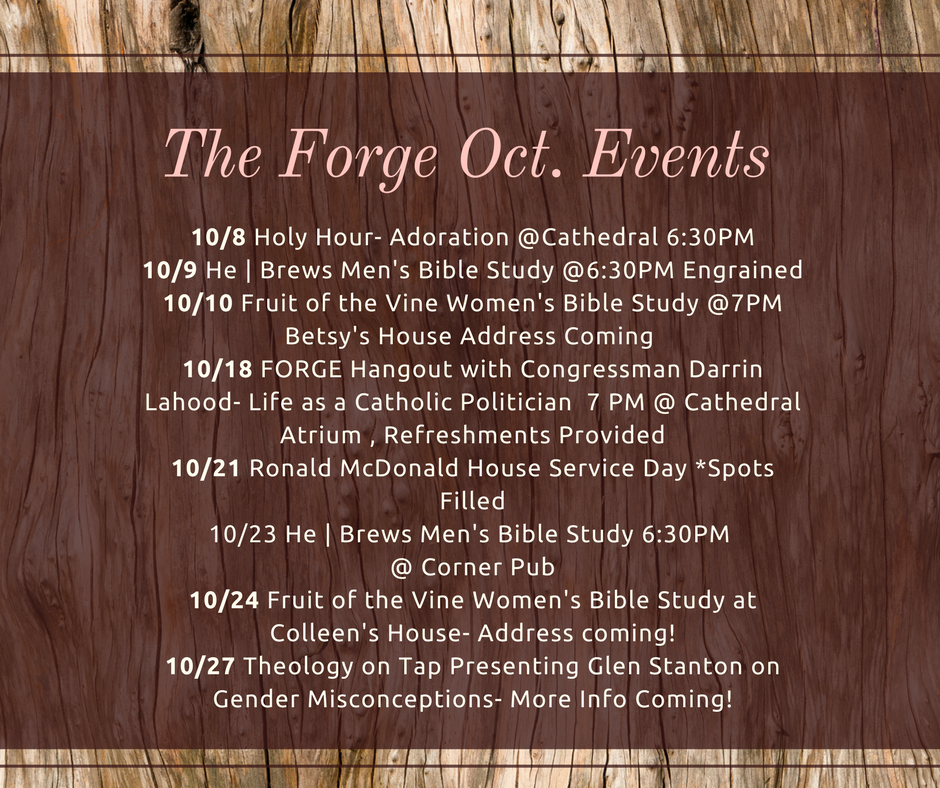
The Forge October Events

Understanding the Term Liturgy

The term liturgy is used with great frequency in the Church. It comes from the Greek word leitourgia which means a public work done for or on behalf of the people. However, we cannot allow the Church’s understanding of the term to be lost. Liturgy is not a spectator sport where a larger group watches a person or two or smaller group perform. While there is always a celebrant or presider and ministers at the liturgy, everyone is called to full, active, and conscious participation. Why?

We are all called to participate because liturgy is first and foremost an act of divine worship meaning that it is focused towards God greater glory and honor. In this act, we are also lifted up and furthered on the path of salvation. Whenever the Church, the mystical body of Christ, gathers for a liturgical celebration, she is participating in the Paschal Mystery: the life, death, and resurrection of Jesus.

A liturgy is a public celebration of the sacraments or the word of God. Among liturgical celebrations, the holy Mass is the highest of all liturgies because, as the Second Vatican Council teaches us, it is the “source and summit” of the Christian life. The Mass itself is divided into four main parts, the two principal parts being liturgies: Word and Eucharist. Sometimes a liturgy is referred to as “the sacred mysteries.” This term also comes from the Greek work mysterion which was rendered in Latin as mystenum (mystery) and sacramentum (sacrament). The term sacrament is used to define a tangible reality is the liturgical celebration which also points to a hidden reality that is also present, thus the term mystery. The term mystery is also used because another understanding of the word refers to a reality that cannot by exhausted and this is true of the grace of God given in the liturgical life.

May God give us the grace to grow deeper in our love for the Church’s liturgy so that we may see cherish its two fold purpose of glorifying God and lifting us up to the divine life with him forever.


Written by Father Christopher House

What does a friendship with Jesus look like?

Normally, my daughter and I are frantically getting ready for Sunday Mass in the morning. However, this particular morning was different. I eagerly make my way up to her room with a puffy, laced pink Easter dress in my hands. After the normal wake-up routine, I share with her the good news, “Hunny, I have a surprise for you!” Witnessing the look of surprise I was going for, a huge grin from ear to ear appeared on her face. “What is it Mommy?” my daughter said. “Well, today is a very special day, it is Easter Sunday! Jesus came home and God is so happy!” As I grabbed the dress to show her, she exclaimed, “Oh my goodness, Mommy, is God having a ball?” …laughter ensued. “Well, yes, I suppose you could look at it that way!” She said, “Mom, I can’t wait to go to Jesus’ Ball, he deserves a party! We’re friends” It was the first time I heard her say that Jesus and her are friends.

While I know we are not in the season of Easter, I can’t help but come back to that story as I reflect on stewardship of time today. I was curious about her friendship with Jesus and have been asking her questions about her faith, getting a glimpse into a childlike faith life. Can you guess Gracey’s response to the question, “How did you become friends with Jesus?” My little 4-year old’s response was, “Oh, I pray and we talk.” Think about that phrase a bit, “I pray and we talk.”

Oftentimes I think we can be left wanting in our prayer lives; finding ourselves asking for this or that, praying for something to change, or showing up to Mass because we think it is just “what we are suppose to do” and following the motions. However, I challenge us to take a deeper look at our own prayer life. What does it look like to be in a friendship with someone? Friendship is not just about asking, but about being present. If we pursue and desire a relationship with Jesus, we must be willing to be present in conversation with Him. We must be willing to set down the phone, close the app, put the papers away or slow down our thoughts, and listen.

When we consider stewardship of time, we mean building a relationship, or friendship, with God. Cultivating that one-on-one relationship with Him, no matter where we are in the faith journey or even how old we are. We can each pray and talk with Him. I hope each of us has the opportunity to be enriched by the “tiniest” believers in our pews and in turn be inspired by their friendship with Jesus.

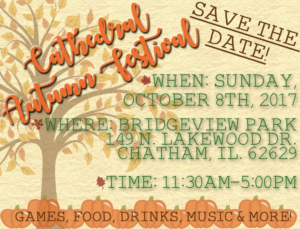
Cathedral Autumn Fest October 8, 2017

 Autumn Festival
Donation Request Form

Giving Back


Click here to shop thru Amazon and earn money for the School & Parish
What is Amazon Smile?


Click here to purchase gift cards thru our SCRIP Program; our enrollment code is A1LDAE4C54L9.
Development Committee Members


School Development Committee Members:

Jordan Thomas, Director – [email protected] (217) 522-3342 ext. 146

Committee Members: Tony Cerveny, Judith Carstens, Kathy Cutler, Candy Copelin, Jennifer Lokaitis, Brianna Bailey-Hill, Amanda Humke, and Ruth Staab

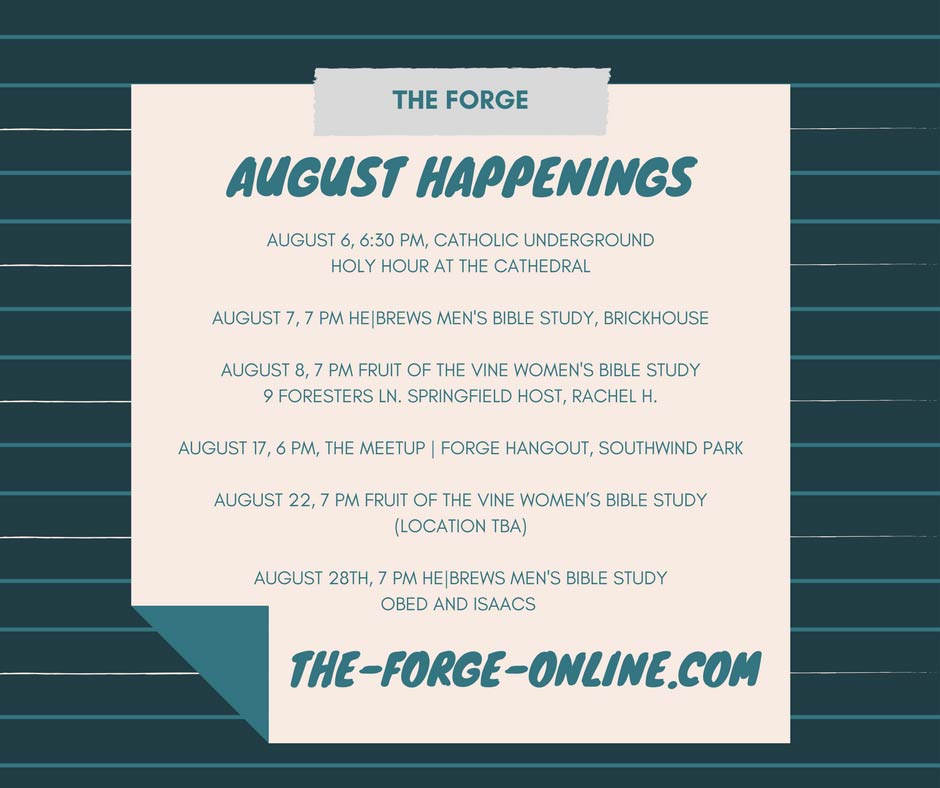
The Forge August Happenings

The Four Pillars of Stewardship

The Diocese of Springfield in Illinois invites you to join us embracing discipleship as the way of life. Click through the links below to browse the downloadable resources. Feel free to use the sharable resources and please be kind to mention the source if you use any of the documents or presentations.

Click on links below to view, print or download documents by category:

Hospitality – Christian Kindness

‘When I was a stranger, you welcomed me.’ Matt 25:35

Prayer – A Heart to Heart with God

‘Prayer is as necessary to our souls as food is to our bodies.’ from Characteristics of a Christian Steward

Formation – Continuous Conversion

‘Being a disciple is not just something else to do, alongside many other things suitable for Christians, it is a total way of life and requires continuing conversion.’
from USCCB’s Stewardship a Disciple’s Response – Pastoral Letter on Stewardship

Service – Love in Action

‘…Amen I say to you, whatever you did for the least of my brothers, you did for me.’ Matt. 25:40


Visit the Diocesan stewardship website for more information. Click here.

Video: The new organ of the Cathedral

« Previous Page
Next Page »

Liturgy

Sunday Masses (unless noted differently in weekly bulletin)
Saturday Evening Vigil – 4:00PM
Sunday – 7:00AM, 10:00AM and 5:00PM

Weekday Masses (unless noted differently in weekly bulletin)
Monday thru Friday – 7:00AM and 5:15PM
Saturday – 8:00AM

Reconciliation (Confessions)
Monday thru Friday – 4:15PM to 5:00PM
Saturday – 9:00AM to 10:00AM and 2:30PM to 3:30PM
Sunday – 4:00PM to 4:45PM

Adoration
Tuesdays and Thursdays – 4:00PM to 5:00PM


CatholicMassTime.org

Parish Information

Parish Address
524 East Lawrence Avenue
Springfield, Illinois 62703

Parish Office Hours
Monday thru Thursday – 8:00AM to 4:00PM
Fridays – CLOSED

Parish Phone
(217) 522-3342

Parish Fax
(217) 210-0136

Parish Staff

Contact Us

Contact Us

Copyright © 2026 · Log in