Cathedral of the Immaculate Conception

Springfield, IL

  • About
    • Contact Us
    • History of the Cathedral
    • Liturgical Schedules
    • Parish Staff
    • Register with Cathedral
    • Subscribe to the Cathedral eWeekly
  • Sacraments
    • Baptism
    • Becoming Catholic
    • Matrimony
    • Vocations
  • Ministry List
    • Adult Faith Formation
    • Cathedral Meal Train
    • Cathedral Online Prayer Wall
    • Cathedral Concerts
    • Family of Faith
    • Grief Share
    • Health and Wellness
    • Spiritual Resources
  • Stewardship
    • Stewardship: A Disciple’s Response
    • Stewardship Form
  • Support
    • E-Giving Frequently Asked Questions
    • Give Online
  • Sunday News
    • Announcements
    • Cathedral Weekly
    • Livestream Feed
    • Submit a Mass Intention Request
    • Weekly or Announcement Submission

New Priests for the Diocese

Of all the liturgies that are celebrated here at our Cathedral, the most beautiful, and I would say the most significant, are those days when the bishop ordains priests for service in our diocese.  Ordaining new men for the priesthood is a sign of life and hope in the diocese, because it means more laborers in the Lord’s vineyard who will share with us the graces that the Lord desires to offer us in the Church.  Only the priest is capable of celebrating the Eucharist, and without the Eucharist, we cannot fully live the life the Lord desires for us, thus the profound significance of the day of priestly ordination not just for the man, but for the entire diocese.

By the time this article comes out (unless you are reading ahead in our weekly eBlast or online bulletin), our diocese will have been blessed with two new priests ordained on Saturday, May 28 – Father Paul Lesupati and Father Zach Samples.  In my role as Vocation Director for the diocese, it has been a joy to see these two men progress through their formation and finally reach this blessed day.
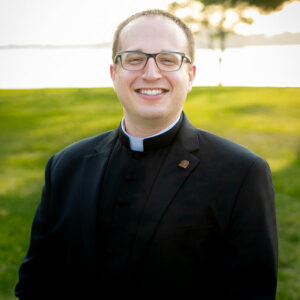

Father Zach Samples is a native of our diocese, hailing from Mt. Zion.  After graduating with a Master’s degree from his beloved Eastern Illinois University, he entered seminary formation at St. Meinrad Seminary.  Father Samples has been blessed with many gifts and I am confident that he will serve our diocese well.  He begins his priestly ministry at St. Peter’s Parish in Quincy, while also helping out as a chaplain at Quincy Notre Dame Catholic High School.
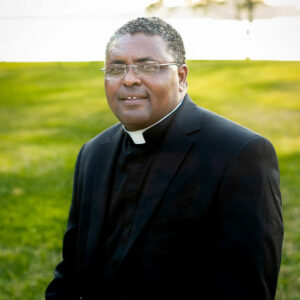

Father Paul Lesupati is a native of Kenya, and his coming to our diocese is a true sign of God’s Providence.  He had met Father Jeff Grant, Pastor of Blessed Sacrament Parish in Springfield, who was on sabbatical in Kenya, working in a refugee camp.  Father Grant noticed a unique gift in Paul and asked if he had ever thought about the priesthood.  In fact, Paul had, having been in religious life as a Franciscan for a few years.  Father Grant referred Paul to me, and the rest is history!  Here at the Cathedral, we will be getting to know Father Lesupati well as he begins his priestly ministry to the diocese here as our new Parochial Vicar.


Please pray for these men as they begin this exciting adventure as priests in our diocese.  Please pray for our seminarians as they continue their formation that will lead them one day, God-willing, to share in this great gift of service to the people of God.  As I did at the beginning of the month, let us commend these men, as well as all of the priests of our diocese, to the prayers of Mary, Mother of Priests, that through her intercession, we may serve you and all of the faithful with the zeal and love that you all deserve as children of God, brothers and sisters in the Lord.

Father Alford

St. Justin Martyr

Feast Day: June 1st  

Just a bit more than a century after Jesus ascended to His Father, a philosopher in Rome, who had found annoying and empty all the philosophies of his day, and been converted by an extraordinary conversation on the beach with an old man who introduced him to Jesus’ fulfillment of the prophets, wrote an extraordinary letter to the Emperor.  Antonius Pius had been ruling the Roman Empire since 138, so he was now into his second decade of his reign.  The empire was at peace.  Antoninus never led armies into battle, in fact, he probably never went within 500 miles of a Roman Legion, who were adroitly quelling various problems on the outskirts of the empire.  He governed well, expanded Rome’s infrastructure including its marvelous aqueducts bringing free and clean water to all, built temples and promoted the arts and philosophy. He was an ideal emperor to receive Justin’s letter:

To the Emperor Titus Ælius Adrianus Antoninus Pius Augustus Cæesar… and to the sacred senate, with the whole people of the Romans, I, Justin… present this address and petition in behalf of those of all nations who are unjustly hated and wantonly abused, myself being one of them. Reason directs those who are truly pious and philosophical to honour and love only what is true, declining to follow traditional opinions, if these be worthless. For not only does sound reason direct us to refuse the guidance of those who did or taught anything wrong, but it is incumbent on the lover of truth, by all means, and if death be threatened, even before his own life, to choose to do and say what is right. Do you, then, since ye are called pious and philosophers, guardians of justice and lovers of learning, give good heed, and hearken to my address; and if ye are indeed such, it will be manifested. …

He spends many pages outlining for the emperor the truths that Christians believe, explaining how it is a reasonable religion and should be at least tolerated alongside of all the other religions then swirling around the Roman Empire.  But his purpose is not just to clarify, but also to evangelize, he spends many chapters explaining Jesus as the Logos-Incarnate, God-made-man, and then gives the emperor an account of the Church’s practices. It is to these words that I want to turn:

But we, after we have thus washed him who has been convinced and has assented to our teaching, bring him to the place where those who are called brethren are assembled, in order that we may offer hearty prayers in common for ourselves and for the baptized [illuminated] person, and for all others in every place, that we may be counted worthy, now that we have learned the truth, by our works also to be found good citizens and keepers of the commandments, so that we may be saved with an everlasting salvation. Having ended the prayers, we salute one another with a kiss. There is then brought to the president of the brethrenbread and a cup of wine mixed with water; and he praise and glory to the Father of the universe, through the name of the Son and of the Holy Ghost, and offers thanks at considerable length for our being counted worthy to receive these things at His hands. And when he has concluded the prayers and thanksgivings, all the people present express their assent by saying Amen. This word Amen answers in the Hebrew language to γένοιτο [so be it]. And when the president has given thanks, and all the people have expressed their assent, those who are called by us deacons give to each of those present to partake of the bread and wine mixed with water over which the thanksgiving was pronounced, and to those who are absent they carry away a portion.  

Notice that already, just a few decades after the death of the Apostles, and over a century beforethe great waves of persecution that would seek to destroy the Church under Diocletian, we already have a foundational belief in the Divinity of Christ, a recognition that if Christianity is true, every other philosophy and religion is at best incomplete.  We already see the Church having bishops, priests, and deacons, and emphasis that divine life is given in Baptism and that the Eucharist is really, truly, Jesus’ Body and Blood, and we can only receive it if we have received from God faith and forgiveness and continue to live in His truth.  I stop here for this week.  We will return to Justin’s letter next week to see what he knows to be the life that Christians are called to from all of these truths.

– Fr. Dominic Rankin while studying in Rome, went with other priests and seminarians from Illinois for lunch to a restaurant in a town outside of Rome. There were rumors that St. Justin was buried in the Church there, but we were saddened to find the Church was not open Sunday afternoon.  Turns out, his remains are not in Italy, at least not all of them.  After he was beheaded, Justin’s relics were treasured by the Church and reverenced in various Churches in Italy all the way until the 1800s, during which, at a time of upheaval in Italy, they were given to a priest of Baltimore, Maryland.  There they stayed until rediscovered in 1989, at which point the Church of St. Mary’s in Annapolis, MD, gave them a proper burial.

Mass Intentions

Monday, May 30

7am – Betty Lou Rogers
(Loretta Midden)

5:15pm – NO MASS

Tuesday, May 31

7am – 30th Anniversary for Karen & Dan
(Family)

5:15pm – Lessie M. Dortch
(Larry and Beverly Smith)

Wednesday, June 1

7am – John Montgomery
(John Busciacco)

5:15pm – Norma Bartoletti
(Estate)

Thursday, June 2

7am – Rick Weitzel
(Tom Steil & Sharon Oldfield)

5:15pm – Shirley Logan
(Lisa Logan & Lori Logan Motyka)

Friday, June 3

7am – Dr. John Snodsmith
(Lou Ann Mack & Carl Corrigan)

5:15pm – A Special Intention
(Julie Berberet)

Saturday, June 4

8am – Pamela Harmon
(Karen Hukelmare & Family)

4pm – For the People

Sunday, June 5

7am -Kyle Buckman
(Karen Marruffo)

10am – Betty Rogers
(Glen Rogers)

5pm – Pat Tadlock
(O’Brien Family)

Mass Intentions

Monday, May 23

7am – O’Laughlin Family
(Mary O’Laughlin-Kathleen)

5:15pm – Jean Powers
(Berni Ely)

Tuesday, May 24

7am – Lillian Sgambelluri
(Rob & Jan Sgambelluri)

5:15pm – Kate Rossi
(Sophia Gunter & Family)

Wednesday, May 25

7am – Sophia Bartoletti
(Estate)

5:15pm – Father Christopher House
(Chris Sommer)

Thursday, May 26

7am – Jean Powers
(Berni Ely)

5:15pm – Living & Deceased

Members of the Patterson Family
(Anonymous)

Friday, May 27

7am – Betty Rogers
(Lou Ann Mack & Carl Corrigan)

5:15pm – NO MASS

Saturday, May 28

8am – NO MASS

4pm – Diana J. Schumacher
(Daniel Schumacher)

Sunday, May 29

7am – Dale Spore
(Vicki Compton)

10am – Sophia Bartoletti & Family
(Estate)

5pm – For the People

On Christian Love

A major theme running throughout the Gospels for the season of Easter is love.  A few weeks ago, we heard the dialog between Jesus and St. Peter as the Lord asked Peter three times: “Do you love me.”  The following Sunday, we heard about Jesus as the Good Shepherd, who lovingly cares for His flock, the Church, even to the point of sacrificing Himself.  Last Sunday, we heard Jesus give His disciples a “new commandment”, that we should love one another as He has loved us.  Thus Sunday, Jesus says: “Whoever loves me will keep my word.”

I sometimes fear that this word “love”, especially as it is used in our Christian context, is misunderstood.  The type of love to which we are called to as Christians is necessarily radical, which I think is one of the reasons Jesus tells us to love as He has loved us, which involves the total gift of Himself for the good of others, not for His own benefit.  Not that there is no room for other forms of love in which we receive affection and support, but we as Christians always need to strive for the Christ-like love toward others.

At the foundation of our love for others is our uncompromising recognition of the dignity of every human life at ever stage.  It can be tempting to think that the Church only cares about the dignity of life for children in the womb, since that is what we so often hear about when it comes to respect for life.  But the Church is likewise insistent that we must see all life as a gift, for each person is a unique, unrepeatable gift of God, created by Him and deserving of love.  No life is without dignity.  Period.  Regardless of the decisions a person has made, regardless of their social and economic status, regardless of their ethnicity, regardless of their gender, regardless of their age…regardless of anything, all life is a gift and deserves to receive love.  But remember that love is willing the good of the other, not condoning whatever they do, for the most loving thing we can do in some cases is to correct errors, call to repentance, and invite conversion.  

Christian love becomes radical when it asks us to show love to those who are the most undeserving in our mind.  Our country witnessed another horrific example of hatred last week in Buffalo when a gunman murdered 10 people and injured three others in what authorities believe to be a racially motivated attack.  One might ask how and if Christian love applies in this man?  I think you know the answer.  But what does that love look like?  As I mentioned earlier, it absolutely does NOT mean condoning such violence (or any of his motivations), for his actions took the gift of life from these innocent victims.  Christian love does not exclude punishment, for justice is not opposed to mercy.  It is well within Christian love to demand justice individually and collectively to address any affront against human dignity, but Christian love also leaves open the door for conversion.  Think of St. Paul, how he was involved in the persecution of Christians in the early Church, a persecution that led to many deaths.  Had Christians at the time not had a sense of the love to which the Lord was calling them, they would have taken his life and considered it justified.  But they did not.  They left room for the Lord to work in Saul’s (later Paul) hardened heart, to give him an opportunity for conversion, which led to his becoming one of the greatest Christians ever to live, responsible no doubt for countless conversions over the centuries.

Perhaps my bringing this up makes us feel a little uncomfortable thinking about love in the face of such hatred.  But once again, this is the radical nature of the love to which Jesus is calling us, and I stress that it is only possible through His love.  Left to ourselves, we will remain stuck in anger and hatred.  Please do not try to hear what I am not saying on this topic – an atrocity like the one in Buffalo is not acceptable and I am not downplaying it in any way.  It must be rejected and responded to, but I am inviting us to consider how we respond as Christians, not as the rest of the world would respond. In the early Church, Christians were seen as different than the rest of the world, and it was commented on by others: “See how they love one another.”  Would that the same could be said about us in how we live our lives, how we treat others, how we respond to evil, sin and suffering, that we do so always motivated by the love with which Christ responds – a love always seeking the good which is ultimately salvation, for the Lord “desires all to be saved and to come to the knowledge of the truth.”  (1 Tm 2:4)

Father Alford

Another Year Down

This Sunday evening will mark the official conclusion of our Family of Faith catechesis program.  As you hopefully know by now, this program is not just about the few families who have children in the program.  It is meant to include the entire parish.  This is why we have done our best to keep the topics for the program in front of you, especially in our weekly bulletin.  As we come to the conclusion of this year, I would like to revisit a point that I offered at the beginning of this year of formation regarding the moral life in Christ:

Do we truly appreciate that what Christ (and by extension the Church) teaches us and asks of us is actually a true path to freedom and joy?  We will only come to that understanding if we start with the person of Christ and our relationship with Him, hearing His words addressed to us that summarize His desire for us in offering us His teaching: “I came so that they might have life and have it more abundantly.” (John 10:10)  Do you desire this for your life, to have life and have it more abundantly?  I guarantee the answer for each of us is a resounding “yes”!  So what do we have to lose in following the way of life Christ and the Church invites us to live?  I hope you will come to discover, over the course of this year, that we have absolutely nothing good to lose.  Rather, by letting the life of Christ be lived in us, we have everything to gain, most importantly eternal life in Heaven.

In light of this goal that we had for this year, it can be fruitful to bring these points to our prayer.  How have you experienced a more abundant life in Christ through what you have learned over the past year?  Do you feel a greater sense of freedom that comes from following Christ more completely?  Where are you still feeling a lack of freedom in your life?  Where have you found joy over the past year, especially with regards to your faith?  Where have you experienced sadness?

These are just some suggestions to help you in processing this last year, but I want to stress that this processing is not just a private, individual exercise.  Share your thoughts, feelings, questions, desires, and struggles with the Lord in a very honest and authentic dialog.  As I mentioned, living the life of Christ is first and foremost about our relationship with Him, so I invite you to spend some time with Him as you consider these things.

Another very beneficial practice could be to share with another person or two, perhaps your family, some of what is moving in your heart as you consider how the Lord has been working in your life this past year.  While somewhat intimidating if you are not used to sharing on this level, the benefits can be profound, not just for yourself, but for others who will be inspired by your willingness to share on a deeper level. 

If you are not where you had hoped to be at this point in your journey with the Lord, do not be discouraged!  The Lord is looking upon you with great delight that you at least desire to love Him more and follow Him more faithfully, weak though you may be.  Ask Him to help you to continue to grow.  Go to our Blessed Mother too, asking for her continued encouragement and prayers.          Just as it delights a parent to be asked by their child to help them with something, so too does our Heavenly Father and our Blessed Mother delight in us when we ask for their help in a spirit of trust and love.

Father Alford

Buried with Christ in Baptism

One symbolic aspect of baptism that has largely been lost to our modern mind is the symbolism of being buried with Christ. The time that the body of Jesus spent in the tomb from Good Friday through Easter Sunday is actually very significant in our faith. According to the Catechism, the original and full sign of baptism is having one’s whole body immersed under water, which is a symbol of being buried in the ground with Jesus. St. Paul talks about this in his letter to the Ephesians when he says, “We were buried therefore with him by baptism into death, so that as Christ was raised from the dead by the glory of the Father, we too might walk in newness of life” (Ephesians 4:9-10). In the Church today, we typically baptize by pouring water on someone’s head, which has great symbolic value of washing away sin. Regardless, the same spiritual effects of baptism are always accomplished when a baptism is celebrated: adoption as God’s child and the forgiveness of all sin. I do admit that baptism by sprinkling is much simpler and less messy than full immersion!

One teaching of the Church that is not very widely know or talked about is that the body of Jesus did not experience any corruption during his three days in the tomb. God’s divine power miraculously preserved Jesus’ body from any sort of decomposition to stay prepared for and foreshadow the Resurrection. Now, Jesus was truly dead in the tomb. His soul separated from his body, went to the realm of the dead, and opened the gates of heaven. But there was still a sort of unity that Jesus kept with his body, even in death. This preservation is a fulfillment of Psalm 16 when it says, “My flesh will dwell in hope. For you will not abandon my soul to Hades, nor let your Holy One see corruption.”

The body of Jesus was treated with great respect between his death and resurrection because of the respect that his Mother and disciples held for him during his life. The Pieta is one of the greatest works of art ever made, and anyone who sees it is drawn in to consider the grief of Mary as she beheld the body of her dead son. As Christians, we are called to imitate Christ in many ways. We can even imitate Christ in death by showing great respect to the bodies of our deceased brothers and sisters. Our bodies are not free from the corruption of the tomb like Jesus’ body was. As we hear every Ash Wednesday, “You are dust, and to dust you shall return.” When we die, our bodies decompose until they are resurrected and reunited with our souls on the last day.

With all of this in mind, it is easy to see why the Church prefers that we bury the bodies of our loved ones, rather than disposing of them in some other way. Even in death, our souls keep a sort of connection with our bodies which will be rekindled in the resurrection. The Church does allow for cremation, and there can sometimes be good reason for this such as hygiene during an epidemic, burial in times of war, and most commonly, financial prudence. However, there is great symbolic value to burying our bodies intact, as the body of Jesus was buried. This reminds us that we are not done with our bodies when we die, but we await the glorious day when Jesus will return. Those who have done good will be raised to the resurrection of life, and those who have done evil to the resurrection of judgment (John 5:28-29). However, remember that no matter what happens to somebody’s body, God has no problem raising it back up! In this season of Easter, let us continue to give thanks to God for making us in his image and likeness, with the plan for us to live forever with him in heaven!

St. Christóbal Magallanes and Companions

Feast Day: May 21st

I hate to disappoint anyone, but there is not an overarching scheme in my choice of the saint for each week.  I look ahead to see who the Church is celebrating, I keep somewhere in the back of my mind the theme of our faith-formation for the month (our Journey to Heaven), and then I do some digging on each saint to see whether one leaps to the top of the list. 

This week it was immediately St. Christopher Magallanes and Companions.  I emphasize “and companions” because as soon as I saw that I knew I had to look into these saints.  Saints often come in pairs or triplets – think of Basil, Gregory, Gregory, Macrina, Naucratius, and Peter (of 4th century Cappadocia), or John of the Cross and Teresa of Ávila (of 16th century Spain), or St. Teresa of Calcutta and John Paul II (of 20th century Europe) – and then there are the abundant moments when God pours out grace for many to come to sanctity at the same time. 

The 22 others canonized with Christóbal were not all martyred at the same time, but they were martyred with the same heart.  As persecution gripped Mexico in the 1920s, these priests and laymen each chose to continue to minister as they could under the radar.  It was a crime to celebrate the Mass, to baptize, or teach, but they continued to walk from village to village and offer the sacraments and the solace of grace to those who would come for it.  Violence exploded around them as churches were burned, looted, and desecrated. One particular governor named his sons “Lenin”, “Satan”, and “Lucifer” and his livestock “God”, “Pope”, “Mary”, and “Christ”.  Such was the society these men found themselves living in. 

It was not a slow, imperceptible squeezing of Christianity out of life, it was a quick and brutal attack on Jesus and His followers.  So also would be their deaths.  I turn my focus upon just Father Magallanes and Father Caloca (his companion), who were walking out to celebrate Mass for the feast of St. Rita of Cascia (May 22nd).  They encountered a shootout between the Christeros and Federal forces, were arrested and hauled off to the local governmental headquarters. They had no rights, no defense, and no trial, and after three days were marched from their cells to their deaths.  The two priests gave each other absolution, encouraged each other in faithfulness, and Fr. Magallanes shouted his final words “I am innocent and I die innocent.  I forgive with all my heart those responsible for my death, and I ask God that the shedding of my blood serve the peace of our divided Mexico.”

These were average men and ordinary priests.  Fr. Magallanes had worked as a priest for 20 uneventful years before persecution broke into his world.  He was angry, as anyone would be, at the injustice of his arrest and the absurdity of the hatred directed against him, against the Church, against the poor Christians trying to keep their faith, and against Our Lord Who came to bring us into the Father’s Love. Yet he held onto that love not only in the ordinary years, but also those last horrible days, and so did all those who are now venerated with him, and so must we. – Fr. Dominic Rankin would be very happy to just be a companion of a saint: Just latch onto the holiness and love in someone else and, through and with them, hang on to Jesus all the way to heaven!

Mass Intentions

Monday, May 16

7am – Joe Forestier
(Judy Mohler)

5:15pm – Anna Geraldine Gasaway
(Rob Gasaway)

Tuesday, May 17

7am – Will
(Family)

5:15pm – Prestina V
(Ann Vaduk)

Wednesday, May 18

7am – Sister Consolata Crews
(Chris Sommer)

5:15pm – Erma Bartoletti
(Estate)

Thursday, May 19

7am – Jean Staab
(Fred & Rita Greenwald)

5:15pm – Delia Sinn
(Pamela Hargan)

Friday, May 20

7am – Sophia Bartoletti & Family
(Estate)

5:15pm – Living & Deceased
Members of the Schmitz Family
(Anonymous)

Saturday, May 21

8am – Wilbur “Bill” West Family
(Carol West)

4pm – For the People

Sunday, May 22

7am – Pamela Rose Harmon
(Archie Harmon)

10am – Vito Sgambelluri
(Rob & Jan Sgambelluri)

5pm – Greg & Mary Kluckman’s
40th Anniversary
(Greg & Mary Kluckman)

World Day of Prayer for Vocations

For the past 59 years, the Church has observed the 4th Sunday of Easter as the World Day of Prayer for Vocations.  The reason for this can be found in the Gospel we hear each year on this Sunday.  Although there is a three-year cycle of readings, the Gospel on this Sunday is always drawn from a section of John 10, where Jesus identifies Himself as the Good Shepherd.  He invites others to share in His shepherding of the flock by calling certain members to a religious vocation as a priest, deacon, or religious brother/sister.  Jesus has commanded that we pray for those called to these vocations when He said: “Pray the Lord of the harvest to send laborers into his harvest.” (Mt 9:38; Lk 10:2)

While browsing some resources for this day of prayer, I came across two prayers that stood out that I would like to share, inviting us to join in praying on this day.  The first prayer is a prayer that families can pray together for vocations.  What makes this prayer unique (and perhaps challenging) is that is asks for openness to a vocation within the family.  I have heard stories in the past of how families are happy to commit to praying for vocations but are hesitant for that prayer to apply to their own family.  Give this a shot, especially if there are still children in your family who do not yet know their vocation:

FAMILY PRAYER FOR VOCATIONS

Father, increase our family’s love for one another.
May we honor each other in times of happiness or hardship,
bearing with one another in love, just as You love us.

In a special way, help us strive for holiness in our current states of life.
Should You call some of us to the priesthood or religious life,
help us to respond with courage and joy.

Together, we make heaven our goal, and pledge, with Your grace,
to help each other on life’s journey to You.

Through the intercession of the Holy Family:
Jesus, Mary, and Joseph.
Amen


The second prayer is one that I saw a couple of weeks ago while sitting next to another priest at a training session I attended.  It is a beautiful prayer for priests, the shepherds Jesus has already chosen to minister to His flock, asking His protection on them all in their various circumstances:

DAILY PRAYER FOR PRIESTS

By St. Therese of the Child Jesus
O Jesus, I pray for Your faithful and fervent priests;
for Your unfaithful and tepid priests;
for Your priests laboring at home or abroad in distant mission fields.
for Your tempted priests;
for Your lonely and desolate priest
for Your young priests;
for Your dying priests;
for the souls of Your priests in Purgatory.

But above all, I recommend to You the priests dearest to me:
the priest who baptized me;
the priests who absolved me from my sins;
the priests at whose Masses I assisted and who gave me Your Body and Blood in Holy Communion;
the priests who taught and instructed me;
all the priests to whom I am indebted in any other way.

O Jesus, keep them all close to Your heart,
and bless them abundantly in time and in eternity.
Amen.

Father Alford

« Previous Page
Next Page »

Liturgy

Sunday Masses (unless noted differently in weekly bulletin)
Saturday Evening Vigil – 4:00PM
Sunday – 7:00AM, 10:00AM and 5:00PM

Weekday Masses (unless noted differently in weekly bulletin)
Monday thru Friday – 7:00AM and 5:15PM
Saturday – 8:00AM

Reconciliation (Confessions)
Monday thru Friday – 4:15PM to 5:00PM
Saturday – 9:00AM to 10:00AM and 2:30PM to 3:30PM
Sunday – 4:00PM to 4:45PM

Adoration
Tuesdays and Thursdays – 4:00PM to 5:00PM


CatholicMassTime.org

Parish Information

Parish Address
524 East Lawrence Avenue
Springfield, Illinois 62703

Parish Office Hours
Monday thru Thursday – 8:00AM to 4:00PM
Fridays – CLOSED

Parish Phone
(217) 522-3342

Parish Fax
(217) 210-0136

Parish Staff

Contact Us

Contact Us

Copyright © 2025 · Log in