The Bible. For some, the very words evoke feelings of warmth and wisdom, but for many Catholics today, the Bible can be chronologically confusing and its meaning hard to grasp. How tragic this is in light of the fact that as Pope Leo XIII said, “Scripture is a Letter written by our Heavenly Father” to his children for the purpose of revealing himself to them.
Those who come to the Holy Bible for the first time could expect to open at the beginning of Genesis and read on through to Revelation with the same ease and excitement as reading the novel Gone With The Wind. But it doesn’t take the novice long to figure out that the Bible doesn’t read like a popular novel. In fact, it isn’t put together as a sequential narrative; rather the books are grouped by literary types. Consequently, the once-excited inquirer puts the untapped treasure back down on the coffee table with a sigh of “what’s the use?”

History of Salvation and the World
An important challenge facing the reader is to find and understand the basic storyline of salvation history within the Bible’s pages. We are not talking at this stage about understanding detail, but rather grasping the scope of the divine story, the “big picture.” The Bible, although made up of many stories, contains a single story. In a nutshell, it is about God and his relationship with mankind, the most complex part of his creation, and the true object of his love and affection. It is mankind that would betray God, and yet God, in turn, would die for.
Starting with the first chapters of Genesis on through the book of Revelation, God gradually reveals his plan to re-establish the broken relationship between himself and his treasured creation. It is only in God’s revealed plan that mankind once again finds its intended purpose for being “because man is created by God and for God; and God never ceases to draw man to himself. Only in God will he find the truth and happiness he never stops searching for” (Catechism of the Catholic Church, 27).
It is important for the modern Catholic to understand that, although the Bible is a mystery on one level, it is also a book of history. There should be no misunderstanding—it is true history as opposed to cleverly devised tales. Pope Paul VI said in the Second Vatican Council document, Directorium Catechisticum Generale (Sacred Congregation for the Clergy):
“the history of salvation is being accomplished in the midst of the history of the world.”
The Bible gives a wide range of examples of how through word and deed God has entered the life of his people.
The Narrative Approach
The difficulty facing Bible readers is how to make this personal yet ancient story of salvation history come alive. They must discover the critical plot and, through the guidance of the Church, understand its meaning in order to make it their own story. Dei Verbum emphasizes the importance of using the contemporary literary form to search out the meaning of the Sacred Scriptures:
“To search out the intention of the sacred writers, attention should be given, among other things, to ‘literary forms.’ For truth is set forth and expressed differently in texts which are variously historical, prophetic, poetic, or of other forms of discourse. The interpreter must investigate what meaning the sacred writer intended to express and actually expressed in particular circumstances by using contemporary literary forms in accordance with the situation of his own time and culture.” (DV 12)
The first step to understanding the Bible chronologically as a story is to identify which of the seventythree books are of historical nature. The term “historical” refers simply to those books that keep the story moving from one event to another. Not all books in the Bible are historical accounts, some are poetic in nature, some are wisdom literature, and some prophetic. The historical books provide us with continuity or give us an ordered account of connected events from Genesis to Revelation. This is called the narrative approach and was common among early Church Fathers such as St. Ambrose and St. Augustine.
Becoming Christian
There are twelve historical books in the Old Testament and, for the sake of simplicity; two historical books in the New Testament (Genesis, Exodus, Numbers, Joshua, Judges, 1 & 2 Samuel, 1 & 2 Kings, Ezra, Nehemiah, 1 Maccabees, Luke and Acts). These books provide the narrative structure on which all the other books hang.
Flowing from the written word, the Catechism moves into the second pillar, the sacraments and liturgy. What are the sacraments and liturgy in relation to the written word? The sacraments and Liturgy provide us with the means of entering the story declared in the Creed, the first pillar.
“From the time of the apostles, becoming a Christian has been accompanied by a journey and initiation in several stages.” CCC, 1229
Certain essential elements will always have to be present: a proclamation of the Word, acceptance of the gospel entailing conversion, a profession of faith, and baptism itself. Throughout this faith journey, the sacraments provide direct encounters with Christ, resulting in the grace of God, which is the life of the Trinity. The new believer travels through initiation (baptism, confirmation and the Eucharist) and participates in the sacraments of healing (penance and anointing of the sick), and service (holy orders and marriage).
Life in Christ
Once the new believer is initiated into the story (Creed) through the sacraments they move into life in Christ, the third pillar of the Catechism. What is life in Christ in relation to the Creed, Liturgy, and sacraments? Life in Christ is our personal and communal script on how to live. Because the Church is the body of Christ, we live the life of Christ in the world. In this pillar we learn about the moral life, virtues, sin and our relationship with society. With the Ten Commandments as a backdrop, we learn how to conduct ourselves along the journey of faith.
Prayer
Prayer, which makes up the fourth pillar of the Catechism, provides us with the guidelines to fortify a close personal relationship with God. There are several wellsprings where Christ awaits us to enable us to drink deeply of the Holy Spirit; the Word of God, the Liturgy and the theological virtues.
Through prayer we can drink more deeply from the Word of God and participate more fully in the sacramental life. It is in prayer that our bond with God grows deeper and with an understanding of the three previous pillars, our understanding of revelation becomes more profound.
This is the third and final installment in the Scripture & Tradition series. It was published on the Great Adventure Blog, the Ascension Blog’s former home, on April 19, 2015. Both previous installments were also published in last week’s Weekly, which can be found on our Cathedral website.
Jeff Cavins is passionate about helping people understand Scripture and become disciples of Jesus Christ. Though he was born Catholic, Jeff went to Bible school and served as a Protestant minister for twelve years before reverting to the Catholic Faith. He then quickly became a leading Catholic evangelist and author. Jeff is best-known for creating The Great Adventure Bible study programs published by Ascension, which have been used by hundreds of thousands of people to engage in Scripture in a life-changing way. In addition to The Activated Disciple, some of his other recent projects include his podcast, The Jeff Cavins Show, and the Great Adventure Bible studies, Ephesians: Discover Your Inheritance, and Wisdom: God’s Vision for Life.
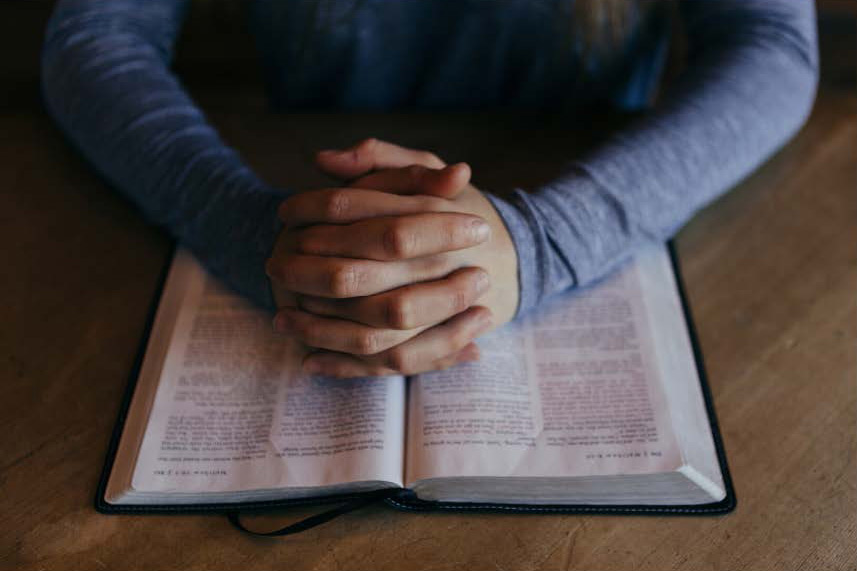
 We were created for community. Human beings are not meant to be alone. As each of us grows in our relationship with Jesus, we find ourselves drawn further into community. Our stewardship never reflects just on us, but on the Body of Christ to which we belong.
 Following the Lord’s Ascension into heaven, the Apostles were gathered once again in the Upper Room where the Lord had instituted both the Eucharist and the Priesthood at the Last Supper. It was also the place where He first appeared to them following the Resurrection. Tradition tells us that the Apostles were not alone on this particular day and that Mary, the Mother of the Lord, was with them. Jerusalem was filled with Jews who had come to the holy city for the feast of Pentecost, a feast celebrating the wheat harvest that was celebrated seven weeks and one day (50 days) following Passover. That particular day was a day that would forever change the face of the earth.
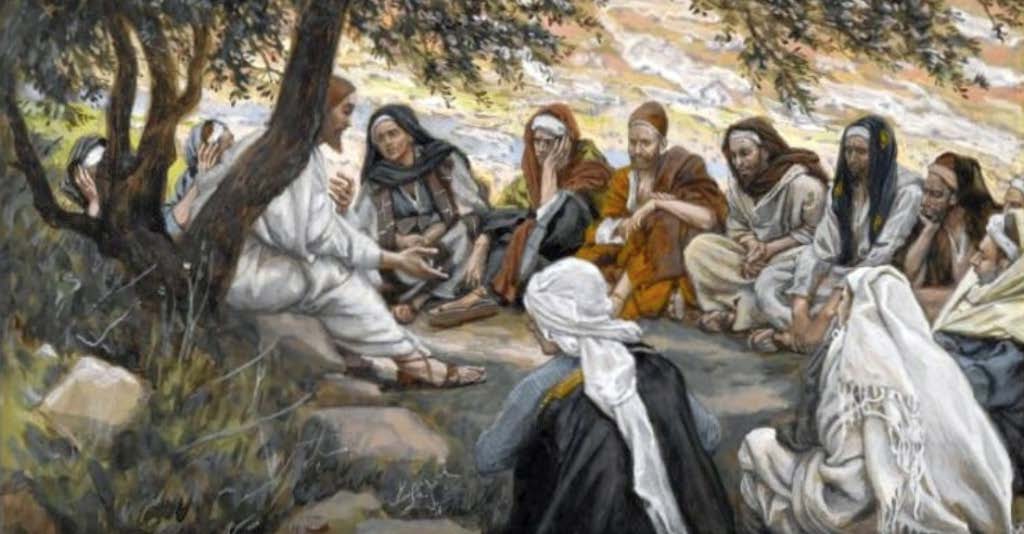

 It is an all too common occurrence, Catholics leaving the Church because one well-intended Bible-believing Christian challenged their faith by asking one question, “Where is that in the Bible?” Suddenly, the scope of truth has been confined to a single book, the Bible, without either party realizing that they have bought into a collection of unexamined presuppositions. Namely: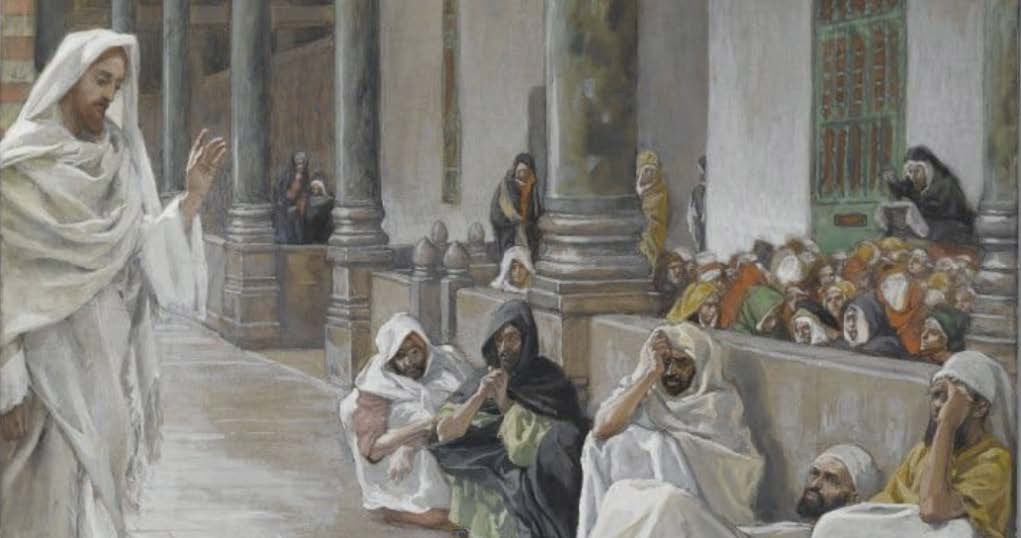
 Have you ever Googled the word “love”? If you did, you may have come across something called the Love Calculator. It is a website where you can supply two names, and the percentage chance of a successful relationship is calculated. Curious, I entered my name and my wife’s. Twenty percent! I hope my wife doesn’t read this!