Not so long ago, my prayer time consisted of presenting a long list of requests to God. Although they were heartfelt and genuine, I gradually became aware that I was doing all the talking, describing the problem to God (which He clearly knew anyway!), and telling God what I thought ought to be done about it. I didn’t give God much opportunity to guide my thoughts while I was praying.
But gradually, I’ve begun to explore different types of intercessory prayer (ways to pray for others). Rather than bombarding God with my ideas and requests, I’m learning to listen as I pray. I spend a few minutes silently considering each situation and wait to get a feeling about what to pray. Sometimes I don’t verbalize a specific prayer – I simply whisper the person’s name a few times. Here are a few suggestions to inspire you toward more creative intercessory prayer.
1. Making my prayer journal creative
My prayer journal has become much more than a notebook filled with names. I use a large scrapbook, and each page is different. For example, Gambia (where I live for several months each year), has recently gone through a period of turbulence, so my Gambia prayer page includes a map and some of my favorite photos. My journal also has a photo montage of my family. On several pages, I’ve written someone’s name and embellished it with felt pens and watercolors as I pray for them. On others, I’ve recorded scripture verses I feel prompted to share with them.
2. Creating a prayer tree
Last summer I created a prayer tree by arranging some twigs in a large vase. I cut leaves from cardstock, added a hanging loop, and then wrote the name of each person I prayed for on a leaf.
As the summer progressed, the twigs became increasingly festooned with leaves. Each time I entered the room, the tree was a gentle reminder to pray.This method was also a great encouragement because I could look at older leaves and thank God for answered prayers.
3. Praying with crafts
Make use of your crafting ability to pray for others by crocheting blankets for the homeless, making twiddle muffs or fidget quilts for patients with dementia, or knitting small hats for babies born in prison.
As a keen crafter, I felt moved to knit some tiny burial gowns to help families whose babies were stillborn. As I knitted each gown, I prayed for the parents who would receive it, that God would soothe their suffering.
This holds good for your friends and family too – while I sewed fleecy tops as Christmas gifts for my grandchildren, I prayed for them. While I believe that the very act of such crafting can be a practical prayer, there’s also the opportunity to pray as you work, or perhaps listen to a recorded meditation, such as a Rosary CD.
4. Using a printable calendar
Printable calendars are great for creative prayer. We can insert prayer requests in advance, adding important dates like a friend’s birthday or upcoming surgery. We can use it like an Advent calendar, by noting important prayers for each day beforehand, then covering it with another paper layer containing doors. Open one door each day to reveal the prayer topic.
Printable calendars can also be used progressively. Spend a few moments in quiet contemplation then fill in each daily square as you feel directed by God. Praying in Color has free printable calendars as well as many other creative prayer resources to inspire you.
5. Going on a prayer walk
A prayer walk can be done on your own or with friends. It could be as simple as taking a walk along your street and praying briefly for each house as you pass. Taking your walk further afield gives you the opportunity to pray for your wider community, including those who work at places such as the hospital, local government offices, emergency services, or neighborhood stores. Include churches, schools, community centers, and those helping others like homeless shelters or a food pantry. Even the smallest community has a host of needs.
Praying for others doesn’t have to be a rote practice. Once we begin using more creative ways to pray, we can find dozens of sources of inspiration. When we learn to listen more carefully to God’s gentle prompting throughout the day, we really can “pray without ceasing.”
Elizabeth Manneh is a freelance writer, sharing her time between the UK and The Gambia, West Africa. She’s written for many publications, including Huffington Post, ReadersDigest.com, and The Good Men Project. She’s on a lifelong exploration to find ways of bringing God into all aspects of her everyday life.

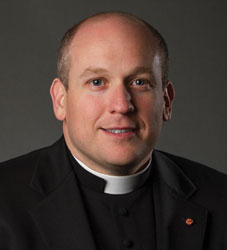 A little under two weeks ago, word began to spread around social media regarding a young priest in a midwestern diocese who was found to have taken his own life. News of this kind is always hard because, as the Catechism of the Catholic Church teaches, “suicide contradicts the natural inclination of the human being to preserve and perpetuate his life (CCC 2281).” I must admit that, even though I did not know this priest, this news hit me at my core and dogged my thoughts for several days.
 Several years ago, my church hosted an Arise night. Arise Milwaukee is a group that helps people fall in love with Jesus in the Catholic Church. An Arise night is no small feat and I was the point person for the parish. After the first planning meeting, I heard God tell me to say a Rosary every night until the event. I’ll admit, my response was, “Are you sure? That’s” (quick counting) “forty days away!” I decided to sleep on it. The next morning the request returned and the fact that forty is a pretty biblical number was making it hard to say no.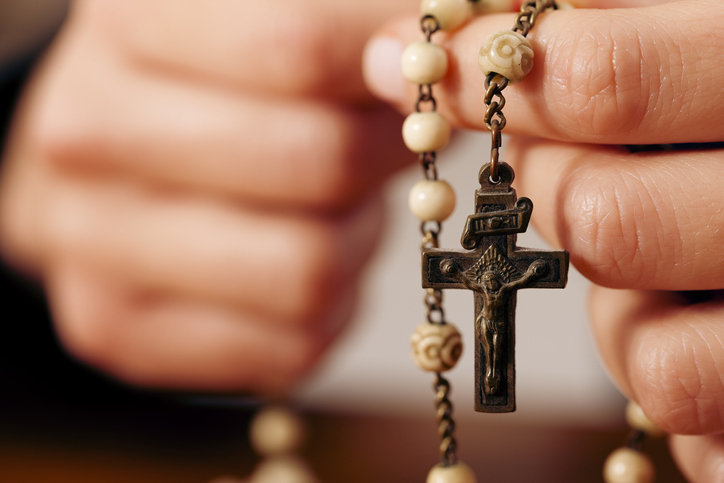
 The prophet Isaiah is both concise and profound: “If you remove from your midst oppression, false accusation, and malicious speech; if you bestow your bread on the hungry and satisfy the afflicted; then light shall rise for you in the darkness, and the gloom shall become for you like midday.” These words direct our attention to the sacredness of human life and human dignity. Without mincing any words, Isaiah sees no compromise when it comes to our relationship with the hungry, homeless, naked, and afflicted. Jesus insisted on the centrality of these relationships and directly stated that what you do to one of the least of these you do to him.
 I was 50 years old before I learned that I had a superpower and that it would help me carry out a special and unique mission. And that I wasn’t the only one; every baptized person has a mission and “superpowers” with which to accomplish their mission. My mission, or call, and yours comes from God. But most Catholics do not know that they have been given a call from God. It is not just for Saints or a small number of special people. It is an ordinary experience. All of us have a contribution to make to the Kingdom of God that is unique and irreplaceable and that really matters.