Cathedral of the Immaculate Conception

Springfield, IL

  • About
    • Contact Us
    • History of the Cathedral
    • Liturgical Schedules
    • Parish Staff
    • Register with Cathedral
    • Subscribe to the Cathedral eWeekly
  • Sacraments
    • Baptism
    • Becoming Catholic
    • Matrimony
    • Vocations
  • Ministry List
    • Adult Faith Formation
    • Cathedral Meal Train
    • Cathedral Online Prayer Wall
    • Cathedral Concerts
    • Family of Faith
    • Grief Share
    • Health and Wellness
    • Spiritual Resources
  • Stewardship
    • Stewardship: A Disciple’s Response
    • Stewardship Form
  • Support
    • E-Giving Frequently Asked Questions
    • Give Online
  • Sunday News
    • Announcements
    • Cathedral Weekly
    • Livestream Feed
    • Submit a Mass Intention Request
    • Weekly or Announcement Submission

The Magi

As I have shared in the past, ever since I was a kid I have had a fascination with the Magi and that fascination evolved into a religious devotion to these mysterious, sainted travelers. The Gospel of Matthew tells us little about them, and history and Tradition do not tell us much either. Matthew names three gifts of gold, frankincense and myrrh and so developed the tradition of three individuals who have been given the names of Caspar, Melchior, and Balthasar.

Popularly, we have called them kings and wise men; the former in an attempt to show fulfillment of Old Testament prophecies and the latter being possibly more accurate. The Scriptures only give them the title of Magi, plural for mage. Another tradition says that they came representing Europe, Africa, and Asia, but that is probably not the case either. Most historians and Scripture scholars point to their origin as being from ancient Persia, modern day Iran. They were likely followers of Zoroastrianism, which, in its more ancient form, placed an emphasis on the study of the stars by its priests.

Matthew’s Gospel tells us that they observed “the star at its rising.” What they exactly saw we do not know. Modern day astronomers have suggested a possible supernova or an unusual alignment of planets. The fact that this may have been a natural phenomenon does not in any way diminish the fact that this sign heralded a supernatural event on earth; after all, does not creation serve its master and creator? More fascinating still is that there is evidence that this astronomical event took place within the constellation of Aries which was the Zodiac sign for Judea and would have lead the Magi to Jerusalem its capital and then on to Bethlehem following their audience with Herod.
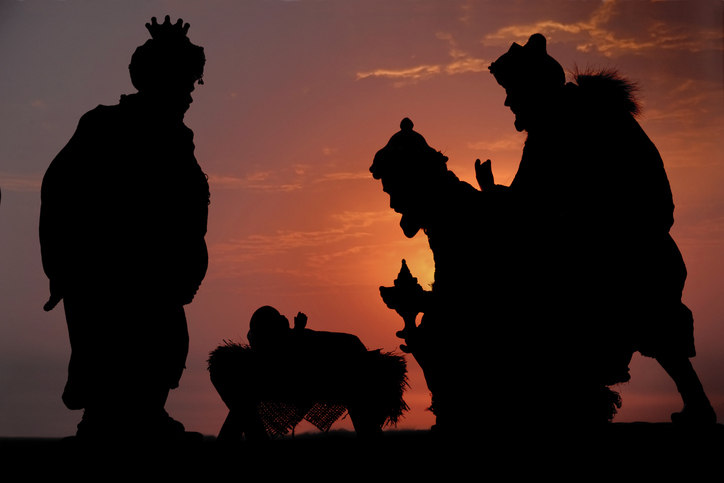
Following the star would not have been easy. The journey from Persia to Bethlehem would have been long, difficult and fraught with danger, yet the Magi made the journey. Why? God called them. On their hearts was placed the hope that something wonderful was waiting for them beneath that star. While they were guided by the star’s light, it was actually faith and hope that moved them. They did not know where they were going, when the journey would end, or what they would find, but they were called and they went.

So what happened to the Magi? Neither Matthew’s Gospel, nor any of the others, tell us anything more about the Magi. There are a few traditions concerning them that say that they themselves became disciples and were eventually martyred for their faith in Christ. In the fourth century, St. Helena brought many relics from the Holy Land back to Rome and among those relics were the bones of the Magi, however, she took them to Hagia Sophia in Constantinople, not Rome. After a short time, the relics were transferred to Milan where they rested until being transferred to Cologne in 1164, where they remain to this day in its cathedral.

The story of the Magi remains relevant for us as disciples. God is always calling to us, many times through the natural realities of our lives, beckoning us to follow the light that leads to him. The path is not always easy, sometimes we do not know where we are going, and maybe we might ask ourselves at times is the journey worth it? The Magi did indeed find the journey worth it because in presenting their gifts to the Christ child they were given a special gift: the joy that comes from God alone.

Of course, there is a great tragedy in this story and that is Herod and his brutal decision to murder all boys in Bethlehem two years old and younger. God was calling Herod also, not through the star, but through the Magi when they came asking about the new born king. Herod was closed off to everyone but himself and was only concerned with following his own light. God was not seeking Herod’s throne or his kingdom, just his faith.

May the grace of this wonderful Solemnity of the Epiphany teach us to guard against being self-referential and closed off, from thinking that life is all about us, and that we have all the answers. May the grace of God open our eyes in faith to behold the many and varied ways that He is seeking to lead us through the challenges and difficulties of this life, to the path that ultimately will lead us to true life in Christ and the joy that He alone gives.

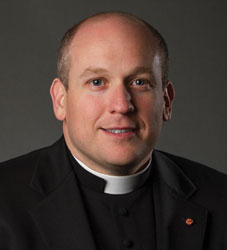
Father Christopher House is the Rector of the Cathedral and serves in various leadership roles within the diocesan curia, namely Chancellor and Vicar Judicial.
The Early Church Offers Guiding Light on Epiphany

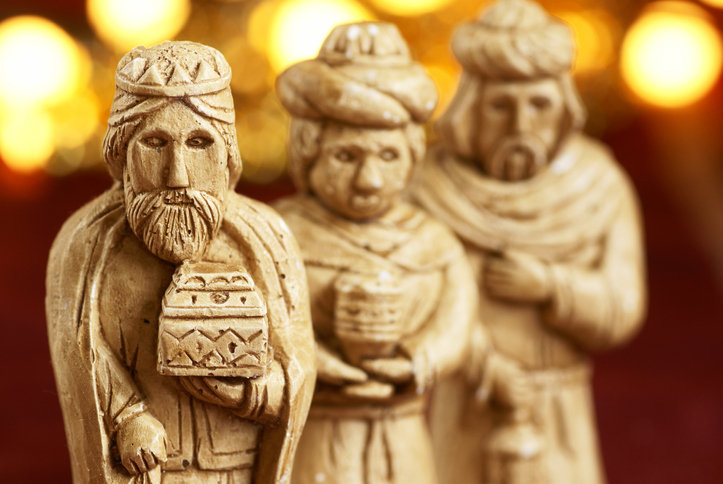
First the Son of God took on flesh and was born to the Blessed Virgin. Then his coming and his true identity had to be made known to the world. In a general way, that’s what the Solemnity of the Epiphany commemorates—the start of proclaiming the good news to every creature. More specifically, the solemnity commemorates Christ’s manifestation to the wise men, the first Gentiles to believe in him and worship him. The practices of the early Church and the teachings of Pope Leo the Great shed light on the meaning of the Epiphany.

St. Paul writes in his Second Letter to Timothy that God’s plan was “made manifest through the appearance of our savior Christ Jesus” (2 Timothy 1:10, emphasis added). The Greek for “appearance” comes into our language as “epiphany.” The word “epiphany” is defined as “an illuminating discovery, realization, or disclosure” (Merriam- Webster Dictionary). Now in the work of the New Evangelization, we continue to participate in the wonder of those first epiphanies by making Christ known.

Celebrating Christ Being Made Known If you were to attend a celebration of the Epiphany in the early local churches in the East, the gospel event actually celebrated would have differed from church to church. Some celebrated the birth of the Lord as the Epiphany. Others celebrated the message to the shepherds and the visit of the wise men. Many associated the Epiphany with the baptism of the Lord and some with his first public miracle at Cana. Some churches celebrated several of these events together as part of the Epiphany.

By the fifth century, the Church in the West had settled on the visit of the Wise Men as the main theme for the Solemnity of the Epiphany, since it is the first manifestation of Christ to the nations. The Epiphany was celebrated twelve days after Christmas on January 6, the date carried over from certain local churches in the East. The solemnity was celebrated for eight days, in what was called the Octave of the Epiphany. Various cultures developed customs surrounding the Epiphany. In some countries, the Epiphany, rather than Christmas became the day children received their gifts, and they received them from the wise men rather than from Santa Claus. Some cultures developed traditions involving “kings’ cake” that had a figurine of the Baby Jesus inside it. Others marked the solemnity by inscribing the traditional initials of the Wise Men together with the numerals of the new year with blessed chalk over the entrance door of the house. Today, following Pope Paul VI’s revised calendar, the Epiphany is celebrated on the Sunday that falls between January 2 and January 8, toward the end of the Christmas Season.

Pope Leo the Great on the Epiphany of the Wise Men Now let’s look exclusively at the Solemnity of the Epiphany as celebrated in the early western Church, in continuity with our own celebration of it. Pope St. Leo the Great, who reigned from 440 to 461 as Bishop of Rome, wrote an insightful series of sermons on the Solemnity of the Epiphany. Pointing out that the Gospel of the day told the story of the Wise Men’s visit, the Epiphany for Pope Leo was clearly on that theme and was a necessary follow-up to Christmas. Christ is not only born but revealed, and revealed not only to Israel but to the ends of the earth.

Like Leo, most of us are not in the bloodline of Abraham, the patriarch. The epiphany of the Wise Men, so early in Matthew’s Gospel, shows that we too have become part of God’s plan. God has fulfilled his word to the prophet Isaiah:

“The Lord has laid bare His holy arm in the sight of all the nations, and all the nations upon earth have seen the salvation which is from the Lord our God” (Isaiah 52:10, as quoted in Leo’s Sermon 36 on NewAdvent.org).

In the visit of the Wise Men, Pope Leo also sees the fulfillment of God’s covenant promises to Abraham. God promised Abraham that all peoples would be blessed through him (Genesis 12:3), that his descendants would be as numerous as the stars in the sky (Genesis 15:5), that he would be a father of many nations (Genesis 17:4), and that kings would come from him (Genesis 17:6).

For the Wise Men, the appearance of the great star meant the birth of a king, and this king was a descendent of Abraham. Further, this great star was the mode of invitation to the first Gentile believers, opening the door to countless peoples to join the covenant family of Abraham. For Pope Leo, these countless believers—ourselves included—are called to likewise be a multitude of guiding stars to others. By the witness of a holy life, we are called to point the way to Christ for others (Sermon 33). Pope Leo teaches that such a great grace and wonder behooves us to come together to praise God in a special solemnity (Sermon 34).

This great star was an invitation to the first Gentile believers, opening the door to countless peoples to join the covenant family of Abraham.

Pope Leo was famous in history for his Tome, delivered by his emissary at the Council of Chalcedon in 451. Upon hearing his words upholding the natures and person of Christ, the bishops at the council exclaimed, “Peter has spoken through Leo.” In his sermons on the Epiphany, Pope Leo shows confidence that the Holy Spirit revealed even to the Wise Men the truth of Christ being fully human and fully divine while united in (what future theologians would describe as) one divine person. Pope Leo teaches that we can perceive this from the gifts the Wise Men offered (Sermon 31).

The epiphany of the Wise Men shows God’s faithfulness to his promises of old and also prompts us to share his love with others. Pope Leo’s sermons are very conscious of God’s action in history. He connects the gospel both with the past and the present and teaches for transformation and conversion in Christ. He also stands with the Wise Men in awe of God’s power, love, mercy, and fidelity.

His approach must be ours as well for the Epiphany:

“Today those joys must be entertained in our hearts which existed in the breasts of the three magi, when, aroused by the sign and leading of a new star, which they believed to have been promised, they fell down in presence of the King of heaven and earth” (Sermon 36).

Michael J. Ruszala is the author of several religious books, including Lives of the Saints: Volume I and Who Created God? A Teacher’s Guidebook for Answering Children’s Tough Questions about God. He holds a master of arts degree in theology & Christian ministry from Franciscan University of Steubenville. He has served for a number of years as a parish director of religious education, parish music director in the Diocese of Buffalo, and adjunct lecturer in religious studies at Niagara University in Lewiston, NY. For more information about Michael and his books, visit michaeljruszala.com.

Faithful Friendship with the Poor and Service as Community

How we do something is just as important as why we do it. As Christians, we are well aware of the injunction to serve the poorest and the most vulnerable. The prophets of Israel continually challenged the Hebrew people with this message and berated them for ignoring it. Our Lord Jesus himself makes it the criteria for judgment and distinction between the “sheep” and the “goats” in the twenty-fifth chapter of Matthew’s Gospel. “…when I was hungry … thirsty … a stranger … naked … sick … in prison …”

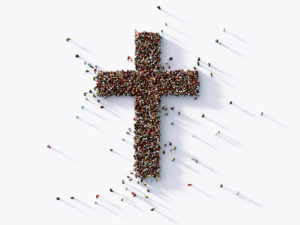
In a general sense, we have the “why” down. It is important to serve the poor. God wants us to. We will be judged on how we treat others. Our awareness of the dignity of the human person calls us to service. We have received so we, in turn, must give. Christ has a love for the poor so we, as his disciples, must also love the poor. There are blessings and life to be found in serving the poor. These and many more reasons make up the “why” of service.

The “how” is of more debate. Are the poor best served by advocating for justice, lobbying Congress, developing programs, volunteering at a soup kitchen, requiring service hours, helping people to help themselves, attending a fundraiser or adopting a child for a Christmas Angel Tree? Should we stick with just immediate needs or, as the moral tale goes, head up-stream in order to determine the source and font of the unease and violence of poverty? When it comes to the “how” things seem to quickly get very complicated – even political and partisan.

I do not pretend a full answer to the “how” of serving the poor. But I would like to propose two helpful principles in guiding service to the poor that I, personally, have learned from the Community of Sant’Egidio; both of which, I believe, are firmly rooted in the gospel message. The first is faithful friendship with the poor and the second is service as a community. It is a truism that there are unintended consequences to all actions we take, even the most altruistic and kind-hearted. More and more often, I find myself wondering if many of our common approaches to service to the poor might actually have the effect of highlighting the poor as a “means to an end” rather than as a person and therefore, a possible friend. We go to the nursing home to get our service hours. We participate in a Thanksgiving Day meal or a Christmas gift program in order to feel and understand what the season is about. We serve the poor to get God’s favor. Clubs, fraternities, schools, organizations and businesses get recognition for what they do for the disadvantaged.

I do not mean to downplay the great good that is occurring and also the sincere effort but I would like to raise a simple question: “Why not the possibility of simple friendship with the poor?” Is it so strange a concept? When the poor are viewed solely as a means to an end then, yes, it is a strange concept and one that a right thinking person would not even bother with. When it is recognized that friendship is possible well, then that changes things. Friends have expectations, friends make demands, true friendship takes time, commitment and faithful presence to grow yet friendship also fulfills a deep yearning of every human heart and true friendship affords a unique and important dynamic in helping oneself grow in authentic personhood. In the Community of Sant’Egidio it is said that the only thing the poor have to give is their desire that we return. Is this not the human condition before God?

Service to the poor that affords, encourages and even “structures in” the possibility of friendship should be a guiding principle of all Christian service. The term “structures in” might need some development. Let me do so by sharing an example. Every Christmas, the communities of Sant’Egidio are encouraged to offer a Christmas Day Meal or “Pranzo” for the poor. The community in Johnson City, TN has done this for a few years now. After the first year I proudly reported that we had offered a nice buffet style dinner for a good number of people. A little later Paola, the community president in the U.S., gently encouraged me to consider for the next year a sit-down style dinner with the poor being served as if they were at a restaurant – probably a common experience for many people but not so common for the poor. How we do things is important. Can we look at what we do, can we tweak it in such a way that dignity is acknowledged and therefore friendship is possible? It may take a little more effort, a little more creativity on our part to “structure in” for the possibility for friendship but this little bit extra does set a truly important tone and perspective.

As far as I know, Jesus never sent any person out alone on mission. When disciples went out on mission, sent by our Lord, they went out as at least two. There is value in community and there is value in serving the poor as a community. When I serve with others I have someone to share my thoughts with, I have someone to share a word or an insight when I might be lacking, I have another to share concern with and think new possibilities – other sets of eyes and ears, other hearts to care and minds to imagine. When I am alone in my service I have none of this. Recognizing how our Lord himself sent out his disciples in community, Sant’Egidio encourages service and friendship with the poor to be lived as community and not alone and individual. On our own we are too easily lost and too easily disillusioned. Service can easily become rigid and perfunctory. My experience is that a moment with the poor often has an Emmaus dynamic to it – the Lord is present but we often only recognize him in hindsight as our hearts burn within us and as we share together. It is good for disciples to serve together and it is good for disciples to share together. Apparently, Jesus thought so.

How we do something is just as important as why. Faithful friendship with the poor and serving as community are two truly important components of the “how” of Christian service.

Fr. Michael Cummins is a priest of the Diocese of Knoxville, TN. Ordained in 1995, he has served in a variety of roles within his diocese. Currently he is serving as pastor of St. Dominic Church in Kingsport, TN. Fr. Cummins holds a Masters of Divinity and Licentiate in Sacred Theology from the University of St. Mary of the Lake (Mundelein Seminary) in Chicago. He has a deep interest in Christian Anthropology and the interaction between faith and culture. In 2004, Fr. Cummins encountered the Community of Sant’Egidio while leading a pilgrimage in Rome. Since then, he has been a member of this recognized lay ecclessial movement and draws much strength from the Community’s vision of prayer, faithful friendship with the poor and work for peace.

7 Saints to Help You Keep Your New Year’s Resolutions

I confess: I’ve never been particularly successful at keeping New Year’s resolutions because I’m more successful at finding excuses to ignore them. In years past I’ve been sidetracked by crowded gyms, the sniffles, and my general inability to resist temptation. This year, I decided I need some extra help, so I’m turning to the saints. I’m used to asking for the intercession of saints for big concerns, for example, laying my parenting woes at the feet of St. Monica, or asking for St. Peregrine’s support for a friend battling cancer. But what about intercession for life’s more mundane issues? Studies show we are more successful reaching goals when we enlist the help of a friend, and who better than our saint friends? Here are a few of my resolutions with the saints who will help me stay on track in 2019.
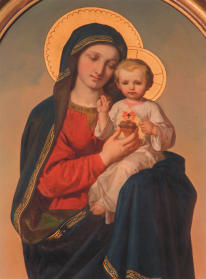
Getting in shape with St. Sebastian, Pope St. John Paul II, and St. Expeditus
Getting more exercise is a perennial New Year’s resolution for me. I thought I’d turn to the patron of athletes, St. Sebastian, or Pope St. John Paul II, well known for his athleticism and love of the outdoors. But my gym time flailing doesn’t quite rise to the level of athleticism and John Paul II surely has more important intercessions and Sebastian is also the patron of those wishing a saintly death. (While I feel like dying when I exercise, I don’t think I’m likely to actually meet my demise and certainly not in a saintly way.) Honestly, my real issue is one of procrastination and lack of motivation. So, I think I need to turn to St. Expeditus, patron of procrastinators. In the early days of the Church, Roman soldier Expeditus, when about to convert to Christianity, was tempted by the devil (in the form of a crow) telling him to “wait until tomorrow.” Expeditus wouldn’t be swayed from his goal saying, “No. Today I will become a Christian.” That’s just the determination I need on those mornings when I’m tempted to say to myself, “Maybe I’ll just go to the gym tomorrow.”

Being more organized with St. Benedict and St. Zita
Another one of my resolutions this year is to finally get more organized. I’ve tried old-school to-do lists and digital solutions, but I still feel overwhelmed keeping up with my schedule, my responsibilities, and of course, the stacks of magazines and mail that threaten to swallow up my desk. While St. Expeditus can help with my general procrastination, I might need to consult an organizational expert on this one. I thought of St. Benedict, whose “rules” set out how to efficiently run a monastery. Then I read that Benedict was so strict in his organizational skills that some of his fellow brothers tried to poison him. Maybe I will ask for his help sparingly. St. Zita, the patron of homemakers and house cleaners might be a gentler and more accessible choice to support me. She managed to keep up with the daunting level of chores her demanding employer required while never missing Mass. And all in the days before dishwashers and washing machines.

Overcoming bad habits with St. Jude and St. Charles Borromeo
A brand new calendar year brings a sense of new possibilities. While your vision of the new-improved-you might not be the same as mine, we all crave the fresh start New Year’s resolutions can bring. But if you’re like me, after starting strong your enthusiasm and energy flag. Asking a saint to intercede on our behalf is like having an accountability partner, someone who either encountered the same challenges in life or is a role model for the goal we wish to achieve. So maybe you don’t need the help of St. Expeditus or St. Zita, but St. Jude, the patron saint of hopeless causes, might be able to support you in your quest to finally quit smoking or St. Charles Borromeo, who was unable to eat what he liked due to stomach issues, can help in your struggle to lose weight. Ask them to intercede for you, trusting that they know the challenges you’re facing. It’s good to know you have a friend in heaven.

Susan Anthony is the mother emeritus to three grown sons and blogs with her lifelong friend Anne at www.yallneedjesusblog.com.

Continuing Through Christmastide

We continue our journey through the Octave of Christmas this weekend with the celebration of the Feast of the Holy Family. This feast reminds us that Jesus was raised in a home, that he grew in age, wisdom, and in knowledge of God’s will for his life. He also grew in grace and obedience under the care of Mary and Joseph.

The Solemnity of Mary, Mother of God follows the Feast of the Holy Family on New Year’s Day. This solemnity marks the end of the Octave of Christmas by celebrating the motherhood of Mary, remembering that it was from her that Jesus took his human nature, becoming one with us in all things but sin. This solemnity is a holy day of obligation and Mass will be offered on Tuesday evening at 5:15PM and on Wednesday morning, New Year’s Day, at 9AM.
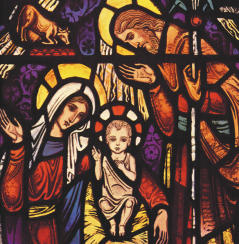
As we continue our journey though the Christmas season, I wish to thank all who ministered and assisted in making our Christmas Eve and Christmas Day celebrations so wonderful, especially to those in our music ministry, our liturgical ministers, our ushers, and to our maintenance staff for their work in setting the environment in the church; a special thanks to our retired maintenance director Mike Hickey who journeyed up from Southern Illinois to help with the decorating.

With the ushering in of the new year, we will be making a change in office personnel. For just about three years now, Katie Price has served our parish as Director of Discipleship and Stewardship. She was instrumental in the refashioning of the bulletin into the Weekly and she helped to move us in a new and better direction in the area of stewardship and discipleship. Katie will be going full time in the diocesan curia in this area of ministry beginning January 1. While she will no longer be a member of our parish staff, we will still benefit from Katie’s expertise and energy. I thank Katie for all that she has done to help us to be better disciples. Please join me in wishing her the best and asking God to bless all her future endeavors.

How blessed we are to have this joyous season of light in the midst of the darkest days of winter, but also at a time when the light begins to lengthen ever so slightly and the darkness begins to recede. Please continue to enjoy the beauty of the season. It began, not ended, on December 25th and continues through Epiphany and the Baptism of the Lord on January 12th. May the joy of Christmas continue to be yours and may you know God’s abundant grace and blessings in 2020. Happy New Year!

Father Christopher House is the Rector of the Cathedral and serves in various leadership roles within the diocesan curia, namely Chancellor and Vicar Judicial.

Is this the End of the Christmas Season or the Beginning?

You’ve probably seen it already. Your neighbors no longer have lights twinkling outside their houses. Large trees are strewn across front lawns in preparation for garbage day. The radio station that had been playing Christmas music twenty-four hours a day since November 1 suddenly stopped playing all their carols at 12:01 AM on December 26.

We have entered the end of the Christmas season … or so thinks the world. I walked into a hardware store on December 27, and I heard “Joy to the World” playing over the loudspeakers. I was glad to hear that some place was still celebrating Christmas. But then a regular Scrooge who worked there commented to her coworker, “Christmas is over! Why don’t we turn off this silly music?”

Christmas is over for the secular world, but not for the Christian. Even now that Little Christmas (The Epiphany is over), we still have a week of Christmas left! The Christmas Season, according to the Church’s liturgical calendar, doesn’t end until the Baptism of Our Lord on January 13.

Even after those days are over with, Christmas still continues. If you don’t want Christmas to end, you’ve found good company with the Church. Below are four ways that Catholics can continue to celebrate Christmas after the New Year, just as the Church directs us to.

  1. Don’t Throw Away Your Christmas Tree Just Yet
    As I mentioned above, you’ve probably seen many of your neighbors already taking out their Christmas trees. It’s odd to think that just a generation or two ago, many people in North America didn’t even put up their trees and decorate them until Christmas Eve. Christians understood that the days leading up to Christmas were in preparation for the holy day. We were more keenly aware of the season of Advent then. Some would start decorating the tree on Gaudete Sunday, the Third Sunday of Advent, which would be quite fitting. But when people start putting up their tree before Thanksgiving, there’s no reason to even bother keeping the tree up past December 25t. Not to mention that if you have a real tree, you probably have needles all over the floor since the tree has been up for well over a month.

    But there’s a reason why we as Christians have the Christmas tree in our house. While the tree has certain German origins, it represents various Christian truths. The star at the top of the tree represents the light of Christ illuminating the entire world, and various ornaments are signs of our Lord’s grace upon us. But even Scripture has good things to say about the Christmas tree, in a certain sense:

    Say among the nations, “The Lord reigns! Yea, the world is established, it shall never be moved; he will judge the peoples with equity.” Let the heavens be glad, and let the earth rejoice; let the sea roar, and all that fills it; let the field exult, and everything in it! Then shall all the trees of the wood sing for joy before the Lord, for he comes, for he comes to judge the earth. He will judge the world with righteousness, and the peoples with his truth.
    (Psalm 96:10-13)

    Even the tree itself speaks to the coming of Christ. It always brings great joy when one lights up a Christmas tree. It’s almost inexplicable. At a Christmas tree lighting in 2014, Pope Francis made an important observation:

    “A Christmas without light is not Christmas. Let there be light in the soul, in the heart; let there be forgiveness to others; let there be no hostilities or darkness…. Let there be the beautiful light of Jesus. This is my wish for all of you, when you turn on the light of the Christmas tree.”

    We can allow our Christmas tree, seen from the streets in our windows, to bring the light of Jesus to others. But that prompts the question: how long should one keep their Christmas tree up?

  1. Keep the Christmas Festivities Going through Candlemas (February 2)
    Typically, at least in the Latin Rite, the Christmas Season wraps up not on Epiphany, but on the Feast of the Baptism of the Lord. This feast takes place, typically a week after the Epiphany. That means that the length of the official Christmas Season can range from sixteen to as many as twenty days.

    In 2019, the Baptism of the Lord falls on Sunday, January 13, the latest that this feast can fall on. But more than a few people contend that Christmas actually goes even further than that, and many a debate has sprung from such a notion. For those that can’t get enough of Christmas, the season can extend all the way into February. If you needed an excuse to keep the Christmas tree up through January, you now have one. But just what is the significance of Candlemas Day? Many of us know this day as the Feast of the Presentation of the Lord, and less commonly as the Purification of the Blessed Virgin Mary. Forty days after Jesus’ birth, He was presented at the temple, according to the Mosaic Law. Also being obedient to the law, Our Lady underwent the purification rite.

    Both of these events follow what was spelled out in Leviticus 12:1-8. But what some people have pointed out is that the forty days between Christ’s birth and his presentation is related in some way to the forty days of the Easter Season. Indeed, many of the older liturgical books prior to the 1969 Missal of Pope St. Paul VI (what we now know as the Ordinary Form) labeled the days of Advent up until Septuagesima as the “Christmas Cycle”, and the rest of the days of the year as the “Easter Cycle”, as can be seen here. Of course, the Easter season certainly trumps the Christmas season in terms of importance and solemnity, but it’s interesting to see how the liturgical calendar has evolved over the centuries.

  1. Pray the Liturgy of the Hours Regularly
    Now this should be something that happens all throughout the year, but praying the Liturgy of the Hours during this time of year does offer us a bit of extra Christmas “flavor”. Compline or “night prayer” has always been a favorite prayer of mine, as it’s the perfect way to end the day with a brief examination of conscience. At the very end, however, we sing one of four Marian antiphons depending on the time of year. Beginning on the first Sunday of Advent, we recite The Alma Redemptoris Mater (O Loving Mother of Our Redeemer). When is the last day we recite this antiphon? You probably guessed it. February 2n, for Candlemas Day.

    The prayer sings the praises of Mary, the one “who brought forth thy holy Creator”, which reminds us of our Lord’s birth in a lowly manger. It’s yet another way to carry on the Christmas Season well past New Year’s Day. But ideally, we can use this opportunity to form a good habit. If we haven’t been praying the Liturgy of the Hours regularly, we can start now in our hopes to keep the spirit of Christmas going. Then, once February 2n has passed, we can continue on in this wonderful prayer. The Catechism of the Catholic Church has the following to say on the Liturgy of the Hours:

    “The Liturgy of the Hours is intended to become the prayer of the whole People of God. In it Christ himself ‘continues his priestly work through his Church.’ His members participate according to their own place in the Church and the circumstances of their lives.… The laity, too, are encouraged to recite the divine office, either with the priests, or among themselves, or even individually.”
    (CCC 1175)

  1. Keep Giving to Charity
    I’m sure that at the very end of the year, you received many emails and letters from a swath of charitable organizations, asking that you make one last donation before then end of the year for tax purposes. At this time of year, we are already predisposed into being generous with our talents and treasures, and we see many people making monetary gifts to many different charities. This should certainly be commended. But why do we have to stop after December?

    We know that almsgiving is something that our Lord directs us to do, and the Church doesn’t relegate this action just to penitential seasons. If we had the ability to make the season bright for our less fortunate brothers and sisters immediately before Christmas Day, then we should try to find that same generosity immediately after. This might mean we don’t go absolutely crazy with the gifts for family and friends on Christmas Day, but those in need require our assistance just as much now as they did then. It’s absolutely something to prayerfully consider as we try to extend the Christmas season.

The Word Became Flesh!
As can be seen, there are several ways to lengthen this holy season of Christmas throughout our daily lives. Our extension of the season can serve as a light to our secular friends and peers. Pope Benedict XVI put it beautifully in a general audience he gave back in 2008:

“Because of the atmosphere that distinguishes it, Christmas is a universal celebration. In fact, even those who do not profess themselves to be believers can perceive in this annual Christian event something extraordinary and transcendent, something intimate that speaks to the heart…

“At Christmas, therefore, we do not limit ourselves to commemorating the birth of a great figure: we do not simply and abstractly celebrate the birth of the man or in general the mystery of life; even less do we celebrate only the beginning of the new season. At Christmas we commemorate something very tangible and important for mankind, something essential for the Christian faith, a truth that St John sums up in these few words: ‘The Word became flesh.’” In turn, let us not allow ourselves to put a limit on the Christmas celebration. It didn’t end on December 26, and it’s not over today. We can even continue it beyond February 2 if we allow ourselves to acquire some new, good habits.

This is truly the beauty of our Catholic Faith. We cannot confine the joy of Christmas to one day. When a single moment has the ability to change the course of human history, we can’t blame ourselves for wanting to commemorate that event for a long period of time. Feel free to keep on giving those you encounter a hearty “Merry Christmas!”

Nicholas is a cradle Catholic and hopes to give a unique perspective on life in the Church as a millennial. His favorite saints include his patron St. Nicholas, St. Ignatius of Loyola, St. Thomas Aquinas, St. John Mary Vianney and St. Athanasius of Alexandria.

An Unkind World Needs Saint Joseph, the Perfect Patron for 2020

Yesterday, I experienced something of a “Saint Joseph Synergy,” finding a copy of Fr. Donald H. Calloway’s Consecration to St. Joseph in my mailbox, and on the very same day that we read at Mass:
This is how the birth of Jesus Christ came about. When his mother Mary was betrothed to Joseph, but before they lived together, she was found with child through the Holy Spirit. Joseph her husband, since he was a righteous man, yet unwilling to expose her to shame, decided to divorce her quietly. (Matt 1:18-19)

 Having the book in my hand on the same day in which Joseph is featured in our readings felt a bit like one of those moments when the Holy Spirit is giving me a pronounced slap upside the head, saying “pay attention.” For that reason (and a few others) I am asking St. Joseph to be my patron for 2020, and to teach me what he knows. Bold of me, perhaps, but in general I think “teach me what you know” is precisely what we should ask of the saints and, in my experience, if you ask for the lessons, they’ll supply them to you by the handful. Given all of my failures in 2019, it seems wise for me to go to a master teacher for some one-onone tutelage on how to live and work and love with steadiness and a truly grounded faith. That would mean going to Joseph. We know the rest of the story begun in yesterday’s reading. Joseph does not put Mary aside. An angel comes to him in a dream. Not a great Archangel as greeted Mary, but a rather workaday heavenly messenger tasked with reassuring a rather ordinary workman of his time. Going on faith, he brings Mary into his home, and prepares to parent and protect Emmanu-el, “Godwith- us,” and to quietly contribute to what Christ Jesus, the Man- God, would become, and even how he would conduct his earthly ministry:

There is a rabbi on the cross, and he looks like a king, but he was a tekton (i.e., artisan, builder, technician) like his stepfather, the righteous man who likely drilled him in the law even as he taught him how to take the measure of whatever construction material was before him and determine its best usage—to envision, design, attach, refine, and finish.

Perhaps parables of mercy were launched in the imagination of the rabbi when he was still very young, when the master taught him his craft, urging the apprentice to discover metaphors before his eyes: how the difficult process of planing something down—of making straight what is gnarled and knotted—brings out its inner beauty, even as it exposes its tiniest deformities to the scrutiny of the world.

An adolescent with the wisdom and confidence to debate the temple elders might have nodded in agreement, while countering that those minute flaws only served to better emphasize all that was intrinsically lovely within the wood—what made it worth saving and finishing, rather than tossing into the fires.

People like to say, “We don’t know anything about Joseph.” Well, we know what matters:

  • Joseph was righteous; he lived devoutly and in accordance with God’s word.
  • Joseph was faithful; he was a man willing to work within the mysteries of God as they came at him.
  • Joseph was courageous; it is no small thing to go outside of the customs of a village or a tribe.
  • Joseph was generous; the needs of Mary and the Child came before all else, including his established life and industry.
  • Joseph was wise; he understood that God’s mind and ways are not our own, but always trustworthy.

We know one other thing about Joseph, and with the world as it is, it might be the most important thing to think about: he was kind. Joseph’s kindness may outweigh all his other good qualities, even his righteousness. Righteousness can sometimes become a boat stuck on the shoals of justice and thereby rendered immovable. Kindness, which contains an element of mercy, can lift the vessel to freedom. Joseph’s kindness is an example of true strength. He could have, in all “righteousness,” cast Mary aside in a way that publicly shamed her and would have ended her life. Within the Law, within the society and the tribe, he had that power and to use it would have meant no dishonor to him.

But even before the reassurances that came from heaven, Joseph was too kind to use his socially approved power in that way. Having seen qualities in Mary that made him see her as unique and lovable, her value was not so lessened in his eyes as to diminish her human status into mere, disposable thing-hood. He would not expose her to that element of humanity that, even today, has a lust for the lives and the blood of the vulnerable—for vengeful, often spiteful, interests that serve something other than heaven.

  • Joseph was righteous;
  • The righteous life he embraced developed his faithfulness;
  • Faithfulness gave him courage;
  • Courage permitted his generosity;
  • Generosity let him grow in wisdom;
  • Wisdom taught Joseph kindness.

Kindness is where, if we must err at all, all our errors should occur. Joseph made no errors because he was a man of faith, and a man in full. Oh that in 2020 the whole world would appreciatively make a model of this righteous, faithful, courageous, generous, and kind Jewish man. Indeed, with such an undertaking, 2021 might look very different.

Elizabeth Scalia is a Benedictine Oblate and author of several books. She served as Editor-in-Chief of the English edition of Aleteia, and as Managing Editor of the Catholic section of Patheos.com. Elizabeth also blogs as “The Anchoress” at www.theanchoress.com. She is married, and living on Long Island.

Embracing Change

I remember the first few conversations about changing the traditional Cathedral Bulletin into a Weekly magazine-style format. It was contentious and just about anyone you had spoken too had an opinion on the matter. Of course, people were worried about getting the news and upcoming events or programs, while others were concerned about the cost or the additional time necessary to compile a weekly magazine. To be frank, I was initially concerned myself. At the time, I had worked in Catholic organizations and parishes, coast to coast, and never, ever, seen a Cathedral parish endeavor to change the layout of the traditional bulletin into an evangelization piece. We don’t change traditions in the Catholic church all too often and that goes for our administrative tasks, especially bulletins! So the question was, what if we could create a faith formative piece to nourish and sustain our parishioners, while encouraging them to share it with others? Wouldn’t that help us move toward discipleship and stewardship?
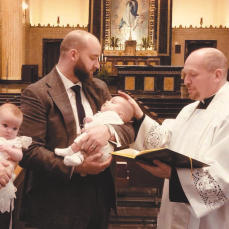
So, why the change and why does it matter?

Change is required in every conversion process and the bulletin is just one example. The standard Parish bulletin is for insiders, aka parishioners. We wanted to create a piece that would be for insiders and outsiders. Most parish bulletins do not include faith formation articles. Most parish bulletins do not engage or encourage readers to share the resources and articles with others. While this may seem like a small insignificant change to some, it was a big adjustment for others. It was one of the first actions taken to enact significant change to encourage discipleship and evangelization at the Cathedral Parish.

It is not just change the Cathedral has gone through since my time here, but a deeper conversion process. The way we message and communicate is different, the way we learn through enriched adult faith formation programs is different, the way we pass along the faith through Family Faith is different, the way we commit as stewards through the Season of Stewardship is different. This is not just about embracing change, but allowing ourselves to dive into a deeper conversion process toward discipleship. Change is incredibly hard. Conversion is incredibly hard, but is change through the lens of holiness.
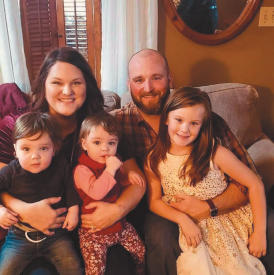
A conversion process requires a willingness to rid oneself of old habits. The same goes for Parish life. If Parishes remain stagnant, comfortable or in maintenance mode, they are not only dying, but also not fulfilling the call toward discipleship. Working towards intentional discipleship IS an uncomfortable process of change and conversion! It has been uncomfortable through the mistakes, falls, or road blocks. This process of conversion at Cathedral has had stumbling blocks, sure, and I am sure to have been a part of some of those. However, we have set a course toward becoming a welcoming community of intentional disciples. It is both exciting and nourishing in so many ways! Don’t you love change?!

It has been a pleasure getting to know so many of you and working alongside you! This community is a special place, a spiritual home unlike any other. Be proud of the Cathedral community you have been a part of shaping. Be evangelizers for the Cathedral and our faith. Be disciples through ministry, service, hospitality, and spirit. Get uncomfortable! Never tire of this journey. We need you!
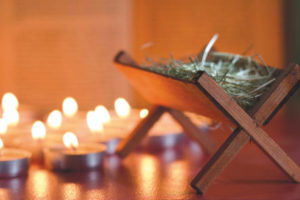
As I endeavor to support the parishes and schools of the Diocese of Springfield in Illinois full time, I know my family will have a nurturing and welcoming spiritual home in our Cathedral. I am eternally grateful for for all of you and the amazing priests and staff that I have had the pleasure of working with and learning from! God bless you all- you will continually be in my prayers!

Katie Price is the Coordinator of Discipleship and Stewardship at the Cathedral.

Drawing Near

The Gospel for the Fourth Sunday of Advent always prepares us for the celebration of Christmas. This year we hear the story of the Annunciation to St. Joseph, where God, through his angel, calls on Joseph to not be afraid and to welcome Mary, and through her, Jesus, into his home.

Throughout Advent we have been reminded that just as the Lord Jesus came to us in time, so he will also return to us at time’s end. He also draws near to us in many and varied ways each day; the most common and wonderful way in which he does this is in and through the people we encounter daily. Dorothy Day once wrote

“If everyone were holy and handsome, with ‘alter Christus’ shining in neon lighting from them, it would be easy to see Christ in everyone. If Mary had appeared in Bethlehem clothed, as St. John says, with the sun, a crown of twelve stars on her head, and the moon under her feet, then people would have fought to make room for her. But that was not God’s way for her, nor is it Christ’s way for himself, now when he is disguised under every type of humanity that treads the earth.”

May we open our hearts to the grace of God that allows us to see him drawing near to us, especially in our sisters and brothers.

On behalf of Bishop Paprocki, Fathers Friedel and Rankin, Deacons Smith and Keen, and everyone on the parish staff, I want to wish you and yours a Blessed and Merry Christmas. May the light of the Christ Child enable us to see him in those around us and lead all the world to greater peace and joy. God bless you!

Father Christopher House is the Rector of the Cathedral and serves in various leadership roles within the diocesan curia, namely Chancellor and Vicar Judicial.

Is this the End of the Christmas Season or the Beginning?

Terry Mattingly of GetReligion has a great column about the “two Christmases.” As he notes, for the Church, the Christmas season runs from Christmas Day (December 25) to Epiphany (January 6). These are the famous Twelve Days of Christmas. But in secular society, the Christmas season runs from around Thanksgiving until December 25. So this Sunday marks either the end of the Christmas season (for secular culture), or the First Day of Christmas (for the Church).

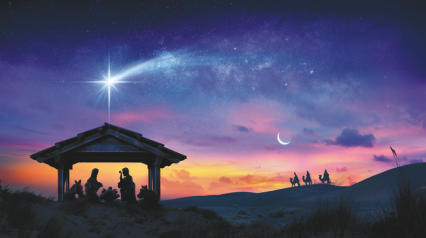
It’s an important difference, and one in which he notes many Christians tend to side with the world, rather than the Church:

“Unfortunately, most Americans — especially evangelical Protestants — have so distanced themselves from any awareness of the Christian calendar that their decisions about that kind of question have been handed over to the culture,”

said the Rev. Russell D. Moore, dean of the theology school at Southern Baptist Theological Seminary in Louisville, Ky.

Many evangelicals fear the “cold formalism” they associate with churches that follow the liturgical calendar, and the result, he said, is “no sense of what happens when in the Christian year, at all.” Thus, instead of celebrating ancient feasts such as Epiphany, Pentecost, and the Transfiguration, far too many American church calendars are limited to Christmas and Easter, along with cultural festivities such as Mother’s Day, the Fourth of July, Halloween, Thanksgiving and the Super Bowl.

As the piece notes, this is particularly problematic for Evangelicals, but I think we Catholics can be guilty of this, too.

The Difference Between the Two Christmases For the world, what we’ve just gone through was the Christmas season, and it’s tied to (at best) being nice, and making time for family and friends, or (at worst) non-stop marketing, shopping, and fighting off loneliness and despair with a credit card.

This Wednesday marks the end of the world’s Christmas season, because this is the climax of their efforts. This is the day when we come together and share all of those presents, and where we take some time off of work to be with our families. Once the presents are opened, and our families have started to annoy us again, it’s back to our ordinary routines. Santa Claus, the central figure of this Christmas, is already gone by Christmas morning.

But for the Church, this Wednesday should mark a beginning, not an end. It marks Christ’s advent into the world where, for the first time, we could behold the Savior of the World in the Flesh, as the rich and the poor, the Magi and the shepherds alike, fall to their knees. The period we just went through wasn’t the Christmas season, because Christ hadn’t come yet. It was the Advent season, in which we’ve prepared for Christ’s coming.

The Catechism explains that in Advent, the Church

“makes present this ancient expectancy of the Messiah, for by sharing in the long preparation for the Savior’s first coming, the faithful renew their ardent desire for his second coming. By celebrating the precursor’s birth and martyrdom, the Church unites herself to his desire: ‘He must increase, but I must decrease.’”

Just as you tidy up for a party, and tidy up a lot for an important party, the birthday of Christ himself, his visit to each and every one of us, should motivate us to clean house. And cleaning house involves throwing out our old sins, and making space for Christ to come in.

With this view, Christ is our guest, and we want him to stay with us forever. So December 25 celebrates his arrival, and we savor this arrival in a special way for days, culminating on either January 6 (the traditional date of the Feast of the Epiphany), Epiphany Sunday (the nearest Sunday to January 6), or even Candlemas (February 2, for those cultures that really like Christmastime).

In a nutshell, here’s what I’d say are the two most important differences between the liturgical calendar and the secular one:

  1. One makes Christmas something we do for Christ, while the other makes it something he does for us. The world’s version focuses on our efforts (our shopping, caroling, and the like), while the Church’s version focuses on Christ’s entry.
  2. The world’s view of the Christmas season is largely without Christ. That is, all but the last day are a celebration of something we’re calling “Christmas,” without the Nativity. What exactly are we celebrating December 25 that’s different than what we were celebrating, say, December 20? By deemphasizing the utter centrality of the Nativity to Christmas, the focus starts to come off of Christ. Whether it’s shifted towards family or shopping, that shift’s still a disaster.

As Mattingly notes, this has hit Evangelicals the hardest. With a cultural suspicion of Advent and the whole notion of “liturgical seasons, ” Evangelicals end up turning to the world for their seasons and holidays. The most shocking example (at least to me) was my discovery that when Christmas falls on a Sunday, many Evangelical churches simply cancel church services. In 2011, when Christmas was on a Sunday, David Gibson reported for the Wall Street Journal: “ Nearly 10% of Protestant churches will be closed on Christmas Sunday this year (2014), according to LifeWay Research, and most pastors who are opening up say they expect far fewer people than on other Sundays. Other reports suggest that churches across the board are scaling down their services in anticipation of fewer worshipers.

‘We have to face the reality of families who don’t want to struggle to get kids dressed and come to church,’ Brad Jernberg of Dallas’s Cliff Temple Baptist Church told the Associated Baptist Press. Similarly, Beth Car Baptist Church in Halifax, Va., is planning a short service featuring bluegrass riffs on Christmas music. ‘I’ll do a brief sermon, and then we’re going home,’ said Pastor Mike Parnell.”

I suppose that this avoids the risk that worshiping God would get in the way of the purpose of secular-Christmas… to be with your family.

The Real War on Christmas
The secular “Christmas” season is a time of strife, with the infamous “war on Christmas” specials that Fox runs annually. But the real “war on Christmas” that we should be worried about is the one I just described, the internal destruction of Christmas by Christians.

Let me give two examples of what I mean here. The first one involves a dispute over whether or not two bus drivers were allowed to decorate their buses with Christmas decorations. One of the bus drivers defended the decorations by saying, “This is totally not a religious thing. This is about Christmas.” Yikes. This should be a wake-up call for Christians who want Christmas to be, you know, about Christ. We should be uncomfortable with both sides of the “war on Christmas”: those who want Christmas stamped out of public life, and those who want Christmas hollowed out into something harmless to secularist.

The second example is a more general one: the ongoing debate over whether we should say “Merry Christmas!” or “Happy Holidays!” Reality check: the word “holiday” is just a shortened form of “holy day.” Christmas is a holiday, Fourth of July is not (hopefully). But “holiday” has come to mean simply “vacation,” because that’s how we treat our holidays. This is most obvious in the UK, where vacationing (anytime of year) is often described as “going on holiday.” But we Americans are guilty of it as well. If we weren’t, we wouldn’t be so upset about the phrase “Happy Holidays,” because it’d be a religious phrase. If “Happy Holidays” has been sterilized to the point that secularists have no trouble using it, well, that’s partly our own fault.

So if this Wednesday is to be an end, let it be an end to the secular celebration of “Christmastime” one and for all. Take this Christmas as an opportunity to start fresh by welcoming Christ as your guest both for the day, and for the Christmas season, and forever.

Joe Heschmeyer is an instructor at the Holy Family School of Faith Institute for the Archdiocese of Kansas City in Kansas, and blogs at Shameless Popery. This article first appears online at: https://www.wordonfire.org/resources/blog/is-this-the-end-of-the-christmas-season-or-the-beginning/20006/

« Previous Page
Next Page »

Liturgy

Sunday Masses (unless noted differently in weekly bulletin)
Saturday Evening Vigil – 4:00PM
Sunday – 7:00AM, 10:00AM and 5:00PM

Weekday Masses (unless noted differently in weekly bulletin)
Monday thru Friday – 7:00AM and 5:15PM
Saturday – 8:00AM

Reconciliation (Confessions)
Monday thru Friday – 4:15PM to 5:00PM
Saturday – 9:00AM to 10:00AM and 2:30PM to 3:30PM
Sunday – 4:00PM to 4:45PM

Adoration
Tuesdays and Thursdays – 4:00PM to 5:00PM


CatholicMassTime.org

Parish Information

Parish Address
524 East Lawrence Avenue
Springfield, Illinois 62703

Parish Office Hours
Monday thru Thursday – 8:00AM to 4:00PM
Fridays – CLOSED

Parish Phone
(217) 522-3342

Parish Fax
(217) 210-0136

Parish Staff

Contact Us

Contact Us

Copyright © 2026 · Log in