 Swaddled tightly beneath a starblanketed Bethlehem sky, God breathed with gentle power. The acceptable time had come. The prophecies were now—at last—fulfilled. The Creator had “entered” creation on a mission of love, and for the next three decades, peace and joy were inhaled and received in tangible new ways.
That Christmas night, the divine life of God was communicated through a tiny human breath. Put simply, God breathed not solely so that he might live but that we would. It’s fascinating how something so small like a breath forms the line between life and death. The Latin word for breath inspirare is where we get the term “inspiration;” it literally means, “to breathe [life] into.” Inspiration, however, is far more than a biological word or concept, it is a deeply spiritual reality. God’s inspiration animates our Christian souls, guides our steps, and offers us both a mission and a purpose.
We often talk about how the Bible is the “inspiration”—the breath —of the Holy Spirit; how the Word of God was recorded through the pens of men. But, have you ever stopped to consider how vital this inspiration of God is to our faith and, indeed, our lives as Catholics? The Church is inspired, the sacraments are inspired and—with any luck—with every encounter we witness on the pages of Sacred Scripture, we, too, are inspired. We breathe in God’s life (grace) not that we would hold it in, but that we might share it.
Inspiration leads to respiration.
Since you began reading this, you’ve probably taken between twenty and thirty breaths. We know, of course, that inspiration is not only vital for our bodies but also for our souls. It’s when we realize how desperately we need oxygen that we come to appreciate it more.
It’s how our story began, after all (or, “before all” if you want to get technical). Life began because God spoke; he breathed the Word (Genesis 1:3) and creation spun into existence. It was when God breathed life into Adam, however, that things got even more interesting (Genesis 2:7): creation now bore the ability to inspire, to procreate life in God’s image. And at that very first Christmas, beside that majestic manger, the new Adam was swaddled tightly by the new Eve. Heaven breathed. God had drawn near in an even more intimate way than in Eden. The Savior’s exhale announced the coming Kingdom. Heaven came to earth to bring earth back to heaven.
As your eyes take in the crèche this year, allow the Holy Spirit to inspire you, again. Gaze upon these incredible figures immersed in the beautiful reality that is our Christmas story. Ponder these realities in your heart as the Blessed Mother did (Luke 2:19). Consider what each character represents and how they were led to this holy night—heroic characters, timeless tales—all immersed in heart-stopping and soul-stirring moments beside the manger. How ironic that the reality of the Christmas story brings us life by taking our breath away.
As you look forward to the Christmas season, recall your own journey that brought you to this place. For just as the light increased within our Advent wreaths each week, the Light now enters to eclipse the darkness of our world, our homes, and our hearts. Throughout this past Advent season the daily readings reminded us that life’s greatest blessings are often born out of its greatest struggles. For those souls reading this who feel immersed in stress, loneliness or darkness this year, especially, remember now that our Emmanuel has come, “God is (indeed) with us” (Matthew 1:23).
At first glance, Mary’s experience of Christ’s birth seems to be shrouded in more darkness than light. Consider these moments from St. Luke’s Gospel: A teenage virgin is pregnant, but not with her husband-to-be’s child. The girl then leaves home for three months; later, in her third trimester of pregnancy, she leaves home again and travels roughly ninety miles by donkey. She gives birth in a cave and, soon after, hears from a prophet that both she and her child will suffer greatly. Most people would not consider these mysterious moments very “joyful.” Prayerful reflection on the mysteries, however, reveals a cause for intense joy. God was on a rescue mission to save us, and that mission included courageous souls fighting through incredibly challenging situations. Not only do the Joyful Mysteries walk us more deeply into the conception, birth, and childhood years of our Lord Jesus, but they also reveal to us a God who is madly in love with us, a God who will stop at nothing to save all of us from sin and death.
The Christmas mystery—the mystery of the Incarnation—invites us to active prayer. God emptied himself and took on flesh. This is beautiful, not only because of the humility and gentleness of the baby in the manger, but because of his invitation to interact with him physically and intimately. The entire Nativity scene is a celebration of God’s love for his children; his willingness to stop at nothing to ensure our salvation. It’s a scene that we must prayerfully engage in, not just passively “admire.” Never forget that the Lord didn’t come to be admired but worshipped. We should fall on our knees this night, as they did so many centuries ago, breathe in his peace and joy, and worship the God who loved us enough to be born into the world’s brokenness and sin to save us from it.
Mark Hart has helped transform Catholic youth and young adult Scripture study in parishes, homes, and classrooms with his wildly popular Bible study programs. A devoted husband and father of four, Mark’s humor and his passion for Scripture are helping hundreds of thousands of Catholics, young and old, begin to read and study the Bible in engaging, fun, and relevant ways. His latest project with Ascension, The 99, will
 This year, Mom couldn’t give us our ornaments even though she’d picked them out. Suzanne Christmyer passed away soon after Thanksgiving, having lived a long full life and loved by her children and grandchildren. She was nearly 90.
 I distinctly remember the first time I went on a retreat. It was my first year of seminary and during Christmas break all of us seminarians at Bishop Bruté (the college seminary our diocese uses in Indianapolis) spent a few days before returning to “the Castle” in prayer and recollection at St. Meinrad Seminary (actually, one of the theology seminaries our diocese also uses). It is a picturesque place – looking out over the rolling, tree-covered, hills of rural Indiana; a peaceful one – away from the busy-ness of the world, the excitements of Christmas back with family, and the efforts and fraternity of seminary life; and one permeated with the prayers of the monks who live there – marked by the hourly chiming of their bell tower prominently standing over the town. But it is not so much those delights that I recall here, but the power of that place to draw me into prayer.
 Here at Cathedral, among plenty of other things certainly, we also have begun again for the season to use the Latin responses at the Sanctus, Mysterium Fidei, and Agnus Dei. It is one simple way to re-open our hearts to the Lord. How deeply language touches us. That’s the power that we’re trying to capture with this change. These are parts of the Mass that the Church, as she has for centuries, encourages us to know in Latin. Why? Because the world does know them! I mean that! I’ve seen it! It is the most incredible, universal, catholic, thing ever to be able to go to Mass anywhere on the planet, and at those points of the Mass realize we can sing together those very same prayers. The Sanctus, the great song of the angels sung above Bethlehem at Christ’s birth, and the Agnus Dei, that central prayer of every Christian begging the Lamb of God, Who takes away the sins of the world, to have mercy on us, now and at our deaths, are probably familiar.
 Around this time of year, people from a variety of cultures across the world are running around trying to prepare for Christmas. Some are getting their homes ready for guests. Some are getting stressed out with shopping. How do Christians, specifically Catholic Christians, prepare for Christmas? To many Catholics, the obvious answer is Advent.
 When I was a nominal Catholic, I liked to pretend that I knew a lot about Catholicism. Realistically, I knew slightly less than the average 7-year-old knows about the workings of a combustible steam engine. Back then, for me, Advent was the Catholic word for Christmas. I was, for a lack of a better term, a theological idiot.
 Give, give, give
 Last weekend, as I was greeting people and shaking hands after Mass, I said to a few parishioners, “Happy New Year!” Some of the glances and puzzled looks that I received in return gave me the impression that for a few, I really took them off guard—and someone even warned me that I was a bit early for ushering in the new year.
 While I’m not sure it’s ever necessarily been the practice to make resolutions at the beginning of a liturgical year, I think this ‘new beginning’ does present us with a perfect opportunity: to examine our spiritual lives with fresh eyes; to ask the Lord to illumine those ways in which He is calling us to grow deeper in the mystery and in the practice of our faith; and to resolve to adhere to some simple and achievable practices in this coming year. Ask yourself in prayer this week,
 Here are a few ideas to get you started:
 Follow the Diocese of Springfield in Illinois on Facebook or Instagram. Share a post every once in a while. Be that person.
 For much of the world the Christmas season has arrived; or I suppose one could say, it arrived several weeks ago!
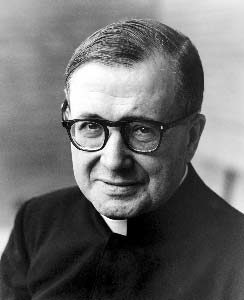 “On this first Sunday of Advent, when we begin to count the days separating us from the birth of the Savior … we have considered the reality of our Christian vocation: how our Lord has entrusted us with the mission of attracting other souls to sanctity, encouraging them to get close to him, to feel united to the Church, to extend the kingdom of God to all hearts. Jesus wants to see us dedicated, faithful, responsive. He wants us to love him. It is his desire that we be holy, very much his own.”
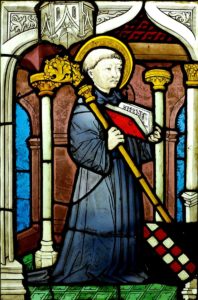 This is something that the great Doctor of the Church, St. Bernard of Clairvaux, spoke about. Living during the twelfth century, St. Bernard wrote a series of sermons for Advent. Often called the last “Father of the Church” in the Christian West, his words are still relevant even as we experience the Advent season in the twenty-first century. He reminds us that we are in actuality preparing for “two advents”: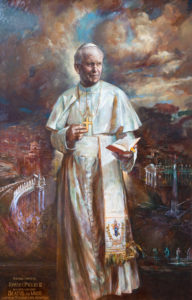
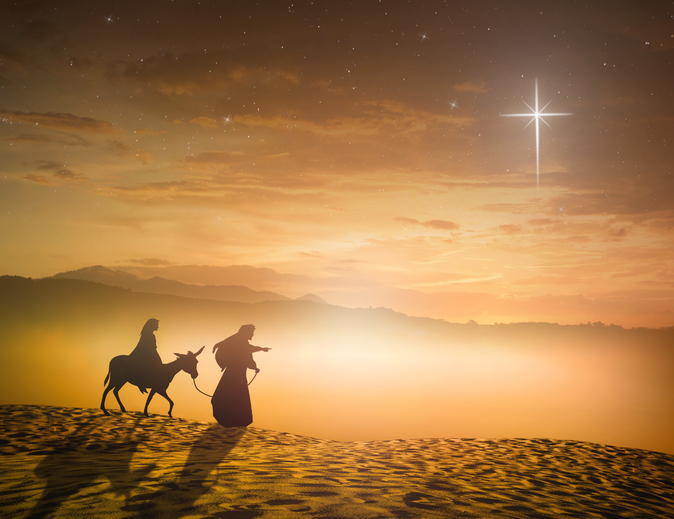 “In today’s Gospel we heard the Lord’s invitation to be watchful: ‘[Watch, therefore, for you do not know on what day your Lord is coming’ (Matthew 24:42) … The exhortation to be watchful resounds many times in the liturgy, especially in Advent, a season of preparation not only for Christmas, but also for Christ’s definitive and glorious coming at the end of time. It therefore has a distinctly eschatological meaning and invites the believer to spend every day and every moment in the presence of the One ‘who is and who was and who is come’ (Revelation 1:4), to whom the future of the world and of man belongs. This is Christian hope!”
 This weekend the church year begins anew as we begin the holy season of Advent, a name derived from the Latin word adventus, which means “the coming.” This holy season looks to the two comings of Christ; first, we look forward to our Lord’s return in glory at the end of time, and second, beginning December 17th, we look back, remembering that our Lord came to us in time to be one with us in all things but sin. While it may not have the same depth of austerity as Lent, Advent is also a penitential season where the words of the Prophets echo to us from ages past to prepare a way for the Lord in our hearts and lives.