“Holy Moly!” I exclaimed to my daughter after she told me the latest news breaking from her Pre-K 4 classroom; her teacher just had a baby! Gracey quickly took the opportunity to tell me that “Holy Moly” was a bad word. Did you know that? I sure didn’t! As I laughed it off, I tried to think about her Catholic formation, where did she hear that? How is she associating the word “holy” already? Her ability to soak up religious formation at such a young age, this summer she will turn five, impressed me.
Many will say, kids repeat everything! While that reigns true, I think they also are quick to believe everything. They have an innocence about them that places trusts in what the adults around them say. If an adult exhibits behavior that is good, typically, the child understands that is good. If an adult exhibits poor behavior, yelling, screaming, hitting, etc. the child picks up on that behavior as bad. They are reflections of the adults that surround them.
So, I need to seriously consider the adults I have around my child. Do they exhibit the values and character that I want as a role model for my child? Do they use language that is appropriate and not derogatory or mean? Do they interact with others the way Jesus would? If you find that the people you surround yourself with do not posses those qualities, it seems natural to me to find a group of adults that do. Where would you find such a group? Your parish.
Parish life has changed over the last few decades. In many places, what used to be a stroll with the neighbors down the block to Mass, turned into a 10 minutes drive. What used to be pews filled with known friends, sometimes can be filled more often with strangers. The importance of parish community can not be stressed enough. In many parishes, we have lost our sense of community in the pews, the friendships, the additional adult help that exemplifies the phrase, “it takes a village to raise a child.” In this case, “it takes a Parish to raise a child.”
So, how to we change that? How to we become closer to the people in the pews next to us? It could start with the person who might glance an understanding smile our way, when our 4 year decides it is time to act up in Mass or when our little one just had an accident. I can’t tell you how comforting it is as a mother to have that support surrounding you in the pews.
 From my peers, (older millennials you could say), I hear all the time that they don’t attend Mass because t h e i r c h i l d r e n a r e t o o disruptive. I respond, “and who cares?” I think one of the ways we can get families back into the pews, create a tighter community, and start to form our young children in the faith is by supporting each other. A small glance, a quick smile, a wave to a child, goes a long way. When my child stares at you while praying, thank you. You are the example I want her to see. When my child hears you sing the closing song and stay till the end, thank you, you are the person I need her to hear. When you compliment her on the way out for being such a good child during Mass (okay not always, but when they are) thank you, that is important for her to know.
We are each examples to these young children around us. Let us all work together, closely, and create a Christ-centered village to raise them. And, when we hear a child upset, let’s say a quick prayer and remember, we’ve all been there before when we were kids in the pews!
Katie Price is the Cathedral Coordinator of Stewardship. She received her Master’s Degree in Public Service Management from DePaul University and her research focus was on Catholic stewardship and giving. She can be contacted at [email protected].
 We are adding a new section to the Weekly in the coming weeks. To celebrate our community and to get to know each other better, we are creating a section in the weekly that highlights parishioner news, prayer requests, and sacramental news to share.
 Many of the world’s religions attest to the reality that something isn’t quite right with humanity. We see suffering and evil in our lives and the lives of others, often conceding to it as some unfortunate aspect of our existence that we can’t seem to do away with. We understand that it doesn’t fit into what life should be like. C.S. Lewis wrote about this in his apologetic work , Mere Christianity. He argued that humanity has always known there is something wrong with the world—the existence of evil and suffering—which clues us into something about the way the world should be. Lewis thought that if a line is crooked, how can we identify that it is indeed crooked unless we have a straight line with which to compare? In his analogy, the straight line reflects goodness and peace, whereas the crooked one, evil and suffering. We can only judge suffering and evil as undesirable if we have a desirable state with which to compare it.
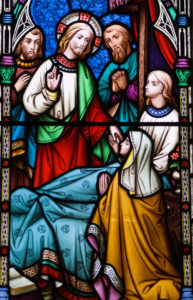 Of course, we can also plummet into the opposite line of thinking, supposing that our own unique suffering makes us better and more loved than others. If God’s gift of suffering invites us into a greater closeness with his Paschal Mystery—which it can—then our ego can be tempted to sink its teeth firmly into the tender meat of pride. Here we can mistakenly pick up crosses that have not been left for us by Christ.

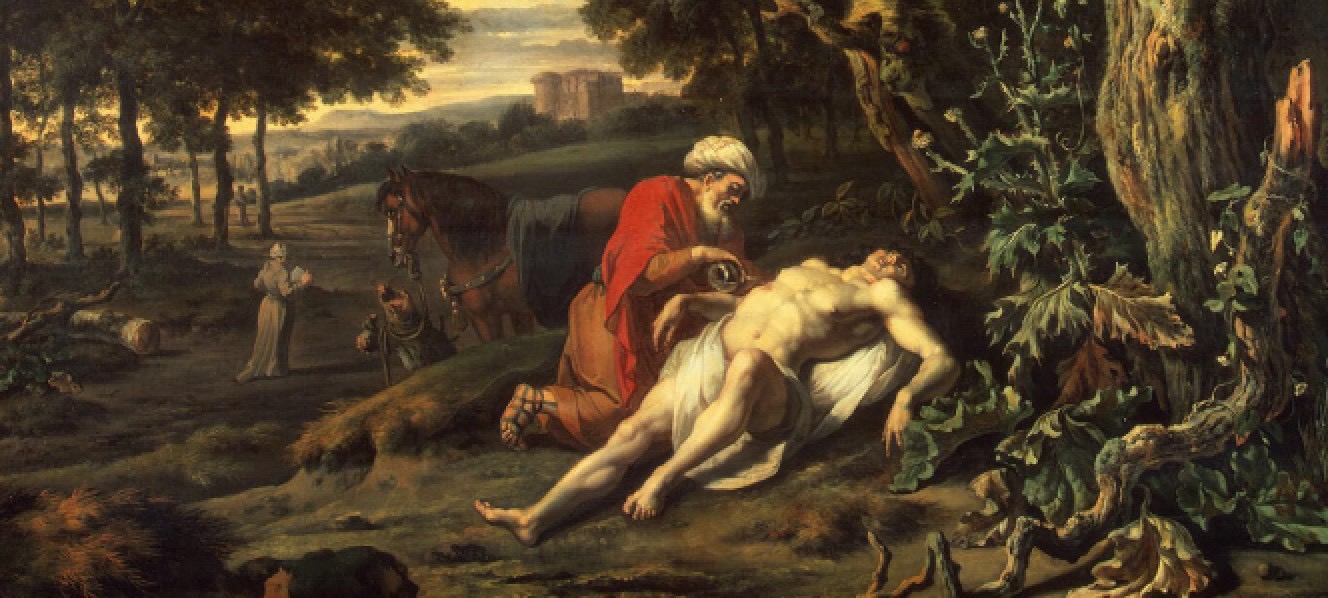
 Here’s a great discipleship opportunity!
 You can: Call me at the Cathedral. My extension is 132. Email me at
  “Be excellent to each other” is not only the catch-phrase of an 80s cult classic but also an excellent guide to life. And despite its dubious origin, there is wisdom contained in the memorable phrase, a wisdom of which we might need reminding.
 “Bring flowers the fairest, bring flowers the rarest, from garden and woodland and hillside and dale; our full hearts are swelling, our glad voices telling the praise of the loveliest flower of the vale!”
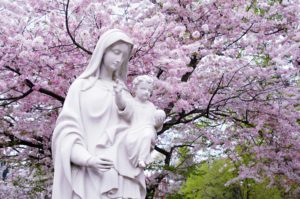 During this month of May, as we continue our celebration of the Easter season and the new life won for us by the risen Christ, we are mindful again of the role that Mary played in the drama of our salvation. God’s plan for our salvation in his son Jesus began with Mary’s yes to God’s will for her. We are invited daily to echo Mary’s yes to God’s will in our lives because salvation is the ultimate end of God’s will for each and every person. We honor Mary throughout the Church year, but particularly in this month, because she is our great model of discipleship and our great intercessor with Jesus her son.