Cathedral of the Immaculate Conception

Springfield, IL

  • About
    • Contact Us
    • History of the Cathedral
    • Liturgical Schedules
    • Parish Staff
    • Register with Cathedral
    • Subscribe to the Cathedral eWeekly
  • Sacraments
    • Baptism
    • Becoming Catholic
    • Matrimony
    • Vocations
  • Ministry List
    • Adult Faith Formation
    • Cathedral Meal Train
    • Cathedral Online Prayer Wall
    • Cathedral Concerts
    • Family of Faith
    • Grief Share
    • Health and Wellness
    • Spiritual Resources
  • Stewardship
    • Stewardship: A Disciple’s Response
    • Stewardship Form
  • Support
    • E-Giving Frequently Asked Questions
    • Give Online
  • Sunday News
    • Announcements
    • Cathedral Weekly
    • Livestream Feed
    • Submit a Mass Intention Request
    • Weekly or Announcement Submission

Gratitude and Advent Stewardship

Thank you to the many parishioners who have submitted your good faith intention cards during the Season of Stewardship! There is still time to send yours in to the office. However, are you wondering why you are being asked to do this? Why is this important?

When you commit to doing something, you likely have the best of intentions to see it through, right? You may right down your goal or tell others about it to help hold yourself accountable. The form helps us identify how we are currently stewards or how we would like to be stewards of our time, talent, or treasure in the future. Many of you are already incredibly generous and involved- thank you! By filling out the stewardship form you help the parish staff identify needs in the parish. We need to ensure that our ministries remain vibrant and welcoming with volunteers. The forms also help us plan the spiritual and financial resources for the year ahead. We want to make sure we can continue to bring to you the high-caliber faith formation programs, services, and special Liturgies, which have become the norm at Cathedral! We need your support and participation in this effort.

As we enter into the Season of Advent, we begin a new commitment to discipleship and stewardship in the Parish! Below we have a few ideas to challenge ourselves during Advent. Watch the Parish eblast and facebook page for more stewardship challenges and videos that will hopefully serve as great resources for you and your family this Advent!

  • Begin the Season of Advent in prayer and in gratitude by joining us at the Novena in honor of the Immaculate Conception! The Novena begins December 1st and runs through December 9th. Each night a different preacher will offer a homily on a different aspect of Marian theology and devotion. Join us Dec. 1st thru 8th – 7:00PM; the last night and closing Mass, December 9th at 5:15 Mass.
  • Serve at the Breadline with your family this Advent (https://cc.dio.org/programs/st-johns-breadline)! St. John’s Breadline in Springfield serves a hot, nutritious meal in a clean, positive environment. The St. John’s Breadline has volunteer opportunities available seven days a week. Shifts are available Mondays through Fridays from 7:30 a.m. – 10:00 a.m. and 1:30 p.m. – 4:00 p.m. Shifts are also available on Saturdays, Sundays and Holidays from 10 a.m. – 1:30 p.m. The Breadline is located at 430 N. 5th St. Springfield, IL 62702. Contact them at (217) 528-6098 for more information.
  • Have a family Advent wreath! The traditional Advent wreath – a crown made from branches of holly, spruce, or straw (or cardboard, fabric, dried flowers, etc.) with four candles (three purple and one rose) that you light in the course of the four weeks of Advent, is a great family tradition! Find a great article with resources for your Advent wreath here: (http://www.usccb.org/prayer-and-worship/liturgical-year/advent/about-advent-wreaths.cfm)
  • Make a NEW family Advent tradition by joining us at the Cathedral Lessons and Carols (Sunday, December 15th – 7:00PM at Cathedral), the Late Advent Holy Hour (Tuesday, December 17 – 7:00pm at Cathedral) or at the first annual Rorate Coeli Mass, which is a Mass in candlelight on Sat. December 14th at 7am!

If you have any questions regarding your stewardship form or how you can grow deeper in your relationship with God this Advent, please contact Katie Price at [email protected].

Thy Kingdom Come!

Every now and again I am asked which of the four Gospels is my favorite. That is a difficult question to answer because, while there are four, together they form one Gospel of Jesus Christ. Each has parts that stand out for me. Mark is the oldest and arguably the most reliable concerning many of the sayings of Jesus. Matthew gives us part of the Infancy Narratives, along with Luke, especially the story of the Magi. John is very theological. It’s the last of the Gospels and is able to assume a base knowledge that already exists among believers because of the three texts before it therefore its language and teaching is more exalted. This leaves us with Luke whose Gospel does have a special place in my heart because it gives us the image of Jesus as the loving divine physician.

The passage from Luke for this Sunday, the Solemnity of Christ the King, may be one of the last passages that we would think of having for this day as it presents us with Christ crucified; not the most kingly presentation from a worldly point of view. As Jesus hangs on the cross, he is mocked three times by the “rulers” who are most likely the Jewish religious authorities, the soldiers, and by one of the criminals crucified alongside Jesus. Each mockery is about challenging Jesus to save himself if he truly is the Messiah. The last mockery from the criminal also comes with a plea for Jesus to save him from the agony and death that he is experiencing as well. All three mockeries can be summed up as “save yourself from the pain and suffering of this life and we will believe.” That’s the messiah the world wants and at times it may be the messiah that we want, but that is not the Messiah who is Jesus Christ.

The other criminal gets it right. Tradition calls him “the good thief” and names him Dismas, but of that we can’t be sure and we don’t know his crimes, which were probably more heinous than robbery given that he and his accomplice are being crucified by the Romans. This criminal acknowledges his guilt and his repentance is implied in his stating that his punishment is just, he acknowledges the innocence of Jesus, and then follows one of the most beautiful exchanges in all of the Scriptures when he makes his own profession of faith: “Jesus, remember me when you come into your Kingdom” to which our Lord replies “today you will be with me in Paradise.”

The salvation that our Lord Jesus has accomplished is for us but it is not for this life. Salvation does not mean that we will be spared from the heartaches and sufferings that are inevitable because of sin. The repentant criminal appears to understand that Christ’s Kingdom truly is not of this world and that the salvation that he is accomplishing will be revealed only through our own exodus from this life.

As we celebrate this great feast of Christ the King and in times when we may be tempted to expect God to save us from the trials of this life, may we remember that God will save us but that his salvation is not about this world but liberation from it. Those who mocked the Lord could not see beyond this present life and still the world continues to mock the crucified Lord today as it holds on to a reality that is fleeting. Thanks be to God that we are called to a hope beyond this world, to a greater life to be revealed, to something better than this world could ever offer. As we prepare for the Season of Advent, let us be mindful that as Christ has come so he will return again in glory with salvation for those who live and die in him. May the grace of Christ lift our minds beyond the cares of this life to the Paradise to be revealed. Thy Kingdom come!

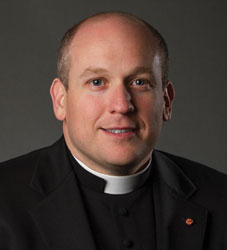
Father Christopher House is the Rector of the Cathedral and serves in various leadership roles within the diocesan curia, namely Chancellor and Vicar Judicial.

The Advent Season is approaching!

We hope to provide you with resources and prayerful opportunities to help grow your relationship with Christ. Advent is a time of waiting and anticipation. It is a season that reminds us to slow down and to spend time in prayer and reflection. As you journey through the Advent season, please know you and your guests are welcome at any of the offerings listed. If you have any questions, please contact the Parish Offices at 522-3342.

Novena in Honor of the Immaculate Conception
Beginning December 1st thru December 9th, the Cathedral will host the annual diocesan novena in honor of the Immaculate Conception, patroness of the United States, our diocese, and the Cathedral Parish. Each night a different preacher will offer a homily on a different aspect of Marian theology and devotion. The novena is moved one day this year because December 8th falls on the Second Sunday of Advent resulting in the transfer of the Solemnity of the Immaculate Conception to December 9th. December 1st thru 8th – 7:00PM; Last Night and Closing Mass, December 9th – 5:15PM @ Cathedral

Advent Lunch and Learn
St Joseph Worker parish in Chatham hosts an Advent Lunch & Learn that consists of a simple soup/bread/etc. lunch followed by a series of Advent reflections on the Tuesdays prior to Christmas. This year, Fr. Dominic Rankin will speak about the three gifts of the magi; gold, frankincense, and myrrh December 3, 10, 17 – 12:05, O’Hara Hall

Rorate Coeli Mass
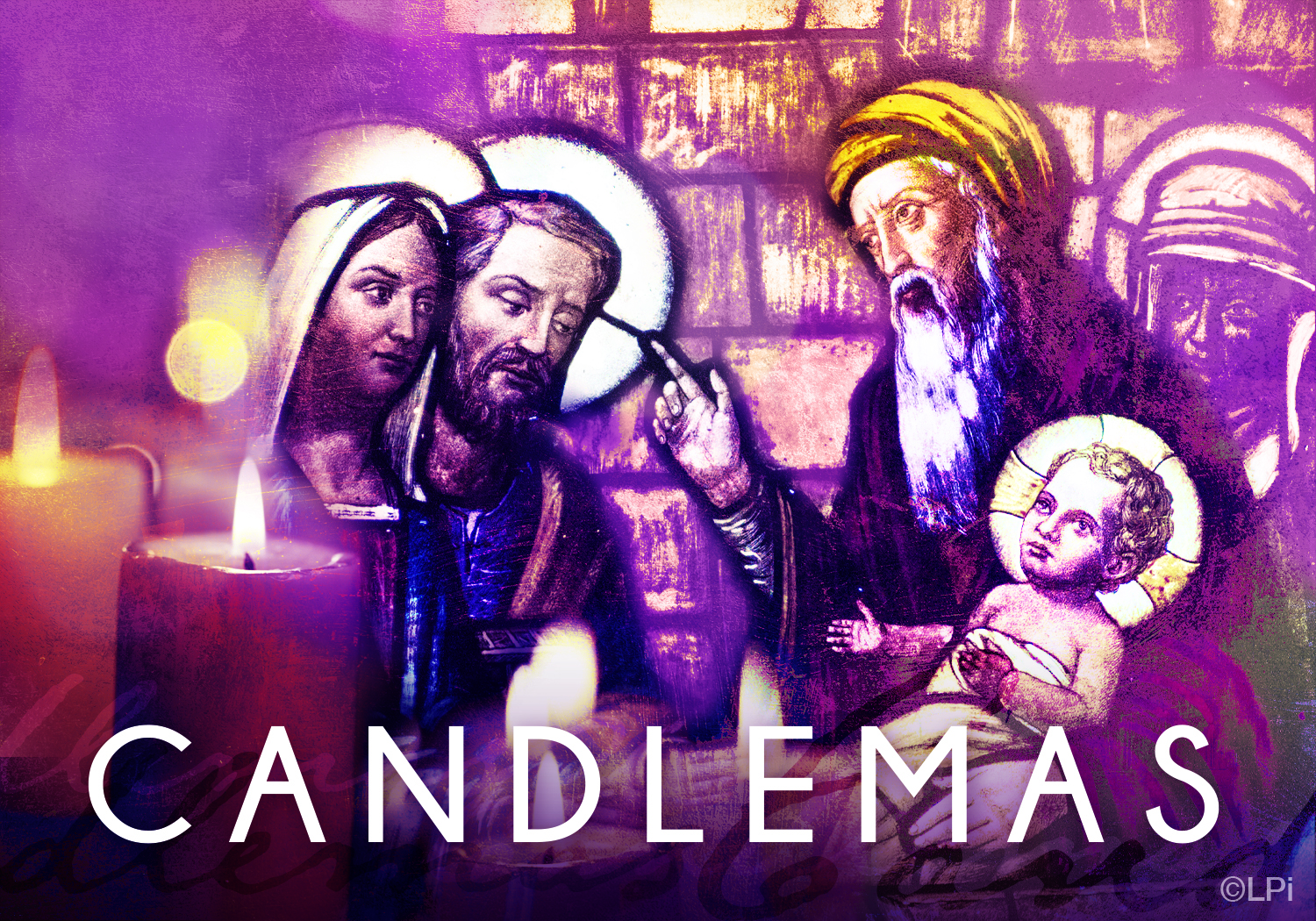
Join us on Saturday, December 14th at 7am for Cathedral’s first Rorate Coeli candlelit Mass in honor of Our Lady during Advent. The Rorate Mass is lit only by candlelight. In the dimly lit setting, priests and faithful prepare to honor the light of the world who is soon to be born, and offer praise to God for the gift of Our Lady. As the Mass proceeds and sunrise approaches, the church becomes progressively brighter, illuminated by the sun as our Faith is illuminated by Christ. All are welcome to join us for this special Mass!

Springfield Choral Society Presents “Messiah”*
The Cathedral is thrilled to once again host the Springfield Choral Society’s presentation of Handel’s “Messiah.” This is a ticketed event. Tickets are available through the Springfield Choral Society or at the door the evening of the performance. Saturday, December 14th – 7:30PM @ Cathedral

Advent Lessons and Carols
On the evening of Gaudete Sunday, in the holy season of Advent, join Mark Gifford and the Cathedral Choir for an evening of Scripture, music, and prayer as we reflect on the two promised comings of Christ. Sunday, December 15th – 7:00PM @ Cathedral

Late Advent Holy Hour
Enjoy the peace and quiet during this prayerful hour spent before the Lord. Tuesday, December 17th – 7:00pm @ Cathedral

ONLINE RESOURCES

The Adventure of Discipleship
Sacred Heart Major Seminary is offering a free, short, interactive online course based on Dr. Daniel Keating’s new book, “The Adventure of Discipleship.” Dr. Keating invites you to look at your Christian journey as an adventure that far surpasses other adventure stories. Dynamic and engaging, each week of the course features short videos, film clips from epic adventures such as Lord of the Rings, scriptural meditations, interactive learning activities and online discussion. Starting December 1st, register at shms.edu

Rejoice! Advent Preparations with Joseph or Rejoice! Advent Preparations with Mary
Rejoice! Advent Meditations with Joseph is a prayer resource with daily meditations that will enrich your Advent by inviting you to experience the first Advent with Joseph and Mary, as they await the birth of their son, the Savior of the world. Together with the guided meditation videos, this journal calls you daily to see through Joseph’s eyes, feel what is in Joseph’s heart, and read the Scripture that Joseph read, so you can fully prepare to welcome Jesus into your heart this Christmas. Presented by Fr. Toups, Sister Miriam Heidland, and Fr. Josh Johnson. The Rejoice! Advent Meditations with Mary Journal not only lets you walk beside Mary during the first Advent, but also lets you get to know her in a way you haven’t before. Rejoice! offers more than insights and information about Mary’s life—it offers an opportunity for you to encounter Mary in the quiet of your heart. Go to ascentionpress.com for more information and to watch an introductory video and order the book or journal.

Advent Gospel Reflections
This year’s Advent Gospel Reflection booklets contain brand new reflections from Bishop Barron, the full Gospel reading for each day, questions for reflection and even journal pages. It’s short, simple, but extremely powerful. It’s like getting a mini-homily each morning from Bishop Barron. Go to bishopbarronbooks.com to purchase a booklet.

Best Advent Ever
A great Christmas begins with an incredible Advent. Every day during Advent, you’ll receive an email with a short video from Matthew Kelly and the Dynamic Catholic team. It’s free and easy to sign up. Go to dynamiccatholic.com to sign up

Finding God in Unexpected Places
A free daily email featuring a short and inspiring Advent video reflection on a work of art from the Detroit Institute of Arts by Fr. John Bartunek, LC. Each daily 1-minute video is designed to help you know the happiness and joy of discovering the presence of God in unexpected places of your daily life and to help others around you do the same. Go to rcspirituality.org/advent-2019/

DAILY PRAYER BOOKS – Paper copy and Online versions

Give Us This Day– Request a free copy at giveusthisday.org
Magnificat– Subscribe at: bookstore.magnificat.net
The Word Among Us– Subscribe or get a free online trial at wau.org/subscribe/

ADVENT BOOKS

Jesus of Nazareth, the Infancy Narratives by Pope Benedict XVI
Pope benedict focuses exclusively on the Gospel accounts of Jesus’ life as a child. The root of these stories is the experience of hope found in the birth of Jesus and the affirmations of surrender and service embodied in his parents, Joseph and Mary.

Joy to the World: How Christ’s Coming Changed Everything (and Still Does) by Scott Hahn
What could be more familiar than the Christmas story — and yet what could be more extraordinary? The cast of characters is strange and exotic: shepherds and magicians, an emperor and a despot, angels, and a baby who is Almighty God. The strangeness calls for an explanation, and this book provides it by examining the characters and the story in light of the biblical and historical context.

Advent and Christmas; Wisdom from Henri J.M. Nouwen
This book is designed to be used during the entire period from the First Sunday of Advent to the end of the Christmas season. Reflections begin with the words of Nouwen, followed by an excerpt from scripture related to the quote and then a prayer timing both together. Finally, an activity is suggested for applying the message.

Advent Meditations with Fulton J Sheen
Drawn from Archbishop’s best-selling books, theses reflections are eloquent quotes paired with beautiful Scriptures on the themes of the season; patience, waiting, gift, hope, humility, joy and more.

Advent and Christmas: Wisdom from Pope John Paul II
Designed like the Nouwen book, we read and reflect on selections from the Holy Father’s talks and statements followed by scripture, prayer and a suggestion for an appropriate seasonal activity

To Jesus through Mary? Why yes, and t’was ever thus!

How wonderful it is that the Feast of the Immaculate Conception of Mary always falls within the start of Advent. Thus, in the very season during which we wait with longing for the Word made flesh to come to us as Emmanu-el (God-withus), we are invited to consider how deeply planned, how “not-random” is his coming, by pondering his Mother Mary, and the very fact of her. “Without God’s Son, nothing could exist; without Mary’s son, nothing could be redeemed,” declared St. Anselm in a sermon, also noting that God is “Father” of the created world and Mary the “Mother” of the world recreated in Christ. Anselm completes his thought by echoing the words of the Archangel Gabriel to Mary: “Truly the Lord is with you, to whom the Lord granted that all nature should owe as much to you as to himself.”

It’s a lot to take in. Mary’s own conception had itself been something pre-ordained by God as necessary within the pageant and process of our salvation—a moment of creation untainted by the brokenness of original sin, which had accompanied every human conception since the first sin of Eden.

From the very beginnings of her existence within the womb of Anne, her mother, the body and soul of Mary were created as the imperatively immaculate vessel required for the containment and growth of the Incarnation of the All Holy. Mary was created with the graces that would render her a fit Ark for the New Covenant, and not only for the time Jesus’ gestation within her womb but throughout her entire life.

This is a fact the Church might appreciate even more today than at any time previous, thanks to science and the discovery of microchimerism. We have learned that within the process of microchimerism, every baby conceived by a woman leaves within her a microscopic bit of his or her cellular being, even if gestation is interrupted, and remains with her forever. Mary, then, was indeed a tabernacle for the Divinity—not for a limited time but for all of her life, as these invisible but real reserves of the Christ remained within her.

Knowing this only reinforces how necessary, how profoundly sensible and reasonable-in-faith is the dogma of the Immaculate Conception, which was deduced long before a time of microscopic discovery. It makes perfect sense that the God who is all good is also completely pure; therefore, the vessel in which he would reside and be made manifest need also be pure, or it could never have been able to sustain all of the light, all of the holiness, all of that power extant within the All-in-All.

Were Mary not be-graced by God for that very purpose of holy containment and development, she would have been crumbled into dust by the immensity of it. And this relates directly to the Assumption of Mary as well. In the Psalms we read: “You will not suffer your beloved to undergo corruption” (Psalm 16:10). Christ’s divine body did not undergo corruption, but ascended into heaven; it follows that his mother’s body, which contained the cellular components of that divinity—and a particle of God is God, entire—would not be permitted to undergo corruption either.

It could not be otherwise. The God particle, commingled with humanity, necessarily preserves humanity and calls it to himself. This is Incarnational. It is Eucharistic, from the beginning. It is our life, conceived in light. And yes, a lot to take in. It’s a lot to take in that God had so thoroughly planned, in the fullness of time, to draw all things to himself through Christ Jesus (Ephesians 1:10), and that we can see the reality of his plans in the Immaculate Conception of Mary and in her life.

It’s also a lot to take in, and something we rarely consider (even when we say, “To Jesus, through Mary”): that Christ’s Body and his Blood are Mary’s as well—that the foundational materials of our Holy Eucharist come to us through Mary. Without Mary’s body, Emmanu-el would not have been with us, and so it makes perfect sense that—as Ark and nurturing catalyst for the New Creation, her body and blood (and her generous, pristine soul) would be preserved of defect, and rendered “full of grace.” As St. John Vianney preached, “The Father takes pleasure in looking upon the heart of the most holy Virgin Mary, as the masterpiece of his hands….The Son takes pleasure in it as the heart of His Mother, the source from which He drew the blood that…ransomed us.”

To Jesus, through Mary, indeed. Those non-Catholics who misunderstand Mariology and assert that Catholics pay her too much homage are missing the point of the essential mission to which she gave her consent: to provide the profoundly pure flesh and blood by which the Savior would eventually—and throughout the ages—feed us and heal us with the super-substanital “daily bread” of the Eucharist. The gift rendered Holy through Christ’s own divinity and called forth by his Bride, the Church. Seen in that light, how could we ever do Mary homage enough for her fiat, and her lifelong example of how to cooperate with grace?

How could we not, especially in Advent, want to ask the prayers of one so beloved of the Incarnate Word, an intercessor who troubled Christ Jesus for something as temporal and passing as wine at a wedding, and to whom we can speak so simply? Especially in this month, let us say each day, with perfect confidence in this “Mother of the world, recreated in Christ”: O Mary, conceived without sin, pray for us who have recourse to thee!

Elizabeth Scalia is a Benedictine Oblate and author of several books including the award-winning Strange Gods: Unmasking the Idols in Everyday Life (Ave Maria Press) and Little Sins Mean a Lot (OSV). Before joining the Word on Fire team as a Editor at Large, she served as Editor-in-Chief of the English edition of Aleteia, and as Managing Editor of the Catholic section of Patheos.com. Elizabeth also blogs as “The Anchoress” at www.theanchoress.com. She is married, and living on Long Island.

Good Grief

[On hearing of the death of his son,] the king was deeply moved, and went up to the chamber over the gate, and wept; and as he went, he said, “O my son Absalom, my son, my son Absalom! Would I had died instead of you, O Absalom, my son, my son!” It was told Joab, “The king is weeping and mourning for Absalom.” So the victory that day was turned into mourning for all the troops; for the troops heard that day, “The king is grieving for his son.” The troops stole into the city that day as soldiers steal in who are ashamed when they flee in battle. The king covered his face, and the king cried with a loud voice, “O my son Absalom, O Absalom, my son, my son!” (2 Sam. 19:1-5)

We Americans live in a culture that has largely lost its shared social scripts and rituals for grieving. How does one grieve loss, failure or tragedy? For how long? How do we move on? How do others respond rightly to those who grieve? With whom should we share our grief? Do we mourn with our clothing? Do we weep and wail aloud in public or in private? Do we share our pain or remain silent? How do we pray in the midst of grief? When do we pray? How should we eat? And how does faith shape the way we grieve?

Grief is how we bury our dead—the injustices and injuries, losses, failures, and tragedies we undergo in life. Grief allows us to heal, surrender, forgive, and move on into new freedom with reverence.

In the face of my parents’ death over the last two years, I have given much thought to this. I have one simple observation. I and my family were overwhelmed by the outpouring of love, support, care, prayer, and compassion shown to us. Cards, texts, emails, gifts, flowers, prayers promised, countless Masses offered, meals brought, memorial donations to charities, sincere words of condolence. One friend had a magnificent chalice made, inscribed with my mom’s name, and donated it as alms to a poor diocese so that my mom would be perpetually remembered in the offering of the Sacrifice.

Absolutely overwhelming. How can one possibly begin to offer gratitude sufficient to repay these acts of kindness? “Pay it forward,” as one friend suggested. Lovely, right, and just.

The beauty and power of all these gifts notwithstanding, what I found most powerful personally was the sacred space afforded me by two people I know. Each offered me a guarded sanctuary within which I could grieve.

One of them, while my mom was dying, asked me, “How are you?” I knew he meant he really wanted to know, and was prepared for whatever would come out. So I told him. He just listened as I dissolved in front of him. He didn’t attempt to mute my pain with pious words of comfort or counsel; neither did he say he knew what I was going through by telling me of his own tale of loss. He simply listened, revering the infinite power of silence. At the end he said, “I’m so sorry.” And embraced me. We left in silence.

For me, he was the weeping Christ-with-me. A real presence reserved in the tabernacle of compassionate silence. Aside from the Funeral Mass, nothing has allowed me to bury my mom and return her to God more than that hour I spent with this friend. He brought alive for me the beauty of the words of Job 2:13: [The friends of Job] sat with him on the ground seven days and seven nights, and no one spoke a word to him, for they saw that his suffering was very great.

May I be able, by God’s grace, to pay that forward . . .

Dr. Tom Neal presently serves as Academic Dean and Professor of Spiritual Theology at Notre Dame Seminary in New Orleans, Louisiana. Tom received a Masters in Systematic Theology from Mount St. Mary’s University and a PhD in Religion at Florida State University.


Join Us!

Cathedral hosts a weekly bereavement group, Grief Share, on Thursdays from 1:00-3:00 (except 11/28 and 12/26) in the Cathedral School Library. Grief Share offers a faith filled opportunity to grieve and heal in company with others. You are most welcome to join us. For more information contact Berni Ely at 899-6637 or [email protected]

Ice and Snow, Bless the Lord!

One of my earliest memories is that of wonder as I clomped out, cocooned in boots, snow-pants, coat, and gloves, into our snow-covered backyard as my dad shoveled a walkway to the garage. It was the most snow I had ever seen – about a foot I guess – and I was only a few years old, so the piles of frozen flakes reached beyond my waist. It wasn’t quite Israelites-through-the-Red-Sea astonishing, but the memory sticks in my mind strongly to this day. Perhaps now I find the onset of cold weather less thrilling than I did as a 4-year-old, but I still am struck by wonder each year with the first snowfall. Only God can recreate an entire landscape over the course of an hour as He does with a snowfall, painting and purifying the grime and grayness of November away with the heaven-sent flurries that filled the sky these past weeks. This week, with plenty of winter confronting us outside, I wanted to take a glance through scripture to see what it might reveal to us of God.

The purity of a fresh snowfall is the image called upon by the repentant David in Psalm 51 as he begs the Lord to forgive the ugly selfishness of his adultery with Bathsheba and murder of Uriah, her husband. It evokes not just a request for pardon, but his beseeching prayer that his heart might be recreated in the Lord’s love. “Purge me with hyssop, and I shall be clean; wash me, and I shall be whiter than snow.” Even the purity of snow falls short in describing the Lord’s forgiveness. His redemption is not just a covering over of our sins, but a renewal of ourselves to their depths, especially in those places of our hearts wounded and warped by sin. Isaiah uses the same image, but now the snow-filled-sky become a pledge from God Himself of salvific forgiveness: “though your sins are like scarlet, they shall be as white as snow” (Isaiah 1:18). As angels filled the December sky above Bethlehem, this promise began to be fulfilled, and it is in the glorious brilliance of Christ transfigured on Mt. Tabor, and the snow-white angels standing by the tomb on the morn of the Resurrection, that mark the definitive advent of Divine redemption.

More astonishing than a state-wide cleansing God completes with an afternoon snow flurry is the transformation He brings about our souls through the supernatural cleansing in one confession. And even more joyous than the most perfect of snowfalls is the rejoicing of all of heaven when we come to Him with repentance!

Psalm 148 transposes the blustering of winter weather into a hymn of praise to the Lord. “Praise the Lord from the earth, you sea monsters and all deeps, fire and hail, snow and frost, stormy wind fulfilling his command! Mountains and all hills, fruit trees and all cedars! Beasts and all cattle, creeping things and flying birds!” Our praise, the psalmist admonishes us, is not merely a spiritual or interior one, but includes and joins with the tangible and visible praise of the natural world. Yet our prayer can be even more inspired by the greater beauty of creation in its continual correspondence with God’s providential will. Just as “even the wind and seas obey Him”, so our praise gives even greater glory to God when it is not only an act of piety and adoration, but of obedience. As our worship corresponds more and more closely to His revelation and example, re-presenting His Sacrifice, in memory of Him, our earthly lives are transposed more and more to the worship of heaven.

Just as snow does more than cover over a cityscape, but actually is a small way of creation following the will of its Creator, so snow and frost image not only God’s desire to purify and cleanse our lives, but the bringing of our lives and hearts into conformity with His. Man, made in God’s image and likeness, with His grace is not only re-created in that original image, but invited to do so in obedient freedom. Our lives become a splendid icon of God Himself.

As we close in on our last weeks of this liturgical year and our readings look ever more towards the definitive, glorious, second coming of Christ marked by “awesome sights and mighty signs … from the sky”, perhaps our recent surprising snowfalls could be a reminder of His loving desire to come now, today, into our hearts and lives.

For as the rain and the snow come down from heaven, and do not return there but water the earth, making it bring forth and sprout, giving seed to the sower and bread to the eater, so shall my word be that goes forth from my mouth; it shall not return to me empty, but it shall accomplish that which I intend, and prosper in the thing for which I sent it (Isaiah 55:10–11).

Father Dominic Rankin is a Parochial Vicar for the Cathedral of the Immaculate Conception.

Evangelization for Introverts

And here it is. The deliverable. The mission: Go, make disciples of all nations.

In other words, evangelize. Yikes! To Catholics that’s a scary word bringing to mind images of people on street corners, telling us the end of the world is near (Chicken Little anyone?) or people going door to door with religious pamphlets. (How many of us have dashed back into the house and pretended to not be home when we see them coming down the block?) It just doesn’t sit well with us. Evangelize.

Can’t we just be private and quiet about our faith? Isn’t it between each of us and God anyway? Don’t we hear every Ash Wednesday that when we give alms, fast, and pray that we should do it in secret and not on the streets to win the praise of others (Matthew 6:1-6)? Don’t we frequently hear the quote from St. Francis of Assisi to preach the gospel always and if necessary use words? My heart did a joyful dance when I heard that. Rejoice introverts! All we need to do is live a good life and voila—evangelization!

Turns out St. Francis didn’t say that, though. St. Francis was a holy man whose actions reflected the Lord’s love but he didn’t shy away from speaking about the gospel. Unfortunately, this quote has given people permission to not talk about the gospel for fear of being seen as a kook. It‘s a safe bet that none of us are living so holy a life that our actions are enough. Jesus used lots of words; sometimes the same ones over and over. We are sheep after all.

Nope, Jesus didn’t tell us to take the easy way out. He didn’t say “just focus on yourself, learn some dogma, watch some videos, read some books.” He said, “Go, make disciples!” Those were his parting words. After everything that happened, he told us to do one thing: make disciples. One thing. He told us we may be hated and persecuted (Matthew 5:11-12). But he also told us, “I am with you always until the end of the age” (Matthew 28:20).

Extroverts and Introverts
Some of the best evangelizers I know describe themselves as extreme extroverts. They are souls who love, love, love being around people. The idea of being home alone reading a book is anathema to them. They spend the day with people and then the evening and the next day and they never seem to tire of personal interaction. Extroverts get energy from others. A crowd … good. A party … good. The doorbell rings … friends! A day home alone … purgatory.

Introverts are the opposite. Those of us who identify as such can be very happy spending a quiet day at home. The more the merrier … nope. A good book by the fireplace … bliss. I love being around people, but they make me so very tired. If my coworkers were in the office every day, I might need to find a new job. Happily two days a week they are off-site and I can recharge for their return, which is no end of fun and exhaustion. If I don’t get quiet, down-time I get twitchy and angsty.

What to do? How does an introvert go and make disciples? It would be tiresome.

Evangelization, going on mission so to speak, is imperative. The Catechism of the Catholic Church reinforces Christ’s directive. While God doesn’t need us to evangelize, “the Church still has the obligation and also the sacred right to evangelize all men” (CCC 848). Well, we can think to ourselves, it’s the job of the Church, as in the parish down the road and priests. Whew. Again, nope. “Lay people also fulfill their prophetic mission by evangelization, that is, the proclamation of Christ by word and the testimony of life. For lay people, this evangelization . . . acquires a specific property and peculiar efficacy because it is accomplished in the ordinary circumstances of the world.” CCC 905

Practical Application
My question has two parts: how should I evangelize and how will I be able to? Giving a talk at a conference a la Fr. Mike Schmitz is not my gift. While I enjoy conferences, I usually leave early and once even spent time a room designated for people who need a quiet space. I enjoy social events, but more is not merrier. Once there are greater than six people around the table, I stop adding to the conversation because there is someone more gregarious than I who is handling it.

I know I need to use words because I’m not holy enough to skate by on action alone, but what does that look like? Evangelization has many forms. God is smart; he gives us gifts to help out. Charisms are given by the Holy Spirit to assist in building his kingdom. Not all require an extroverted personality type. (An aside: A charism is different from talent. When a person is working within a charism, what he or she is doing enables others to experience God.)

Genuine Relationship
If we are to evangelize, we need to be in contact with other people but it doesn’t have to be a party. Evangelization is relational and most effectively done over time with one person at a time—a boon for introverts who operate well in a one on one situation. One of the best ways to evangelize is to walk alongside someone as he or she explores faith. It’s spiritual friendship done over coffee, while on a walk, even over the phone. What’s important is building a genuine relationship with a person and being open to discussing faith. Maybe that means slipping in comments about what your faith means to you. Maybe it’s more direct and you know someone who is looking to discuss Jesus. Whatever it looks like, it means being relational and remembering that the person in front of you is not a project, but a human person. We don’t need to be experts. We aren’t leading the person, merely walking with him or her. The Holy Spirit does the heavy lifting. If asked a question you don’t have an answer to, that’s OK. Commit to looking for the answer, maybe together. Words are needed but they don’t have to be fancy or inspiring or big; they need to be yours and if you’re uncertain what they will be, the Holy Spirit will provide.

Most important, we should remember that we are not doing our own work, we are doing God’s work. He knows who he wants us to invest in and, if we consecrate it to him, he will give us the words we need and the time we need to say them.

As Pope Paul VI made clear in his 1974 encyclical on evangelization, Evangelii Nuntiandi:

“Nevertheless [witness] always remains insufficient, because even the finest witness will prove ineffective in the long run if it is not explained, justified … and made explicit by a clear and unequivocal proclamation of the Lord Jesus. The Good News proclaimed by the witness of life sooner or later has to be proclaimed by the word of life. There is no true evangelization if the name, the teaching, the life, the promises, the kingdom and the mystery of Jesus of Nazareth, the Son of God are not proclaimed.”
EN 22

Amen.

Merridith Frediani’s perfect day includes prayer, writing, unrushed morning coffee, reading, tending to dahlias, and playing Sheepshead with her husband and three teenagers. She loves leading small faith groups for moms and looking for God in the silly and ordinary. She blogs and writes for her local Catholic Herald in Milwaukee.

Evangelization Catechesis, and the Art of Toddler Car Seat Negotiation

When I was finishing my graduate studies in theology, I imagined that I would spend my days as a theologian in an office surrounded by leather-bound books pouring over the translation of a particular Scripture passage, or I’d be in a classroom scrawling on a dusty chalkboard some phrase in Classical Hebrew script, or I’d be lecturing in a hall about the historical-critical method’s place in the rich history of biblical hermeneutics. It’s funny now, I think I imagined myself as a feminist theologian version of Indiana Jones.

I never thought that I would spend an inordinate amount of my adult life repeating the same phrase over and over and over again: “Get in your car seat!” Most of the time, it was followed with an affectionate “Please?” Sometimes it was followed with an equally affectionate “Or else.” Nevertheless, I found myself repeating this phrase multiple times a day to multiple children. As life would have it, I ended up taking a different route than I had earlier imagined: teaching theology to high school students, volunteering in youth ministry, falling in love, getting married, having kids . . . very un-like Dr. Indiana Jones. I wouldn’t change a thing, but sometimes I struggled to find the greater meaning in my day-to-day challenges as a parent of two toddlers.

Like many parents, the car seat is where I had some of my biggest battles. Physically, emotionally, mentally—the car seat was our daily battleground. I, the parent, fought for the virtues of safety, order, responsibility, and obedience. My children fought for independence, comfort, control, and (I think, sometimes) just for fun. It was on one particularly hot August day in the middle of a busy grocery store parking lot that a thought occurred to me.

“Georgie,” I say, “can you get in your car seat so I can buckle you up?” “Mmm. No.” (Not surprising, but at least she made it seem like she was considering my request.) “G,” I continue as sweetly and calmly as possible, “would you like me to teach you how to work the buckles so you can do it all by yourself?” Her five-year-old eyes lit up. “Yeah!” she said as she practically jumped into her car seat.

So I taught her. I spent the next ten minutes or so showing her how to work her arms into the straps, which metal pieces go into where, how to listen for the “click,” and how to check to make sure she’s in safely. I let her do everything—even when it was ninety degrees, someone was waiting for my spot, it took her little hands two minutes to get the latches to engage, and my threeyear- old had broken into a box of goldfish crackers. I wanted to give her ownership of the process and that meant I had to step back a little. Now, before you report me to CPS, of course, I also verified that she was in safely, but only after she was finished. If she missed something, or if an adjustment had to be made, I lovingly pointed it out and allowed her to fix the problem before offering help. The point was that she was now armed with the information, she was in control, she had the ability to do it on her own.

My Instagram-worthy teaching moment had passed and, alas, I was never awarded that “Parent of the Year” trophy when I got home. However, the next morning when it was time to go to the library something wonderful happened. Georgie walked to the car, climbed into her car seat, and buckled herself in. She did the same thing later that afternoon, and again that evening, and all the next day. Every time she would proudly proclaim, “It’s okay Mommy, I got this.” Seriously, where was that trophy? But it’s what happened next that really made me stop and think. Georgie started to ask questions: she wanted to know why she had a special seat in the car, who made the car seat, how does it work, why is it against the rules for her not to use one, when could she sit in the front seat? She was going deeper into her understanding of this daily ritual. And so we had conversations.

We talked about the whys and the hows surrounding this small but meaningful part of her life. And then? She started sharing her newfound knowledge . . . to everyone. Her teachers, the lady at the bank, our neighbor walking his dog: Georgie would stop them all and say, “I buckle myself into my car seat. It’s important. It’s the law because it keeps me safe. Do you want to watch?” The other afternoon, she turned to her sister and asked, “Clemmy, would you like me to teach you how to buckle your car seat? I can show you. It’s a little tricky but I think you can do it.” She had come full circle. A month earlier she had no control; she was forced into this daily procedure with no say of her own. But now? She had become a teacher. By allowing my daughter to participate in the car seat “ritual” on her own, to ask questions, and to share her knowledge, she now felt in control and grew to enjoy the process—even to the point where she wanted to help others find that joy.

I thought to myself: Shouldn’t evangelization and catechesis be the same as these car seat negotiations?

As evangelizers, and additionally as catechists, shouldn’t we take a similar approach to bringing people into the faith—especially when it comes to children, youths, and young adults? As any well-seasoned parent will tell you, a surefire way to turn any kid off from something is by telling or, even worse, forcing them to do it—much like my struggle with the car seat. How can we get the unchurched/de-churched/unaffiliated as excited and passionate about the faith as my daughter now is about car safety? I think the answer lies somewhere at the intersection of giving up a little control, modeling the faith with intention, patience, and grace. We have immense challenges ahead of us when it comes to evangelizing the younger generations today. They are incredibly headstrong and independent—difficult to convince unless it originates as their own idea. This is due, in part, to both their biology and the culture of their generations—factors that we have no real control over. While this “hands-off” approach may not appeal to older generations, the facts of our situation are clear: we need to change our approach if we want to grow the young Church. This doesn’t require a dumbing down of the doctrine nor does it mean ignoring or fundamentally changing Church teaching—it requires us to adapt our evangelizing/teaching style to one that suits the culture.

Obviously, putting a child in a car seat and fostering their Catholic faith are entirely different things, but the way that I choose to approach them is the same: I allow my children to have some sense of ownership, some control, and some sense of understanding rather than force them to complete the task that they do not fully understand. This puts a lot of pressure on me as a parent and teacher. I need to have the patience, I need to take the time, and I need to have the answers to their questions (or at least be able to look them up online). Truthfully, it might be easier to just say “Do it” or “Because I say so,” but then the end result is not the same: the child is in their car seat and the rosary is said, but they have learned to resist or even hate the process because they are forced to do it. I cannot help but wonder what it would look like if we adopted the same approach with the evangelization and catechesis of our young adults today. Would the attention to the sacraments change, would youth participation in the Church be increased, would belief in Church teachings be stronger, would the practice of the rosary or Eucharistic Adoration be more commonplace if we adopted this different teaching style?

Kelly Tramontin is a professional wife, mother, theologian. She studied Theology at Loyola Marymount University where she earned her Masters degree in 2010. She currently lives in Los Angeles with her husband and two daughters.

Stewardship In Action

Over the past few days, if you are a registered parishioner of Cathedral, you should have received information regarding our Season of Stewardship and a commitment card in the mail. This commitment card is what we are asking every Cathedral household to complete and return. If you are not registered and would like to fill out the card, we invite you to do so online at https://spicathedral.org/stewardship-form/ . Everyone is invited to commit to a stewardship way of life and in the process grow deeper in their relationship to Jesus.

So you might be asking, why a commitment card? Why can’t I just make my promise to the Lord? Why would anyone need to know? To answer this, first think about our expression of faith. Intentional discipleship is an outward sign of God’s love and mercy in the world. Going to Mass, making the sign of the cross, are signals to people around you that you believe in Him. The Sacraments are a visible sign of God’s love and blessings in all of our lives. The way we act in our daily lives, our charity or service, is a visible sign of God’s hands and feet in the world. It is through our words, actions, and commitments that we all share the responsibility of discipleship and evangelization in the world.

Secondly, think about other commitments you have made. Have you ever tried to loose weight or make some type of serious change in your life? I have found that when I write down this commitment, and make it known to others, the likelihood of me reaching my goal is significantly higher. Cathedral wants to accompany you! The staff members are committed to helping you connect your faith to stewardship through prayer, service, or giving.

Third, think about the offertory. It is the invitation during the Mass in which we have the opportunity to discern our stewardship for the week ahead. It is our invitation to respond. If you are like me, sometimes it is challenging because we might contribute online, so we are unsure what to “place” as our offering. But, the Season of Stewardship challenges each of us to look at this part of the Mass differently. It challenges us to consider our commitment to stewardship in all ways of discipleship. We adults serve as examples to the young people around us. While I contribute online, my daughter contributes via her allowance and places something in the basket. She knows that Mommy places her gifts in the “online basket” and looks forward to doing that too, one day! Then, she is reminded to consider who she can be praying for this week and how she can help someone this week. It is a great spiritual exercise for family stewardship!

We hope you prayerfully discern your commitment to stewardship as a way of life and place the commitment card in the basket the next time you are at Mass, fill out the form online, or send the form to the Parish Offices.

If you have any questions regarding the Season of Stewardship or your participation in stewardship at the Cathedral, please contact Katie Price in the Parish Offices at [email protected] or call the Parish Offices at 522-3342.

What Is Purgatory?

In the Catholic Church, the month of November is traditionally dedicated to the Holy Souls, honored in a special way on November 2nd with the Commemoration of All the Faithful Departed (more commonly known as “All Souls Day”). This month, therefore, we pay particular attention to our duty as Christians to pray for the dead: those who have gone before us in this life and are now in need of our intercession in order to attain eternal life with God.

But why do Catholics pray for the dead? Well, in short, it’s because we believe in the doctrine of purgatory. However, in my conversations with many faithful and holy Catholics, I get a sense that most people misunderstand or simply “don’t get” what the Church teaches us about purgatory.

So—what is purgatory? According to the Catechism of the Catholic Church, purgatory is “a state of final purification after death and before entrance into heaven for those who died in God’s friendship, but were only imperfectly purified; a final cleansing of human imperfection before one is able to enter the joy of heaven.” A soul which has completely rejected God chooses for itself the punishment of hell. A soul which is purified completely of sin in this life, on the other hand, is brought immediately into eternal rest in heaven (and is therefore a saint, whether canonized or not!). But for the other souls—not damnable, but not yet perfected in grace—the Church recognizes a period of purification.

This purification is entirely unlike the punishment of hell in that a soul in purgatory is de facto destined for heaven, but must undergo cleansing from all sin before spending eternity in the unbridled presence of God. How we will experience that purification may indeed be a “refining fire” (your guess is as good as mine!), but there is one very key difference between that and the “fires of hell:” the undying hope of eternal salvation.

One of the effects of the Protestant Reformation was to throw out this doctrine of purgatory, which in my humble opinion was a grave mistake. See, Catholics see purgatory as an extension of God’s unfailing mercy; to throw it out is tantamount to saying that all the souls unworthy of immediate acceptance to heaven (which would be anyone with any attachment to sin left in them!) is banished to hell. I don’t know about you, but I would much rather believe in a God who mercifully purifies those souls not in obstinate refusal of that mercy!

Traditionally, then, the Catholic Church has always understood itself to be comprised of three states: the Church Triumphant (i.e. the saints already rejoicing in heaven), the Church Militant (i.e. us still fighting it out here on earth), and the Church Suffering (or the Church Penitent/Expectant, i.e. those souls currently experiencing purification in purgatory). It has always been understood that one of the great tasks entrusted to the Church Militant is to pray for the eternal repose of the souls of the Church Suffering, to help them by our prayers to attain that purification necessary to enter heaven. It is our spiritual work of mercy, praying for the living and the dead, that aids souls in reaching God.

For that same reason, you may have heard of Masses being “offered” for a deceased loved one (at Cathedral, our practice is to share the intention of the Mass during the petitions). As the Catechism states, the Church has always “honored the memory of the dead and offered prayers in suffrage for them, above all the Eucharistic sacrifice, so that, thus purified, they may attain the beatific vision of God” (emphasis mine). To have a Mass offered for a deceased parent, sibling, child, or friend is perhaps the most loving and fitting way possible to remember your loved ones, for by it, the innumerable and eternal graces of the Mass are applied to their souls.

Unfortunately, fewer and fewer people are making the sacrifice to have Masses offered for their relatives and friends. The process is actually quite simple. The “offering” is traditionally ten dollars (which is our participation in the sacrifice of the Mass), and dates can be requested by contacting your local parish’s secretary.

As our Gospel reminds us, our God is “not God of the dead, but of the living.” May we always remember our responsibility and our privilege to aid our brothers and sisters through their final purification into eternal life, where at last they may see God face to face!

Father Michael Friedel is a Parochial Vicar for the Cathedral of the Immaculate Conception.

« Previous Page
Next Page »

Liturgy

Sunday Masses (unless noted differently in weekly bulletin)
Saturday Evening Vigil – 4:00PM
Sunday – 7:00AM, 10:00AM and 5:00PM

Weekday Masses (unless noted differently in weekly bulletin)
Monday thru Friday – 7:00AM and 5:15PM
Saturday – 8:00AM

Reconciliation (Confessions)
Monday thru Friday – 4:15PM to 5:00PM
Saturday – 9:00AM to 10:00AM and 2:30PM to 3:30PM
Sunday – 4:00PM to 4:45PM

Adoration
Tuesdays and Thursdays – 4:00PM to 5:00PM


CatholicMassTime.org

Parish Information

Parish Address
524 East Lawrence Avenue
Springfield, Illinois 62703

Parish Office Hours
Monday thru Thursday – 8:00AM to 4:00PM
Fridays – CLOSED

Parish Phone
(217) 522-3342

Parish Fax
(217) 210-0136

Parish Staff

Contact Us

Contact Us

Copyright © 2025 · Log in