 As I have shared in the past, ever since I was a kid I have had a fascination with the Magi and that fascination evolved into a religious devotion to these mysterious, sainted travelers. The Gospel of Matthew tells us little about them, and history and Tradition do not tell us much either. Matthew names three gifts of gold, frankincense and myrrh and so developed the tradition of three individuals who have been given the names of Caspar, Melchior, and Balthasar.
Popularly, we have called them kings and wise men; the former in an attempt to show fulfillment of Old Testament prophecies and the latter being possibly more accurate. The Scriptures only give them the title of Magi, plural for mage. Another tradition says that they came representing Europe, Africa, and Asia, but that is probably not the case either. Most historians and Scripture scholars point to their origin as being from ancient Persia, modern day Iran. They were likely followers of Zoroastrianism, which, in its more ancient form, placed an emphasis on the study of the stars by its priests.
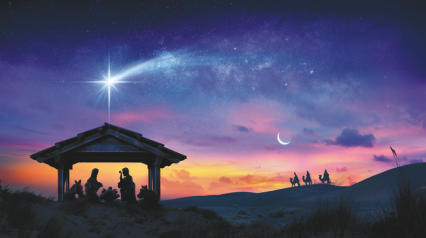
Matthew’s Gospel tells us that they observed “the star at its rising.” What they exactly saw we do not know. Modern day astronomers have suggested a possible supernova or an unusual alignment of planets. The fact that this may have been a natural phenomenon does not in any way diminish the fact that this sign heralded a supernatural event on earth; after all, does not creation serve its master and creator? More fascinating still is that there is evidence that this astronomical event took place within the constellation of Aries which was the Zodiac sign for Judea and would have lead the Magi to Jerusalem its capital and then on to Bethlehem following their audience with Herod.
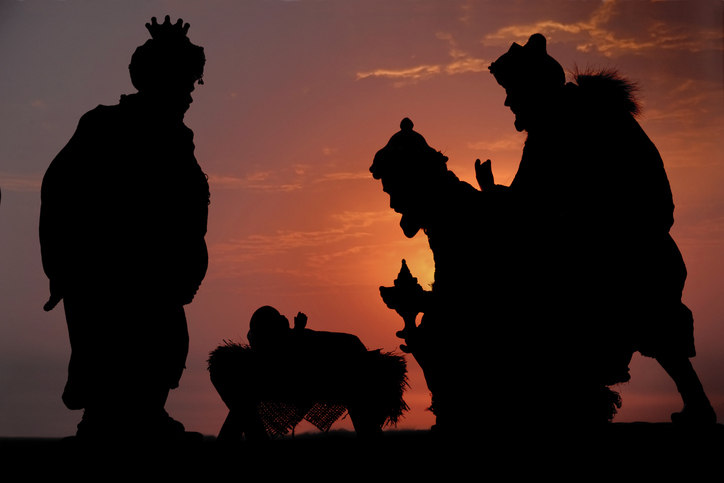
Following the star would not have been easy. The journey from Persia to Bethlehem would have been long, difficult and fraught with danger, yet the Magi made the journey. Why? God called them. On their hearts was placed the hope that something wonderful was waiting for them beneath that star. While they were guided by the star’s light, it was actually faith and hope that moved them. They did not know where they were going, when the journey would end, or what they would find, but they were called and they went.
So what happened to the Magi? Neither Matthew’s Gospel, nor any of the others, tell us anything more about the Magi. There are a few traditions concerning them that say that they themselves became disciples and were eventually martyred for their faith in Christ. In the fourth century, St. Helena brought many relics from the Holy Land back to Rome and among those relics were the bones of the Magi, however, she took them to Hagia Sophia in Constantinople, not Rome. After a short time, the relics were transferred to Milan where they rested until being transferred to Cologne in 1164, where they remain to this day in its cathedral.
The story of the Magi remains relevant for us as disciples. God is always calling to us, many times through the natural realities of our lives, beckoning us to follow the light that leads to him. The path is not always easy, sometimes we do not know where we are going, and maybe we might ask ourselves at times is the journey worth it? The Magi did indeed find the journey worth it because in presenting their gifts to the Christ child they were given a special gift: the joy that comes from God alone.
Of course, there is a great tragedy in this story and that is Herod and his brutal decision to murder all boys in Bethlehem two years old and younger. God was calling Herod also, not through the star, but through the Magi when they came asking about the new born king. Herod was closed off to everyone but himself and was only concerned with following his own light. God was not seeking Herod’s throne or his kingdom, just his faith.
May the grace of this wonderful Solemnity of the Epiphany teach us to guard against being self-referential and closed off, from thinking that life is all about us, and that we have all the answers. May the grace of God open our eyes in faith to behold the many and varied ways that He is seeking to lead us through the challenges and difficulties of this life, to the path that ultimately will lead us to true life in Christ and the joy that He alone gives.
Father Christopher House is the Rector of the Cathedral and serves in various leadership roles within the diocesan curia, namely Chancellor and Vicar Judicial.
 How we do something is just as important as why we do it. As Christians, we are well aware of the injunction to serve the poorest and the most vulnerable. The prophets of Israel continually challenged the Hebrew people with this message and berated them for ignoring it. Our Lord Jesus himself makes it the criteria for judgment and distinction between the “sheep” and the “goats” in the twenty-fifth chapter of Matthew’s Gospel. “…when I was hungry … thirsty … a stranger … naked … sick … in prison …”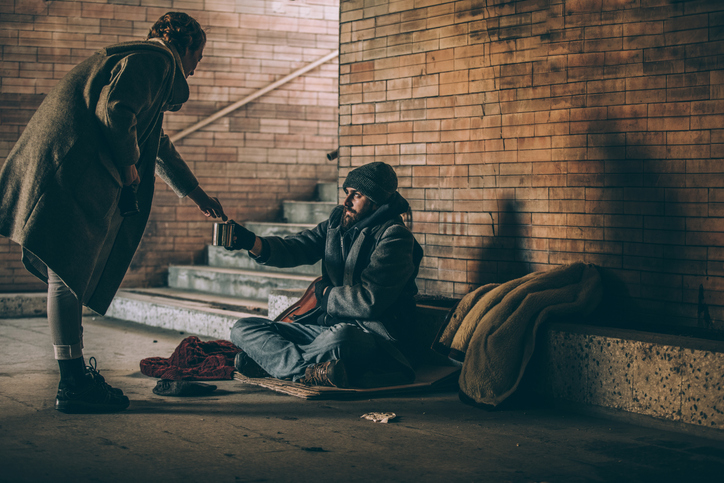
 As far as I know, Jesus never sent any person out alone on mission. When disciples went out on mission, sent by our Lord, they went out as at least two. There is value in community and there is value in serving the poor as a community. When I serve with others I have someone to share my thoughts with, I have someone to share a word or an insight when I might be lacking, I have another to share concern with and think new possibilities – other sets of eyes and ears, other hearts to care and minds to imagine. When I am alone in my service I have none of this. Recognizing how our Lord himself sent out his disciples in community, Sant’Egidio encourages service and friendship with the poor to be lived as community and not alone and individual. On our own we are too easily lost and too easily disillusioned. Service can easily become rigid and perfunctory. My experience is that a moment with the poor often has an Emmaus dynamic to it – the Lord is present but we often only recognize him in hindsight as our hearts burn within us and as we share together. It is good for disciples to serve together and it is good for disciples to share together. Apparently, Jesus thought so.
 I confess: I’ve never been particularly successful at keeping New Year’s resolutions because I’m more successful at finding excuses to ignore them. In years past I’ve been sidetracked by crowded gyms, the sniffles, and my general inability to resist temptation. This year, I decided I need some extra help, so I’m turning to the saints. I’m used to asking for the intercession of saints for big concerns, for example, laying my parenting woes at the feet of St. Monica, or asking for St. Peregrine’s support for a friend battling cancer. But what about intercession for life’s more mundane issues? Studies show we are more successful reaching goals when we enlist the help of a friend, and who better than our saint friends? Here are a few of my resolutions with the saints who will help me stay on track in 2019.
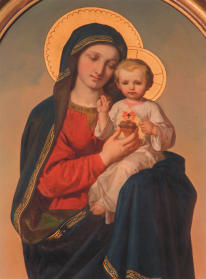 The Solemnity of Mary, Mother of God follows the Feast of the Holy Family on New Year’s Day. This solemnity marks the end of the Octave of Christmas by celebrating the motherhood of Mary, remembering that it was from her that Jesus took his human nature, becoming one with us in all things but sin. This solemnity is a holy day of obligation and Mass will be offered on Tuesday evening at 5:15PM and on Wednesday morning, New Year’s Day, at 9AM.
 With the ushering in of the new year, we will be making a change in office personnel. For just about three years now, Katie Price has served our parish as Director of Discipleship and Stewardship. She was instrumental in the refashioning of the bulletin into the Weekly and she helped to move us in a new and better direction in the area of stewardship and discipleship. Katie will be going full time in the diocesan curia in this area of ministry beginning January 1. While she will no longer be a member of our parish staff, we will still benefit from Katie’s expertise and energy. I thank Katie for all that she has done to help us to be better disciples. Please join me in wishing her the best and asking God to bless all her future endeavors.
 You’ve probably seen it already. Your neighbors no longer have lights twinkling outside their houses. Large trees are strewn across front lawns in preparation for garbage day. The radio station that had been playing Christmas music twenty-four hours a day since November 1 suddenly stopped playing all their carols at 12:01 AM on December 26.
 Yesterday, I experienced something of a “Saint Joseph Synergy,” finding a copy of Fr. Donald H. Calloway’s Consecration to St. Joseph in my mailbox, and on the very same day that we read at Mass:
 I remember the first few conversations about changing the traditional Cathedral Bulletin into a Weekly magazine-style format. It was contentious and just about anyone you had spoken too had an opinion on the matter. Of course, people were worried about getting the news and upcoming events or programs, while others were concerned about the cost or the additional time necessary to compile a weekly magazine. To be frank, I was initially concerned myself. At the time, I had worked in Catholic organizations and parishes, coast to coast, and never, ever, seen a Cathedral parish endeavor to change the layout of the traditional bulletin into an evangelization piece. We don’t change traditions in the Catholic church all too often and that goes for our administrative tasks, especially bulletins! So the question was, what if we could create a faith formative piece to nourish and sustain our parishioners, while encouraging them to share it with others? Wouldn’t that help us move toward discipleship and stewardship?
 It is not just change the Cathedral has gone through since my time here, but a deeper conversion process. The way we message and communicate is different, the way we learn through enriched adult faith formation programs is different, the way we pass along the faith through Family Faith is different, the way we commit as stewards through the Season of Stewardship is different. This is not just about embracing change, but allowing ourselves to dive into a deeper conversion process toward discipleship. Change is incredibly hard. Conversion is incredibly hard, but is change through the lens of holiness.
 It has been a pleasure getting to know so many of you and working alongside you! This community is a special place, a spiritual home unlike any other. Be proud of the Cathedral community you have been a part of shaping. Be evangelizers for the Cathedral and our faith. Be disciples through ministry, service, hospitality, and spirit. Get uncomfortable! Never tire of this journey. We need you!
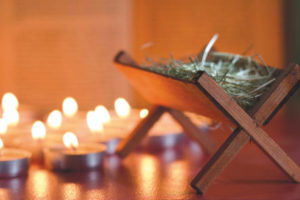 May we open our hearts to the grace of God that allows us to see him drawing near to us, especially in our sisters and brothers.
 Terry Mattingly of GetReligion has a great column about the “two Christmases.” As he notes, for the Church, the Christmas season runs from Christmas Day (December 25) to Epiphany (January 6). These are the famous Twelve Days of Christmas. But in secular society, the Christmas season runs from around Thanksgiving until December 25. So this Sunday marks either the end of the Christmas season (for secular culture), or the First Day of Christmas (for the Church).