 Ten years ago this past December, we celebrated the rededication of the Cathedral Church. At that time, I was the diocesan Master of Ceremonies so I was tasked with overseeing the actual dedication ritual. This was the first dedication of a church for me and the fact that it was the Cathedral made it even more special and also more nerve-racking. There are different prayers and ritual actions that compose the rite and that make for a beautiful celebration. The central prayer is the actual prayer of dedication. In studying the text of the prayer, I remember being struck by one specific line in the prayer: here may the waters of Baptism overwhelm the shame of sin.
This Third Sunday of Lent presents us with the story of the Woman at the Well as recorded in St. John’s Gospel. The story is rich in details that should be noticed. The disciples have gone into the town to buy food. Jesus remains, alone, at a well to rest. It is an odd place to rest being that it is noon and the hottest time of the day, but none of this is by accident, just as Jesus’s encountering the Samaritan woman is not a matter of chance.
The woman comes to the well. No one goes to fetch water at noon; water is fetched either early in the morning or in the evening so as to avoid the sun and the heat. Yet, here this woman approached the well and encountered the Lord who was waiting for her. In the course of the conversation we come to understand that the woman is in a relationship that is contrary to God’s law. While some people today might be inclined to brush off the woman’s circumstance, 2000 years ago the woman would have been faced with shame and being ostracized from the community; thus, why the woman is going to the well at noon when no one is around.
Jesus meets the woman where she is. He engages her in a way that brings her sin into the light without condemning her or seeking to shame her. While He asks her for a drink of water, He is actually thirsting for her faith and an openness to His grace and mercy. He wants the same from us.
As we continue through this holy season of Lent, may we heed the Lord’s call to return to the grace of our baptism, to leave the old life of sin behind, as well as the shame and guilt that it brings. I want to invite you to take advantage of the sacrament of Reconciliation offered here at the Cathedral or in any parish. I am especially inviting you if you find that you are carrying the burden of sin, shame, and guilt, and don’t seem to know how to lay them down. Reconciliation is the well of mercy where the Lord Jesus is waiting for all of us. Come and meet the Lord, allow Him to wash you clean and to remind you that you are loved, that you belong to Him, and that no sin can ever change that fact.
We are not the sum of our weaknesses and failures, we are the sum of the Father’s love for us and our real capacity to become the image of His Son Jesus. -Pope St. John Paul II
Father Christopher House is the Rector of the Cathedral and serves in various leadership roles within the diocesan curia, namely Chancellor and Vicar Judicial.
 I’ve always struggled with daily prayer — I don’t have the self-discipline to commit to something every day. So, as a way to get better at prayer and to deepen my relationship with God, I made daily prayer my Lenten promise for several years. It did not go well. I’d get off on the right foot but quickly start missing days, and by the end of Lent, feel like a failure. I kept trying year after year, but I kept falling short.
 As you continue on your Lenten journey, please remember that the Cathedral offers several opportunities to enrich your spiritual life through prayer. Adoration is held on Tuesdays and Thursdays from 4:00pm to 5:00pm, and Stations of the Cross is held on Fridays during Lent immediately following the 5:15pm Mass. Daily Mass is offered Monday through Friday at 7:00am, 12:05pm, and 5:15pm and Saturdays at 8:00am.
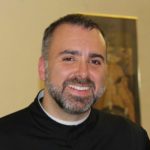 “Jesus took the loaves, gave thanks, and distributed them to those who were reclining, and also as much of the fish as they wanted.”—John 6:11


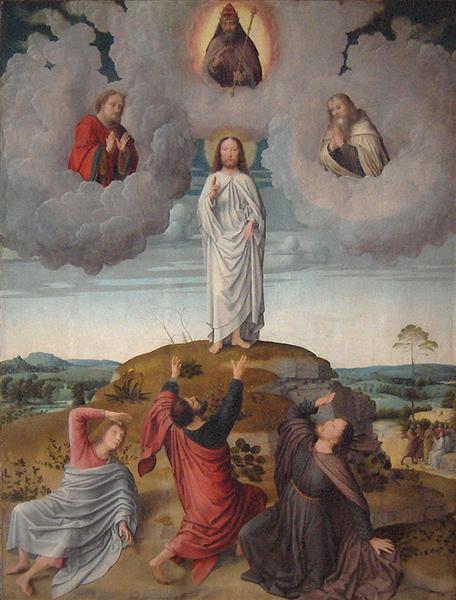 The second truth of the spiritual life which the Transfiguration teaches us is that we are meant to see the vision of God. Unlike the apostles, we do not see Jesus face to face. How, then, do we get a glimpse of him in all his glory? The central and most important way is in the Mass. At every Eucharist, the Risen Lord is truly present in our midst. When the readings are proclaimed, it is Jesus’ voice that we hear. When we receive the Eucharist, we touch the body of the Risen Lord just as the apostles did, and we are transformed by him.