 Last weekend, as I was greeting people and shaking hands after Mass, I said to a few parishioners, “Happy New Year!” Some of the glances and puzzled looks that I received in return gave me the impression that for a few, I really took them off guard—and someone even warned me that I was a bit early for ushering in the new year.
What I meant, of course, was to wish people a happy beginning to the Church’s new year, which commences every year with this season of Advent. As of last Sunday, we began a new liturgical cycle, reliving anew the mysteries of our salvation ‘from the top,’ starting appropriately with this season of postured anticipation of a Savior who will be born among us at Christmas. We move from studying Luke on most Sundays to Matthew in this coming year. In all of our liturgical books, we made what the seminarians I studied with used to call the “big flip,” which was when we moved the ribbons from the very back of the books to the very front. All in all, there’s just something satisfying about knowing we’ve completed another year in the Lord’s grace, and so we begin again.
 While I’m not sure it’s ever necessarily been the practice to make resolutions at the beginning of a liturgical year, I think this ‘new beginning’ does present us with a perfect opportunity: to examine our spiritual lives with fresh eyes; to ask the Lord to illumine those ways in which He is calling us to grow deeper in the mystery and in the practice of our faith; and to resolve to adhere to some simple and achievable practices in this coming year. Ask yourself in prayer this week,
“How is God calling me deeper? What can I do to recommit myself to this life of discipleship and prayer? What is a small resolution that I can make to God in this coming year?”
 Here are a few ideas to get you started:
- If you haven’t gone to confession in years (yeah, you!), there’s no time like the present!
- Start praying before meals with your family, if you don’t already. Kneel by your beside every night and thank God for the beauty of another day.
- Commit to reading the Scriptures every day. Read a single chapter of one of the Gospels or start with the Book of Psalms. If you want something systematic, the Augustine Institute published a Bible in a Year that I find helpful, and it only takes about 20-30 minutes per day. (For the more technologically inclined, there are apps for this as well.)
- Spend a weekly or monthly hour in adoration. Start coming to Cathedral’s offerings of adoration on Tuesday and Thursday afternoons. Come see what our Late Advent Holy Hour is about!
- Resolve to pray the Rosary daily or weekly or to spend your commute offering a Divine Mercy Chaplet.
- Look through this Weekly and pick one of the plethora of Advent Offerings and go. Invite a friend! Go to some of the many adult faith formation opportunities we host. Discover the beauty of prayer and song at Lessons and Carols. Come see what a Rorate Coeli Mass is.
- Ever tried going to a daily Mass? Try going one extra day a week. See what grace the Lord has in store for you.
- Pick a different thing to fast from every week (coffee, snacking, salt, dessert, social media/internet, etc.). Offer the little suffering for someone you know who is sick or in need of your prayers.
- Explore the world of Catholic podcasts. I’m a fan of Catholic Stuff You Should Know. The Diocese started a podcast called Dive Deep. There’s even a podcast for praying the Liturgy of the Hours (called Pray Station Portable).
 Follow the Diocese of Springfield in Illinois on Facebook or Instagram. Share a post every once in a while. Be that person.
- Up your weekly contribution by $5. Pick a charity that you know and trust—local or global—and send them a donation. Commit to living discipleship in your financial life as well.
- Pick up a book for spiritual reading. Learn about the saints. Dive in deeper with some theology or spiritual classics. If you need suggestions, call me!
The options are endless. Pick something you can accomplish. Like our other New Year’s resolutions, we don’t want these to be a distant memory in just a couple weeks from now. Don’t try and do everything; but as a spiritual director once told me, “Don’t let the perfect be the enemy of the good.” Resolve to do something good, even if we’re never going to implement in perfectly. One thing I know is that our Lord can never be outdone in generosity—if you commit to growing with the Lord, even a small effort can be met with great reward!
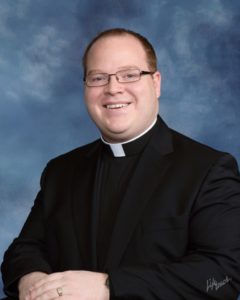
Father Michael Friedel is a Parochial Vicar at the Cathedral and Chaplain at Sacred Heart Griffin High School.
 For much of the world the Christmas season has arrived; or I suppose one could say, it arrived several weeks ago!
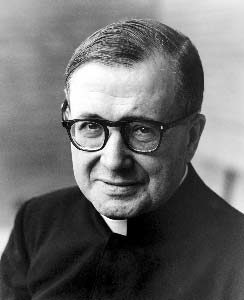 “On this first Sunday of Advent, when we begin to count the days separating us from the birth of the Savior … we have considered the reality of our Christian vocation: how our Lord has entrusted us with the mission of attracting other souls to sanctity, encouraging them to get close to him, to feel united to the Church, to extend the kingdom of God to all hearts. Jesus wants to see us dedicated, faithful, responsive. He wants us to love him. It is his desire that we be holy, very much his own.”
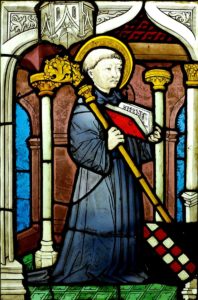 This is something that the great Doctor of the Church, St. Bernard of Clairvaux, spoke about. Living during the twelfth century, St. Bernard wrote a series of sermons for Advent. Often called the last “Father of the Church” in the Christian West, his words are still relevant even as we experience the Advent season in the twenty-first century. He reminds us that we are in actuality preparing for “two advents”: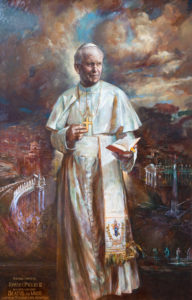
 “In today’s Gospel we heard the Lord’s invitation to be watchful: ‘[Watch, therefore, for you do not know on what day your Lord is coming’ (Matthew 24:42) … The exhortation to be watchful resounds many times in the liturgy, especially in Advent, a season of preparation not only for Christmas, but also for Christ’s definitive and glorious coming at the end of time. It therefore has a distinctly eschatological meaning and invites the believer to spend every day and every moment in the presence of the One ‘who is and who was and who is come’ (Revelation 1:4), to whom the future of the world and of man belongs. This is Christian hope!”
 This weekend the church year begins anew as we begin the holy season of Advent, a name derived from the Latin word adventus, which means “the coming.” This holy season looks to the two comings of Christ; first, we look forward to our Lord’s return in glory at the end of time, and second, beginning December 17th, we look back, remembering that our Lord came to us in time to be one with us in all things but sin. While it may not have the same depth of austerity as Lent, Advent is also a penitential season where the words of the Prophets echo to us from ages past to prepare a way for the Lord in our hearts and lives.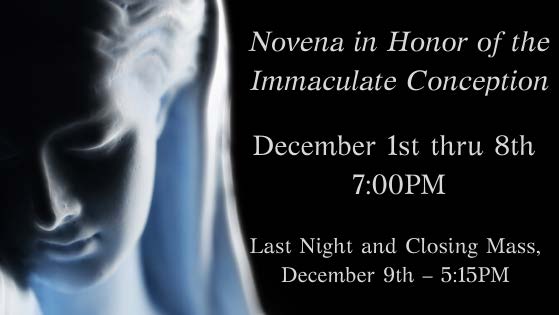
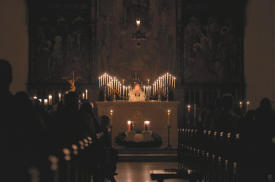
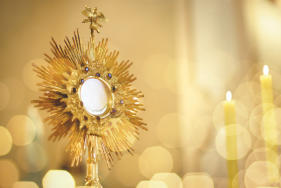 We hope to provide you with resources and prayerful opportunities to help grow your relationship with Christ. Advent is a time of waiting and anticipation. It is a season that reminds us to slow down and to spend time in prayer and reflection. As you journey through the Advent season, please know you and your guests are welcome at any of the offerings listed. If you have any questions, please contact the Parish Offices at 522-3342.
 Novena in Honor of the Immaculate Conception
 In Death on a Friday Afternoon, the late Fr. Richard John Neuhaus cautions us to take Lent slowly, to not rush to Easter. A similar thought comes to mind when approaching Advent: we should not rush to the stable. Advent, the time of great expectation, should be a time when we can linger awhile with Mary and Joseph in their time of anticipation.

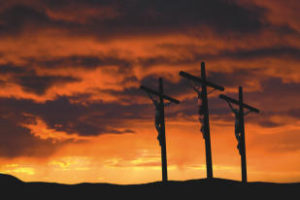 The passage from Luke for this Sunday, the Solemnity of Christ the King, may be one of the last passages that we would think of having for this day as it presents us with Christ crucified; not the most kingly presentation from a worldly point of view. As Jesus hangs on the cross, he is mocked three times by the “rulers” who are most likely the Jewish religious authorities, the soldiers, and by one of the criminals crucified alongside Jesus. Each mockery is about challenging Jesus to save himself if he truly is the Messiah. The last mockery from the criminal also comes with a plea for Jesus to save him from the agony and death that he is experiencing as well. All three mockeries can be summed up as “save yourself from the pain and suffering of this life and we will believe.” That’s the messiah the world wants and at times it may be the messiah that we want, but that is not the Messiah who is Jesus Christ.
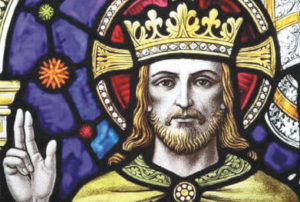 The salvation that our Lord Jesus has accomplished is for us but it is not for this life. Salvation does not mean that we will be spared from the heartaches and sufferings that are inevitable because of sin. The repentant criminal appears to understand that Christ’s Kingdom truly is not of this world and that the salvation that he is accomplishing will be revealed only through our own exodus from this life.