 My life is one of far greater riches than the rich man in today’s parable. Space-age wool, cotton, and polyester blends compose the clothes that I throw on every morning and the food I eat throughout the day is more abundant, nourishing, fresh, and appetizing than even the most sumptuous of meals that the un-identified “Dives” [“rich-man”] would have enjoyed. So how do I avoid his fate? A few take-aways immediately strike the attentive reader.
For one, the obvious connotation: Dives now finds himself in anguish because he ignored the impoverished and ill Lazarus who lived literally under his very gate, and yet received neither attention, food, nor even the smallest gesture of love from him. Christ’s words in the prior chapter of Luke that we heard last weekend should resonate again in our hearts: “you cannot serve God and mammon”. “Son”, Abraham speaks to all of us, “remember that you in your lifetime received your good things, and Lazarus in like manner evil things; but now he is comforted here, and you are in anguish.” Is my “lifetime”, a word that not only speaks of physical length of days, but of the fullness of our lives, including and extending into eternity, comprised merely of the “good things” of this world? How often is my mood, disposition, and happiness dependent on merely earthly possessions and pleasures?
A couple weeks ago I bought one of those electrolyte-additive mixes that you drink after a hard workout, choosing “orange” because I thought it would be the best flavor. Well, it’s terrible, and every time I try to drink the stuff, I think I should just toss it and try “cherry pomegranate” or “lemon” instead… Not after this Gospel! Lazarus did not have food at all. He did not even get the scraps and refuse that our rich man threw out, much less food that was palatable or nutritious. In eternity, am I going to be still be looking for a quick drink for myself (as long as it’s not orange-flavored) or will my mind and heart be set on more important things? I make that decision now in the simple choice to not complain when my preference is not given to me, as well as in those greater acts of charity when I offer kindness, concern, and dignity to someone in need of it who crosses my path.
A second call resonates beyond this first one though, and it comes at the end of our Gospel today.
And he said, ‘Then I beg you, father, to send him to my father’s house, for I have five brothers, so that he may warn them, lest they also come into this place of torment. But Abraham said, ‘They have Moses and the prophets; let them hear them.’ And he said, ‘No, father Abraham; but if some one goes to them from the dead, they will repent.’ He said to him, ‘If they do not hear Moses and the prophets, neither will they be convinced if some one should rise from the dead.’ ”
Our rich man shows concern for his brothers; he is not just a cold-hearted, wealthy, tyrant or something. What does this mean for us?: Kindness is not enough. Love of neighbor is not the extent of Christ’s call, but only when it flows from, and is linked with Love of God! Our life must not merely be not serving mammon, but a conscious and constant choice to serve God! How might we do this? I think our Gospel today offers us a simple way: fill our minds and hearts with God’s Word. Abraham’s final message to our rich-man is that he (and his brothers) did not hear Moses and the Prophets, and so, they would also be ambivalent towards even the astonishing revelation in Christ’s resurrection. Is my mind filled by the entertainment, distractions, and noise of our world? What happens when my phone dies or an ad rudely interrupts my YouTube watching? What is the first thing I read in the morning, or the last thing I hear or see before I fall asleep?

While running this past week, the Bluetooth earbuds I was listening to an audiobook with ran out of power. I had a couple miles to go on a long run, and it was annoying to not have the distraction of constant sound pumped into my head, but I was forced to go without them and ended up praying two decades of the rosary and greeting a couple people with a smile and wave as I trotted the last bit back to the rectory. It was a moment of insight: are the words that fill my mind and heart those of God, or a barrage of distraction that keep me far from appreciating His gifts and presence? Not only must we set aside time for silence in order to even notice God’s work in our lives, but we also have to spend time to meditate on His Word – Moses, the Prophets, the Gospels – and let them percolate in our hearts, penetrate our minds, and polish the lenses through which we see our world.
Father Dominic Rankin is a Parochial Vicar for the Cathedral of the Immaculate Conception.
 Various polls in recent years have indicated the rise of “nones”, those declaring no religious affiliation whatsoever. This is particularly conspicuous among young people. It has been noted that these “nones” are often of two types:

 This past weekend I had dinner with one of my closest friends, meeting up with him at after a conference he was presenting at. It’s one of those friendships where we’ve seen each other at our best and our worst; one of those bonds where you can speak without words. I always had a second home with his family in Iowa. I stood up for him at his wedding, baptized two of his children, and I’m godfather to his middle son, Callum…you get the picture. In the course of dinner, sitting at a sidewalk table outside of the restaurant, there was a gentleman who appeared to be homeless as well as suffering from a form of mental illness. He was sitting down on the sidewalk about five or six feet from our table, talking to himself and smoking, but not causing any disturbance. My friend said we should move tables and I responded by asking him “what if that man is Jesus Christ?” My friend didn’t say anything to me but the look that he shot me clearly said “don’t try to play that card with me.” I smiled and laughed and we stayed at our table and the gentleman five or six feet from us moved on a few minutes later.
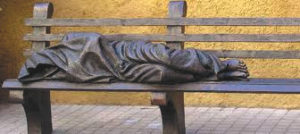 As Christians, we need to be conscious of separating problems from persons, because people should never be seen as problems. Behaviors may be problematic, physical, mental, emotional conditions may be problematic, attitudes may be problematic, but a person and their existence is never problematic. This confusion can be found at the root of the evil of abortion, that too many times pregnancy is seen only as a condition or a problem or a situation, rather than a woman who is carrying an unborn child where one or both may be facing issues, challenges, or difficulties. Another example is the epidemic of violence in society with guns or otherwise. I firmly believe that we cannot legislate a fix to this problem because, as a society, we have become masters at looking at people and denying/not seeing their personhood, their innate human dignity and as long as we are able to do that then the violence in our communities will only get worse.
 Does God want us to be happy?

 When I was in seminary, I had a professor of the New Testament who insisted that we should rename the “Parable of the Prodigal Son.” His claim—which isn’t wrong—was that the title we’ve given to this parable seems to imply that its focus is on the younger son, who prematurely requests his inheritance, spends it on a life of profligacy, and returns in repentance to the great joy of his father (and to the vexation of his older brother). But reading the parable, it’s clear that Luke doesn’t mean for us to focus on the son so much as on the father, whose response to the waywardness and repentance of his son is categorically generous, to say the least. My professor preferred rather to call this familiar story the “Parable of the Merciful Father.”
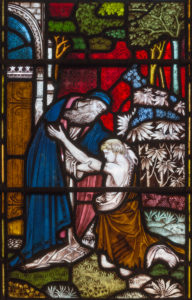 Admittedly, what we call a parable is of significantly less importance than what we understand it to mean. But my professor was right in insisting that we must focus on Jesus’ focus.
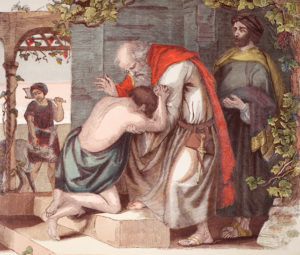 These parables highlight something intensely true about conversion: the emphasis is far less upon us than it is upon our relentless God. If we remove the obstacles we have to conversion, God’s grace cannot help but prevail in our lives. That’s exactly what the Sacrament of Confession is about. It’s about identifying those roadblocks to grace and allowing God to restore us. And we can be assured of this: when we allow Him to pursue us, to manifest His power in our lives, to call us back to Himself, “there will be joy in heaven.”
 Your questions, answered.

 Are you looking to grow deeper in your relationship with Jesus? Are you discerning Catholicism? Have you attended Mass at Cathedral or a faith formation program and are curious about joining our faith community? The Rite of Christian Initiation of Adults (RCIA) is the opportunity for adults to explore their relationship with Jesus and learn about the Catholic faith.
 The process begins with an inquiry form, found at https://spicathedral.org/ becoming-catholic/.