Cathedral of the Immaculate Conception

Springfield, IL

  • About
    • Contact Us
    • History of the Cathedral
    • Liturgical Schedules
    • Parish Staff
    • Register with Cathedral
    • Subscribe to the Cathedral eWeekly
  • Sacraments
    • Baptism
    • Becoming Catholic
    • Matrimony
    • Vocations
  • Ministry List
    • Adult Faith Formation
    • Cathedral Meal Train
    • Cathedral Online Prayer Wall
    • Cathedral Concerts
    • Family of Faith
    • Grief Share
    • Health and Wellness
    • Spiritual Resources
  • Stewardship
    • Stewardship: A Disciple’s Response
    • Stewardship Form
  • Support
    • E-Giving Frequently Asked Questions
    • Give Online
  • Sunday News
    • Announcements
    • Cathedral Weekly
    • Livestream Feed
    • Submit a Mass Intention Request
    • Weekly or Announcement Submission

The Season of Stewardship

The Season of Stewardship is kicking off next weekend, Oct. 27th and all are welcome to join us in this discernment process. As the Diocese continues to move towards activating disciples, this parish is engaging in the four pillars to support that effort: prayer, hospitality, service, and formation.

You are probably witness to the many ways the Cathedral has embraced the four pillars:
Prayer: Daily Mass, Adoration, daily Confessions, liturgical celebrations…
Hospitality: Alpha program, greeters, program hospitality, Reboot Service: Habitat for Humanity, CCCW projects and more…
Formation: Year-long formation program led by the priests and on-going adult faith formation series…

There is A LOT going on in the spirit of stewardship at Cathedral!

For those in the parish who may be new to a Season of Stewardship or stewardship practices in general, we would like to take some time to answer the most common questions presented to us. If you have any further questions or comments, please reach out to us!

What is the Season of Stewardship?
The Season of Stewardship is a discernment process that invites each of us and our households to prayerfully discerning our commitment to a stewardship way of life through offering time in prayer, service, and generosity.

Who can participate in the Season of Stewardship?
Anyone can participate in the Season of Stewardship by filling out a Good Faith Intention Card. If you are interested in joining the parish, you may make known that intention on the card.

I am not a member of the Cathedral, though…
The Cathedral is the mother church of the Diocese, so in a way we are all participants in the stewardship of the Cathedral. If you are interested in going to any of our faith formation programs, Cathedral concerts, or the like, please know your participation is encouraged and welcomed!

I filled out a card last year, do I have to again this year?
Our hope is that everyone was contacted and engaged in the areas of their interests last year. However, your interest or availability may have changed over the last year, so we ask you to fill out this discernment card each year and make another visible commitment to practicing stewardship. Please know, we will always do our best to connect you to the ministries that interest you or help you in stewarding your gifts to the parish.

But, I am nervous about getting involved or I don’t know where my talents would best serve the parish…
It is easy for us to say, “Don’t be nervous,” but please, don’t be! Pray about your participation and offering up those nerves or fears to the Lord. He will help guide you in this discernment process if you turn to Him!
Fostering the Gratitude of Lepers

I remember the first encounter I ever had with leprosy—with “lepers.” It was the summer after my first year of theology, and I found myself in India, volunteering with the awe-inspiring Missionaries of Charity, praying at the tomb of their foundress St. (Mother) Teresa of Calcutta, and serving in some of the houses that Mother Teresa had founded for orphans and for the dying.
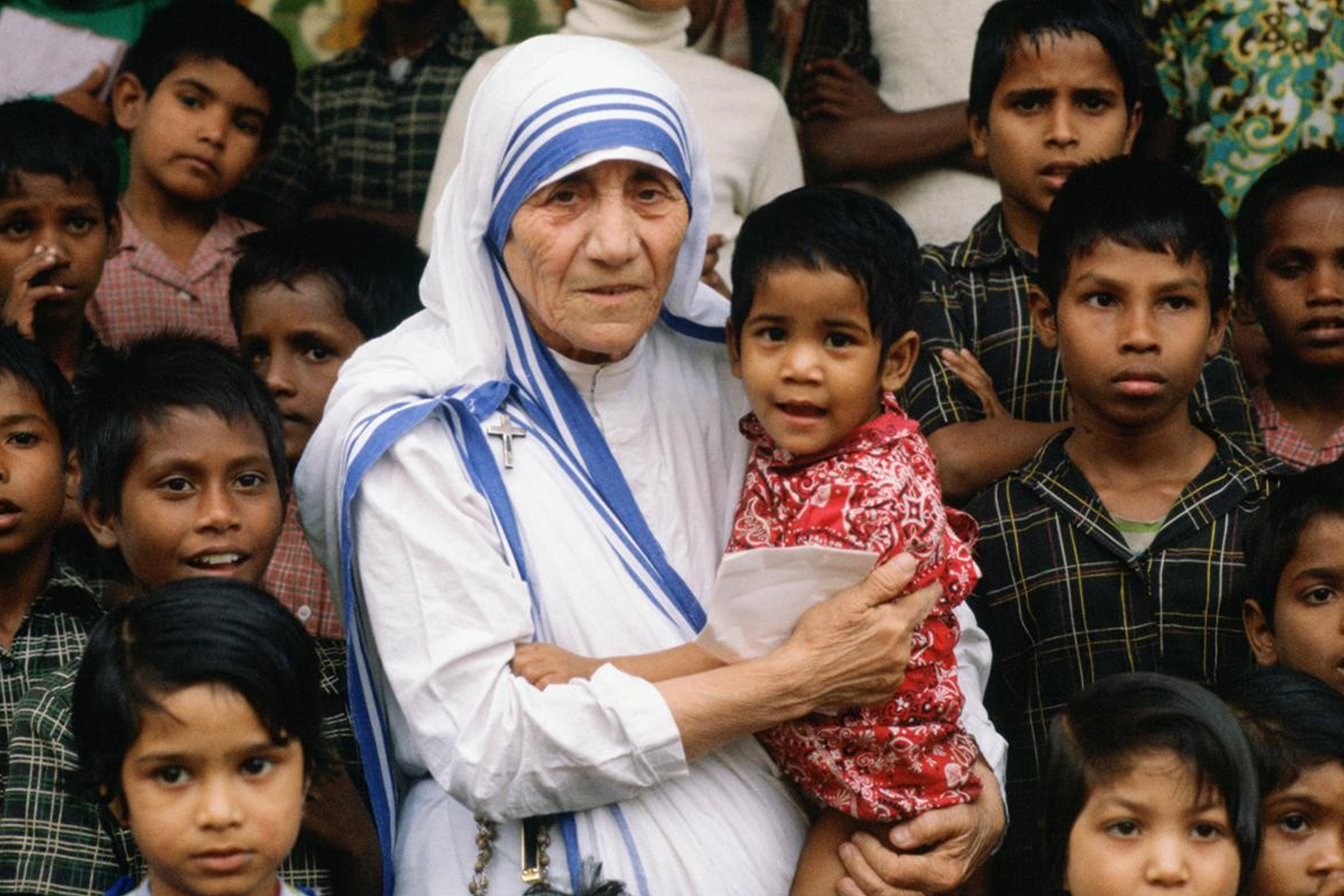

It was an eye-opening summer, to say the least. But one day, the opportunity came along to visit some of the work of the Missionaries of Charity Brothers up in Titagarh, about a 75- minute drive north from “Motherhouse.” [Fun fact: the Missionaries of Charity are more than just the sisters. There are in fact five branches of their order: the active sisters with which most are familiar, contemplative sisters, active brothers, contemplative brothers, and MC Fathers.] The work of the MC brothers in Titagarh was to care for a community of those afflicted by leprosy, also known as Hansen’s disease.

Despite my hesitation at the initial thought of visiting a modern-day leper colony, I decided to go. ‘Surely if they invite visitors, it means that they have some kind of precaution to keep us from contracting the disease,’ I thought. It was only upon entering the colony that we were greeted by a MC brother who systematically dispelled every stereotype I had ever heard about the disease. As it turns out, a full 95% of people are immune to leprosy. While scientists are still not completely positive how the disease spreads, they do know it has to do with prolonged exposure and breathing in the bacteria from the coughing or sneezing of an infected person. Leprosy, decidedly, is not spread through physical contact with lepers.

What was truly amazing, though, was what the brothers were doing for those who had contracted leprosy in the community around Titagarh. A large number of patients came to the brothers only for medicine: a long-term course of antibiotics which cures a person from Hansen’s disease, although it cannot reverse the nerve-damaged often already advanced in nature by the time the patient discovers the disease.

But besides these fortunate souls who still lived among their families, the brothers also provide housing for a whole host of people who had been ousted from their jobs and their families because of the stigma the disease still holds. And in the colony, typical of the Missionaries of Charity, these men and women find a home where they can recover their sense of dignity and selfworth. Here they are given food and shelter, a community, and even work. The colony is built on a thin but elongated plot of land directly adjacent to the train tracks, and the members of the community maintain a garden and a fishery (which feeds them and a number of the other MC houses in Calcutta), a shoemaking and prosthetics shop (for those who have experienced amputations because of their advanced nerve damage), and a shop equipped with multiple looms. [Another fun fact: every sari worn by a Missionary of Charity is woven at the looms in Titagarh by these lepers, and they are quite proud of that!]

Gratitude doesn’t begin to describe what I saw in those lepers. Dignity had been restored to them. They were given a new life when everything they had known had been taken from them by a misunderstood disease. But safe in the walls of Titagarh, they were so supremely grateful for the care, the work, and the community that they were given.

My experience there and in the other MC houses in Calcutta made me really reflect on gratitude. I had never seen gratitude like I had there. These were men and women whose lives were literally restored to them because of the work of Mother Teresa’s followers. Though many did not understand Christianity, what they saw was the fruit that it bore in the world, in their world. And without a word of English spoken, they communicated to me—a simple volunteer—the immensity of gratitude they felt.

In our Gospel for this weekend, Christ calls us to gratitude. We, like the leper who returned to give thanks, must be cognizant of the immensity of graces that come our way—and we must return to their source, our Lord, to thank Him. It’s why we come around this table every Sunday. Not because we always feel like it, but because we know how drastically different our lives would be without it.

So often, we think of gratitude as something we express for another’s sake. But gratitude changes us more than it changes the person we are thanking. It opens our eyes to the reality: that our world, our life, our faith is gift. And for all of that, and so much more, we give thanks.

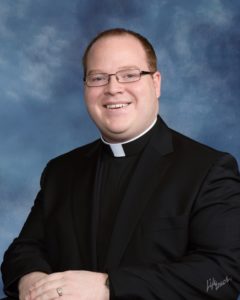
Father Michael Friedel is Parochial Vicar for the Cathedral of the Immaculate Conception.

Third Dimension: Missionary Formation

What are the biblical, catechetical, spiritual, and theological foundations for the mission of the Church? To provide this reflection, I have compiled a sampling of different thoughts from the teachings of the Church on this topic.

Question to Ponder:

It was not until the Holy Spirit came upon the Apostles at Pentecost that they left the upper room and began preaching the Gospel. How can you open yourself to the workings of the Holy Spirit to more boldly proclaim the Gospel?

 Week Three Challenge

Slowly, thoughtfully and prayerfully read the following quotes “Go, therefore, and make disciples of all nations, baptizing them in the name of the Father, and of the Son, and of the holy Spirit, teaching them to observe all that I have commanded you.”
Mt 28:19-20

“The word ‘catholic’ means ‘universal,’ in the sense of ‘according to the totality’ or ‘in keeping with the whole.’ The Church is catholic in a double sense: First, the Church is catholic because Christ is present in her…Secondly, the Church is catholic because she has been sent out by Christ on a mission to the whole of the human race.”
(CCC 830-831)

“In the course of twenty centuries of history, the generations of Christians have periodically faced various obstacles to this universal mission. On the one hand, on the part of the evangelizers themselves, there has been the temptation for various reasons to narrow down the field of their missionary activity. On the other hand, there has been the often humanly insurmountable resistance of the people being addressed by the evangelizer… Despite such adversities, the Church constantly renews her deepest inspiration, that which comes to her directly from the Lord: To the whole world! To all creation! Right to the ends of the earth!”
St. Paul VI, Apostolic Exhortation Evangelii Nuntiandi, 50 (1975)

“The Holy Spirit is indeed the principal agent of the whole of the Church’s mission.”
St. John Paul II, Encyclical Redemptoris Missio, 21 (1990)

“In virtue of their baptism, all the members of the People of God have become missionary disciples (cf. Mt 28:19)… Every Christian is a missionary to the extent that he or she has encountered the love of God in Christ Jesus: we no longer say that we are ‘disciples’ and ‘missionaries’, but rather that we are always ‘missionary disciples’.
Pope Francis, Apostolic Exhortation Evangelii Gaudium, 120 (2013)

“Without cost you have received; without cost you are to give.”
Matthew 10:8

Why Society Needs More Eucharistic Adoration

It may seem like a bit of a stretch, but society needs you to spend more time in Eucharistic Adoration.
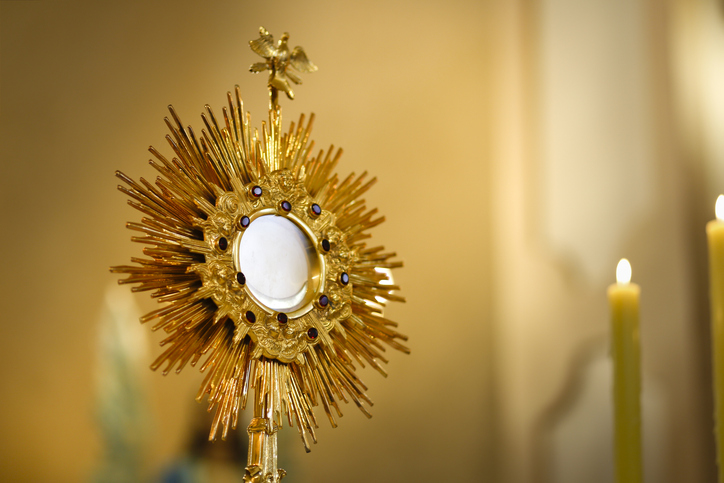
When I think of the direction our society is headed, it really makes me question how I’m living my life. I am constantly concerned and frustrated because it seems like no matter how many prayers I pray, or how many people I try to help, I feel like the downward spiral that our society has been in for a while now just keeps getting worse.

But in the midst of all this uncertainty, there is one thing I don’t question: and that is my need to be, well, me. Yes, as a matter of fact, it starts with me. On a daily basis, I am repeatedly trying to figure out how to “fix” the people around me or “convert” the masses who have fallen away. I think, “If I could just change them … if they could just see what they were created for … then our whole society would improve”… but here’s what I’ve come to realize: It should never start with a “you” mentality; it should always start with me.

Michael Jackson Calls for Change
Michael Jackson said it, or I guess sang it, well: “If you want to make the world a better place, take look at yourself and make a change.”

A likable man in many ways, even Michael Jackson had many of his own demons and I’m sure, like all of us, could have made some changes within his own heart. That aside, I believe that he hints at something very crucial—and that is the need for selfreflection and growth starting with ourselves.

It’s interesting because when you think about it, it seems counterproductive to self-reflect. Egocentrism is arguably one of the biggest problems of our society as a whole right now. Most people you meet have a view of the world that starts and ends with themselves. Many people say it’s all about “number one,” meaning themselves. But the beguiling thing is—most of the time, we only scratch the surface of who we really are.

Under The Surface
Who am I? Atheists, Buddhists, Christians, philosophers, Catholics, and many others have been pondering this question for centuries. To really know ourselves we need to look beyond the surface. I think all of us are very good at seeing ourselves with an aerial view. We paint a picture of perfection on the outside, but are not concerned with what is really under the surface. This mentality is the root of egocentrism in our society.

None of us want to take a good, clear look at what is buried deep within, because if we did I’m not so sure we would like what we find. In fact, I know that to be true because I’m the same way. Very few are willing to take the plunge and see the brokenness within and then have the courage to make necessary changes. But if we all made those changes, wouldn’t that really set the wheels in motion for an even better society?

The Remedy
So what does our society really need? We all want to help our society by doing our part. Some of us are even willing to take these hard steps and start with ourselves—but what’s step one? Here’s where I get super Catholic. If it starts with me, then I need to become who God created me to be. Yes, that rhymed. Yes, that might be lame. No, this is not a poem, but is it true? Yes! St. Catherine of Siena famously said:

“If you become who you were created to be, you will set the world on fire!”

God created us to be world-changers, truth-seekers, leaders— but before we start critiquing and helping the world around us, we have to always start with ourselves.

In my previous article, “Why Adoration Is Essential for the Soul and Body“, I listed some of what I consider to be the greatest benefits—including those for the body, mind, and soul—to being in the Lord’s presence in Eucharistic Adoration. Here’s the thing, no amount of blogs ever written could hold all of the abundant graces and benefits of being in the presence of Christ, but there is one correlation I want to touch upon in this article that I had mentioned in the previous one, and this is the good that comes from placing ourselves before the Eucharist in Adoration—and as a result, the good that is rendered in our society.

Necessary for Society, Necessary for Me
A better society starts with a better—more specifically, holier— me. So how does the Eucharist play a role in this?

From the beginning of our existence, we were made in the image of God. The beauty of spending time before the Eucharist is that what we see on the altar is the truest version of ourselves. We see the image in which God created us.

St. Augustine says:

“’You are the body of Christ, member for member’ [1 Corinthians 12.27]. If you, therefore, are Christ’s body and members, it is your own mystery that is placed on the Lord’s table!”

(Sermon 272)

First, we see that Augustine points out that we are a part of something greater than ourselves—we are members of the mystical body of Christ. But then he goes on to explain the reality of our own personal mystery. When we come face to face with Jesus in Adoration, we behold the mystery of ourselves fully realized in Christ. If we have ever had any doubt about why God created us, the Lord comes to meet us in that doubt. He looks at us and we behold him.

We Become What We Receive
In that exchange, our creator transforms us into an even truer image of ourselves and a reflection of him. Jesus sees the depths of us—even the parts that we try to hide—all of our brokenness and insecurities, and he fully knows us—and fully loves us—from that place. With Christ before us in Adoration, we can enter those broken parts of ourselves with courage, because we know that he loves us and is with us when we do!

Jesus reveals himself in Adoration just as he did at Emmaus in the breaking of the bread. He reveals to us our identity when we feast our eyes upon him in Adoration, and also when we take into our body his presence through Communion. What a mystery! And we, in turn, receiving the bread of life, become food for our broken and hungry world when we receive the Lord’s presence. And isn’t that exactly what our world needs?

The world doesn’t need more critics and overly-pompous Christians who make it their life’s goal to fix everyone. We need more Christians who are food for the broken and hungry in our society—so that when others receive our presence, they come into contact with the Eucharistic presence of Christ! If we become what we receive, then we become broken bread for the broken world.

Food for the World

“You are the salt of the earth … You are the light of the world.”

 (Matthew 5:13-14)

The world needs you! You are irreplaceable and indispensable, and all the gifts you possess contribute to the betterment of our society. You are first called to become a saint, called by the Lord himself to an eternal life full of never-ending joy and happiness in heaven.

The beauty in becoming fully who we are in Christ is that it calls those around us to a higher way of life. It reminds our brothers and sisters who have forgotten this call upon their life as well. Encountering Jesus in Adoration changes the world—starting with us. When we see him and accept the grace he offers, we can become saints. During Adoration, our hearts become disposed to doing the will of Christ and our actions thereafter reflect his love and mercy.

Through this interior transformation, we can play our role in changing our society into a community in Christ as the mystical body. Don’t believe me? Open up Acts of the Apostles and read how twelve nobodies changed the world!

Read about Saul, a man who murdered thousands of Christians, then converted after one encounter with Jesus, and from that one encounter changed the world!

We have the opportunity to encounter the same Jesus everyday! So let him change you through the Eucharist first. Through you, he can change the course of our society. And remember, it only takes a few grains of salt to change the flavor!

Taylor Tripodi is a 24 year-old cradle Catholic from Cleveland, Ohio aspiring for sainthood. Taylor graduated from Franciscan University, majoring in theology and catechetics and is now a fulltime musician, traveling all over and spreading God’s unfailing love through word and song.

Stewardship Is Love

Stewardship is a grateful response to God’s love for us. Think of the many blessings you have in your life. From your first deep breath in the morning, to a warm hug from a child, to the gift of healthy food, or a job to attend too each day. Think about the blessings we may take for granted, the fact that we can sit in a beautiful Cathedral for worship, while Christians around the world do not have such beautiful worship places. Think about the ability to receive the Eucharist without persecution or threats on us, many are not so lucky in this world. The fact is, we are incredibly blessed and we are called to share those blessings with others.

I was recently attending the International Catholic Stewardship Council Conference in Chicago. While I was there, I had many opportunities to speak with colleagues in stewardship offices across the country. Learning about their opportunities and challenges is not only insightful, but therapeutic. We are all trying our best to serve the church, the people of God, into growing and understanding that our relationship with Him is a direct reflection of many of the other relationships in our lives.

At the conference, I discussed with some colleagues what made this “stewardship thing” so hard. We came up with a variety of reasons but ultimately dwindled down the #1 reason is love. In order to love, one must be honest, humble, trustful, and vulnerable…everything that Jesus is so freely with us. Ultimately, stewardship is an act of love and trust. I trust that if I make time with the Lord a priority for Sunday and throughout the week, that the items that need to take priority will, and those that should not won’t. I trust if I make an effort to serve or use my talents for the church, that I will notice a difference in myself and the community around me in which I serve- all for the better. I trust if I am willing to part with the $10 toward meaningless purchases during the week and give that $10 instead to the mission of the church, that I could turn something meaningless into meaningful.

We all are asked to love by sharing the abundant gifts we have been given. This isn’t about the hardships of giving, or the sacrifice, rather the joy we receive from being generous:

for God loves a cheerful giver.
2 Corinthians 9:7

Katie Price is the Coordinator for Stewardship at the Cathedral and the Director of the Center for Discipleship and Stewardship for the Diocese of Springfield, IL.

Around the Parish

I find it hard to believe that we are now in the month of October. Time always moves forward and we are called to do the same, forward towards the Kingdom. Our Holy Father Pope Francis has designated October as an Extraordinary Mission Month. World Mission Sunday is always celebrated in October in the Church, but the Holy Father is calling us to give special attention all month to the Church’s missionary efforts around the world in proclaiming the Gospel and advancing the Kingdom of God. Our own Vicki Compton will have several items in the Weekly during the month of October highlighting the Church’s missionary activity.

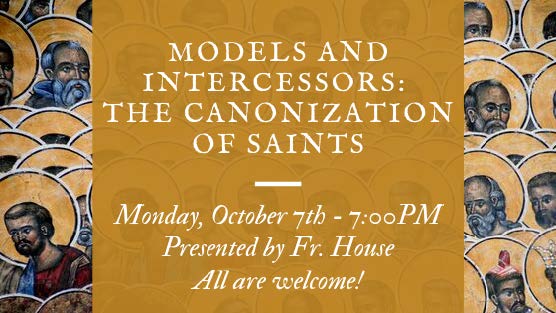
As October begins we are also kicking off another year of Adult Faith Formation starting this Monday evening at 7PM in the atrium. I will be presenting on the topic of the Church’s process for the canonization of saints, using our own Venerable Father Tolton’s cause as our case study. This was the topic for my thesis when I finished my license in canon law four years ago. This talk is also timed to coincide with the canonization of Cardinal John Henry Newman by Pope Francis on Sunday, October 13th. Father Rankin will be presenting on Cardinal Newman following his canonization. Please check the Weekly for upcoming dates, times, and topics for Adult Faith Formation.

As you may have seen in the Weekly, we have begun another course of preparation for the Rite of Christian Initiation of Adults (RCIA). Sometimes people want to join the faith and they are simply waiting to be invited. Might someone in your life be one of those people? It’s not too late!

In the area of faith formation, we have launched a new catechetical program for our youth and their families called Family of Faith. This new model is directly intended to help parents fulfill the responsibility that they were given at their child’s baptism to be their child’s first teacher in the faith. At the beginning of each month, one of the priests teaches the parents on a specific topic and the parents then teach that topic to their children. We also have an activity with all the families in the program each month. All adults are invited to the parent formation session at the beginning of each month. Again, times and topics can be found in the Weekly or by calling Vicki in the parish office.

At the end of the month we will kick off another Season of Stewardship when all of us will be invited to examine what we are offering to the Lord regarding our service, prayer, and treasure. At that time we will be a month away for our celebration of Thanksgiving, so it will be an appropriate opportunity for us to examine what our response to God is for the good things that he has done for us.

The weather now seems to give the indication that summer is indeed giving way to fall. As the leaves will begin to fall and the color of creation fade, we must always remember that this is a part of creation’s renewal which is always ongoing. The same is true for us with the grace of God; the Lord is always seeking to renew us. I invite all of us to seek those avenues and opportunities for God’s grace so that each of us, and as a parish family, might become more and more the people that the Lord is calling us to be. God bless you!

Father Christopher House is the Rector of the Cathedral and serves in various leadership roles within the diocesan curia, namely Chancellor and Vicar Judicial.

Second Dimension: The Witness of the Saints, the Missionary Martyrs, and the Confessors of the Faith

“Holiness is the most attractive face of the Church,” Pope Francis says in his Apostolic Exhortation Gaudete et Exsultate (9). When the members of the Body of Christ live an authentic Christian life, they help build up the kingdom of God (CCC, 2044-2045). In my many travels to Mission lands, I met so many holy men and women, lay, Ordained and Religious who were building the Kingdom through large and small acts of love. I know a Bishop in Kenya who has built a medical school so that local men and women can be trained to provide healthcare to his impoverished people. I know a priest in India who despite writing books, hosting a television show, teaching at the seminary and pastoring a large parish plus 15 mission parishes, made time every Sunday morning to greet the homeless men and women at his gate and provide them each with a bit of money so they could buy breakfast. I met laypeople in Tanzania who gather monthly in someone’s home to read the Word of God, pray for each other and discuss ways of helping their neighbors who are in need. The first time I ever heard about human trafficking, modern day slavery, was from a Religious Sister in Michigan who had been working for years with other Sisters to raise awareness and provide relief to victims. Our local orders of Sisters, lay missioners and priests from our diocese have served or are serving in remote areas of Haiti, Tanzania, Brazil, Peru, Japan, El Salvador, on Native American Reservations and at the border bringing the hope and healing of Jesus Christ to our most vulnerable neighbors.

Week Two Challenge:

We are provided with the testimonies of missionary saints, martyrs, and witnesses to the faith to draw us ever deeper in our relationship with God and strengthen our own proclamation of the Gospel. Spend some time researching the life of a missionary witness – St. Francis Xavier, Anna Maria Dengel, Daniele Comboni, Fr. Andrew Kim and the Korean martyrs, Sr. Dorothy Stang, Dr. Tom Catena, Francis Xavier Ford, Jean Donovan or another missionary here http://www.october2019.va/en/ testimoni.html#paginationinit

Question to Ponder:

In his Apostolic Exhortation Gaudete et Exsultate, Pope Francis says to each one of us, “May you come to realize what that word is, the message of Jesus that God wants to speak to the world by your life. Let yourself be transformed. Let yourself be renewed by the Spirit, so that this can happen, lest you fail in your precious mission. The Lord will bring it to fulfilment despite your mistakes and missteps, provided that you do not abandon the path of love but remain ever open to his supernatural grace, which purifies and enlightens.” (24)

How is the Lord shaping the “word” He wants to speak to the world by your life?

5 Reasons Your Parish Should Have a Bereavement Ministry

If your parish is hoping to meet people where they are, then implementing a bereavement ministry program is a good starting point. I had the privilege of working in bereavement ministry for the Archdiocese of St. Louis, and saw the benefits such a ministry could have if done well. Here are five reasons to include bereavement ministry, or grief ministry, in your parish.

  1. Jesus told us to comfort those who mourn.
    Jesus says in the Beatitudes, “Blessed are those who mourn, for they will be comforted.” There are mourners in your parish. Will you comfort them?

    In fact, the Bible is sprinkled with mentions of grief and mourning. Jesus himself mourned after the death of Lazarus, and supported the dead man’s family in their grief. St. Cyprian once said:
    “How can a man say that he believes in Christ, if he does not do what Christ commanded him to do? From where will he attain the reward of faith, if he will not keep the faith of the commandment? … He will make no advancement in his walk toward salvation, for he does not keep the truth of the way of salvation” (The Treatises of Cyprian, Treatise I, ch. II). Our quest to be Christ-like shouldn’t neglect how Jesus approached grief and the grieving.

  1. It applies to everyone at some point.
    Everyone dies, so it stands to reason that just about everyone will, in fact, have someone close to them die at some point in their life. Most of us will have many people die, and we will struggle horribly after some of them. No one goes through life without grief.

    That is why a ministry for those who are grieving is such a good thing. Other than birth and taxes, grief is the only thing guaranteed to effect every parishioner at some point.

  1. It’s what people are looking for.
    Major upheavals bring people to faith. Death causes us to think about what comes after this life. Funerals pull lapsed Catholics back into Church, sometimes for the first time in decades. All of these are very good reasons to be prepared to minister to the grieving.

    Catholics Come Home has a great collection of resources for people brought to the Church because of grief, which may be helpful for anyone leading a grief ministry. But perhaps the best thing a parish can do is provide a home for the grieving. Give people a space to tell the story of their grief, and see that they can find a community to support them. That is evangelization at its finest.

    One parish I worked with had a dedicated bereavement team who would make sure the church was prepared for every funeral. They would place tissue boxes in the pews and have people on hand to answer any questions. They would reach out to the family after the funeral and ask if they would like to receive bereavement resources in the mail. The family would receive resources on prayers, remembrance services, simple self-care steps, and a card on the anniversary of the death. They were also invited to join a grief ministry group.

    The woman in charge of the resources said she wanted to make sure her fellow parishioners were never alone in their grief. She wanted them to know that they were welcome at the parish even when they felt messy and distraught.

  1. It’s easy.
    We’re in the midst of a small-group renaissance. There are so many support systems for people who want to start one! You can read here about the basics of starting a small group. Most likely, you can also contact your parish office. If you are willing to put in the work to lead a small group, the pastor and his council should be happy to help you succeed.
    There are also plenty of options for what you can do! You can do a study that is completely focused on grief, or get together twice a month for coffee and a general check in. You can learn how to pray with Scripture together, or study Christ’s passion in-depth. You could even read a book that enunciates the grief process, or one about a profound experience of grief. Local funeral homes also tend to offer workshops and speakers you could attend together. It’s all down to what works best for you and your parish.
  1. The return on investment is high.
    When your parish supports someone in a time a grief, it doesn’t just affect that person. All of their family and friends learn that they were able to turn to the Catholic Church during a painful time. That plants a seed for the future.

    As I previously stated, everyone will experience grief at some point in their life. Sometimes that grief is overwhelming. It is a good thing to let people know they can come to the Catholic Church when they are in despair.

Melissa Keating is a writer, editor, and content strategist based in St. Louis.

The Cathedral Bereavement Group Is Starting Soon! Cathedral parish will begin hosting Grief Share, a weekly grief support group. If you, or someone you know, would like help and encouragement after the death of a spouse, child, family member, or friend, please join us beginning Thurs., Nov. 7, 1:00-3:00pm in the Cathedral School Library. Grief Share runs for 14 weeks, but guests may join the series at any point and can pick up what they missed during the next cycle. Brochures are available in the literature rack by the west atrium doors. For more information contact Berni Ely @ 899-6637 or [email protected]

It Would Have Been Enough

If the only prayer you said was “thank you,” that would be enough. —Meister Eckhart

I was sitting quietly early this morning, before the rush of life commenced, and was overwhelmed with an undefined sense of gratitude. Actually, it was very defined. It was a visceral awareness of the gratuitousness of existence (i.e., the fact that anything exists at all is a sheer gift bereft of any claim to entitlement). “Gratuitous” captures this well, I think, as it means “not necessary or justified.”

God needn’t have created anything at all, yet chose to. While we often complain to God that we do not yet possess wellbeing, we forget that we already possess something far more radical, extraordinary, stunning, mind-blowing and grounding: being. I am.

Become aware at this very moment that there is something rather than nothing, there is a you, and a whole massive cosmos that did not have to exist at all, but does. Existence is a mystery, a source of wonder, and its very be-ing itself is already excessive.

Another vantage on this. I shared with my students this summer that for most of the Old Testament faithful men and women, there was no clear awareness of a personal afterlife, of a resurrection from the dead that promised reward for justice and punishment for injustice. With death, identity faded into the shadows of nonexistence.

I call to you, Lord, all the day long; to your I stretch out my hands. Will you work your wonders for the dead? Will the shades stand and praise you? Will your love be told in the grave or your faithfulness among the dead? Will your wonders be known in the dark or your justice in the land of oblivion?

The answer to Psalm 88’s desperate questions? No. The idea of “eternal life” in Judaism only came later, closer to the time of Jesus.

So imagine, would you remain faithful to God and his commandments in this life, as did the Hebrew saints, amid great hardships and sufferings, amid unanswered questions about good and evil, with no belief that after death an eternal life awaited you? No reward, other than knowing you lived in fidelity, here and now, to the will of the good God who made you and chose you to be his own in this world? Would you have done so wholeheartedly? Would you say, as Tennyson once said so beautifully,

I hold it true, whate’er befall; I feel it, when I sorrow most; ‘Tis better to have loved and lost Than never to have loved at all.

Back to my morning’s silent insight. It is quintessentially a Jewish-Christian instinct to see gratitude as the foundational virtue on which all else is built, the attitude that sustains all other good things. And this gratitude is not, in the first instance, for this or that good thing, or even for well-being, but simply for the very fact that you, I, or anything exists at all. Ever has, ever will. Period.

When you begin each day with that mindset, it revolutionizes the way you experience life. And then the supererogatory “over-the-top” excess of well-being that God has in fact granted us in Christ, with the hoped promise of a new creation in which “all will be well in all manner of being well,” becomes a fresh cause to “leap for joy” (Luke 6:23).

In this dayenu (song), the Jewish soul lives in a constant thankful awareness of a God who says to each of us, in each and every moment, “I love you: I want you to be.” Only then, like the prophet Habakkuk, we can sing:

For even though the fig tree does not blossom, nor fruit grow on our vines, even though the olive crop fail and fields produce no harvest, even though flocks vanish from the folds and stalls stand empty of cattle, yet I will rejoice in the Lord and exult in God my savior.

Dr. Tom Neal presently serves as Academic Dean and Professor of Spiritual Theology at Notre Dame Seminary in New Orleans, Louisiana. Tom received a Masters in Systematic Theology from Mount St. Mary’s University and a PhD in Religion at Florida State University.

How Do I Know This Thought Is From God?

It’s one of the most commonly asked questions when it comes to discernment—How do I know that this thought or desire is from God and not just from me? Is this actually God speaking, or this just my mind speaking, and I think it’s God? Is it me thinking that it’s God but it’s just my thoughts, while God is actually speaking through my thoughts? Confused? You are in good company.

I spent most of my twenties wrestling with the question of God’s will and how to know if I was following his promptings well. I thought if I chose poorly I would be doomed to a life of misery. So I often spent time thinking and over-thinking as to where God wanted me and if I was following his voice or my own.

There’s no scientific method to test our thoughts to confirm with one hundred percent accuracy that this particular prompting is a word from the Lord. That’s part of the mystery of who God is and how he operates. Sometimes he will drop a loud word or give a clear sense of peace, and sometimes he wants us to make the decision and start walking ourselves.

There are three quick tips that I would like to share with you today that helped me out in my own journey. They may sound simplistic and indeed they are—the challenge is to actually set aside the time to put these into action.

  1. Spend time in prayer.
    In God we live, move, and have our being. (Acts 17:28). The more time we spend before the Blessed Sacrament or in quiet prayer, the better we start to realize the wandering nature of our own thoughts and will be able to distinguish God’s voice above ours. Be sure to listen and don’t do all the talking. Make time for pure silence. God also works through our thoughts and imaginations. Sometimes we get a holy idea for a work of service or we remember someone we haven’t spoken with for some time. That can absolutely be a prompting of the Holy Spirit to reach out to that friend or take action where you see that need. Follow that holy prompting!
  2. Spend time in Scripture.
    Paul tells the Colossians to “ Let the word of Christ dwell in you richly” (Colossians 3:16). Similar to the time spent in mental prayer, we must become familiar with God’s word, especially the Gospels, so we know the voice of our shepherd. “Ignorance of Scripture is ignorance of Christ,” St. Jerome asserted. If we’re too busy to open up the Bible, we’re too busy.
  3. Spend time with others.
    God sometimes speaks through other people. Perhaps we’ve had moments where a friend or even a stranger said the exact thing we needed to hear for that moment. I think God humorously uses these moments to remind us that we need one another. No man is an island.

Friends and family and even co-workers can see what we often can’t. Sometimes we get so lost and locked in our thoughts that we start spinning and overthink our concerns to the point of paralysis. Other people can help us gain perspective of the situation. They can also reveal concerns that we don’t see (or want to see). Friends and family can call us to the carpet if we’re in a bad relationship or making a rash decision. They can also remind us that we’re losing out on joyfully living in the present moment.

Likewise, be that person for a friend who may also be in need of a loving gut check. I was blessed with several friends who did so for me when I needed to hear the truth—real friendship always brings the truth with love. God wants the best for us. These are just a few tips that might help you in achieving some clarity. Our God is faithful! He knows you, loves you, and wills your greatness! “Call upon me and come and pray to me, and I will hear you.” – Jeremiah 29:1

Bobby Angel writes and presents for the Ascension Presents blog and video blog. This article originally appeared here: https://media.ascensionpress.com/2019/09/19/how-do-i-know-thisthought- is-from-god/

« Previous Page
Next Page »

Liturgy

Sunday Masses (unless noted differently in weekly bulletin)
Saturday Evening Vigil – 4:00PM
Sunday – 7:00AM, 10:00AM and 5:00PM

Weekday Masses (unless noted differently in weekly bulletin)
Monday thru Friday – 7:00AM and 5:15PM
Saturday – 8:00AM

Reconciliation (Confessions)
Monday thru Friday – 4:15PM to 5:00PM
Saturday – 9:00AM to 10:00AM and 2:30PM to 3:30PM
Sunday – 4:00PM to 4:45PM

Adoration
Tuesdays and Thursdays – 4:00PM to 5:00PM


CatholicMassTime.org

Parish Information

Parish Address
524 East Lawrence Avenue
Springfield, Illinois 62703

Parish Office Hours
Monday thru Thursday – 8:00AM to 4:00PM
Fridays – CLOSED

Parish Phone
(217) 522-3342

Parish Fax
(217) 210-0136

Parish Staff

Contact Us

Contact Us

Copyright © 2026 · Log in