 I love watching replays of great sports highlights. Sometimes you see something so extraordinary that you tell others they have to see it to believe it. The one-handed catch, the in-the-park home run, and the photo finish are all examples of these types of moments. They are amazing feats that boggle the mind.
I wonder how many people in biblical times saw Jesus perform miracles and told others they wouldn’t have believed it unless they saw it with their own eyes. Of course, we believe the stories of his miracles, and we didn’t see them in person. We do believe them, don’t we?
There is no television program that features replays of the actual miracles Jesus performed 2,000 years ago. However, there are miracles every day for the world to see. Many of those come about by allowing God to work through us. People are waiting to be healed and fed, and mountains are waiting to be moved. There might not be a replay for these miracles either. However, people will be amazed by the power of God. Jesus said we could do these things if we had faith. Blessed are those who believe but who have not seen. Furthermore, blessed are those who perform great works with God so that others may see.
–Tracy Earl Welliver, MTS
 When my wife and I put our house on the market, by the grace of God we had three showings in less than a week. It occurred to me that when people I have never met come into my home, I often wonder what goes through their mind as they enter and take the inevitable tour. It’s probably quite obvious that we are a family with many children as there is a bunk bed and a single bed surrounded by toy boxes full of weaponry and basketballs in one room and a crib accompanied by a play kitchen and pink, frilly dolls in another. However, another aspect that simply can’t escape the inquisitor is that this home is also one where religion is a deeply rooted aspect of the family dynamic. Specifically, a Catholic dynamic.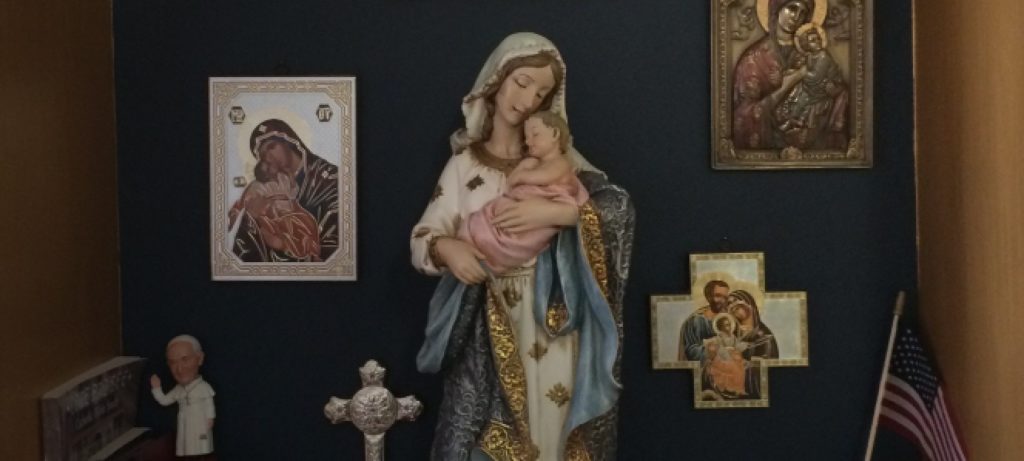
 I have been hesitant to dive into the conversation surrounding the latest scandals, but working to promote good stewardship and discipleship leads me to many Catholics who question why. The questions I have received include: “How can I support a church with this type of scandal?”: “Why are we asked to practice good stewardship when others clearly have not?”: and the most common, “What happens now?” Personally, I too am upset, confused, disappointed and fooled. I had the opportunity to meet and sit with one of the accused at a Catholic Awards conference, and yes, this man was being honored. Looking back at that experience, I am left feeling fooled for having thought this was a man of God, a Shepherd, a model for Christian discipleship.
 As football season comes to its long-anticipated start, it seems the nation has been cast into a frenzy of excitement. I can’t recall the number of times I’ve heard, “It’s finally football season again!” and “Thank God for Sundays!” in some form or another. And yes, I agree. I love football (especially college football), and I’m glad it’s back.
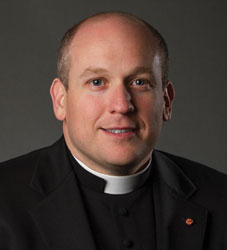 This Sunday is the fifth and last Sunday of our journey through the sixth chapter of John’s Gospel known as the Bread of Life Discourse. Beginning with feeding of the five thousand with five loaves and two fish, Jesus seeks to move the crowd to understand that in him is something far greater than the wonder of the loaves and fishes. He is the Bread that has come down from heaven and he repeatedly tells the crowd in this chapter that whoever eats his flesh and drinks his blood will live forever. As one can imagine, this teaching by the Lord Jesus causes quite a stir among his audience.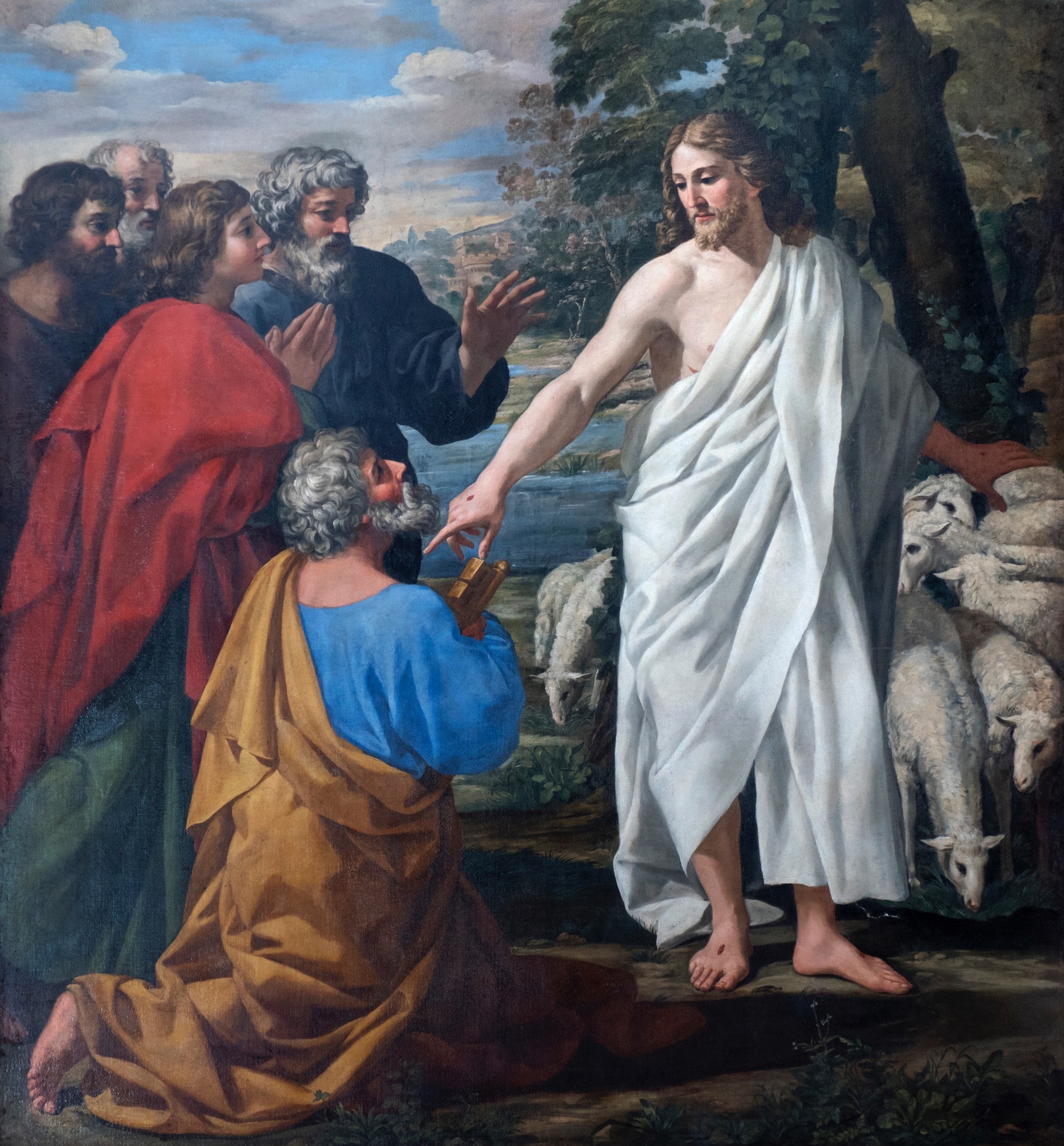
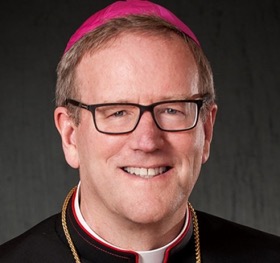 When I was going through school, the devil was presented to us as a myth, a literary device, a symbolic manner of signaling the presence of evil in the world. I will admit to internalizing this view and largely losing my sense of the d e v i l a s a r e a l spiritual person. What shook my agnosticism in regard to the evil one was the clerical sex abuse scandal of the nineties and the early aughts. I say this because that awful crisis just seemed too thought-through, too well-coordinated, to be simply the result of chance or wicked human choice. The devil is characterized as “the enemy of the human race” and particularly the enemy of the Church. I challenge anyone to come up with a more devastatingly effective strategy for attacking the mystical body of Christ than the abuse of children and young people by priests. This sin had countless direct victims of course, but it also crippled the Church financially, undercut vocations, caused people to lose confidence in Christianity, dramatically compromised attempts at evangelization, etc., etc. It was a diabolical masterpiece.
 Sometime in the early aughts, I was attending a conference and found myself wandering more or less alone in the area where groups and organizations had their booths. I came over to one of the tables and the woman there said, “You’re Fr. Barron, aren’t you?” I replied affirmatively, and she continued, “You’re doing good work for the Church, but this means that the devil wants to stop you. And you know, he’s a lot smarter than you are and a lot more powerful.” I think I just mumbled something to her at that moment, but she was right, and I knew it. All of this has come back to me in the wake of the Archbishop McCarrick catastrophe. St. Paul warned us that we battle, not against flesh and blood, but against “powers and principalities.” Consequently, the principal work of the Church at this devastating moment ought to be prayer, the conscious and insistent invoking of Christ and the saints.
 With the publication of a partially redacted Grand Jury report detailing the often stomach-turning actions of over 300 priests in Pennsylvania, and the equally repugnant actions of too many bishops working to conceal rather than reveal these criminal sins, the week has felt “apocalyptic” in the truest sense of the word: there is a great revelation, a great revealing, beginning to unfold throughout the Church.
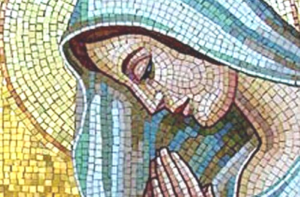 This Sunday the Church stands in between two wonderful liturgical commemorations of the Blessed Mother: the Solemnity of the Assumption and the Memorial of the Queenship of Mary. The belief that Mary was taken body and soul into heaven has been held by the faithful since the early years of the Church, but Pope Pius XII only recently defined the dogma itself in 1950.
 A little gratitude can work wonders. In fact, it’s scientifically proven that gratitude makes us healthier. Study upon study has shown that people who give thanks regularly have positive social relationships, feel more relaxed, make better decisions, and are generally happier people. Sounds good, right?
 “Okay,” Jack earnestly responded, as he looked into my eyes and then drank from the chalice. I was serving as a Eucharistic minister at the Confirmation Mass for the teenagers I had prepared for the sacrament over the past two years, and needless to say, I was taken aback by the realization that I had neglected to review with my students one very important detail: the proper, prayerful response when receiving the body and blood of Christ.