 In 2014, I knelt in the pew at the Easter Vigil Mass having just been confirmed in the Church moments before. Many months of prayer, study, and conversion culminated at that moment, and my heart fluttered with excitement at the thought of receiving the Eucharist for the first time.
The emotions I experienced during this Mass were intense. Despite my deep-seated fear of discerning my vocation, the rush of devotion I felt made me pray more sincerely than I ever have, “Lord, I will do whatever you want me to do, even if it means the religious life or married life or being a missionary. I’ll do it.”
For the first few years after becoming Catholic, my new faith stirred my emotions almost constantly. At Mass, singing “Lamb of God” brought me to tears every week. Once, while praying at Eucharistic Adoration, I suddenly experienced a very real, overwhelming sense of being embraced by Jesus as he welcomed me home. And when I went to Confession, if acknowledging where I’ve fallen short of God’s hopes for me didn’t make me feel loved by a merciful God, then the priest’s beautiful prayer of absolution certainly did.
I not only believed and appreciated the beauty of my new faith, but I also felt the beauty of Jesus Christ and the Catholic Church deeply in my soul.

But a few years after my initial conversion, I began to notice a gradual, creeping spiritual desolation — a sense of abandonment and darkness and a loss of the strong feelings of love and devotion I’d had early in my conversion. I still loved God, of course, perhaps even more than in years prior, but I felt less emotionally moved by that love. I left the confessional feeling hollow — like I’d heard the words of absolution with my ears, but not with my heart. In fact, I quite literally felt nothing, no matter the Sacrament, prayer, or devotion.
I became frustrated and confused, thinking this was some fault of my own. But my spiritual director reassured me that faith is not about our feelings, but about fidelity. He likened my relationship with Christ to a human relationship: We “fall in love,” and the beloved is all we can think about. We’re walking on air whenever we’re around them. But after a few months or years, those feelings subside, and then the real work of love begins: loving even when we don’t feel the emotional consolation of that love.
Thankfully, the truth of our faith isn’t contingent on our emotions. Still, experiencing this spiritual desolation can be a bit unnerving and confusing. Accepting spiritual low points as opportunities for growth is the first step; but once you’ve done that, there are a few helpful ways to keep your faith when you’re just not feeling it:
Pray (even when you don’t want to)
Once, I confessed to a priest that “I didn’t feel like praying.” He responded, “But did you pray anyway?” I told him yes, I did, and he assured me that praying, even when you don’t feel like it, is actually quite virtuous.
When prayer feels especially difficult, I take the opportunity to pray in ways I haven’t tried before, like the Divine Mercy Chaplet, the Divine Office, or a novena to a particular saint. More devotions won’t necessarily help you recapture spiritual joy — and you shouldn’t pray more for that purpose! — but prayer is essentially extending your heart to God. He reaches back for you, even if you can’t feel it at the moment.
Grow in knowledge, grow in love
After losing a close family member, I struggled with understanding and believing what happens to a soul after death. This struggle made me feel farther from God than I’d ever been.
Along with honest prayer, learning what the Church teaches on this matter by consulting the Catechism, Scripture, and Catholic writers helped me grow in knowledge of God. Specifically, I read articles by Tim Staples and Jimmy Akin of Catholic Answers during this struggle. Their theological explanations of the great love God has in preparing a place for us in Heaven and giving us the grace here on Earth to get there helped me come to love God more. In times of spiritual drought, focus on the intellectual side of faith by reading the Bible, studying the Catechism, consulting with priests, and reading helpful articles.
Turn your faith into action
Though you may not feel the presence of Christ emotionally, you can find him in serving others — whether that means volunteering at a soup kitchen, serving at a parish event, or doing something selfless for your family or spouse. For me, making dinner for my parents on the weekends and doing an extra chore or two around the house to lessen the burden on my husband really helped me to stop focusing so much on myself, and instead, focus on loving those closest to me.
Continue to make the Sacraments
Even if you don’t feel the consolation you once did when going to Mass or Confession, keep going anyway. Just because you don’t feel a rush of love and devotion when receiving the Eucharist or deeply sense God’s mercy after Confession doesn’t mean that sacramental grace isn’t working within you.
When I started focusing more on the different parts of the Mass and truth of the Eucharist and less on how going to Mass made me feel, I actually experienced even more awe of the Sacrament. I came to realize that the truth of Christ’s presence remained even when my emotions didn’t reassure me.
Times of spiritual desolation are actually a great grace because they allow us to come to love Jesus for his own sake — not for the warm, fuzzy feelings we get when we go to Mass. Learning to embrace spiritual low points and make them fruitful not only benefits our souls immensely but can make times of spiritual consolation even sweeter.
Sarah Coffey is a freelance writer and copy editor as well as an archives assistant for the Archdiocese of St. Louis. She and her husband, Jesse, both converted to Catholicism in college, and they reside in the St. Louis area with their cat Stella. She blogs at sarah-coffey.com/blog. The original article can be found on the Busted Halo blog: https://bustedhalo.com/ministry-resources/ how-to-keep-your-faith-when-youre-just-not-feeling-it and is used with permission.
 The Christian writer C.S. Lewis in his book Mere Christianity posed the question that Jesus Christ had to be one of three things: a lunatic, a liar, or, actually Lord as he claimed to be. Lewis was not the first to frame this conundrum, but he was the one who “popularized” the question. The question cuts to the point of stating who Jesus is. If he is not who he claims to be as Messiah and Lord then he is out of his mind for claiming to be the Son of God or he is a liar and a charlatan who deceived the masses. Surely we agree that Jesus was not insane nor he was he a liar, so, therefore, Jesus is Lord. Well, aren’t we glad that we settled that? If only it was that easy.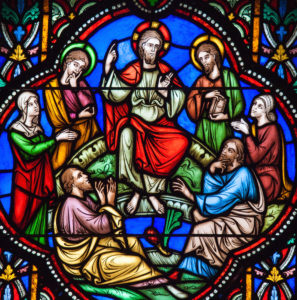
 I must confess. I have not always prayed for someone if I told him or her I would. I have fallen victim to making the phrase, “You are in my prayers,” a sentence void of real emotion or intent. It is like asking the question, “How are you?” Do I always want to know how you are at the time? Then fol lows the mos t common responses of “fine” or “good.” I could have had the worst day, but I still utter a response that does not reflect my true state. Many of us say things to be nice without really thinking about it. At least, I hope I am not the only one.
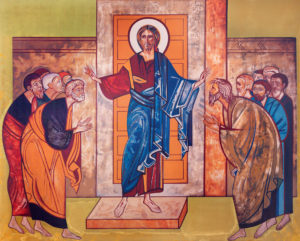 Good stewardship requires us to say what we mean and mean what we say. Stewardship is a way of living. It does ask for sentiments of love. It asks for profound actions of love. We need to offer our gifts, talents, time, and prayers to one another and then follow through. This means we need to be more mindful of what we are saying, more committed to following through, and more accountable for our actions if we fail. If we practice this way of living, not only will we be able to say we are doing the right thing, but our integrity will be intact and we will bear witness to the transforming power of Jesus Christ.
 The question has been put to me again and again. Ever since the stories of child sex abuse broke out of Boston in 2002 and threw the Catholic Church headlong into an ongoing and painful Lent, people have asked me: “Why are you still a Catholic?”
 I remain within the Catholic Church because it is a Church that has lived and wrestled within the mystery of the shadowlands ever since an innocent man was arrested, sentenced, and crucified, while the keeper of “the keys” denied him, and his first priests ran away. Through two thousand imperfect years—sometimes glorious, sometimes heinous—the Church has contemplated and manifested the truth that dark and light, innocence and guilt, justice and injustice all move together, back and forth like wind-stirred wheat in a field, churning toward a culmination imaginable yet out of reach.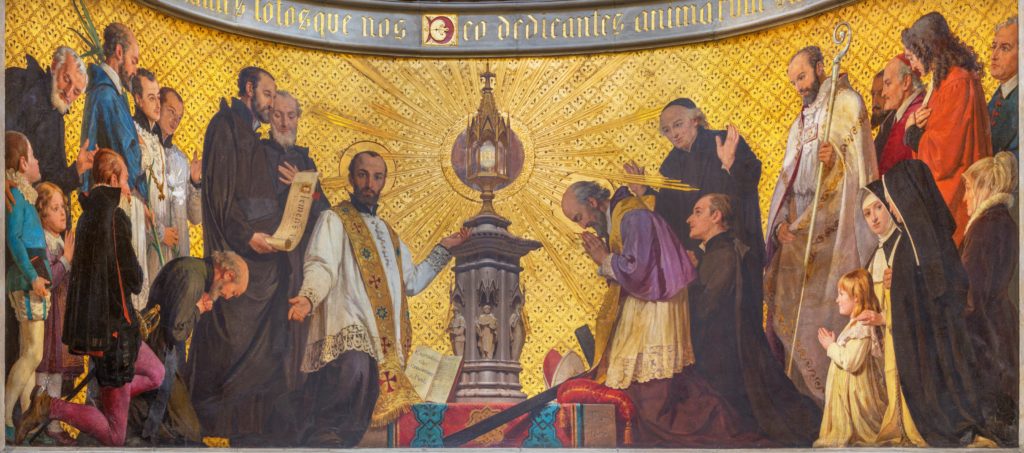
 Many of you may have witnessed quite a setup on Wednesday evenings after you come out of daily Mass. We have the linens out, pitchers of cool refreshments, a team busily working to set out quite a spread of food, and usually me struggling to get technology perfect. If you were to stay for the Alpha session you would witness even more hospitality. This program has introduced many to the loving and welcoming embrace of Jesus Christ through open discussion and dialogue. We have had Catholics, non-Catholics, searchers and seekers of all different walks of life. Particularly, we have served guests that others, like in the Second Reading this week, may have shut out. This is radical hospitality, and there is a case to be made for why Cathedral should be the epicenter of radical hospitality.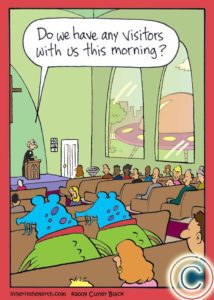
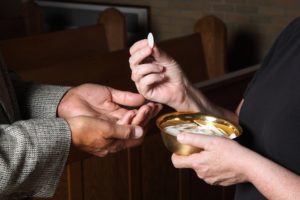 When Father House introduced me to the parish, he mentioned that one of my responsibilities is to help the parish implement the goals of the recent synod. This is a responsibility I gratefully embrace. Despite my great love for the Missions and the privilege it was to serve as diocesan mission director for over 15 years, helping to build a community of fervent and intentional disciples is the ministry I have been longing to do for the past several years. And honestly, the Cathedral parish is the place I most want to do this. I am excited about the unique mix of parishioners and visitors that makes up this community. Because we have so many visitors with us, especially at daily and weekend Masses, we have a special opportunity for evangelization and hospitality. The Cathedral has always been known for excellent Liturgy, and we are going to make sure it continues to be all that it can be to provide people with a transcendent experience of God in the midst of a welcoming community.
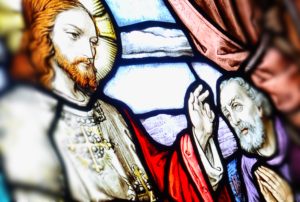 I love watching replays of great sports highlights. Sometimes you see something so extraordinary that you tell others they have to see it to believe it. The one-handed catch, the in-the-park home run, and the photo finish are all examples of these types of moments. They are amazing feats that boggle the mind.