For my niece, Renee, who is in a lot of pain due to a tooth problem. For all my brothers & sisters who have left the Catholic Church, that they return back home. For Amy’s conversion and restoration of relationship with her parents.
Precepts of the Church – Part III
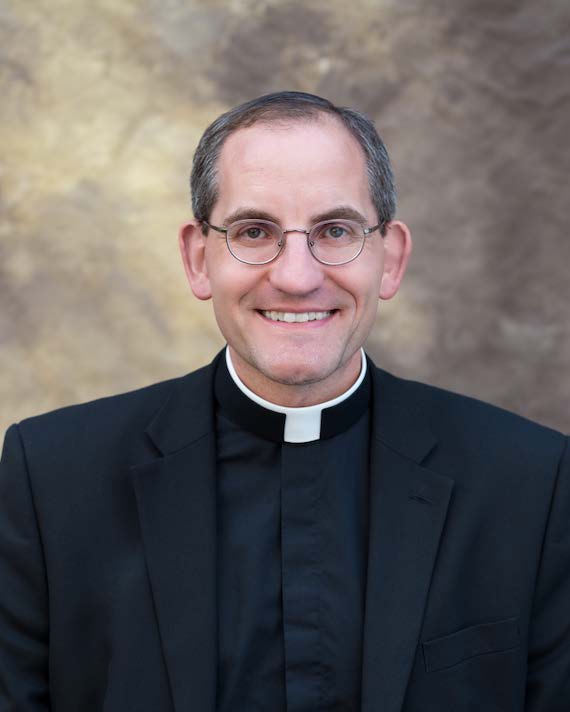
We continue our reflections on the Five Precepts of the Church, having looked at the first and fifth precepts: 1) obligation to attend Mass on Sundays and Holy Days of Obligation, and 5) providing for the needs to the Church. This week, we will jump back to the second precept: Confession of serious sin at least once a year.
Notice two key words in this precept: “at least”, which is consistent with the Church’s definition of the
precepts, that they constitute “the very necessary minimum” of the Christian life. Serious sin is also known
as mortal sin. It is mortal because it kills our relationship with the Lord, and we are the ones responsible for that mortal blow. A serious, or mortal sin, requires that we have full knowledge of what we are doing, that we know it is wrong, and that we do it anyway. The classic example is intentionally skipping Mass without a serious reason (ie being in the hospital, or physically incapacitated by illness or injury).There are many other things in the moral life as well, perhaps most commonly sins against chastity (ie sexual activity outside of marriage, artificial contraception, use of pornography). There are other examples that can be given, but to list them all would take more space than I have.
One of the reasons this precept is worded this way is connected to the third precept: Reception of Holy Communion at least once a year during the Easter season. One must be in the state of grace (having any serious sins absolved through Confession) in order to receive Holy Communion. So if the very minimum is receiving Holy Communion once a year, it makes sense that we confess serious sins prior to doing that. The Church has rightly encouraged us to receive Holy Communion much more frequently because of how important it is for us to receive the graces that come from this gift. So if we receive more frequently, which most of us do every Sunday, then we need to make sure our use of Confessions roughly matches that. In other words, if we plan to go to Holy Communion regularly, we should probably be going to confession more regularly. We must never approach Holy Communion with unforgiven, serious sin on our soul. To do so is to commit an additional serious sin of sacrilege. So if we are aware of committing a serious sin, make it a point to get to confession as soon as possible for two reasons: 1) so that we can receive Holy Communion the next time we are at Mass 2) to avoid being separated from God for eternity. As Jesus reminded us a few Sundays ago, “You also must be prepared, for at an hour you do not expect, the Son of Man will come.” (Luke 12:40) The choice is always up to us. We use our free will to either follow or not follow God. We choose to ask His forgiveness for our serious sins in the way He intended it (ie Confession), or we choose not to. And in the end, we either choose to be with Him in Heaven, or we choose not to. Jesus does not condemn us to eternal separation, we choose that ourselves by choosing contrary to His will and not turning back in repentance.
A clarification on this topic is necessary, because it is often misunderstood. Divine law is to keep holy the Sabbath, which as Christians is to keep holy the Lord’s Day. The way we do this is by going to Mass (the first precept of the Church). That obligation is always there, so even if we are not in the position to receive Holy Communion due to unconfessed serious sin, we still need to go to Mass. We are not obliged to receive Holy Communion at each Mass, though we are encouraged to do so, but only if we are aware that we are not guilty of any unconfessed mortal sins.
Since this is such an important and sometimes sensitive topic, I plan to return to it next week, especially since I basically addressed two precepts in this article. In the meantime, ask yourself if it might be time for you to get back to confession.
Father Alford is the Rector of the Cathedral and serves in the diocesan curia as the Vicar for Clergy, Consecrated Life, and Vocations.
Prayers of St. Thomas Aquinas

Recently I was reminded of the need to both prepare ourselves to receive Communion and
say a prayer of thanksgiving after Mass. This practice helps us to receive the graces that God
desires to give us during Communion. The back of our missalette has several prayers to this
end, and I encourage you to make use of them both before and after Mass. Many saints have
written prayers for this same purpose. I share here two prayers written by St. Thomas
Aquinas as a lesson in how to prepare and give thanks for the Eucharist. The language in this prayer is certainly not how we usually speak today, but these prayers are worth at least reading through, to learn a lesson in how the saints pray!
Prayer Before Mass
Almighty and everlasting God, behold I come to the Sacrament of Thine only-begotten Son, our Lord Jesus Christ: I come as one infirm to the physician of life, as one unclean to the fountain of mercy, as one blind to the light of everlasting brightness, as one poor and needy to the Lord of heaven and earth. Therefore I implore the abundance of Thy measureless bounty that Thou wouldst vouchsafe to heal my infirmity, wash my uncleanness, enlighten my blindness, enrich my poverty and clothe my nakedness, that I may receive the Bread of Angels, the King of kings, the Lord of lords, with such reverence and humility, with such sorrow and devotion, with such purity and faith, with such purpose and intention as may be profitable to my soul’s salvation. Grant unto me, I pray, the grace of receiving not only the Sacrament of our Lord’s Body and Blood, but also the grace and power of the Sacrament. O most gracious God, grant me so to receive the Body of Thine only-begotten Son, our Lord Jesus Christ, which He took from the Virgin Mary, as to merit to be incorporated into His mystical Body, and to be numbered amongst His members. O most loving Father, give me grace to behold forever Thy beloved Son with His face at last unveiled, whom I now purpose to receive under the sacramental veil here below. Amen.
Prayer After Mass
Lord, Father all-powerful and ever-living God, I thank You, for even though I am a sinner, your unprofitable servant, not because of my worth but in the kindness of your mercy, You have fed me with the Precious Body & Blood of Your Son, our Lord Jesus Christ.
I pray that this Holy Communion may not bring me condemnation and punishment but forgiveness and salvation. May it be a helmet of faith and a shield of good will.
May it purify me from evil ways and put an end to my evil passions.
May it bring me charity and patience, humility and obedience, and growth in the power to do good. May it be my strong defense against all my enemies, visible and invisible, and the perfect calming of all my evil impulses, bodily and spiritual.
May it unite me more closely to you, the One true God, and lead me safely through death to everlasting happiness with You.
And I pray that You will lead me, a sinner, to the banquet where you, with Your Son and holy Spirit, are true and perfect light, total fulfillment, everlasting joy, gladness without end, and perfect happiness to your saints.
Grant this through Christ our Lord, Amen.
St. Thomas Aquinas
Prayers taken from catholic.com
Fr. Dominic Vahling serves as a teacher and chaplain at
Sacred Heart-Griffin High School in Springfield.
Saint Stephen I, King of Hungary
Feast Day: August 16th | Patron of Hungary, Kings, Stonemasons/Bricklayers, Protector against the Death of Children
To continue our remarkable story from last week for a final time, it was there right at the end of the year 1000 AD, that a pagan prince surrounded by only recently settled barbarians, received his blessing, anointing, and crown from Pope Sylvester II. Historians argue whether the crown Stephen received that day was the same famed 4 lb, gold and enamel, circlet once protected in Fort Knox, now housed in the Hungarian Parliament, and universally known as the “Crown of St. Stephen”. Certainly, we can trace it back almost that far, and perhaps things are muddled because only part of Saint Stephen I, King of Hungary Feast Day: August 16th | Patron of Hungary, Kings, Stonemasons/Bricklayers, Protector against the Death of Children the crown came from the Pope and it has been embellished in the centuries since. In any case, we can trace what that crown symbolizes from St. Stephen all the way to today. Already, when Stephen wore it at his coronation, that gold crown, topped with a cross, with its images of Christ the King reigning over the angels, it seemed to those who could see him then that already he was crowned with the halo of a saint. His sanctity, of course, would have to be won over the intervening years – as he worked to evangelize his people, suffered the loss of all his children, and slowly learned that the greatest good he could do as a king was to serve the poorest of his constituents and pray for them.
But those years, with all their crosses, did turn him into a saint! On his deathbed, having lost much, and gained much, in a dramatic moment never forgotten by the Christian people that came after him, St. Stephen lifted the crown from his head and offered it to Christ, and Our Lady. Ever since that day, his gold crown remains a symbol of Hungary’s true King: Christ, and Queen: Mary. All the 50 kings of Hungary since crowned with those jewels, have known that they are truly only deputies of their country’s true king, and that their highest goal is to join the first of their line in offering their kingship to His reign. Stephen’s right arm, perhaps at first a somewhat macabre relic, is housed with honor in the Cathedral of Budapest because it was his hand that entrusted that kingdom into the hand of Christ.
Amazingly, something of that truth was communicated as the United States returned Stephen’s crown to Hungary in 1978. We did not give it to the Communist dictator in charge of Hungary. In fact, János Kádár (said dictator) was not invited to the handing-over ceremony! Rather, Cardinal Lekai, the Roman Catholic primate of Hungary, was there to welcome the crown home, as part of the group receiving it back for the Hungarian People, from the American People. That crown, symbolizing the autonomy, and Christianity, of Hungary, was not fit to crown an authority contrary to Christ, but was a fitting treasure to return to the many faithful people who had endured so many attacks against their faith during the prior two decades.
Cd. Lekai, to add a final amazing twist to this whole story, was the immediate successor to Cd. Mindszenty, the embattled Catholic leader of Hungary who had endured torture and had been sentenced to life imprisonment for being a traitor to the Communist State. His show-trial in 1948 was lambasted for its injustice around the globe. Beaten by rubber truncheons, the cardinal was coerced into admitting that he had schemed to overthrow the Party, start World War III, become the supreme power after said war, … oh, and also stealing the Hungarian Crown Jewels. The Cardinal actually took asylum in the American Embassy in Budapest for 16 years to avoid being killed or exiled by the communists (staying there from 1956 to 1971!) Three black communist cars waited outside of the gate of our embassy in Budapest for the entirety of that decade and a half waiting for a chance to scuttle him off to a soviet prison, or worse. The Vatican actually paid $50 each day to the Americans who agreed to stay overnight in the embassy so that he wouldn’t be kidnapped! Perhaps none of them knew that the crown jewels so desired by his communist persecutors were actually safe and sound in the country where under whom he had found protection! Cd. Mindszenty was declared venerable by Pope Francis in 2019. He was a fitting successor to the first saint of Hungary, whose crown has taught us an awful good story, and been the epicenter of an amazing amount of grace down through the centuries.
Fr. Dominic Rankin got to know some of this story in 2016 when he had the chance to visit Budapest, and the relics of St. Stephen. One other memory of that trip, amongst many, was the incredibly deep metro system under Budapest. Only now to I know that it was placed so deep underground precisely because of the threat of bombing, nuclear or otherwise, during the Cold War.
Mass Intentions
Monday, August 29
7am – Dan Casson
(Family)
5:15pm – Family
(Mark Suszko-Jane Bucci)
Tuesday, August 30
7am – Norma Bartoletti
(Estate)
5:15pm – Family
(Genevieve Severino)
Wednesday, August 31
7am – M. Caroline Morrison
(Family)
5:15pm – Dominic Aiello
(Family)
Thursday, September 1
7am – Sophia Bartoletti & Family
(Estate)
5:15pm – Living and Deceased
Members of the Schmitz Family
(Family)
Friday, September 2
7am – Marve Bangert
(Family)
5:15pm – Joseph Reichle
(Lou Ann Mack & Carl Corrigan)
Saturday, September 3
8am – Mark West
(Carol E. West)
4pm – Tony Bartoletti
(Estate)
Sunday, September 4
7am – James Conkrite
(Litina Carnes)
10am – Helen “Bobbie” McCarthy
(Family)
5pm – For The People
Prayer Wall – 08/21/2022
Please pray for James Thompson, a 19 yr old, who has been in and out of the hospital this summer & has had health issues. Please pray that God would heal him.
Precepts of the Church – Part II
In last week’s bulletin, I wrote about the Precepts of the Church, focusing on the first precept of the obligation to attend Mass on Sundays and Holy Days of Obligation. I was pleased to see a good number of people in attendance for our masses on the Solemnity of the Assumption this past week, even though it was not a day of obligation this year due to its falling on a Monday.
Given that the concept of the Precepts of the Church may be new for some of you, or at least something you may have not considered in a while, I thought it might be a good idea to address the other precepts over the next few weeks. For our review, the Catechism states the following about these precepts (emphasis added):
The precepts of the Church are set in the context of a moral life bound to and nourished by liturgical life. The obligatory character of these positive laws decreed by the pastoral authorities is meant to guarantee to the faithful the very necessary minimum in the spirit of prayer and moral effort, in the growth in love of God and neighbor. (CCC 2041)
Instead of just going from one precept to the next, I would like to jump to the fifth precept for our consideration this week: Providing for the needs of the Church.
In our Fourth Diocesan Synod, held in 2017, a prominent theme was that of stewardship. The tenth declaration from the Synod summarizes what we mean by stewardship:
As a Diocese committed to discipleship and stewardship, the community of Catholic faithful recognizes that everything we have comes from God and that He has given us gifts not just to use them for ourselves but also to share them with others. As faithful and generous stewards of God’s abundant gifts, those committed to discipleship and stewardship as a way of life pledge to share their talents, give of their time and contribute proportionately from their financial resources for the good of the Church and those in need.
You will have noticed in last weekend’s bulletin a summary of our financial position which offers some insight into the good financial stewardship in our parish. In most parishes, unfortunately, a large majority of the financial support comes from a relatively small number of parishioners. In other words, let us not be too comfortable with where we are, but heed the invitation to prayerfully reflect on how the Lord is inviting us to be more generous in sharing from our abundance for the good of the Church – locally here at the Cathedral, and beyond. In that regard, you will see some information in the bulletin about our mission appeal that will be taking place next weekend. Supporting the good work of the sisters who will come to speak with us is an excellent way for us to live our stewardship for the good of the Universal Church.
Lest you think stewardship is only about money, notice how the definition also includes being stewards of our time and talent. In that regard, we have noticed some disappointing declines in the number of liturgical ministers at our masses. It is becoming more and more difficult to fill some of the slots we need in order to make for a good experience at each Mass. In particular, we have a great need for greeters and ushers, especially at our 5:00 PM Sunday Mass, and for people to do the livestreaming at our 10:00 AM Sunday Mass. Please contact Vicki Compton if you are willing to exercise your stewardship of time and talent in these or any liturgical role.
Father Alford
Saint Stephen I, King of Hungary
Feast Day: August 16th | Patron of Hungary, Kings, Stonemasons/Bricklayers, Protector against the Death of Children
This week we begin 1500 years before Stephen’s crown was returned to Hungary from Fort Knox, with the calendar now standing at about 440 AD. If you were unfortunate enough to be on the shore of the Danube river (so, modern-day Hungary) at that time, you would find yourself on the run from Attila the Hun, who was sacking Roman outposts as he swept down the river pillaging the entire Balkan peninsula with his army of horse archers. Attila would, a decade later, be stopped from sacking Rome by a word from Pope St. Leo I, but during this campaign he and his brother Bleda burned and pillaged pretty much every settlement except for Constantinople itself. Thankfully, if you survived their onslaught, the barbarian brothers would be long in the historical rearview-mirror 500 years later when the only reminder of their presence was perhaps a shadow of “Bleda” carried down in the name of the city of “Buda”. In any case, ironically, all this means that if we were to stand along the Danube in 1945, or 445, or 945, we would have found ourselves each time surrounded by bloodthirsty pagan hordes, though different ones each time.
In 945, to finally get closer to the time of St. Stephen, if we again were standing there on the Danube, we would now be bumping elbows with “the Hungarians”, a conglomeration of Magyar tribes originally from Mongolia, actually descendants of the same people from which Attila and Bleda had come from. These tribes had recently gained control of the Carpathian Basin by defeating and displacing the prior residents here, members of the Kingdoms of Bulgaria, East Francia, and Moravia (who had been weakened by their own internecine conflicts). Many more details could be found if you were to delve into the Church records of that time, for that is where most of this history was recorded. The “Chronicle by George the Monk” contains the first known reference to the Hungarians. Their first raids are recorded in the “Annals of St. Bertin”. The succession of their kings, who we will now get to know, are given to us in an anonymous monk’s “Gesta Hungarorum”. Archbishop Theotmar, 300 miles west in Salzburg, wrote around 900 of the Moravians and Hungarians allying against the Germans. His diocese has been in existence for 400 years, so Christianity was well established there in Germany, at that time ruled Louis the German, the grandson of Charlemagne. Theotmar, though, would die in battle against the Hungarians in 907, before their conversion to the faith that he championed.
To get back to those seven different Magyar tribes. As they were taking over those lands within the Carpathian peninsula, they had chosen to unite under one of their chieftains, Álmos. Three other Khazar tribes, after an unsuccessful revolt against their Khagan [King] joined those seven, calling themselves together the “Ten Arrows” [“On-Ogur”, probably the origin of the name “Hungarian”], and choosing Álmos as their Grand Prince around 850 AD. They thus definitively left behind their loose obedience to the Khagan further east (and south), and started the Árpád Dynasty, which would last 450 years and would count 8 members of its line as Catholic saints or blesseds, though of course we’re not there just yet! Among the first six successors of Álmos, Christian names are nowhere to be found: Árpád, Zoltán, Fajsz, Taksony, Géza, and Vajk. Each, unfortunately, were in the main cruel pagan chieftains, with Géza, though he was baptized at some point and did allow missionaries into his kingdom, continuing to practice pagan rites and mercilessly murdering relatives who could act as rivals to his power.
But baptism did not leave Géza’s son unconverted. Named Vajk at his birth in Esztergom, 30 miles North of Budapest, the only son of Géza and Sarolt, would take the name Stephen (after that famous deacon-martyr of the early Church) upon his own baptism at the hand of St. Adalbert of Prague. Providentially, his pagan father would arrange Stephen’s marriage to Gisela, a Christian princess of Bavaria (daughter of Henry II, a member of the Ottonian dynasty, who had taken over the Germanic lands after the Carolingians had fallen from power. The Germans and Hungarians were now on better terms and this marriage was one of the acts that solidified that congenial relationship). With the help of Christian Knights from Germany, Stephen would solidify his reign over all the Hungarian tribes, and later, with the support of both Otto III (then Holy Roman Emperor) and the consecration of Pope Sylvester II, would became the first King of a united Hungary and was crowned either on December 25th, 1000 AD, or January 1st, 1001. (The records we have speak of his being crowned on the “first day of the second millennium” which could be interpreted by the dating of that time either way).
– Fr. Dominic Rankin was recalling last week a time he dressed up as St. Louis of France for Halloween, important to note was that his homemade crown also incorporated some sort of bucket to maintain its structural integrity. It also made it far too small, and rather uncomfortable. St. Stephen’s crown is actually far too large to fit a normal human head, so they insert a leather pad between the crown and the king to be crowned, making it fit properly, and far more comfortable than my bucket.
Mass Intentions
Monday, August 22
7am – John & Edith Bakalar
(John Busciacco)
5:15pm – Genevieve Bitschenauer
(Barbara Bitschenauer)
Tuesday, August 23
7am – Betty Rogers
(Glen Rogers)
5:15pm – Alfred G. Nicoud
(Tim Nicoud)
Wednesday, August 24
7am -Aileen A. Ford
(Sandra Dangelo)
5:15pm – Josephine Beagles
(Family)
Thursday, August 25
7am – Gekas Family
(Philip & Peggy Gekas)
5:15pm – Barbara McGrath
(Family)
Friday, August 26
7am – Ann West
(Carol E. West)
5:15pm – Sophia Bartoletti
(Estate)
Saturday, August 27
8am – John Vogt Jr.
(Bill Vogt)
4pm – Virginia Chineke
(Fr. Peter Chineke)
Sunday, August 28
7am – Pamela Rose Harmon
(Archie Harmon)
10am – Tim Davlin
(Carol West)
5pm – For the People
Prayer Wall – 08/16/2022
For Lily….may she have a full recovery from her accident.