Cathedral of the Immaculate Conception

Springfield, IL

  • About
    • Contact Us
    • History of the Cathedral
    • Liturgical Schedules
    • Parish Staff
    • Register with Cathedral
    • Subscribe to the Cathedral eWeekly
  • Sacraments
    • Baptism
    • Becoming Catholic
    • Matrimony
    • Vocations
  • Ministry List
    • Adult Faith Formation
    • Cathedral Meal Train
    • Cathedral Online Prayer Wall
    • Cathedral Concerts
    • Family of Faith
    • Grief Share
    • Health and Wellness
    • Spiritual Resources
  • Stewardship
    • Stewardship: A Disciple’s Response
    • Stewardship Form
  • Support
    • E-Giving Frequently Asked Questions
    • Give Online
  • Sunday News
    • Announcements
    • Cathedral Weekly
    • Livestream Feed
    • Submit a Mass Intention Request
    • Weekly or Announcement Submission

Mission Appeal August 4th and 5th

This weekend, Rev. Dr. James Okoye, CSSp, visited our parish to speak at the Masses about the missionary work of the Church and in particular that of the Spiritans (Congregation of the Holy Spirit, previously known as the Holy Ghost Fathers). To learn more about the Spiritans, please visit their website at http://spiritans.org.

This visit is part of a national program in which annually a representative of one of the missionary groups visits parishes of the Diocese to invite the parish to share in the mission work of the universal Church. The Spiritans are an international community engaged in a wide range of missionary activity in over 60 countries throughout the world.

 Fr. Okoye is the Director of the Center for Spiritan Studies at Duquesne University in Pittsburgh, PA. His ministry as a priest has included congregational leadership as Provincial of the Nigerian Congregation of Spiritans and General Assistant in the Congregation’s headquarters in Rome.

When Jesus said: “You shall witness to me in Jerusalem and in Samaria and to the ends of the earth,” He made the spread of the Gospel an essential part of our Catholic life.

We urge you to respond generously to Father Okoye’s appeal. Thank you for your generous support!

For more information please see their website at http://spiritans.org and if you have any questions please call the Parish Offices.

Why Accompaniment Involves Apologetics

I recently granted an interview to the National Catholic Reporter concerning the upcoming Synod on Young People, the Faith, and Vocational Discernment, to which I was elected a delegate. We discussed a number of topics, including the rise of the “nones,” the purpose of the Synod, and creative ways of listening to the concerns of young people. In the course of the conversation, I also stated that I would bring the issue of apologetics before the Synod, since so many young people have questions about, and objections to, the faith. But when the interview appeared, the author expressed her puzzlement that I would mention apologetics, though it is clear that the working document calls for “accompaniment” of young people. It seems many think doing apologetics and accompaniment are mutually exclusive. To my mind, they’re mutually implicative. Of course, especially in our context today, a brow-beating, “I’ve got all the answers” approach is counterindicated. But apologetics as such is needed more than ever—and more to the point, is perfectly congruent with Pope Francis’ insistence on walking with those who struggle with the faith.

I don’t know any better illustration of what this looks like than the account of Jesus’ conversation with two erstwhile disciples on the road to Emmaus. The story commences with the couple walking the wrong way. Everything in the Gospel of Luke moves toward Jerusalem, the city of the cross, the Resurrection, the sending of the Spirit, the birth of the Church. Thus, venturing away from the center, they are evocative of all of us sinners who, to varying degrees, wander on wrong paths. Suddenly, walking with them, though they are prevented from recognizing him, is the Lord Jesus. He does not announce himself; he does not launch into a discussion of theology; he does not tell them what to think or how to behave. He walks with them in easy fellowship, even though they are going the wrong way, and he gently asks what’s on their minds: “What are you discussing with each other as you walk along?”

All that the left quite rightly finds attractive in accompaniment is on display here: tolerance, the willingness to enter the psychological space of those who are lost, non-aggressiveness, listening, etc. And this patient approach indeed bears a good deal of evangelical fruit, for Jesus discovers that they know quite a bit about him: “A prophet mighty in deed and word before God and all the people, and how our chief priests and leaders handed him over to be condemned to death and crucified him….Yes, and besides all this, it is now the third day since these things took place. Moreover, some women of our group astounded us…and told us that they had seen a vision of angels who said that he was alive.” But it also reveals how much they didn’t know, and this invites a decisive turn; the patient, listening Christ becoming pretty directive: “Oh, how foolish you are, and slow of heart to believe all that the prophets declared!” And with that, Jesus launches into a very rich apologetic, placing the events of the cross and Resurrection within the interpretive context of the Old Testament, taking the couple through a master class in Scripture and theology.

It shouldn’t be too difficult to see how this story provides a template for the evangelical accompaniment of young people today. Yes indeed, friendship and respectful listening are indispensable. Walking with even those who are alienated from the Church is always the right thing to do. Browbeating, moralizing, and haranguing are to be avoided. However, accompaniment does not simply mean wandering around with someone! As the Emmaus account clearly demonstrates, the gentle, invitational approach aroused questions that then called for answers. Jesus loved them, walked with them, elicited what they knew—and then he taught, with clarity, at length, and in depth. And so young people today (who, trust me, have myriad questions about religion) are hungry and thirsty— not just for friendly companions, but for a word from the Church. The term “apologetics” is derived form the Greek apologia, which simply means “bringing a word to bear.” It implies, therefore, giving a reason, providing a context, putting things in perspective, offering direction. How wonderful that, recalling Jesus’ great apologetic intervention, the Emmaus disciples said, “Were not our hearts burning within us, while he was talking to us on the road, while he was opening up the Scriptures to us?” Young people will feel the same way today if the Church both walks and talks with them.

As long as we’re exploring etymology, it is instructive, by way of conclusion, to examine the roots of the word “accompaniment.” It comes from the Latin cum pane (with bread). To accompany is not just to be with someone; rather, it is to share bread with that person, to give and to receive life. In the evangelical context, therefore, true accompaniment goes beyond fellowship. It has to do with offering the bread of life.

Bishop Robert Barron is the founder of Word on Fire Catholic Ministries and Auxiliary Bishop of the Archdiocese of Los Angeles. Bishop Barron’s latest film series and study program, CATHOLICISM: The Pivotal Players, debuted in September 2016 and has been syndicated for national television. This article can be found at https://www.wordonfire.org/resources/article/whyaccompaniment- involves-apologetics/5861/.

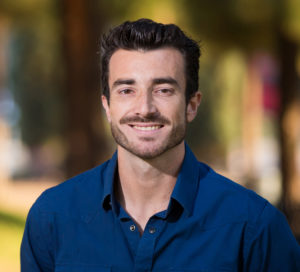
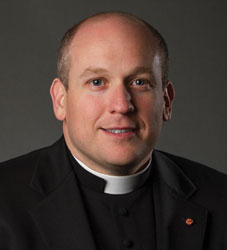
Getting to Know Rev. Michael A. Friedel

I sat down with Fr. Michael Friedel to get to know him and his ministry. We are excited to welcome him to our community!

 Where were you born/raised/family life?

I was born and raised in East Alton, IL, and my home parish is Holy Angels in Wood River. My parents, Joe and Trish, patiently raised me and my brother, Daniel (who is 13 months older than me), sending us to Catholic grade school and high school. I am truly blessed to have such a good family, and I think we’re all enjoying learning what having a priest in the family looks like!

What was college like for you and when did you discern the priesthood?

I attended the University of Illinois at Urbana-Champaign, majoring in Chemical and Biomolecular Engineering. I graduated with that degree in 2011, immediately before entering seminary at Mundelein. I spent two very happy years there before making the journey to Rome for theological studies—where I’ve been for the past five years.

As for how I ended up in seminary—your guess is as good as mine! I got very involved in St. John’s Newman Center on the campus of U of I. There, I met some of the most authentic people I’ve ever met—men and women, in a secular collegiate setting, who were earnestly striving to be what God wanted them to be. Somewhere between that and a bit of disenchantment with chemical engineering, I realized that God was flooding my heart with peace and joy in the opportunities I had to serve Him and the Church. After a period of repeating “yeah, but Lord…,” I decided to apply for seminary, and I’ve not regretted it for a second.

 Who influenced you in considering a vocation to the priesthood?

The list is long! My family, first and foremost. Without the guidance and support from my parents, the seedbed of my vocation might never have been. My brother was actually in seminary and discerning religious life for several years, so thanks to his courage in pursuing God’s will for him, seminary didn’t seem so strange for me. I also had several priests growing up who showed me that priests aren’t completely unrelatable (which I was wont to think as a grade/high schooler). Finally, I’d say my spiritual director at University of Illinois, who was an amazing priest who encouraged me to pursue priesthood. His example and joyful presence in those initial moments of discernment was huge.

 What would people be surprised to learn about you?

I have seen over four hundred different species of wild birds in my life.

 What are your favorite movies/shows?

I don’t make a lot of time for television or movies, but I like to joke that my taste in television most closely resembles that of an old man. I’m a huge fan of “Jeopardy!”.

 Any special talents or favorite hobbies?

I love traveling! I have always enjoyed singing and being in choirs. I also enjoy cooking, though I don’t make much time for it. Growing up, my family and I were avid birdwatchers, which took us to many national parks and beautiful scenic places around the country.

 What do you like most about being a priest?

Although they were the things I most feared entering seminary, two of my greatest joys are preaching and hearing confessions. Celebrating Mass I also find to be a uniquely intense moment of communion with God and His Church. Definitely, though, part of what got me thinking about ministry was the way that I felt God calling me to live my life in communion with others and service to the People of God—so I have found ministry to be very fulfilling, in both regards!

 Favorite spiritual book/podcast/website you frequent?

“He Leadeth Me” by Walter Ciszek. If you haven’t read it, do it! My favorite podcast is definitely Catholic Stuff You Should Know, partly because I’m good friends with two of the priests who do the podcast (although to be honest, I spend months away from it and then tend to binge episodes).

 What advice would you give to a young man who is contemplating a vocation to the priesthood?

Trust the Lord’s plan for you. Talk about it (especially with priests or other people who might be thinking about it). Invest a little in the Church and discover how amazingly life-giving a true and fulfilled life in the Church really is. God’s plan for us is always way more incredible than anything we could ever plan for ourselves, and so I promise you that—even if it isn’t always easy —if God is calling you, you will find peace and joy in a way you never thought imaginable. It’s an amazing life, no matter what His plan for you is. Follow Him and trust!

 Katie Price is the Coordinator of Stewardship and Discipleship at the Cathedral. She can be reached at the Parish Offices, 522-3342 or via email at [email protected].

Staff Changes

This past week we said goodbye to Dominic Vahling, a seminarian for our diocese who has spent the past eight weeks with us here at the Cathedral. I know that the vast majority of you did not get to know Dominic more than just a handshake after Mass, but his time here has been one more piece of hi s format ion for priesthood which, God-willing, is in just under two years’ time.

 After some time with his family, Dominic will be returning to Kenrick- Glennon Seminary in St. Louis to finish his last two years of seminary formation and preparations for his Diaconate ordination this coming spring. I am grateful for the goodness that Dominic shared with us in his short time in the parish. Please join me in keeping him in prayer that God will continue to bless Dominic with every grace that he needs to continue to both hear and answer the Lord’s call in his life.

At the same time, I am very happy to welcome a new member of staff to the Cathedral Parish. Vicki Compton is joining the Cathedral staff, having most recently served as the director of the Office for the Missions for our diocese. Vicki will be serving as the parish’s Coordinator for Faith Formation and Mission. Her ministry will be very broad in that she will help the Cathedral clergy in many aspects of parish life, from faith formation and catechesis to ministry formation to helping us constantly examine how we are responding to the call of the Gospel as a parish. One major area of assistance that she will be assisting with is our parish implementation of the goals the Fourth Diocesan Synod that was held this past year.

I was privileged to visit the missions in Haiti and Belize with Vicki , along wi th making a pilgrimage for peace and justice to the Holy Land with her and other pilgrims from our diocese this past December. Before serving as director of the Office for the Missions, Vicki lived in the missions in Haiti for a few years and has also served as a Catholic schoolteacher and principal in our diocese. Vicki is a very welcoming person with a passion for the Gospel and the Church’s mission. She is a welcome addition to our staff and I look forward to you getting to know her. Please pray for her in this time of transition.

God bless you and yours in the week ahead!

 Father Christopher House is the Rector-Pastor of the Cathedral and serves in various leadership roles within the diocesan curia, namely Chancellor and Vicar Judicial.

Mission Appeal August 4th and 5th

During the weekend of August 4-5, 2018, Rev. Dr. James Okoye, CSSp, will visit our parish to speak at the Masses about the missionary work of the Church and in particular that of the Spartans (Congregation of the Holy Spirit, previously known as the Holy Ghost Fathers). To learn more about the Spiritans, please visit their website at http://spiritans.org.

This visit is part of a national program in which annually a representative of one of the missionary groups visits parishes of the Diocese to invite the parish to share in the mission work of the universal Church. The Spiritans are an international community engaged in a wide range of missionary activity in over 60 countries throughout the world.

Fr. Okoye is the Director of the Center for Spiritans Studies at Duquesne University in Pittsburgh, PA. His ministry as a priest has included congregational leadership as Provincial of the Nigerian Congregation of Spartans and General Assistant in the Congregation’s headquarters in Rome.

When Jesus said: “You shall witness to me in Jerusalem and in Samaria and to the ends of the earth,” He made the spread of the Gospel an essential part of our Catholic life.

We urge you to respond generously to Father Okoye’s appeal. Thank you for your generous support!

For more information please see their website at http://spiritans.org and if you have any questions please call the Parish Offices.

All Sinners Are Welcome

While I was in central Georgia, filming the Flannery O’Connor episode of my Pivotal Players series, I saw a sign on the outside of a church, which would have delighted the famously prickly Catholic author: “All Sinners Are Welcome!” I thought it was a wonderfully Christian spin on the etiquette of welcome that is so pervasive in our culture today. In a time of almost complete ethical relativism, the one value that everyone seems to accept is inclusivity, and the only disvalue that everyone seems to abhor is exclusivity. “Who am I to tell you what to do?” and, of course, everyone gets inside the circle. What I especially liked about the sign in Georgia was that it compels us to make some distinctions and think a bit more precisely about this contemporary moral consensus.

Is it true to say “everyone is welcome”? Well, yes, if we mean welcome into the circle of the human family, welcome as a subject of infinite dignity and deserving love and respect. Christians—and indeed all decent people—stand against the view, pervasive enough in the supposed culture of inclusion, that the unborn, the aged, the unproductive are not particularly welcome. If by “all are welcome,” one means that all forms of racism, sexism, and elitism are morally repugnant, then yes, the slogan is quite correct.

But let’s consider some other scenarios. Would we claim that everyone is welcome to become a member of the college baseball team? Everyone is welcome to try out, I suppose, but the coach will assess each candidate and will then make a judgment that some are worthy of being on the team and others aren’t. Like it or not, he will include some and exclude others. Would we claim that everyone is welcome to play in a symphony orchestra? Again, in principle, anyone is invited to give it a go, but the conductor will make a fairly ruthless determination as to who has what it takes to make music at the highest level and who doesn’t, and he will include and exclude accordingly. Would we argue that everyone is welcome to be a free member of our civil society? Well, yes, if we consider the matter in abstraction; but we also acknowledge that certain forms of behavior are incompatible with full participation in the public space. And if misbehavior is sufficiently egregious, we set severe limits to the culprit, restricting his movement, bringing him to trial, perhaps even imprisoning him.

With this basic distinction in mind, let us consider membership in the Church of Jesus Christ. Are all people welcome to the Church? Yes of course! Everyone and his brother cites James Joyce to the effect that the Catholic Church’s motto is “here comes everybody,” and this is fundamentally right. Jesus means to bring everyone to union with the Triune God, or to state the same thing, to become a member of his Mystical Body the Church. In John’s Gospel, Jesus declares, “When the Son of Man is lifted up, he will draw all people to himself.” Bernini’s colonnade, reaching out like great in-gathering arms from St. Peter’s Basilica, is meant to symbolize this universally inclusive welcome offered by Christ. Is the Church, as Pope Francis says, a field hospital where even the most gravely wounded are invited for treatment? Is the Lord’s mercy available to everyone, even to the most hardened of sinners? Yes! And does the Church even go out from itself to care for those who are not explicitly joined to Christ? Yes! In fact, this was one of the reasons the Church was so attractive in the ancient world: when Roman society left the sick to fend for themselves and often cast away the newly-born who were deemed unworthy, the Church included these victims of the “throwaway culture” of that time and place.

However, does this mean that the Church makes no judgments, no discriminations, no demands? Does the Church’s welcome imply that everyone is fine just as he or she is? Here we have to answer with a rather resounding no. And that Georgia sign helps us to understand why. The Greek word that we translate as “church” is “ekklesia,” which carries the sense of “called out from.” Members of the Church have been called out of a certain way of life and into another one, out of conformity with the world and into conformi ty wi th Chr ist . Every ecclesiastical person, therefore, is a welcomed sinner who has been summoned to conversion. She is someone who is, by definition, not satisfied with who she is. To return to the Pope’s famous image, a field hospital receives not those who are doing just great but those who are deeply, even gravely, wounded. The problem is that anytime the Church sets a limit or makes a demand or summons to conversion, she is accused of being “exclusive” or insufficiently “welcoming.” But this cannot be right. As Cardinal George once put it, commenting upon the famous liturgical song “All Are Welcome,” all are indeed welcome, but on Christ’s terms, not their own.

 Bishop Robert Barron is the founder of Word on Fire Catholic Ministries and Auxiliary Bishop of the Archdiocese of Los Angeles. Bishop Barron’s latest film series and study program, CATHOLICISM: The Pivotal Players, debuted in September 2016 and has been syndicated for national television. The original article, used with permission from: https://www.wordonfire.org/resources/author/bishop-robert-barron/47/

When the Heart Responds

Think about your day yesterday. Did you lead with your heart? Okay, I understand, that is a tough question. But, what would the day look like if we had led every decision, every action, every encounter only through the way our heart would respond?

The Gospel today is one in which many of us learned early on in Catholic formation. Who doesn’t remember learning about Jesus’ loaves and fishes at a young age? I am not sure if I was impressed by the miracle or equally impressed that Jesus was so generous he had “extras,” but this Gospel was easily absorbed by my young mind. When we teach this story to children they hang on to this miraculous miracle, almost in a superhero type of way. I remember thinking, “Wow, the magic,” when in my simple childish mind, I couldn’t really understand some of the deeper meanings of this Gospel.

Did you notice the invitation Jesus has for us? We are invited to cooperate with Him. Think about it this way, the disciples were pointing out there was not enough food and money to feed everyone. Without having to say it, I can assume the disciples’ natural inclination was to disperse the group and have everyone “fend for themselves!” However, that is not Jesus’ plan for us. He does not want us dispersed and fending for ourselves, rather to put our trust in Him and to take what little we have and offer it up, together.

Stewardship is a testament to leading with your heart. For example, the envelope was never made to be a collection device; it wasn’t made to just put the check in the magic canister and shoot it up over to the bank teller who then responds with a lollipop. It is a generous and trusting offering. It is a visible sign of our willingness to come to the altar with what little we have and to ask Jesus to multiply these blessings. It does not matter the amount, the type, the time, talent, or treasure sum we place before Him, whatever we have will be abundantly multiplied, large or small. A parish community can either be of the mindset that everyone fends for themselves (and we all get Root Beer flavored lollipops, ew!) or the mindset that when we act together we multiply blessings (yey, a multitude of flavors!) As you can tell, going to the bank as a child was quite an experience for me.

I like to teach Gracey, my daughter, about the saints. These incredibly ordinary people who have all started with what little they had and through making each decision, each sacrifice, and each encounter a response from their heart, their mission grew. When they were willing to give, Jesus multiplied their efforts. There was no movement, no community, no saint that didn’t start with a small amount of loaves and fishes and through living out the Gospel found that Jesus multiplied their ministry and blessings.

Let go and let God lead the way. Trust in Him, he will multiply our offerings if we are willing to cooperate and lead from the heart.

Katie Price is the Coordinator of Stewardship and Discipleship at the Cathedral. She can be reached at the Parish Offices 522-3342 or via email at [email protected].

The Bishop’s Church

In my article in last week’s edition of The Weekly, I talked about what makes a cathedral a cathedral. Its not about size, beauty, or architecture, which in many cases are prominent features of a cathedral, but what makes a cathedral is one thing: a chair. Now, it is not just any chair, it is the bishop’s chair or cathedra in Latin, from which a cathedral church derives its name and prominence. The cathedra is a symbol of the bishop’s authority over a local church (diocese) and because of the location of the cathedra in a cathedral, it gives a cathedral church its special status in a diocese as the mother church of the diocese. The cathedral in each diocese is “the bishop’s church. ” A cathedral’s place in the life of a diocese is so special that the anniversary of it s dedication is celebrated each year in ever y parish as a feast. This is true in our diocese on December 2nd, formerly October 14th before the restoration and rededication; in the Cathedral parish, the anniversary of the dedication is a solemnity.

A cathedral being the “mother church” means that, generally, certain special events happen within its walls; this is true of our Cathedral church. Important Masses and celebrations throughout the year occur here such as the Chrism Mass during Holy Week when the new holy oils are blessed for the year and the priests of the diocese renew their priestly commitment to God and the Church. The ordination of deacons and priests takes place in the Cathedral as well as the ordination and/or installation of a new diocesan bishop. Other special events in the life of the diocese happen in the Cathedral as well, such as the yearly Mass for couples celebrating 50+ years of marriage, the annual Mission Mass celebrated with school children throughout the diocese, and the Rite of Election for Catechumens and the Call to On-Going Conversion for those who seek to be received into the Church at Easter.

In almost every case, the diocesan bishop celebrates these special celebrations in a cathedral. Having received the sacrament of Holy Orders three-fold, a bishop in his own person is the fullness of the priesthood, being deacon, priest, and bishop. The bishops are the successors of the Apostles and they are the guardians of what is termed “Apostolic Succession,” meaning that they hand on from generation to generation the sacrament of Holy Orders to deacons, priests, and other bishops assuring the on-going sacramental life of the Church. The bishops are also the body of authoritative teachers in the Church called the Magisterium. Collegially and individually, they are to strive to protect and preserve the truth of the Faith as given by the Lord Jesus and revealed by the Holy Spirit.

Most bishops are given the ministry of being a diocesan bishop, meaning that they are charged with shepherding a section of the people of God known as a diocese. As our diocesan bishop, Bishop Paprocki is not the pope’s representative here, but rather, he is the representative of Christ himself. As a successor of the Apostles and as our diocesan bishop, Bishop Paprocki unites us to the greater Church in his obedience to and communion with the Bishop of Rome, Pope Francis, who is the successor of St. Peter, the apostolic head of the Church as designated by the Lord Jesus.

It is the special ministry of the diocesan bishop, combined with his special relationship with the cathedral church, that gives a cathedral its unique place among other churches, making a cathedral truly the mother church of a diocese

Father Christopher House is the Rector-Pastor of the Cathedral and serves in various leadership roles within the diocesan curia, specifically Chancellor and Vicar Judicial.

Football Season Is Coming

 You might think it strange that, here in the height of the summer and baseball seasons that I would be writing about football. Why? Because I love football! The fall season is arguably my favorite time of the year not just because the seasons are changing and the weather gets a little cooler. More importantly, the fall season brings us football season as well, one of my favorite activities!

I’m not sure how or when I got hooked on football. The sport was not a mainstay in my family entertainment schedule. But I started playing in 7th grade on a 6-man league followed by a move up to the full 11-man teams in 8th grade. When it came time to register for high school, I was eager to meet the freshman football coach and start practicing at the high school level. By the time I graduated high school, I had two varsity letters and lots of fond memories on the gridiron. These hot, humid days, mixed with the smell of fresh cut grass, remind me of late summer practices on the practice field.

Why am I spending so much rhetoric on football? Did I mention that I love football? Because I love football so much, I know the difference between a quarterback, fullback, halfback, cornerback and nickelback. You don’t have to explain to me what the significance of the line of scrimmage is, or why the line of gain is so important to both the offense and defense. I enjoy watching the game, whether it’s at a local high school matchup or a nationally televised broadcast of a collegiate or professional game. One of my daughters will often ask me which team I plan to cheer for when they announce a game and when I don’t really care which team wins I might reply with something like, “whoever is wearing the white uniform.” It doesn’t matter who wins, I just really enjoy football.

In contrast to my love of football, I do not particularly care for math. It’s not that I don’t value math – good math skills are important and are used every day! Academically, I struggled with math in school. As hard as I tried with homework and extra help with my teachers, if I got a C on a test, I was excited! My mom, of course, was not, and was always on me about my grades! I took college prep level classes in high school and I can vaguely remember concepts like sine and cosine, the Pythagorean Theorem and the FOIL method. But because I did not love math, I did not strive for excellence in my math studies. I endured my math lessons and am happy to not have to endure those lessons again.

If you are still reading this article, you are probably wondering where I am going with this story. I’m writing about my experiences growing up to illustrate an important point about discipleship. In my time here as part of the bishop’s curia staff, I’ve had numerous conversations about how we catechize our young people. Invariably during these conversations, I’ll hear something about how we need to do a better job of communicating the faith to the next generation. Many people lament to me about how deficient young people are in their knowledge of the faith. While I certainly agree that we can all learn more about our faith, I’ve tried time and again to explain to my conversation partners how catechesis is not the problem.  The problem, in my opinion, is that we as the Church have not effectively evangelized our young people. We have many fine catechists who present the Catholic faith through an organized and systematic curriculum that can effectively transmit the truths about our faith.

 Yet, despite effective catechesis, the statistics about the religiosity of young people paints a bleak picture – roughly 8 out of 10 (79%) young people leave the Catholic Church by the age of 23. What gives?

If we are effectively catechizing, why are young people still leaving the Church? Young people are leaving the Church not because of poor catechesis. They are leaving because they have never had a conversion experience that helped them experience Christ in a personal way.

Let me explain… Did I mention I love football? And that, because I love football, I do a lot to actively seek out opportunities to interact with the sport? Faith is so much more than the facts and information that we study in catechesis. If we want young people to become life-long disciples of Jesus Christ, we need to help our young Church fall in love with Him and to have a personal encounter so that Jesus is alive and real in their lives. When we fall in love with Jesus, just like how I fell in love with football, we will eagerly seek out ways to grow closer to Him and His Church. Otherwise all the catechesis in the world will be of little help, much like how all the instruction in the world did little to help me grow in understanding of math because I did not love the subject the same way I love football (did I mention I love football???)

What I have learned through this reflection is that our focus in ministry should be on conversion! Without a metanoia experience, a turning point in a young person’s life, catechesis will do little to motivate anyone to be a life-long disciple of Jesus. Not that we should completely abandon the head knowledge (catechesis). Unless hearts are won over for Christ (evangelization), we will be nothing more than a resounding gong or a clashing cymbal because we do not love Jesus (I read something about this in 1 Corinthians 13!)

 How do we convert hearts to Jesus Christ? Start by telling your own story.

Why are you a disciple of Jesus Christ? What is it about being Catholic that excites you the most? What experiences did you have in your life where you felt a close and personal connection with Jesus Christ? Share other people’s experiences, too. We have this wonderful example from holy men and women who have gone before us called the Communion of Saints. Their stories paint an amazing mosaic of the many and unique ways each of these holy men and women encountered Jesus Christ. Immerse young people in the richness of our Catholic traditions! The smells and bells of Liturgy are meant to bring all our senses into the experience of the sacred. Finally, don’t forget to pray!

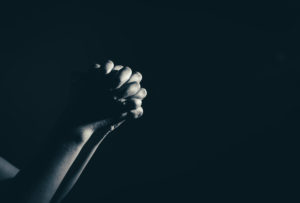
Shot of a group of friends putting their hands together in prayer

Converting hearts to Christ relies thoroughly on God’s grace and we should constantly pray that we be effective witnesses of that grace.

I love Jesus more than I love football. And because of my love for Him I do everything I can to learn more about Him and His Church, just as I do because of my love for football . Our challenge as disciples is to find ways to help young people fall in love with Jesus so that they, too, pursue Christ with the same passion that I pursue football.

 Kyle Holtgrave is the Director of the Office for Youth and Young Adult Ministry for the Diocese of Springfield, IL. Kyle and his family are also longtime Cathedral Parishioners. You can contact Kyle and find out more information on the Diocese of Springfield website: http://www.dio.org/youthministry

Rest & Prayer

As some of you may know I am currently in my second trimester, almost six months pregnant, with twins. The joy and excitement my husband, daughter and I feel is overflowing! We are incredibly excited and very much in “twin planning mode!” What will they need? Do we need two of everything? How will the car work with three car seats? Will we ever be able to sleep again? This Sunday’s Gospel speaks to me, it reassures me that rest in this overwhelming world of ours is equally important to our lives and daily tasks.

It is easy to get caught up in a “To-Do” list. If you are like me, you may have a hard time saying, “No,” which means you might be over extending yourself often! It is hard for those of us serving in ministry to be able to pause and rest. We almost get a sense of guilt if we say no or if we take time to ourselves. But, how else can we listen and be open to hearing God if we don’t make the time to be quiet? It is often through rest, reflection, and silence that we can draw closer to Him, it is not like he has a megaphone on standby!

My daughter has a hard time napping, in fact a hard time getting to sleep at any time. I can imagine I was similar when I was her age (5). Singing, talking with her stuff animals, or “reading” to her barbies, is a more engaging and fun activity then closing your eyes and silence. As she says, “Sleeping is boring.” Oh the joy of being young! Her actions remind me how hard it is for us to slow down. Rest is just as essential to her young growing mind and body, as it is to mine. If prayer is essential and intentional, so too must our commitment to rest and silence.

As Jesus encouraged his disciples to rest, he too encourages us to take time for ourselves. I often tell Gracey, Jesus likes to whisper little secrets just for you to hear, so quiet time is essential to a friendship with Him. How can we take time to find rest and silence in this busy world?

Here are some tips:

  • Find a quiet place, all to your own, where you can commit to being in silence when you are there. Maybe a room in your house, a park bench, or a pew in church.
  • Set aside 1% of your day to silence and prayer. This can be just 15 minutes a day! If you set aside this time before bed, you might have an easier time falling asleep!
  • Explore the silence by journaling afterward. As you sit in silence, your mind may tend to drift. It takes practice to control your mind. Perhaps writing down where your mind is drifting might indicate items controlling too much of your time.
  • Remember, being comfortable in silence takes practice. Being intentional about rest is important and essential. Don’t worry, that “To-Do” list will be there when you get back!

 Katie Price is the Coordinator of Stewardship and Discipleship at the Cathedral. She can be reached at the Parish Offices 522-3342 or via email at [email protected].

« Previous Page
Next Page »

Liturgy

Sunday Masses (unless noted differently in weekly bulletin)
Saturday Evening Vigil – 4:00PM
Sunday – 7:00AM, 10:00AM and 5:00PM

Weekday Masses (unless noted differently in weekly bulletin)
Monday thru Friday – 7:00AM and 5:15PM
Saturday – 8:00AM

Reconciliation (Confessions)
Monday thru Friday – 4:15PM to 5:00PM
Saturday – 9:00AM to 10:00AM and 2:30PM to 3:30PM
Sunday – 4:00PM to 4:45PM

Adoration
Tuesdays and Thursdays – 4:00PM to 5:00PM


CatholicMassTime.org

Parish Information

Parish Address
524 East Lawrence Avenue
Springfield, Illinois 62703

Parish Office Hours
Monday thru Thursday – 8:00AM to 4:00PM
Fridays – CLOSED

Parish Phone
(217) 522-3342

Parish Fax
(217) 210-0136

Parish Staff

Contact Us

Contact Us

Copyright © 2026 · Log in