 This weekend the Church celebrates the Solemnity of Our Lord Jesus Christ, King of the Universe, popularly referred to simply as “Christ the King.” This Sunday is also the last Sunday in Ordinary Time and the last summer of the Church year. The Church year begins anew next Sunday, the First Sunday of Advent. Pope Pius XI established the Solemnity of Christ the King in 1925 in response to an increasing rise in secularism and extreme nationalism. The purpose of this solemnity is to remind us of the Lord Jesus’s sovereignty over everything: society, government, nations, families, and individuals.
The Gospel for the feast this year is taken from the eighteenth chapter of St. John’s Gospel with Pilate’s interrogation of Jesus. The encounter between the Lord and the Roman Procurator juxtaposes two opposing views of kingship: earthly and heavenly. First, Pilates hows contempt for the Jewish people in answer to Jesus’s question about how Pilate knows about him. Pilate knows what he knows about Jesus primarily by being informed by the chief priests who have brought Jesus to Pilate. Pilate is a poor governor who sees no need to be involved in the details of the lives of the people he is responsible for. The opposite is true of Jesus who, while Lord of heaven and earth, is intimately concerned about each and every one of us.

Next, the two continue their interchange about the Lord’s kingship, focusing on the Lord’s kingdom. Jesus is clear to Pilate that his kingdom is not of this world, but this is a concept that is beyond Pilate who is only concerned with the cares of the world and its allurements. The same was true for Herod when Jesus was born. The newborn king had neither designs on Herod’s throne nor any design on Roman power some thirty-plus years later. The Kingdom of God must first be established in the hearts and minds of people before it takes any temporal form. When the Kingdom is firmly established in our lives then it will naturally occur in the world at large.
Finally, the two arrive at the question of truth. Jesus states: “for this I was born and for this I came into the world, to testify to the truth. Everyone who belongs to the truth listens to my voice.” There is no way to unpack the richness of the Lord’s statement in this small space. The truth that Jesus speaks of is the Father’s desire for all creation to live in peace and right relationship with him, totally free from sin and death. In fact, Jesus is the embodiment of the Father’s desire in that he is the ultimate sacrifice that makes this right relationship possible, thus Jesus is rightly called “the Truth” itself (see John 14:6).
The interchange between Jesus and Pilate shows us that Jesus is ultimately an inconvenient truth for Pilate. He is not prepared to accept the Truth that Jesus proclaims because, to be able to do so, Pilate must accept the fact that life is not about him, his desires, or his whims. The same is true for us. For Christ to truly reign in our lives, we must be prepared to accept him and what he asks completely: not “mostly, ”not“ everything but a small portion,” but 100% and nothing less. Only when we accept Jesus and his Kingship completely into our lives will his reign be established in us and then in the world.
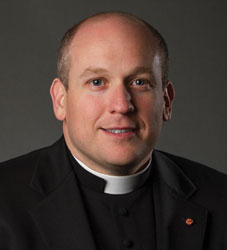
Father Christopher House is the Rector of the Cathedral and serves in various leadership roles within the diocesan curia, namely Chancellor and Vicar Judicial.
 Thanksgiving is upon us and then we fall very quickly into all of the busyness of the Christmas season. Since Advent begins on December 2, this is a very good week to prayerfully consider what sort of Advent reading will best feed our spirits and help us—amid all the tight schedules—to remain connected to this season of expectation, discovery, and enduring, mysterious love. Particularly at a time when the world feels volatile and dark, we need Advent’s promise of an ever-burning Light, and to stay in touch with it.
 In an episode of Call the Midwife, young nurse Jenny Lee works with a teenage-girl who has lived a life of poverty. A Catholic priest, who oversees the home where the girl has been sent to escape an abuser, tells an angry and distraught Jenny: “Poverty isn’t bad housing or dirty clothing. It’s never having been loved, or even respected. It’s not knowing the difference between love and abuse.”
 I enjoy working out. After my second child, a switch flipped in my brain and I started lifting weights and changing my eating habits. I think we hear about those kind of transformations all of the time but I’ve learned that training my body and mastering my eating habits also had a profound affect on my spiritual life.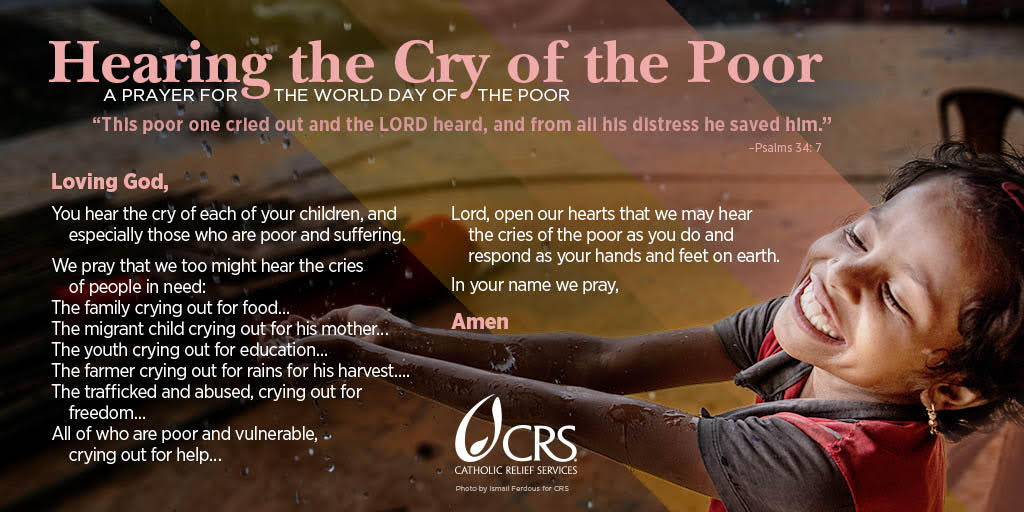
 I am not sure your family tradition the night of Thanksgiving, but much to my chagrin I have a few family members that hit the big sales starting that evening. While I am not opposed to snatching a good sale, I always feel uncomfortable thinking about the workers who leave their families to prepare for the mad rush of eager shoppers. I am sure the deals on that evening make it worth it for that special item someone has been asking for all year, but I wish we could just give it one day. In fact, the next day, known as “Black Friday,” is one of the biggest shopping days in the US. Did you known the most popular requested gift card this year is an Amazon gift card? Anyone surprised? The shopping weekend doesn’t end here! We continue onto “Small Business Saturday” and then “Cyber Monday.”
 Peace in our world is something that we all dream of, though we often feel paralyzed in our efforts to bring about peace. Watching news clips of the political and religious turmoil present in our world today is enough to make even the most optimistic person sit back and wonder if peace is something that can be achieved.
 At the close of the Year of Mercy, Pope Francis suggested that the Church set aside one day each year for communities to “reflect on how poverty is at the very heart of the Gospel .” He designated this day as the World Day of the Poor, to be celebrated each year on the 33rdSunday in Ordinary Time.
 Catholic Charities Holy Family Food Pantry