 This weekend’s Gospel couldn’t provide us with a greater reflection on stewardship. Not just stewardship basics, but the call to be radical, intentional disciples who participate as stewards in our own lives, and in the life of our parish and beyond. The Gospel message today doesn’t let us forget the ‘tough love’ Jesus has for each of us:
Jesus, looking at him, loved him and said to him, “You are lacking in one thing. Go, sell what you have, and give to the poor and you will have treasure in heaven; then come, follow me.” At that statement his face fell, and he went away sad, for he had many possessions.
Notice the phrase, “loved him” before Jesus gives the rich man His response. He is using ‘tough love’ because He knows his response is going to leave the rich man frustrated. Jesus knows how hard this is for each of us. He doesn’t ask this of us lightly; He wants us to remove the dist ract ions, temptations, or other items in our lives that distance us from a deeper relationship with Him. As noted in previous stewardship articles, we know that at the heart of stewardship is our relationship with Jesus. It was not enough for Jesus to ask the rich man to give up all his earthly possessions, but more importantly to come back and follow Him. We can not ignore the importance of a relationship with Jesus.
 But what is he specifically asking us in today’s Gospel? Are we experiencing some tough love from Jesus in our own lives? Are we listening to His response or trying to make one up on our own? Simply put, Jesus is asking for us to be radical. To give up everything and follow Him. To pray more, serve more, and give more. To not be absorbed by percentages or service hours, but to pour out both into His Mission here on earth freely and abundantly. This is a radical call to stewardship for each of us. A stewardship way of life is often uncomfortable, unusual, and for some of us unaffordable. How could we give more? How could we budget differently? How could we take seriously the relationship we have with Jesus more than we are now? Can I serve more people or give more time? Each of us over the next few weeks should be discerning these questions, as they help us discern our call to stewardship. It is a radical call, but so is the call to be in deep relationship with Him. It is a call that when answered, provides great blessings in each of our lives, despite any sacrifices we have made.
We want to provide a healthy framework for each of us to discern our call to stewardship. Here are a few questions and answers that may be on your mind:
Why is Cathedral doing a Season of Stewardship?
Each year, parishes across the country spend time reflecting and committing to a stewardship way of life. This season or process is a best practice for parishes making an effort to take seriously their commitment to grow as intentional disciples and utilize their time, talent, and treasure to be good stewards.
Should I participate?
Yes! Everyone is invited to participate, regardless of your parishioner status. We are all called to be good stewards!
What will you do with the information?
Parish staff members will help cultivate an individual’s stewardship interest(s), nurture current stewards in the pews, and provide connections between par ishioner s and ministries or resources.
Can’t I just think about it and do it on my own without filling out the form?
Filling out the form is a visible act of your commitment to being a good steward. It is through this good intention that you and your community will help you along the way to discipleship. It is also common that when we take seriously the discernment process and write down our intentions on paper, we tend to hold ourselves more accountable.
We hope that you will participate with us over the next few weeks and consider how we can be more radical in prayer, service, and giving, just as Jesus has asked us.
Katie Price is the Coordinator for Stewardship at the Cathedral. She can be contacted by calling the Parish Offices or emailing her directly at [email protected].
 I oftentimes say in prayer, “Grant me the wisdom to see Your will for my life and the courage to follow that will.” It is a request for true discernment to see that God’s will is always more important and fruitful than my own will. It is easy to fall into the trap of thinking happiness and fulfillment lie in doing what I want to do and following my own wants and desires. Our entire secular culture is filled with that message. However, that road has led too many to a place of emptiness and regret. I must pray to keep in the forefront of my mind that God created me on purpose and for a purpose. Being wise enough to see that purpose is the key to true satisfaction in this world.
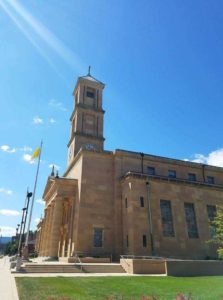
 On Sunday October 14th, the Cathedral Church will celebrate being 90 years young. While the 14th is no longer the liturgical celebration for the Cathedral’s dedication, since its dedication anew on December 2nd, 2009, we will still celebrate this important day in our parish life of faith with a concert of sacred music on Saturday evening, October 13th at 7:00PM in the Cathedral. The choirs of the Cathedral, Blessed Sacrament, Christ the King, and St. Boniface in Edwardsville have been working to provide what will surely be a wonderful evening of song and praise. I hope to see you there.
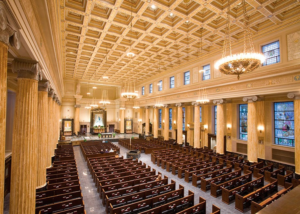 I described the Cathedral’s birthday as “90 years young” because, while the building may need some care here and there due to time, the church itself is the epicenter for many great things happening in the parish. If you have not noticed in past issues of the Cathedral Weekly, there are many things happening in our parish. The parish’s faith formation program is in full swing with weekly offerings from talks on various theological topics, to Bible and book studies, to the Forge young adult ministry, and the parish high school youth group. The Parish School of Religion program is running, as is the Rite of Christian Initiation of Adults. And if you are looking for service and fellowship opportunities, I invite you to check out the parish choir and other liturgical ministries, the Cathedral Council of Catholic Women, or the Father Tolton Knights of Columbus Council. If you have any questions about any of these offerings, please contact Vicki Compton at the parish office.
 Each week, Katie Price drafts our publication of the Cathedral Weekly and I am very happy to share with you that Katie and her husband Darren welcomed twins this past Monday, October 1. Please join me in thanking the Lord for the gift of Anne Marie and John Eugene. I would also like to thank Katie’s brother, Chris, who is filling in for Katie for the next several weeks to help keep the Weekly coming to you.
 We all have unique ways in which we are called to serve. Some might find ourselves on Boards, some of us might be helping a neighbor next door, some of us might be serving at Mass. All of these are excellent examples of how to act as a disciple and answer God’s call in your life. We also should acknowledge that we are examples for each other. Just as my mom was providing an example to me, we provide examples to children around us. We also serve as examples to each other. I am sure many of you have volunteered for an event or ministry before, in which you were asked by your friends and family why you participate. Your witness story is important and you should be encouraged to share it!
 Think about your favorite restaurant for a moment. Maybe it was fancy, maybe it is a local favorite, but think about that exceptional restaurant. When you think about getting the chance to go there, how does that make you feel? When you arrive, does someone greet you or do they recognize you warmly? Think about the ambiance, the feelings you get when you are seated. How does the ambiance, the smells, or the music make you feel? How about the service at the restaurant? Are the servers attentive, warm, knowledgeable, and engaging with you? Think about the tables that surround you, how are those individuals feeling? Are those people at the tables around you also sharing in the positive experience and seemingly enjoying this restaurant?
 The book itself was inspired by actual events concerning a Lutheran boy in Silver Spring, Maryland whose family turned to the Catholic Church for help. The quest for help eventually took them to the Jesuits in St. Louis, Missouri where the boy was delivered from the power of demonic forces after a major exorcism in 1949. In the story The Exorcist there is a break in the ritual being performed by the two Jesuit priests. During this break, the younger priest, who is having a crisis of faith, asks the older priest why a twelve-year old girl; the older priest responds “to make us despair.”
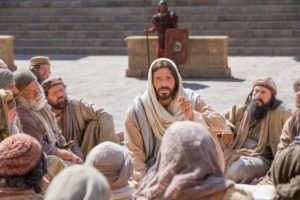 The Lord gives us strong words in this Sunday’s Gospel reading from Mark: if your hand, foot, or eye are going to keep you from entering into heaven, then get rid of them. The Lord Jesus is telling us that there is nothing in this life be it material things, relationships, pleasures, behaviors, whatever that are worth risking the gift and the promise of eternal life with God in heaven. We are also warned sternly to be on guard that we do not lead anyone else into sin, because the punishment for that will be severe.
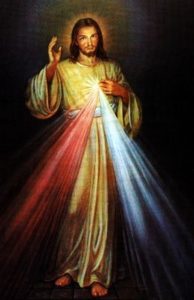 When faced with the power of sin, when tempted to lose hope because of evil in the world, let us always remember the words emblazoned under our Lord in the image of Divine Mercy: Jesus, I trust in you.
 When you give of your time, you are giving unselfishly because you will never get that time back. Consider this, if you gave $5 extra to the offertory basket this weekend what are the chances that you would get that $5 back at some point? Probably high because you might get a promotion, or a monetary birthday gift, or perhaps win on a lottery card. However, when we give our time toward deepening our relationship with Him, we prioritize this unselfish gift. You will never get time back. But isn’t that time with God a worthy sacrifice? Despite our busy lives, stewardship of prayer is an act of trust. When you are worried you won’t have time to make it to Mass, make time and trust. When you are worried you won’t have time to make it to Bible Study, prioritize it and trust. When you feel overwhelmed with your calendar, prioritize your relationship with Jesus, don’t squeeze Him in.
 “Do unto others as you would have them do unto you.”