Cathedral of the Immaculate Conception

Springfield, IL

  • About
    • Contact Us
    • History of the Cathedral
    • Liturgical Schedules
    • Parish Staff
    • Register with Cathedral
    • Subscribe to the Cathedral eWeekly
  • Sacraments
    • Baptism
    • Becoming Catholic
    • Matrimony
    • Vocations
  • Ministry List
    • Adult Faith Formation
    • Cathedral Meal Train
    • Cathedral Online Prayer Wall
    • Cathedral Concerts
    • Family of Faith
    • Grief Share
    • Health and Wellness
    • Spiritual Resources
  • Stewardship
    • Stewardship: A Disciple’s Response
    • Stewardship Form
  • Support
    • E-Giving Frequently Asked Questions
    • Give Online
  • Sunday News
    • Announcements
    • Cathedral Weekly
    • Livestream Feed
    • Submit a Mass Intention Request
    • Weekly or Announcement Submission

Whose Light Do You Follow?

Ever since I was a kid I have had a fascination with the Magi and that fascination evolved into a religious devotion to these mysterious, sainted travelers. In my living room in the rectory there are ten different sets of the Magi at present, from the Nativity scene to nutcrackers to ornaments to other images. The Gospel of Matthew tells us little about them, and history and Tradition tell us even less. Matthew names three gifts of gold, frankincense and myrrh and so developed the concept of three individuals who have been given the names of Caspar, Melchior, and Balthasar.

Popularly we have called them kings and wise men but the Scriptures only give them the title of Magi, plural for mage. It has also been said that they came representing Europe, Africa, and Asia, but that is probably not the case either. Most historians and Scripture scholars point to their origin as being from Persia, modern day Iran. They were likely followers of Zoroastrianism, which in its more ancient form placed an emphasis on the study of the stars by its priests.

Matthew’s Gospel tells us that they observed “the star at its rising.” What they exactly saw we do not know. Modern day astronomers have suggested a possible supernova or an unusual alignment of planets. The fact that this may have been a natural phenomenon does not in any way diminish the fact that this sign heralded a supernatural event on earth; after all, does not creation serve its master and creator? What is fascinating is that there is evidence that this astronomical event took place within the constellation of Aries which was the Zodiac sign for Judea and would have lead the Magi to Jerusalem its capital and then on to Bethlehem following their audience with Herod.

Following the star would not have been easy. The journey from Persia to Bethlehem would have been long, difficult and fraught with danger, yet the Magi made the journey. Why? I wish I had a ready answer for that, but I believe it was because they were called. Something, or rather someone, put it on their hearts that something wonderful was waiting for them beneath that star. We say that they were guided by the star’s light but it was actually the light of faith that guided them. They did not know where they were going or what they would find, but they were called and they followed.

This is why the story of the Magi is so wonderful and pertinent for us in our discipleship. God is always calling to us, many times through the natural realities of our lives, beckoning us to follow the light that leads to him. The path is not always easy, sometimes we do not know where we are going, and maybe we might ask ourselves at times is the journey worth it? The Magi found the journey worth it because in presenting their gifts to the Christ child they were given the gift of joy in exchange. Herod is the great tragedy of the story. God was calling to him also, not through the star, but through the Magi themselves when they came asking about the new born king, but Herod was closed off to anyone but himself and was only concerned with following his own light.

May the grace of this wonderful Solemnity of the Epiphany teach us to guard against being self-referential and closed off, from thinking that life is all about us and that we have all the answers. May the grace of God open our eyes in faith to behold the many and varied ways that God’s light is calling to us, through the challenges and difficulties of this life, to the path that ultimately will lead us to true life in Christ.

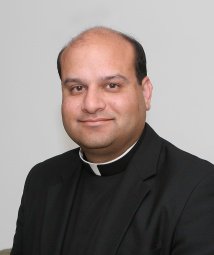
Father Christopher House is the Rector-Pastor of the Cathedral and serves in various leadership roles within the diocesan curia, specifically Chancellor and Vicar Judicial.

Graces of Epiphany

The blessed embassy wonders that it has been led to the holy cradle by a ray of light streaming from above; the farthest nation is the first to enjoy the common good.

What a wonderful favor! He who embraces heaven and earth is held within the embrace of his Mother; he who left the Kingdom of his Father lies hidden in the bosom of his Mother. Through a simple service the spiritual treasure is revealed: humanity is perceived, but divinity is adored.

Those who offer gold, frankincense, and myrrh show more in mystery than they offer in knowledge. In the gift of gold royal dignity is indicated, in the smoke of the frankincense divine majesty, and in the appearance of myrrh humanity which is destined for burial. Thus the number of their offering bespeaks the Trinity, while their single devotion gives evidence of unity.

Following this example, if we wish to reach Christ, let us endeavor to behold heaven with the ever watchful attention of our heart. May the star of justice direct the path of a perfect life for us. Let us offer the gold of fidelity, the spices of devotion, and the burnt offering of chastity to him who said: No one shall appear before me empty-handed. May we possess spiritual myrrh within us to temper our souls in such a way that it may keep them unharmed by the corruption of sin.

Let us change our life, if we desire to reach our true country, that is, the heavenly one. Let there be this exchange between the two so that we may prepare for ourselves the substance of that future life by our use of this present one. Just as eternal life will be the reward of this life, let us labor in such a way that this one may be the price of that.

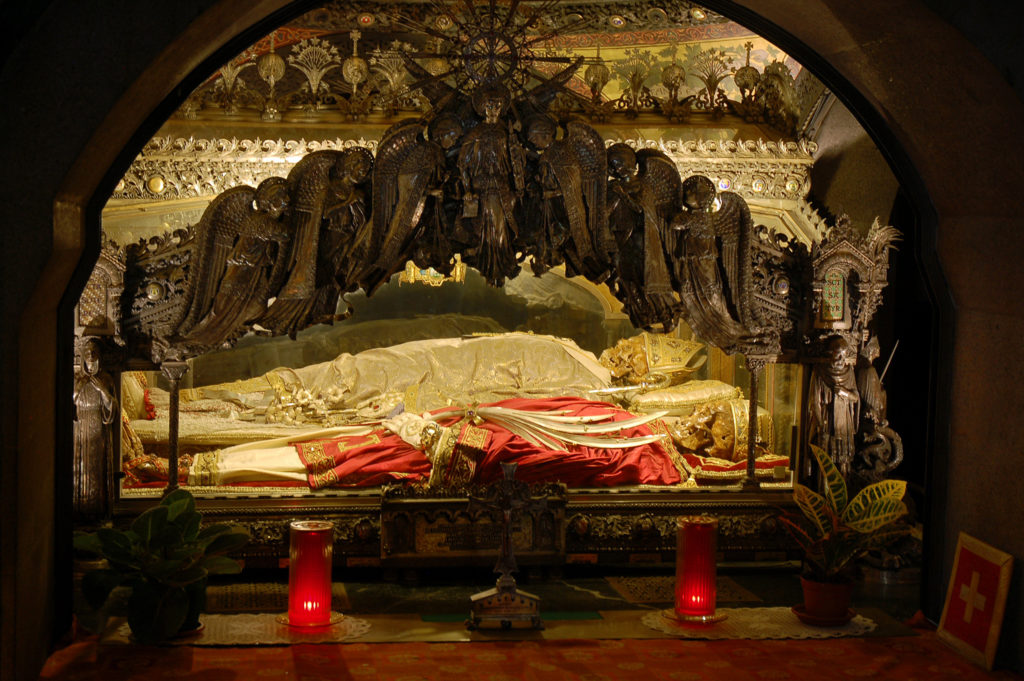
Saint Caesarius of Arles (470-542 AD), was a monk, archbishop and celebrated preacher. Among his many reforms, he brought the Divine Office into the local parishes and founded a convent, placing his sister Saint Caesaria there as abbess. He was revered for his more than forty years of service and for presiding over Church synods and councils, including the Council of Orange in 529. Over 250 of his sermons have survived.

Continuing the Joy of Christmas

We continue our journey through the Octave of Christmas this weekend with the celebration of the Feast of the Holy Family. This feast reminds us that Jesus was raised in a home, that he grew in age, wisdom, and in knowledge of God’s will for his life. He also grew in grace and obedience under the care of Mary and Joseph. This feast is followed by the Solemnity of Mary, Mother of God, on New Year’s Day. This solemnity marks the end of the Octave of Christmas by celebrating the motherhood of Mary, remembering that it was from her that Jesus took his human nature, becoming one with us in all things but sin. This year the obligation is lifted to attend Mass on January 1st because the solemnity falls on a Monday, however, Mass will still be offered on New Year’s Day at 9AM.

Thank you to all who ministered and assisted in making our Christmas celebrations so wonderful. How blessed we are to have this joyous season of light in the midst of the darkest days of winter, but also at a time when the light begins to lengthen ever so slightly and the darkness begins to recede. Please continue to enjoy the beauty of the season. It began, not ended, on December 25th and continues through Epiphany and the Baptism of the Lord on January 8th. May the joy of Christmas continue to be yours and may you know God’s abundant grace and blessings in 2018!

Father Christopher House is the Rector-Pastor of the Cathedral and serves in various leadership roles within the diocesan curia, specifically Chancellor and Vicar Judicial.

Christmas: The Impossible Becomes Reality

Here is proven the old saying that actions speak louder than words, in this case God’s actions. It is this great mystery of Christmas, God becoming one with us in all things but sin, that is a stumbling block to many people of faith outside of Christianity. Many can accept the notion of resurrection but that God would condescend to enter into our human condition….unthinkable. Yet, here we are again at the manger to celebrate this wonderful reality, this wonderful mystery of the Word made flesh, the love of God incarnate.

The hustle and bustle of the secular world around us for this time of year is at an end, mostly because they sadly miss the whole point of Christmas, building up to one day and then for many people its all over. How wonderful for us in the Church that this is not the case. Christmas opens up for us a beautiful season in the life of the Church where we are invited to ponder, to stand in awe, to celebrate these wonderful actions by our loving God in the coming days and feasts. I hope and pray that you will take time in the days ahead to ponder these mysteries, to allow the Lord to enfold you in his love, to come to a deeper understanding of your own God-given worth that is testified to by the Lord Jesus coming to us.

On behalf of Bishop Paprocki, Fathers Maher and Stock, Deacons Smith and Keen, and all the parish and school staff, I want to wish you and yours a blessed and merry Christmas. May the light of the Christ Child, born for us in Bethlehem, lead us and all the world to greater peace and joy.

Father Christopher House is the Rector-Pastor of the Cathedral and serves in various leadership roles within the diocesan curia, specifically Chancellor and Vicar Judicial.

Back from the Holy Land

It was August of 2000 when I returned to Mundelein Seminary for my third of four years of theol- ogy studies. That year was going to be standout because my class was going to spend ten weeks from December into February in the Holy Land studying, praying, and touring, but it wasn’t to be. The following month the prime minister of Israel went up the Temple Mount where the temple once stood and the Dome of the Rock is now. That visit sparked a tremendous outrage among the Pales- tinians and lead the way to an intifada, which meant the cancella- tion of our chance to study in the Holy Land. However, all things in God’s time….

After almost twenty years I was finally able to make it to the Holy Land earlier this month, serving as spiritual director for the yearly pilgrimage offered by the diocesan Office for the Missions. Ten nights in the Holy Land took me from Caesarea on the Mediterranean coast where both Ss. Peter and Paul preached to three nights on the Sea of Galilee and the chance to visit Nazareth, Capernaum, Cana, and the sites where Jesus gave the Sermon on the Mount, the Bread of Life discourse, and multi- plied the loaves and fishes, among many places. From Galilee, we journeyed up to Jerusalem for six nights, stopping along the way visit Mt. Tabor, where our Lord was transfigured before Pe- ter, James, and John, renewed our baptismal promises at the Jordan River (actually in the Jordan for a few of us), and to Jeri- cho where many great events from the Old and New Testaments took place.

In Jerusalem, I was able to walk in the Lord’s footsteps at the sights where so many key events in his earthly life took place. We arrived on a Saturday night and the next morning, with a good friend who made the trip with me, I went before sunrise to the Church of the Holy Sepulcher to visit the site of the Lord’s death and resurrection. From Jerusalem, we were also able to visit Bethlehem and the sites surrounding the Nativity of the Lord.

As I write this, I find myself grasping for words to express what the experience was like and the words escape me. I was told that once I visited the Holy Land that I would never read or hear the Scriptures in same way again and I have found that to be truer than I imagined. The visit was one of great grace for me. I was privileged to pray for all of you along the way and I am grateful for the many prayers that were offered for me and the group as we made our pilgrimage. It was a blessing to walk in the Lord’s footsteps and to meet people of various ethnicities and religions who call that place “holy” for many reasons. I ask you to please pray for the peace of Jerusalem, that those who live in the Holy Land may find common ground so as to live together in harmony and mutual respect. Finally, if you ever have the chance to visit the Holy Land, GO!

Father Christopher House is the Rector-Pastor of the Cathedral and serves in various leadership roles within the diocesan curia, specifically Chancellor and Vicar Judicial.

Great Places: The Shrine at Fifty

When it was dedicated a half-century ago, it bespoke a self- confident Catholicism, at home in America and proud to display its Marian piety and its considerable resources. Today, a building that has aged remarkably well and improved in the process makes two important theological statements that are worth pon- dering on this golden anniversary.

The first statement was unmistakably clear the day the Shrine opened to the public. Its interior was unfinished, save for one colossal icon—the great apse mosaic of Christ come in judgment, which rivets the eye from the moment the pilgrim enters the nave. That image of a stern, majestic Christ was an appropriate “fit” for a Ro- manesque-Byzantine structure; but it was also a challenge to the saccharine Jesus being peddled by preachers of the “power of positive thinking” in 1959. This Christ makes you think, all right—about the seri- ous business of life, about rendering an account of one’s stewardship one day, about the awe-inspiring majesty of Jesus Christ, king of the universe.

Some found it shocking, in 1959; others find it startling today. The icon’s most important theological statement, however, is not so much a warning as a reminder: all true devotion to Mary points us to her Son, as Our Lady herself did in her last words in the Gospels—”Do whatever he tells you…” And by pointing us to her Son, who is both Son of God and Son of Mary, Our Lady points us, through the Incarnation, into the second great mystery of Christian faith: the mystery of the Most Holy Trinity. The royal road to the great truths of Chris- tianity begins with Mary’s “yes” to Gabriel’s unexpected visit.

The Shrine makes its second important Marian theological statement in a more recent addition to its decoration: the great sculpture of the “universal call to holiness” which, spanning the length of the basilica’s back wall, depicts a rich panorama of modes of Christian life and sanctity. The universal call to holiness was one of the great themes of the Second Vatican Council’s Dogmatic Constitution on the Church: no matter what their station in life or their state of life in the Church, all the baptized are called to be saints—for becoming a saint is the fulfillment of our human and Christian destiny. Looking at the cosmic Christ in judgment, we are reminded of the source of sanctity in the Church; looking at holiness exemplified in the Body of Christ as we leave the basilica, we’re reminded of the extraordinary range of God’s re- deeming and sanctifying grace as it enlivens disciples.

And the Marian angle here? Mary is the first disciple, because her fiat, her “yes” to the divine plan, sets the pattern of all Christian discipleship. As John Paul II, borrowing from Hans Us von Balthasar, said in 1987, there are many “profiles” of the Christian life in the New Testament: the Petrine profile sets the pattern for the Church of authority and jurisdiction, as the Pauline profile does for the Church of proclamation and evange- lization and the Johannine profile does for the Church of contemplation. The Marian profile, however, is most basic: for everything else in the Church—authority, proclamation, contemplation— exists to serve the deepening of discipleship and the call to holiness that comes from conversion to

Christ. And the primordial profile of the Christian disciple’s life is set by two paradigmatic expressions of Mary’s discipleship: the articulated fiat of the Annunciation, and the silent fiat at the foot of the cross.

The Shrine is the largest Catholic structure in the western hemisphere. More importantly, though, it provides one of the Americas’ richest experiences of Catholicism, aesthetically, litur- gically, and musically—a catechism in stone, mosaic, and glass, and a noble act of homage to the patroness of the United States.

George Weigel is the Senior Fellow of the Ethics and Public Policy Center, a Roman Catholic theologian and one of America’s leading commentators on issues of religion and public life. Reprinted with Permission.

Advent Stewardship

When I was growing up this was my favorite Sunday in Advent. Why? When I was growing up pink was my favorite color of course! (haha) But seriously, this is one of my favorite weeks of Advent. It is the check-in point; Advent is half- way complete. Advent is a time

that awakens us to the very real presence of Jesus in our lives. It is a time that alerts us to God and requires us to be watchful of his presence in our lives. So, how have we done this season? It is good to check-in on our Advent Stewardship.

Stewardship of Time: Have we spent time with God, in the spirit of stewardship? Consider for the last remaining weeks set- ting aside some time with Him, either through prayer, daily Mass, or checking out the Advent resources we have posted on the website.

Stewardship of Talents: Have you had an opportunity to share your talents? Over the next two weeks, maybe there is a ministry or a program that you would have the interest in participating as a volunteer. On the Sunday Announcements stuffer you will find numerous opportunities to share your talents!

Stewardship of Treasure: Have you increased your giving or providing extra generosity to someone in need? We have had increased giving opportunities in the past couple weeks, from clothing drives to food drives. As we enter the next two weeks consider how your Parish might be in need and how you might be able to make a special gift.

Advent is a busy season, and it will be over in a blink. Take a moment to pause and spend some time with our Lord. It is im- portant to slow down and be present. His presence in our lives is one of the greatest presents of the season.

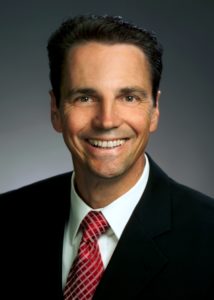
Katie Price is the Coordinator for Discipleship and Stewardship at the Cathedral. She comes with an extensive background in this field after helping dioceses and parishes across the nation meet their goal of mak- ing discipleship a priority in their parishes. If you would like to learn more about the work she is doing, email her at [email protected].

Do I have to go to Mass twice this weekend on Christmas?

Over the past couple of weeks, I have been asked this question several times. Simply put, the answer is yes, although I would always prefer for us to understand that we get to go to Mass twice in one weekend rather than we have to go.

This year is unique in that the Fourth Sunday of Advent and Christmas Eve fall on the same day; this happens about every six or seven years although a leap year might render a longer interval. According to the law of the Church, which is based on divine law, Catholics are required to participate in the Holy Sacrifice of the Mass on Sundays and on other days of precept which we know as holy days of obligation. Christmas is a day of precept whose obligation is never lifted, the same Sunday. Therefore, all Catholics must attend Mass the weekend of December 23/24 for the Fourth Sunday of Advent and also for the Solemnity of Christmas on December 24/25.

The following was recently published by the Committee for Divine Worship of the United States Conference of Catholic Bishops: “The prevailing view of many canon lawyers is that each obligation must be fulfilled with a separate Mass. Thus, when consecutive obligations occur on Saturday-Sunday or Sunday-Monday, the faithful must attend Mass twice to fulfill two separate obligations….Aside from canonical requirements. It would be hp[ed, of course, that Catholic foster a love for the Sacred Liturgy and hold a desire to celebrate the holy days as fully as is reasonably possible.”

While for many there will be many things happening over the days of December 23-25, we must remember why we gather and celebrate: the birth of the Lord Jesus. Be sure to make the Masses of the Fourth Sunday of Advent and Christmas a part of your Christmas plans.


Advent Stewardship

As we enter into Advent, we enter into a season of waiting. It is not often that we enjoy waiting. Waiting in a long line, waiting for test results to come back, waiting for a new job opportunity; waiting is a challenge for many of us. We get impatient, anxious, or needy. What we are waiting for makes it all worth it, right?

This Sunday’s readings from Mark tell of Jesus
providing caution to his disciples:
May he not come suddenly and find you sleeping.
What I say to you, I say to all: ‘Watch!’
-Mk 13: 36-37

He is speaking to the need to be watchful. This is not just in reference to Jesus’ birth, but for Christ’s return in glory at the end of time. We are to be alert to God’s call for us, watchful of temptations that can distract us. Just as the disciples were to be prepared, we are to prepare.

So, how does being watchful relate to waiting? Think about the last time you were waiting for something… you were mindful of the car ahead of you in the drive-thru; you were tracking the package online to see the delivery time, your son or daughter practicing driving before the driver’s test. While these examples are insignificant, they can remind us that preparation is part of waiting. When you are prepared, you are watchful and situationally aware. How are we watchful in our faith experiences? Are we in a deep relationship with God through daily prayer? Are we participating in the sacramental life of the church, particularly the Eucharist and Confession? Are we serving others, just as we were reminded to do so in last week’s Gospel to serve the least?

This Advent, let us embark on a more watchful and prayerful journey through the season, waiting with open and joy-filled hearts for the Christ child!

Katie Price is the Coordinator for Discipleship and Stewardship at the Cathedral. She comes with an extensive background in this field after helping dioceses and parishes across the nation meet their goal of making discipleship a priority in their parishes. If you would like to learn more about the work she is doing, email her at [email protected].

Savior of the Nations, Come!

This weekend the church year begins anew as we begin the holy season of Advent, a name derived from the Latin word adventus, which means “the coming.” This holy season looks to the two comings of Christ; first, we look forward to our Lord’s return in glory at the end of time, and, second, beginning December 17th, we look back remembering that our Lord came to us in time to be one with us in all things but sin. While it may not have the same depth of austerity as Lent, Advent is a penitential season where the words of the prophets echo to us from ages past to prepare a way for the Lord in our hearts and lives.

I know that this time of year is a busy time for many of us, but I encourage you to not get swept away in the commotion. Advent is a beautiful season and even though it is penitential (thus the use of the color violet), it also possesses a subdued joy and peace. I encourage you to make use of this season and set aside some time for yourself with the Lord. May every nation, home, and heart make room for Christ, the Prince of Peace.

The Solemnity of the Immaculate Conception

This Friday, December 8th, the Church celebrates the Solemnity of the Immaculate Conception of the Blessed Virgin Mary. This day remembers that Mary, from the very first moment of her conception in the womb of her mother St. Anne, was kept free from all touch or stain of sin, thus the Latin inscription above the great mosaic in the Cathedral macula non est in te (no stain is in you). This great gift of grace was to prepare her to be a perfect vessel in which the Lord Jesus would take on our human nature in all things but sin, taking his flesh and bone from Mary. This great solemnity is a holy day of obligation; Masses will be at 5:15PM for the vigil on Thursday the 7th and at 7:00AM, 12:05PM, and 5:15PM on Friday the 8th. Come and honor Mary our Blessed Mother, the Immaculate Conception, who is patroness of our
cathedral, diocese, and nation.

Greetings from the Holy Land

As you read this I am in the middle of my time in the Holy Land, serving as spiritual director for the diocesan pilgrimage. Last week saw us in Galilee for a few nights and as of Saturday we
arrive in Jerusalem for six nights, returning home on the 8th. I am praying for all of you; please pray for the safe journey of the group. God bless you!

Father Christopher House is the Rector-Pastor of the Cathedral and serves in various leadership roles within the diocesan curia, specifically Chancellor and Vicar Judicial.

« Previous Page
Next Page »

Liturgy

Sunday Masses (unless noted differently in weekly bulletin)
Saturday Evening Vigil – 4:00PM
Sunday – 7:00AM, 10:00AM and 5:00PM

Weekday Masses (unless noted differently in weekly bulletin)
Monday thru Friday – 7:00AM and 5:15PM
Saturday – 8:00AM

Reconciliation (Confessions)
Monday thru Friday – 4:15PM to 5:00PM
Saturday – 9:00AM to 10:00AM and 2:30PM to 3:30PM
Sunday – 4:00PM to 4:45PM

Adoration
Tuesdays and Thursdays – 4:00PM to 5:00PM


CatholicMassTime.org

Parish Information

Parish Address
524 East Lawrence Avenue
Springfield, Illinois 62703

Parish Office Hours
Monday thru Thursday – 8:00AM to 4:00PM
Fridays – CLOSED

Parish Phone
(217) 522-3342

Parish Fax
(217) 210-0136

Parish Staff

Contact Us

Contact Us

Copyright © 2026 · Log in