Last week I decided to ask my students a question at the begging of class.
I can’t recall why, but I asked them: “If all of us were to die right now, if we were all going to be hit by a nuclear missile in the next few seconds, how many of you think you’re going to heaven?” It was interesting that only one girl put up her hand. But I was happy that the rest of them did not put up their hands, because if we are certain that we are going to heaven when we die, we have to wonder, where is the virtue of hope? We hope that we are going to heaven; we pray daily that God will have mercy on us, but none of us can be certain we’re going there.
But then it occurred to me that for them, it might not be about hope at all. So I asked them: “How many believe that if you were to die this minute, you’re going to hell?” About five of them put up their hands, and these were girls of very fine character. So I asked one of them: “Why do you think you’re going to hell?” She said: “Because I’m not nice. I don’t take any BS”. I asked the other one, and she said much the same thing.
I almost fell over. I asked them: “Where did you get the idea that holiness is about being nice? And where did you get the idea that being assertive is contrary to holiness?”
Then I stopped them. I didn’t want to know where they got that idea. I know exactly where they got it. It’s called the tyranny of niceness. In a culture dominated by the tyranny of niceness, which is what the culture we live in is fundamentally — a polite tyranny — it is more important to be nice than it is to be truly good. Niceness is more important than truth. That’s why I find it so hard to get teenagers to raise objections in class if they hear anything they don’t agree with, if they wish to dispute a point. They’ve been taught that arguing, asking difficult questions, challenging the teacher, etc., is not nice, that it is disrespectful.
We don’t live in a culture of debate anymore. When I was young, there used to be a show called The Great Debate, and they’d debate controversial issues and at the end, the audience would vote. We don’t see that kind of thing anymore, and very few schools have debate clubs. The reason we no longer live within a culture of debate is that, to use a phrase coined by Pope Benedict XVI, we live under the dictatorship of relativism. Relativism is the tyrant behind the tyranny of niceness. Relativism denies that there is absolute truth. It denies that there are absolute moral precepts, that certain actions like abortion and active euthanasia, adultery, contraception, pornography, fornication, etc., are intrinsically wrong.
And so it naturally follows that if there is no truth, there’s nothing to debate; for debate is supposed to uncover the truth, but there is no truth. And so all debating does is result in hurt feelings. In a relativistic culture, everyone has their own truth, and no one has a right to say what is true or not true, who is right and who is wrong. That’s a nice culture, a very agreeable one.
So, students who want to challenge a point in class are not being nice. Argument has been openly discouraged; just accept what you’re being taught. And what is being taught is not at all controversial. Why not? Because it’s not nice to talk about controversial things like abortion, fornication, homosexuality, for example, for these are divisive, and someone is going to get offended. In other words, truth takes a backseat to sensitivity. And so the most fundamental moral directive, the one commandment that replaces the Ten Commandments of old is: Thou Shalt be Sensitive.
Love has now come to mean sensitivity. We’ve all heard the expression “The truth hurts”. Speaking the truth can cause people to feel uncomfortable. It is not nice to make people feel uncomfortable. But speaking the truth is probably the most loving thing you can do, yet it’s not always nice. Just as it’s not nice to have your stomach cut open with a scalpel, but my doctor did a very loving thing years ago when he cut me open to remove a cancer. Not nice, but loving.
A local psychologist wrote on the adverse psychological effects of the tyranny of niceness, how it tends to bring about a split in one’s entire personality, a disintegration of the character, because instead of speaking what one knows to be true, one has to remain silent, be nice, say nice things, regardless of whether or not they are true. I have had colleagues who say the nicest things, the most positive things, when they know they are not being sincere. “How was this or that field trip?” “It was great!” Then you question them further, and they eventually admit that it was a disaster, a complete waste of time. Why did they say it was great? They’re stuck for an answer. It’s the tyranny of niceness; if we speak the truth, we’ll look like cranks, ogres. When I started teaching, I remember one principal always told us that we were all doing a wonderful job. He knew that wasn’t true. Only some were doing a good job. But it’s not nice to tell the truth. This kind of personal dis-integrity can only have serious adverse consequences down the road, both psychologically and spiritually.
Well, holiness is not niceness. Holiness is heroic faith, heroic hope, and heroic charity (supernatural love of God). Jesus is holiness itself, the perfection of holiness, the fountain of all holiness. But read the gospels. He wasn’t nice, especially to the Pharisees. St. Paul wasn’t always that nice. Note what he said to the Galatians: “As for me, brothers, if I am still preaching circumcision, why do the attacks on me continue? … Would that those who are troubling you might go the whole way, and castrate themselves!” (Gal 5, 11-12). Not a nice thing to say, but Paul is a saint. Study the life of St. Padre Pio, one of the greatest saints in the 20th century. He was not always nice, but he was a man of heroic charity.
And this Second Reading we heard proclaimed today, St. Paul’s letter to the Romans, by today’s standards, wasn’t nice at all. It would be horribly offensive to a large number of people: “Let us conduct ourselves properly as in the day, not in orgies and drunkenness, not in promiscuity and lust, not in rivalry and jealousy… make no provision for the desires of the flesh.”
The area of sexuality is so important, because sexual immorality affects one’s ability to relate to another, it affects marriage, and marriage is the foundation of the family, which is the fundamental unit of society. But people today, including educators, are silent on sexual morality, because there’s a fear we might offend. Unfortunately, some priests and bishops have become disciples of the tyranny of niceness, which is why we rarely hear about controversial issues from the pulpit.
Well these readings are all about preparation for the Second Coming of Christ. How do we prepare? By growing in holiness, by growing in personal integrity. Lust above all has the power to destroy that integrity. Neurosurgeon Donald Hilton has recently written on the effects of pornography on the brain, and what researchers have found is very disconcerting, especially in light of the fact that, according to recent data, 87% of college males and 31% of females view pornography. What he says is that pornography causes a disruption of dopamine in the brain. There is an area in the center of the brain about the size of an almond that is a key pleasure reward center, and when this area is activated by dopamine and other neurotransmitters, it causes us to value and desire pleasure rewards. Dopamine is essential for human beings to desire appropriate pleasures in life. Without it, we would not eat; we would not procreate, nor would be even try to win a game of checkers, etc.
It is the overuse of the dopamine reward system that causes addictions. When the neural pathways are used compulsively, dopamine is decreased. The dopamine cells begin to shrink or atrophy. That small center of the brain begins to crave dopamine. What happens is that the brain re-wires itself; the “pleasure thermostat” is reset, and this produces a new “normal” state. The result is that the person must now act out in addiction to increase the dopamine to high levels in order to feel normal.
That is the case with all addictions, but especially sexual addiction, which establishes itself very rapidly and is the hardest to overcome. Most importantly, Hilton points out that the frontal lobes of the brain, located just above the eyes, also atrophy, and these lobes have important connections to the pleasure pathways in the brain, so that pleasure can be controlled. The frontal lobes are important in our ability to make judgments. He says that if the brain were a car, the frontal lobes would be the brakes. What happens as a result of this atrophy of the frontal lobes is that the person becomes impaired in his ability to process the consequences of acting out in addiction. He compares this neurological decline to the wearing out of the brake pads on a car. What they have found with people who suffer from frontal lobe damage, from car accidents for example, is that they are impulsive — they act without any thought of consequences — they are compulsive — fixated on certain objects or behaviors — and they are emotionally labile, that is, they have sudden and unpredictable mood swings. And of course they exhibit impaired judgment.
Dr. Victor Cline, in his essay on the effects of pornography on adults and children, says that it dramatically reduces a person’s capacity to love, resulting in a dissociation of sex from friendship, affection, caring, and other emotions that are part and parcel of healthy marriages. He says a person’s sexual side becomes dehumanized, and many will develop an “alien ego state” or dark side, “whose core is antisocial lust devoid of most values”.
The consequences this has on marriage should be obvious. But Cambridge anthropologist Dr. J. D. Unwin examined 86 cultures spanning 5, 000 years with regard to the effects of sexual restraint and sexual abandon. He found that cultures that practice strict monogamy exhibited what he called “creative social energy”, and they reached “the zenith of production”. But cultures in which there was no restraint on sexuality deteriorated into mediocrity and chaos, without exception.
As time goes on, we see in our culture less and less sexual restraint, that is, more sexual abandon, and we’ve witnessed a steady decline in marriage since 1968. We only have to think of the consequences of marriage and family breakup on children. Divorce hurts kids. Ask any teacher with a modicum of common sense.
This culture does not produce real men anymore. Many of our male celebrities are stuck in a perpetual adolescence. A boy does not have control over his passions, but is led by them. A man possesses himself, governs his passions, subjects them to reason. A boy loves things for what they do for him, but real love loves another for that person’s sake, not for the sake of what the other does for me. That kind of love is difficult to acquire, and few young adults have achieved that, which is why so many young couples call it quits after only a few years of married life. They have not learned to love, and they have not learned to rise above hardship through an act of the will. Many think life — and marriage — is about non-stop exhilaration.
The best thing we can do for this world, this culture, is take St. Paul’s words seriously: “Let us then throw off the works of darkness and put on the armor of light; let us conduct ourselves properly as in the day, not in orgies and drunkenness, not in promiscuity and lust, not in rivalry and jealousy… But put on the Lord Jesus Christ, and make no provision for the desires of the flesh.”
We have to struggle for personal integrity. We have to be careful and prudent parents, assertive parents. We have to cultivate chastity in ourselves and help cultivate it in our children. There’s no growing in holiness without chastity, there’s no preparation for eternal life without it. And one of the best things we can do for others is to stop being so nice. Tell them the truth, do it with compassion and consideration, but speak it and witness to the truth. Tell your kids the truth. The culture we live in has cheated them and is going to continue to cheat them. It is our duty to tell them.
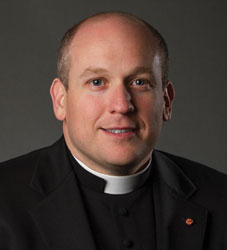
Doug McManaman is a Deacon and a Religion and Philosophy teacher at Father Michael McGivney Catholic Academy in Markham, Ontario, Canada. He is the past president of the Canadian Fellowship of Catholic Scholars. Deacon Douglas studied Philosophy at St. Jerome’s College in Waterloo, and Theology at the University of Montreal. Copyright © 2010 Douglas McManaman
 We continue our journey through the Octave of Christmas this weekend with the celebration of the Feast of the Holy Family. This feast reminds us that Jesus was raised in a home, that he grew in age, wisdom, and in knowledge of God’s will for his life. He also grew in grace and obedience under the care of Mary and Joseph. This feast is followed by the Solemnity of Mary, Mother of God, on New Year’s Day. This solemnity marks the end of the Octave of Christmas by celebrating the motherhood of Mary, remembering that it was from her that Jesus took his human nature, becoming one with us in all things but sin. This year the obligation is lifted to attend Mass on January 1st because the solemnity falls on a Monday, however, Mass will still be offered on New Year’s Day at 9AM.
 Here is proven the old saying that actions speak louder than words, in this case God’s actions. It is this great mystery of Christmas, God becoming one with us in all things but sin, that is a stumbling block to many people of faith outside of Christianity. Many can accept the notion of resurrection but that God would condescend to enter into our human condition….unthinkable. Yet, here we are again at the manger to celebrate this wonderful reality, this wonderful mystery of the Word made flesh, the love of God incarnate.