Promises have meaning and are typically not taken lightly. There is something about receiving someone’s promise that evokes peace in our hearts. While the present moment may be uncertain or trying, knowing there is something good on the horizon gives hope. In John 14, Jesus shares heavenly promises bound to bestow peace and hope.
Jesus comforts us, proclaiming that we should not let our hearts be troubled. He encourages us not only to have faith in God but also to have faith in him, an act of trust you will never find misguided. Faith, as Hebrews 11 tells us, “is the realization of what is hoped for and evidence of things not seen.” Most experiences of faith are something not seen but felt only in our hearts. Perhaps having faith is not always the simplest task, but God never asks the impossible; therefore, we can be assured of the grace necessary to accomplish it.
We can hold tight to other promises shared by Jesus in today’s Gospel as well; these are especially comforting in times of uncertainty. Jesus has gone before us and is preparing a place for us — meaning there is room in heaven for everyone. Furthermore, He promises to come back and take us there so that all we need to know of how to get there, is to follow the Way, Jesus himself. For Jesus is the Way, the Truth, and the Life — the model of faith and giver of peace.

Although Jesus has gone before us, he is still, and will always be, right here with us. As worries mount, so too does the tendency to feel God has forgotten us, but the Scriptures ask us to recall the promises of His presence. Hope is restored upon the assurance never to be forsaken nor abandoned (Hebrews 13:5); recalling Jesus remains with us always, until the end of the age, to be exact (Matthew 28:20).
It is precisely those moments when we struggle the most to see God amid our circumstances, that we should rely those promises. With the gift of hindsight, we can look back to the outcomes of other hardships or trials (especially those beyond our control), carefully and prayerfully recognizing all the graces bestowed. Possibly the situation didn’t resolve as wished, yet there is a discernable peace associated with that time and some greater good that came from it.
A family once prayed for a cure to their brother’s terminal illness. They longed for his healing. As the disease progressed, so did his once dormant faith. Before becoming sick, he was far removed from the Catholic faith. His illness brought forth completely different healing as he decided to embrace a relationship with Christ. The miraculous reception of the sacraments, after too many years to count, and the acceptance of God’s will; amazed the family, who likewise found great peace in this otherwise unwanted circumstance. In the end, the eternal promises of Christ resulted in a peace that was truly beyond understanding.
Like St. Thomas, we too can worry we’ll not know the path to the place Jesus has prepared for us. The road may seem confusing or beyond our reach. The promises, while trustworthy, may feel as though they are meant for someone else, and not for someone so filled with doubt, sin, or fear. Remember, out of great love for us, while we were still sinners, God sent his only Son to die for our redemption (Romans 5:8).
Jesus is truly the Way, the Truth, and the Life, and we don’t have to search far to find he is always with us. He journeys alongside our darkness and our joy. He is the embodiment of the unseen God; if we have seen him, then we have seen the Father.
We don’t need to search far to find signs and wonders of God. We can witness his almighty love in a sunrise, the sweet smile of a child, and the peace which comes in prayer. “Amen, Amen, I say to you, whoever believes in me will do the works that I do, and will do greater ones than these, because I am going to the Father,” (John 14:11). Amen, this is where hope prevails amid the most challenging and uncertain times.
Allison Gingras is the founder of ReconciledToYou.com — where she shares her Catholic Faith and Relationship with Jesus with laughter and honesty, and how it is lived in the everyday, ordinary of life! Allison hosts A Seeking Heart with Allison Gingras recorded on FB Live Mondays 12:30 pm et; and distributed through Breadbox Media. Her newest project is the Stay Connected Journals for Catholic Women, published through Gracewatch.Media. Allison works for WINE: Women In the New Evangelization. As their WINE Steward she oversees and facilitates the online aspect, aka the Virtual Vineyard, including WINE Book Clubs.
 When I was in eighth grade (1989/1990), I saw the movie The Shoes of the Fisherman for the first time; it has since become one of my favorites. The 1968 movie stars Anthony Quinn as a Ukrainian archbishop named Kiril Lakota who has been imprisoned in a Siberian labor camp by the Soviet government. The movie begins with Lakota being brought to Moscow and face to face with Soviet Premier Kamenev, played by Sir Laurence Olivier. The crux of the meeting is that the Vatican has brokered a deal for Lakota’s freedom, but before Lakota finds this out, Kamenev asks him if has learned enough in his confinement to face freedom. Lakota responds that he has already been free for a long time because he has spiritual freedom.
 Well, here we are in the “new normal” of COVID-19. And we don’t know how long it’s going to be before things change.
 How Faith Transforms What We “See”
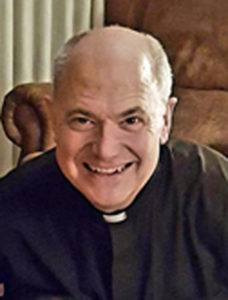 Do you ever feel that life is unfair? Though we understand that injustice and inequity exist, there is an underlying assumption that if we believe in God, or better yet get God on our side, then the scales of justice and fairness will somehow be tipped in our favor. God will intervene to set things right. The image we often carry of God is one of an all-powerful and grand fixer. But, if we listen carefully to Sacred Scripture and study faith tradition, this is not who God is at all. Our second reading this weekend gives us a great perspective to pursue. “Christ also suffered for you, leaving you an example that you should follow in his footsteps. He committed no sin and no deceit was found in his mouth.” If we look to the passion of Christ, we clearly see a God who does not eradicate or sidestep injustice and great suffering but embraces them. If the idea is to somehow get God to remove these painful stumbling blocks from our path, then we would have been given this as the example to follow. Instead, we have been brought through insults, unjust accusations, intense suffering, ridicule and death.
 Jesus kept himself intact as he went along the path of the cross. It was this anchored integrity, rooted in a relentless relationship he had with his Father that kept him from anger, bitterness, retaliation, defensiveness, and self-pity. His strong resolution to endure this pain brought him to the place where all pain empties into, the Resurrection. The abundant life Jesus desires us to have is our resurrected life! It is not the promise of an easy meal ticket through this earthly one but the glory of transformation and new life to come. This is where the Good Shepherd’s example leads us. It’s not about finding green and safe pastures here. Believing in Jesus as the Good Shepherd isn’t some form of spiritual “bubble wrap” we roll around ourselves to protect us from all of life’s evils and hardships. This is nowhere near the idea. It certainly was not how the original disciples saw things and the way their lives played out didn’t reflect a God who shielded them from all injury and harm. They encountered quite the opposite. But, they followed the example of their Good Shepherd.
 The Cathedral Council of Catholic Women and the Knights of Columbus Council #16126 are offering scholarships to students who are: