I find it hard to believe that we are now in the month of October. Time always moves forward and we are called to do the same, forward towards the Kingdom. Our Holy Father Pope Francis has designated October as an Extraordinary Mission Month. World Mission Sunday is always celebrated in October in the Church, but the Holy Father is calling us to give special attention all month to the Church’s missionary efforts around the world in proclaiming the Gospel and advancing the Kingdom of God. Our own Vicki Compton will have several items in the Weekly during the month of October highlighting the Church’s missionary activity.
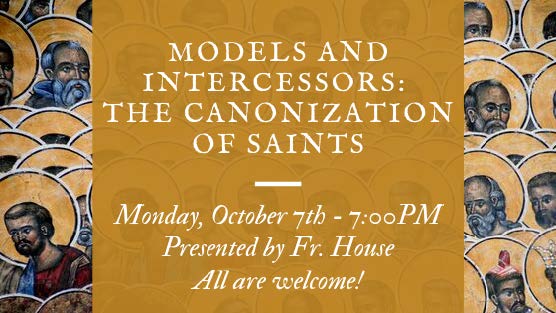
As October begins we are also kicking off another year of Adult Faith Formation starting this Monday evening at 7PM in the atrium. I will be presenting on the topic of the Church’s process for the canonization of saints, using our own Venerable Father Tolton’s cause as our case study. This was the topic for my thesis when I finished my license in canon law four years ago. This talk is also timed to coincide with the canonization of Cardinal John Henry Newman by Pope Francis on Sunday, October 13th. Father Rankin will be presenting on Cardinal Newman following his canonization. Please check the Weekly for upcoming dates, times, and topics for Adult Faith Formation.
As you may have seen in the Weekly, we have begun another course of preparation for the Rite of Christian Initiation of Adults (RCIA). Sometimes people want to join the faith and they are simply waiting to be invited. Might someone in your life be one of those people? It’s not too late!
In the area of faith formation, we have launched a new catechetical program for our youth and their families called Family of Faith. This new model is directly intended to help parents fulfill the responsibility that they were given at their child’s baptism to be their child’s first teacher in the faith. At the beginning of each month, one of the priests teaches the parents on a specific topic and the parents then teach that topic to their children. We also have an activity with all the families in the program each month. All adults are invited to the parent formation session at the beginning of each month. Again, times and topics can be found in the Weekly or by calling Vicki in the parish office.
At the end of the month we will kick off another Season of Stewardship when all of us will be invited to examine what we are offering to the Lord regarding our service, prayer, and treasure. At that time we will be a month away for our celebration of Thanksgiving, so it will be an appropriate opportunity for us to examine what our response to God is for the good things that he has done for us.
The weather now seems to give the indication that summer is indeed giving way to fall. As the leaves will begin to fall and the color of creation fade, we must always remember that this is a part of creation’s renewal which is always ongoing. The same is true for us with the grace of God; the Lord is always seeking to renew us. I invite all of us to seek those avenues and opportunities for God’s grace so that each of us, and as a parish family, might become more and more the people that the Lord is calling us to be. God bless you!
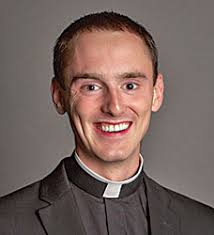
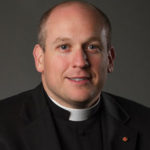
Father Christopher House is the Rector of the Cathedral and serves in various leadership roles within the diocesan curia, namely Chancellor and Vicar Judicial.
 “Holiness is the most attractive face of the Church,” Pope Francis says in his Apostolic Exhortation Gaudete et Exsultate (9). When the members of the Body of Christ live an authentic Christian life, they help build up the kingdom of God (CCC, 2044-2045). In my many travels to Mission lands, I met so many holy men and women, lay, Ordained and Religious who were building the Kingdom through large and small acts of love. I know a Bishop in Kenya who has built a medical school so that local men and women can be trained to provide healthcare to his impoverished people. I know a priest in India who despite writing books, hosting a television show, teaching at the seminary and pastoring a large parish plus 15 mission parishes, made time every Sunday morning to greet the homeless men and women at his gate and provide them each with a bit of money so they could buy breakfast. I met laypeople in Tanzania who gather monthly in someone’s home to read the Word of God, pray for each other and discuss ways of helping their neighbors who are in need. The first time I ever heard about human trafficking, modern day slavery, was from a Religious Sister in Michigan who had been working for years with other Sisters to raise awareness and provide relief to victims. Our local orders of Sisters, lay missioners and priests from our diocese have served or are serving in remote areas of Haiti, Tanzania, Brazil, Peru, Japan, El Salvador, on Native American Reservations and at the border bringing the hope and healing of Jesus Christ to our most vulnerable neighbors.
 If your parish is hoping to meet people where they are, then implementing a bereavement ministry program is a good starting point. I had the privilege of working in bereavement ministry for the Archdiocese of St. Louis, and saw the benefits such a ministry could have if done well. Here are five reasons to include bereavement ministry, or grief ministry, in your parish.
 If the only prayer you said was “thank you,” that would be enough. —Meister Eckhart
 My life is one of far greater riches than the rich man in today’s parable. Space-age wool, cotton, and polyester blends compose the clothes that I throw on every morning and the food I eat throughout the day is more abundant, nourishing, fresh, and appetizing than even the most sumptuous of meals that the un-identified “Dives” [“rich-man”] would have enjoyed. So how do I avoid his fate? A few take-aways immediately strike the attentive reader.
 Various polls in recent years have indicated the rise of “nones”, those declaring no religious affiliation whatsoever. This is particularly conspicuous among young people. It has been noted that these “nones” are often of two types:


 This past weekend I had dinner with one of my closest friends, meeting up with him at after a conference he was presenting at. It’s one of those friendships where we’ve seen each other at our best and our worst; one of those bonds where you can speak without words. I always had a second home with his family in Iowa. I stood up for him at his wedding, baptized two of his children, and I’m godfather to his middle son, Callum…you get the picture. In the course of dinner, sitting at a sidewalk table outside of the restaurant, there was a gentleman who appeared to be homeless as well as suffering from a form of mental illness. He was sitting down on the sidewalk about five or six feet from our table, talking to himself and smoking, but not causing any disturbance. My friend said we should move tables and I responded by asking him “what if that man is Jesus Christ?” My friend didn’t say anything to me but the look that he shot me clearly said “don’t try to play that card with me.” I smiled and laughed and we stayed at our table and the gentleman five or six feet from us moved on a few minutes later.
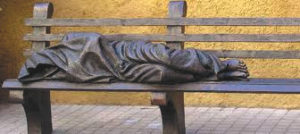 As Christians, we need to be conscious of separating problems from persons, because people should never be seen as problems. Behaviors may be problematic, physical, mental, emotional conditions may be problematic, attitudes may be problematic, but a person and their existence is never problematic. This confusion can be found at the root of the evil of abortion, that too many times pregnancy is seen only as a condition or a problem or a situation, rather than a woman who is carrying an unborn child where one or both may be facing issues, challenges, or difficulties. Another example is the epidemic of violence in society with guns or otherwise. I firmly believe that we cannot legislate a fix to this problem because, as a society, we have become masters at looking at people and denying/not seeing their personhood, their innate human dignity and as long as we are able to do that then the violence in our communities will only get worse.
 Does God want us to be happy?