Joann Lenn, parishioner, Cathedral; retired from AT&T. Her
commitment includes serving the sick at St. John’s Hospital,
helping in Cathedral Parish as eucharistic minister and
coordinating and serving funeral lunches.
Rose M. Lenn, parishioner, Cathedral; retired secretary. Her
commitment includes serving the sick at St. John’s Hospital,
helping in Cathedral Parish as eucharistic minister and
coordinating and serving funeral lunches.
Kathy Roe, parishioner, Cathedral; self-employed. Her
commitment includes welcoming the stranger, serving as lector,
responding to needs and surrendering her life to the Lord’s
service. She and her husband Dan have a daughter and a son.
Around the Parish
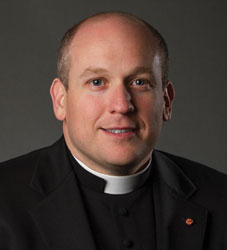 Congratulations to our students in our PSR program who are receiving the Sacrament of Confirmation this weekend! I wish to thank our teachers in the our PSR program for their dedication in teaching our young people the Faith. This is our last group of students to be fully initiated before the Cathedral Parish implements the restored order of the sacraments that you have read about in the Catholic Times and that was promulgated as a result of our Fourth Diocesan Synod. Our children will now be making their first celebration of Reconciliation in second grade and receiving Confirmation and their first Holy Communion in third grade.
 As you have read in previous letters, our own Father Stock will be leaving us at the end of June to become pastor of the parishes in Bearsdtown, Arenzville, and Virginia and Father Friedel will become the new chaplain at Sacred Heart-Griffin High School in addition to being parochial vicar here at the
 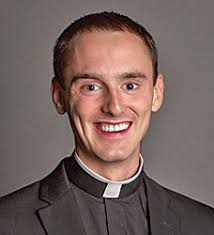 Cathedral. As Father Stock leaves us, we will welcome Father Dominic Rankin as our newest parochial vicar here at the Cathedral. Father Rankin will be coming to us from finishing advanced studies in marriage and family life in Rome. Father Rankin was ordained for our diocese in 2018. In addition to welcoming Father Rankin, we will also welcome another seminarian for the summer: Grant Wilson, who is a native of Jacksonville and finishing his second year of theological studies in Rome, will be with us for about six weeks from the beginning of July until mid-August. Grant will be present through the parish in various activities.
Other assignments to mention: Father Marty Smith, who served here from 2015-2017, has been appointed pastor of St. Francis Xavier Parish in Jerseyville and St. Patrick Parish in Grafton. Father Braden Maher, who served here from 2016-2018, has been appointed pastor of St. Charles Parish in Charleston and chaplain of the Newman Center at Eastern Illinois University. Last, but not least, our own Deacon David Beagles has been assigned to serve the parishes of St. Anthony in Effingham and Annunciation Parish in Shumway for the summer. Please pray for them and for all of our priests, deacons, and parishes who are in transition this summer.
Finally, with all of these changes, I wish to offer my thanks to you, the parishioners and friends of the Cathedral, for the love and support that you give to the men who come to train and serve here. Maybe we don’t get to hold on to them as long as we would like, but you make it so that, when they leave here, they are ready for the challenges ahead. All of the assignments that I have mentioned are good for us, our diocese, and the greater Church. Let us give thanks to God for these blessings.
I find it hard to believe that Memorial Day weekend is here, that next weekend marks the beginning of June, and 2019 will soon be half over! In the midst of the flying-by of time, please take a moment this weekend to offer a prayer for those who have given their lives in the service of our nation. May the Lord give us the grace to be the people that we aspire to be: one nation, under God. May God bless you and yours!
 Father Christopher House is the Rector of the Cathedral and serves in various leadership roles within the diocesan curia, namely Chancellor and Vicar Judicial.
“ At the Offertory… Therefore”
 On Friday, a seminarian I know texted me a photo of a page from Ven. Archbishop Fulton Sheen’s A Priest Is Not His Own, and said beneath it, “I thought you’d like that.”
My God yes.
Sheen was describing to priests, as celebrants of the Mass, the meaning of the Offertory. The offering of gifts of bread, wine, and alms—“my sacrifice and yours.” How eloquently he expressed the mystery of a ritual action that is reduced, in most people’s minds, to fishing for money or dropping envelopes in the basket. Or maybe checking the watch to where we stand at halftime.
Do the faithful have any idea what they are really transacting in? Are saying “Amen” to? Giving over? Such ignorance profoundly weakens the Offering’s potential effect to change lives and transform the world. Literally. Annie Dillard captured my sentiments in a passage I seem to quote every other week:
Does any-one have the foggiest idea what sort of power we so blithely invoke? Or, as I suspect, does no one believe a word of it? The churches are children playing on the floor with their chemistry sets, mixing up a batch of TNT to kill a Sunday morning. It is madness to wear ladies’ straw hats and velvet hats to church; we should all be wearing crash helmets. Ushers should issue life preservers and signal flares; they should lash us to our pews. For the sleeping god may wake some day and take offense, or the waking god may draw us out to where we can never return.

It’s why I get concerned when I see programs or schemes that over-focus on what people should “get out of Mass” by reducing Massconsumption to emotional satisfaction or learning outcomes. By doing this, we strip liturgy of its vast, mysterious, transcendent, and terrifying power. The late Fr. Aidan Kavanagh makes this point: “Although the liturgy does indeed ‘teach,’ it teaches as any other ritual does—experientially, non-discursively, richly, ambiguously, and elementally. Liturgy, like the feast, exists not to educate but to seduce people into participating in common activity of the highest order, where one is freed to learn things which cannot be taught.”
Okay, so here’s a nutty stream-of-consciousness scenario that runs through my head as I write:
Jerry: “Hey, what did you get out of Mass today, Tom?” Tom: “Oh, well, hmm, let me think. Well, you know when they pass the collection plate around and then bring the gifts up?”
Jerry: “Sure, what about it? Did you realize you had an empty wallet when the basket came by?”
Tom: “Ha! No, well, it was a little different. I found myself handing over to God’s uncreated Fire my body and soul; all of my prayers, works, joys, and sufferings; my livelihood; my sins and failings; my marriage and family and friends, even strangers and enemies; the living and the dead; angels and demons; all of time and space. I mean, the whole freakin’ universe! But that was a little scary, because I realized I was giving absolutely everything back, handing it all over completely to God’s control and will. It was like saying, ‘Okay, it’s all yours now. All of it. Dispose of it wholly according to your will.’ I was unsettled at what I was agreeing to.
Jerry: “Yikes.”
Tom: “Yeah, well, and after I did all of that . . . oh, wait, I forgot. As I handed all this over, it all somehow got tangled up with everyone-from-everywhere else’s ‘stuff.’ I was like, ‘Wait, that’s my stuff, not theirs!’ But he wouldn’t listen.”
“Okay, so then all that stuff got loaded onto the altar, and then got totally wrecked into the bread and wine we’d brought up, by those words, ‘This is my . . . given up.’ Those are hard words to hear, but it was too late. Then the eternal Spirit fell down on all of it, like free-falling Fire, and burned it up into the Heart of the risen Body of Jesus. It was all like a raging furnace coming out of the now-ruined Bread and Wine. I could hardly breathe.
“Then Jesus, Master Craftsman that he is, started building, out of all of our tangled-up burning stuff, a whole new section of the new creation. Which, I heard said, never ever passes away. And it was amazing; he built it up in a way I never would have imagined doing. Incredibly beautiful, but very strangely new. Everything.
“Okay, then Jesus, after building all this at his altar on high, carried this whole new world he’d made back down toward us, borne on the music of the fiery Spirit. Then he, somehow in that ruined Bread and Wine, came wildly running over toward us out of the sanctuary. But here’s the wildest thing of all. He totally ruined me by commanding me: ‘Eat, drink.’ Eat, drink fire? Unworthy me? Terrifying! But he gave me courage. And now, my God . . . I have eternal life.
“I was undone. Speechless. Unable to move. It was all superintense, more Real than reality. And then I was totally overwhelmed with a gratitude I’ve never felt before. Ever before.
Jerry: “That’s all?”
Tom: “Oh no! There’s so much more. But that’s what comes to mind. Oh no, wait, I forgot! The priest said something at the end, like ‘Go! Be sent!’ But when I looked up at him, he wasn’t there, only Christ, but terrifying in Majesty. He was commanding me: ‘Go! But this time, to ruin our ruined world,’ just like I’d seen done at Mass. And then he said, ‘Bring those ruined ruins back to me, to do this all again next week.’
“I mean, what?
Oh man, I ran! I’ve been running ever since. I just can’t stop. It’s why I’m totally out of breath now and stammering . . .”
Jerry: “Whoa.”
Tom: “Yeah, I know. Who knew? . . .”
Dr. Tom Neal presently serves as Academic Dean and Professor of Spiritual Theology at Notre Dame Seminary in New Orleans, Louisiana. He has worked for twenty years in adult catechesis, retreat ministry and teaching theology in various contexts trying to make present for others the “Word made fresh.” Tom received a Masters in Systematic Theology from Mount St. Mary’s University and a PhD in Religion at Florida State University.
Everyday Stewardship
 I often lead group prayer with similar words: “Give us the wisdom to know Your will for our lives and the courage to follow it as we seek to make our community a clearer reflection of the Kingdom of God.” The words acknowledge that we need to be about God’s will, not our own, and in that journey, we will bear greater witness to the transforming power of Jesus Christ.
We talk about how we are called to live a stewardship way of life and that we have been given many good gifts, but it is never truly about us. We are never the main thing. In the same manner, it is never really about our parish. Our combined stewardship may lead to many fruits, like an increased offertory or more vibrancy in parish life. However, it is always about the Kingdom of God and the King, Jesus Christ.
Through our stewardship, we allow our parish community to shine like a city on a hill for others to see and then be drawn toward Jesus Christ. It is about leading people to heaven. Our actions of stewardship do not point toward us but instead to the one who calls us to this life. Our constant prayer needs to be that we always seek to discern God’s will and follow it instead of our own. By doing that, we can transform our own lives, our parish communities, and then the world around us.
-Tracy Earl Welliver, MTS
Liturgical Publications, Inc. Used with permission.
The Angelus
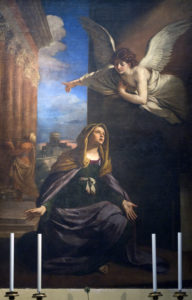 The Angel of the Lord declared unto Mary.
R. And she conceived of the Holy Spirit.
Hail Mary, full of grace,
The Lord is with Thee;
Blessed art thou among women,
And blessed is the fruit of thy womb,
Jesus.
Holy Mary, Mother of God,
Pray for us sinners,
Now and at the hour of our death. Amen
V. Behold the handmaid of the Lord.
R. Be it done unto me according to thy word.
Hail Mary, etc.
V. And the Word was made Flesh.
R. And dwelt among us.
Hail Mary, etc.
V. Pray for us, O holy Mother of God.
R. That we may be made worthy of the
promises of Christ.
LET US PRAY
Pour forth, we beseech Thee, O Lord, Thy
grace into our hearts, that we to whom the
Incarnation of Christ Thy Son was made
known by the message of an angel, may by
His Passion and Cross be brought to the glory of His
Resurrection. Through the same Christ Our Lord. Amen.
This wonderful prayer evolved from a recitation of three Hail Mary’s following an evening bell around the 12th century to its present form (with morning and midday recitations) in the 16th century.
When prayed in a group setting a leader recites the verses and everyone recites both the responses and the Hail Mary’s in between each verse, as shown above.
Although the Angelus has been traditionally said three times daily, at 6 am, noon and 6 pm, you can pray it at anytime! It is still accompanied by the ringing of a bell (the Angelus bell) in some places such as Vatican City and parts of Germany and Ireland. The Regina Coeli prayer (which may also be sung as a hymn) replaces the Angelus during the Easter season.
This text is an excerpt from the original article appearing on the website: https://www.ourcatholicprayers.com/theangelus.html.
During the month of May, we have been sharing Marian prayers to honor Mary. We hope you will consider praying with us for the intentions of our Parish family.
How to Share Your Faith with Friends and Family Who Lost Theirs
 “Jesus answered and said to her, ‘Everyone who drinks this water will be thirsty again; but whoever drinks the water I shall give will never thirst; the water I shall give will become in him a spring of water welling up to eternal life.’ The woman said to him, ‘Sir, give me this water, so that I may not be thirsty or have to keep coming here to draw water.’ – John 4:13-15
Perhaps you have them in your life just as I do: loved ones who are good people, but who either by choice or by life circumstances don’t share your Catholic faith. And perhaps like me, you’ve had interesting moments with these family members or friends when they asked about the Church or the Faith in general.
Whether because of mainstream media coverage, or simply to make conversation with me, many of my friends who have been away from the Church (or who never knew her to begin with) are suddenly asking questions. Over the past several months, I’ve had my spiritual antenna raised for such encounters where the movements of the Holy Spirit create a moment of opportunity to minister with love.

I sense in these fleeting conversations the opening of a window through which great grace can pass. But I also often fear that something I wrongly say or do in these interactions will again slam shut that window and further distance my loved one from the power of Christ’s embrace.
Look for Those “Well Moments”
There is not an easy “one size fits all” approach to these encounters. You probably know the pain of having someone you love reject the Creed with which they were raised. The accompanying pain tears at our hearts and causes us to secondguess ourselves, and to wonder what we might have done differently. We often wrongly judge—both our fallen away brothers and sisters, and ourselves.
Lately, I’ve been trying to train myself to recognize what I’ve started calling these “well moments”. We know from reading John’s fourth chapter that Jesus himself had an opportunity to meet a Samaritan woman who was not only popularly considered a sinner, but who also was clearly seeking some greater truth in her own life.
Jesus didn’t choose to begin this encounter from a position of judgment or condemnation, but rather in a dialogue. He gently and lovingly led the woman to the truth she was so desperately seeking. John 4:5-42, gives us a model, an object lesson of sorts, for our own “well moments.”
We Need to Walk
Pope Francis broke open the key component of Christ’s encounter with the Samaritan Woman: “When a Samaritan woman came to draw water, Jesus said to her, ‘Will you give me a drink?’
In this way, the pope explained, Jesus cut across the barriers of hostility that existed between Jews and Samaritans, crushing the prejudice that existed in relating to women.
The pope said that Jesus’ simple request signals the beginning of an open dialogue, through which, with great delicacy, he entered the interior world of a person to whom, according to social convention, he should not even have spoken to.
“But this is exactly what Jesus does! Jesus is not afraid. When Jesus sees a person He goes towards that person because He is filled with love. He loves all of us. He does not stop before anyone because of prejudice,” Pope Francis said.
He went on to explain that Jesus does not judge, but acknowledges each person making him or her feel considered and recognized, and stimulating in that person the wish to go beyond their daily “routine”.
As we prepare for such encounters in our own lives—those times when we have the opportunity to simply and lovingly journey alongside someone as they move towards Jesus Christ—we need to remember to attend to our own spiritual thirst as well. A life lived immersed in Scripture and the sacraments helps prepare our hearts and minds for “well moments.”
Together let’s meet these opportunities fully prepared to let God work through us. Let’s open a dialogue, set judgment aside and “be not afraid” the next time we find ourselves at the well.
Lisa M. Hendey is the Founder of CatholicMom.com and the author of The Grace of Yes and A Book of Saints for Catholic Moms. Lisa writes in multiple Catholic venues and maintains an active speaking calendar, presenting on faith, family, technology and evangelization topics. Visit her at www.LisaHendey.com. This article was first published on The Great Adventure Blog June 26, 2014.
Moving from Maintenance to Mission
In Evangelii Gaudium, Pope Francis exclaims: “In our day Jesus’ command to ‘go and make disciples’ echoes in the changing scenarios and ever new challenges to the Church’s mission of evangelization, and all of us are called to take part in this new missionary ‘going forth’. Each Christian and every community must discern the path that the Lord points out, but all of us are asked to obey his call to go forth from our own comfort zone in order to reach all the ‘peripheries’ in need of the light of the Gospel.”
 How will we respond at Cathedral? How about being part of the Alpha ministry? Alpha is a perfect place to get acquainted with others in and outside of the parish around a shared meal and discussion. The ministry is one tool we are using to move our parish from maintenance to Mission. Alpha transmits the faith through initial proclamation, in language any person, even unchurched, can understand and encourages us to go off the church campus to invite others to consider Christianity.
Think about the many ways you can participate in the life of the parishserving at Mass, joining a Bible Study or Book Club, joining the Knights of Columbus or helping the Cathedral Council of Catholic Women (CCCW). Increased opportunities both during the day and in the evenings for adult faith formation is helping parishioners and guests to continue to be formed in the faith. All of this missionary movement is to help people become intentional disciples of Jesus Christ. And we will continue to seek ways to form and accompany parishioners as they discern their unique way to make Christ known in the world.
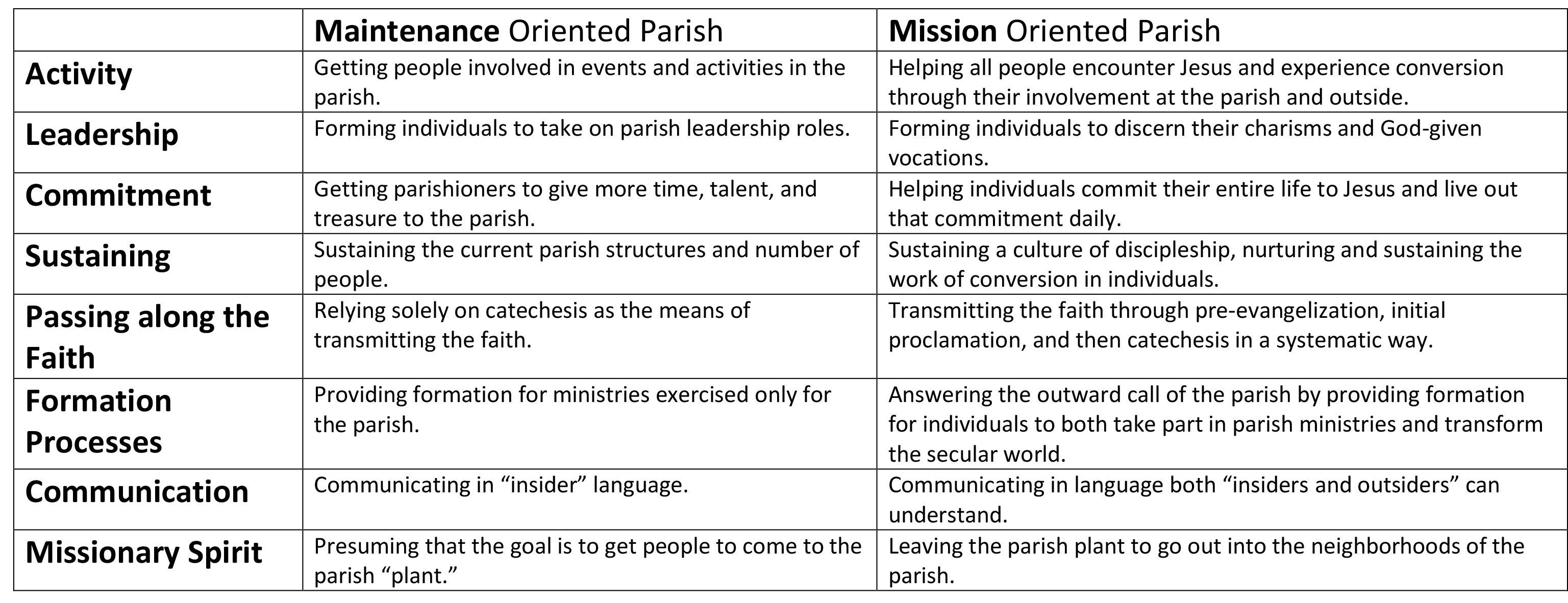
The list below outlines the differences between a parish in maintenance mode and one that is in mission mode. Bobby Vidal, who is the Director of Evangelization and Lay Formation at St. Kateri Tekakwitha Church in Santa Clarita, California wrote the first seven and the eighth was provided by Sherry Weddell, author of the book “Becoming a Parish of Intentional Disciples.”
Reflect on these differences with us. When ready, think about your answer to this question: How will you continue to help the Cathedral move from maintenance to mission?
If you are interested in any of our ministries at the Cathedral or for more information about the next session of Alpha starting on June 10th, please reach out to Vicki Compton at [email protected] or 522-3342.
Go and Make Disciples on Facebook: A Guide to Sharing Your Faith on Social Media
 The quote famously attributed to Saint Francis goes, “Preach the Gospel at all times. Use words if necessary.” These days, when so much of our communication takes place on keyboards and screens, words truly are necessary for sharing our faith online. In my own social media presence, I’ve struggled to strike the right balance of piety and down-to-earth humor, inner peace and occasional doubt that will make my Catholic faith relatable to my friends and followers who aren’t believers. So, how do we choose what to say in our posts, comments, and updates that attracts others to the Gospel? Here are a few do’s and don’ts I’ve learned along the way.
Do: Make it personal
I love to share what God is doing in my life. When I do so on Facebook or Twitter, I have the freedom to speak from personal experience without feeling preachy—since, after all, I’m simply relating my own stories. I’ve posted many times about how God is leading me, like when I started volunteering at a crisis pregnancy center, or the many things I’m thankful for, like my recent 10-year anniversary of becoming Catholic. Personal testimony is compelling. Both in my “real” life and in my relationships on social media, I’ve had friends reach out with questions about Christianity after I’ve shared openly about my spirituality. When others hear stories about your walk with God, it may intrigue them enough to turn to you when they’re seeking answers.
Do: Make it real
On social media, we often try to present an image of perfection in order to show we’re “good” Christians. I’d be embarrassed to admit to hundreds of people that my marriage has hit a rough patch or that it’s a weekly struggle to get my kids to go to Mass without a meltdown. (In fact, it’s during these times that I often post a cheery status update to garner likes that will make me feel better.) But to make our faith appealing, we don’t have to post the status updates of a saint. Your friends know you’re human. Let’s try to keep it real by mentioning authentic struggles alongside the highlight reel. I recently shared a podcast episode that featured a painful story from my past, and it actually felt really good to get so honest. Jesus himself said, “It is not the healthy who need a doctor, but the sick. I have not come to call the righteous, but sinners” (Mark 2:17).
Do: Make it an invitation
It’s the final, critical step of evangelism: Making a concrete offer for others to take a step toward Christ. Could you tell your Facebook friends about a service opportunity they could join at your church, or extend an open invitation to Mass to your Instagram followers? (Since it’s all online, at least you won’t experience the awkwardness of rejection in person.) When my husband and I lead music for the Stations of the Cross at our church, I like to put the word out on social media. Not surprisingly, we’ve had far more friends show up to this particular church event than get in touch out of the blue.
Do: Speak with charity and kindness
It stings when people say hurtful or uninformed things about our religion on social media. But while it’s important to stand up for our convictions, we’re far more likely to win over online friends to Christ with gentle words than with a battering ram of righteous anger. My hot-button issue online? The right to life. The minute I see Facebook friends on a tirade against the pro-life movement, I want to rip their arguments to shreds in ALL CAPS. But when I can stay a bit more mindful, I try instead to lead with open-ended questions that get to the bottom of the other person’s feelings or beliefs. (Or, when possible, offer an invitation to discuss in person.) A show of compassion and open-mindedness may go further than you expect. I recently had an agnostic pro-choice friend share a Catholic article I had written on her own Facebook page—an action I believe was fueled by the mutual respect we’d shown each other online.
Don’t: Get too academic
As much as we Catholics may love to dig into the finer points of transubstantiation or the difference between venial and mortal sin, most people are not won over to the Gospel by theological treatises. If your social media posts delve too often into a religious academic discussion, your unchurched (and possibly even your churched) friends’ eyes will glaze over. I know I tend to skip over lengthy back-and-forth theological discussions when I see them online. The comments so often seem self-important, and the highbrow religious terminology is a turn-off. The unfortunate reality is that many people already have a preconceived notion of the Catholic Church as an esoteric institution. Instead of feeding that stereotype online, maybe it’s time to present our faith on a more relatable level—and keep the discussions of dogma to a minimum.
Don’t: Be (only) religious
My relationship with Jesus is the bedrock of my life, but it’s not the only subject I find interesting. And, quite honestly, when religious friends of mine post nothing but saint pictures and Bible verses, even I tend to tune them out. People want to see you’re a real, approachable person who does more than pray 24/7. Showing you have a sense of humor and a life outside of church might convince others that they, too, could embrace faith as a part of their journey. On social media, I especially love pointing out things that strike me as hilarious, like weird things my kids say, or the time my church’s song sheet made a super funny typo. After all, social media presents an opportunity to share all of our lives with others, including—but not limited to—our faith.
Sarah Garone is a Catholic wife, mom, nutritionist, food blogger, and freelance writer in Mesa, Arizona. When she’s not cooking up something healthy and delicious in the kitchen (or cooking up ideas for writing), you can find her sharing recipes and reflections at “A Love Letter to Food.”
Everyday Stewardship
I was recently reading an article about the real aspects of true love. The psychologist writing the piece said that many people hide behind the words “I love you.” They can start believing that if they say it enough times, it simply becomes true.
Jesus claimed that the world would know his disciples by the fact that they loved one another. In the Church, we speak of loving one another quite frequently. I hope that someone can tell that I am a disciple of Jesus by the way I love others. However, that hope is something I have to keep in the center of my mind because I fear too often that I speak more of love than act out of love.
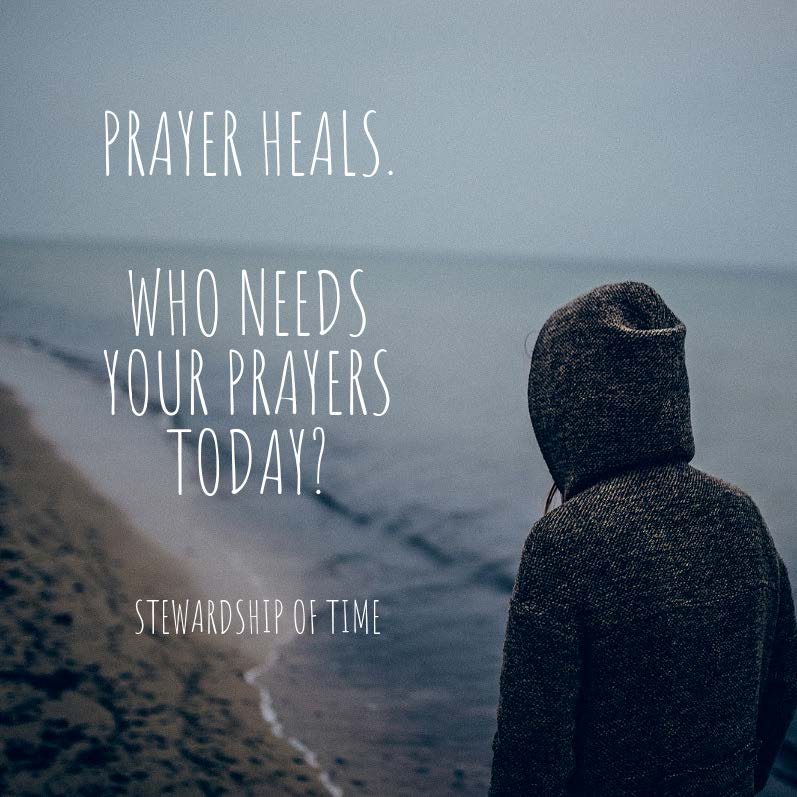 As Christians, we can find ourselves hiding behind our words. History, unfortunately, has shown us that our witness of action has not always been profound enough. The world will surely know whom it is we serve if we love like Jesus, we act like Jesus, and we serve others like Jesus. Our stewardship will bear witness to the transforming power of Jesus Christ, and we will bring others to him. Our love will be an instrument of our evangelization. Our words will become true, not because we said them enough, but because they are true.
Tracy Earl Welliver is a Catholic author, speaker, consultant, and Gallup-certified Strengths coach with over 25 years experience in parish ministry. He is currently the Director of Parish Community and Engagement for LPI, having previously served for 22 years as Pastoral Associate at Saint Pius X Catholic Church in Greensboro, NC. Tracy also currently sits on the ICSC Board of Directors. He has a BA in theology from DeSales University and a MTS from Duke Divinity School. Tracy has been married to his wife, Mariann, for 27 years and they have 3 children.
An Icon of the Good Shepherd
For this Fourth Sunday of Easter, Good Shepherd Sunday, we are given the image of the Good Shepherd from John’s Gospel. This image of the Lord is familiar to most of us and has been the subject of countless pieces of art. There is always the danger of sentimentality with the image of the Good Shepherd, the danger of creating an unreal image. In art, the Good Shepherd is always presented as clean, tidy, serene, but is that really a correct image of the Good Shepherd?
This past Tuesday, May 7th, a man by the name of Jean Vanier died in France at the age of 90. Some of you may have heard of him, most probably have not. He grew up the son of the governor-general of Canada when our northern neighbors were still not fully independent of the British Empire. He served in both the British and Canadian navies and considered the priesthood for a time before finding a unique calling from the Lord in his mid-30s.
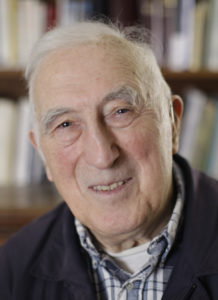 In the early 1960s, following a visit to his spiritual director in France, and at his urging, Jean started visiting asylums in France In seeing the horror of the conditions that many lived in and the inhumanity that they were subjected to on a daily basis in inadequate and underfunded institutions, he felt called to act. In beginning his work with the mentally and physically disabled, Jean said that he found those he served to be a “source of life and truth, if we welcome them and put ourselves in their service.” What started in a broken down home in north-east France turned into what today is known as L’Arche International with 154 communities around the world in 38 countries in the service of men and women with physical and mental disabilities. The community’s name comes from the French word for “ark,” specifically Noah’s Ark, which served as a refuge for Noah and his family amidst the destruction of the world.
Jean noted “as we share our lives with the powerless, we are obliged to leave behind our theories of the world, our dreams, and our beautiful thoughts about God…to be grounded in a reality that can be quite harsh.” In speaking of the value of serving those in his community, he said “when those engrained in a culture of winning and of individual success really meet them, and enter into friendship with them, something amazing and wonderful happens. They too are opened up to love and even to God. They are changed at a very deep level. They are transformed and become more fundamentally human.”
For me, Jean Vanier was a living icon of Christ the Good Shepherd, seeking out those whom society saw as less than desirable, and bringing true Christian care and compassion to them.
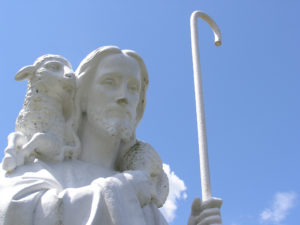
cemetery.
Christ the Good Shepherd is not a sanitized figure in art but our loving savior who enters into the messiness of our lives and the brokenne ss of our sinfulness, to bring us back to life and love with God. And he invites us to do the same, to bring his goodness, love, and mercy to the broken, the vulnerable, and to societies “undesirables;” to bring anyone and everyone to God by our authentic living out of the Gospel.
To learn more about Jean Vanier and L’Arche International, you can visit L’Arche International’s website at larche.org and you can find the article that I read on May 7th about his death in the Washington Post.
Father Christopher House is the Rector of the Cathedral and serves in various roles within the diocesan curia, namely Chancellor and Vicar Judicial.