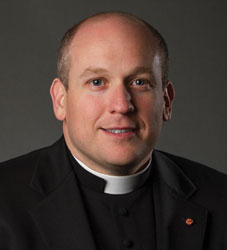
 Congratulations to our students in our PSR program who are receiving the Sacrament of Confirmation this weekend! I wish to thank our teachers in the our PSR program for their dedication in teaching our young people the Faith. This is our last group of students to be fully initiated before the Cathedral Parish implements the restored order of the sacraments that you have read about in the Catholic Times and that was promulgated as a result of our Fourth Diocesan Synod. Our children will now be making their first celebration of Reconciliation in second grade and receiving Confirmation and their first Holy Communion in third grade.
 As you have read in previous letters, our own Father Stock will be leaving us at the end of June to become pastor of the parishes in Bearsdtown, Arenzville, and Virginia and Father Friedel will become the new chaplain at Sacred Heart-Griffin High School in addition to being parochial vicar here at the
 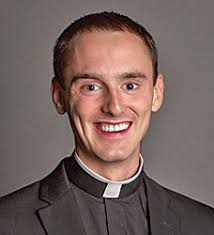 Cathedral. As Father Stock leaves us, we will welcome Father Dominic Rankin as our newest parochial vicar here at the Cathedral. Father Rankin will be coming to us from finishing advanced studies in marriage and family life in Rome. Father Rankin was ordained for our diocese in 2018. In addition to welcoming Father Rankin, we will also welcome another seminarian for the summer: Grant Wilson, who is a native of Jacksonville and finishing his second year of theological studies in Rome, will be with us for about six weeks from the beginning of July until mid-August. Grant will be present through the parish in various activities.
Other assignments to mention: Father Marty Smith, who served here from 2015-2017, has been appointed pastor of St. Francis Xavier Parish in Jerseyville and St. Patrick Parish in Grafton. Father Braden Maher, who served here from 2016-2018, has been appointed pastor of St. Charles Parish in Charleston and chaplain of the Newman Center at Eastern Illinois University. Last, but not least, our own Deacon David Beagles has been assigned to serve the parishes of St. Anthony in Effingham and Annunciation Parish in Shumway for the summer. Please pray for them and for all of our priests, deacons, and parishes who are in transition this summer.
Finally, with all of these changes, I wish to offer my thanks to you, the parishioners and friends of the Cathedral, for the love and support that you give to the men who come to train and serve here. Maybe we don’t get to hold on to them as long as we would like, but you make it so that, when they leave here, they are ready for the challenges ahead. All of the assignments that I have mentioned are good for us, our diocese, and the greater Church. Let us give thanks to God for these blessings.
I find it hard to believe that Memorial Day weekend is here, that next weekend marks the beginning of June, and 2019 will soon be half over! In the midst of the flying-by of time, please take a moment this weekend to offer a prayer for those who have given their lives in the service of our nation. May the Lord give us the grace to be the people that we aspire to be: one nation, under God. May God bless you and yours!
 Father Christopher House is the Rector of the Cathedral and serves in various leadership roles within the diocesan curia, namely Chancellor and Vicar Judicial.
 On Friday, a seminarian I know texted me a photo of a page from Ven. Archbishop Fulton Sheen’s A Priest Is Not His Own, and said beneath it, “I thought you’d like that.”
 I often lead group prayer with similar words: “Give us the wisdom to know Your will for our lives and the courage to follow it as we seek to make our community a clearer reflection of the Kingdom of God.” The words acknowledge that we need to be about God’s will, not our own, and in that journey, we will bear greater witness to the transforming power of Jesus Christ.
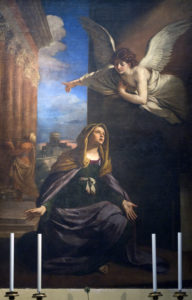 The Angel of the Lord declared unto Mary.
 “Jesus answered and said to her, ‘Everyone who drinks this water will be thirsty again; but whoever drinks the water I shall give will never thirst; the water I shall give will become in him a spring of water welling up to eternal life.’ The woman said to him, ‘Sir, give me this water, so that I may not be thirsty or have to keep coming here to draw water.’ – John 4:13-15
 How will we respond at Cathedral? How about being part of the Alpha ministry? Alpha is a perfect place to get acquainted with others in and outside of the parish around a shared meal and discussion. The ministry is one tool we are using to move our parish from maintenance to Mission. Alpha transmits the faith through initial proclamation, in language any person, even unchurched, can understand and encourages us to go off the church campus to invite others to consider Christianity.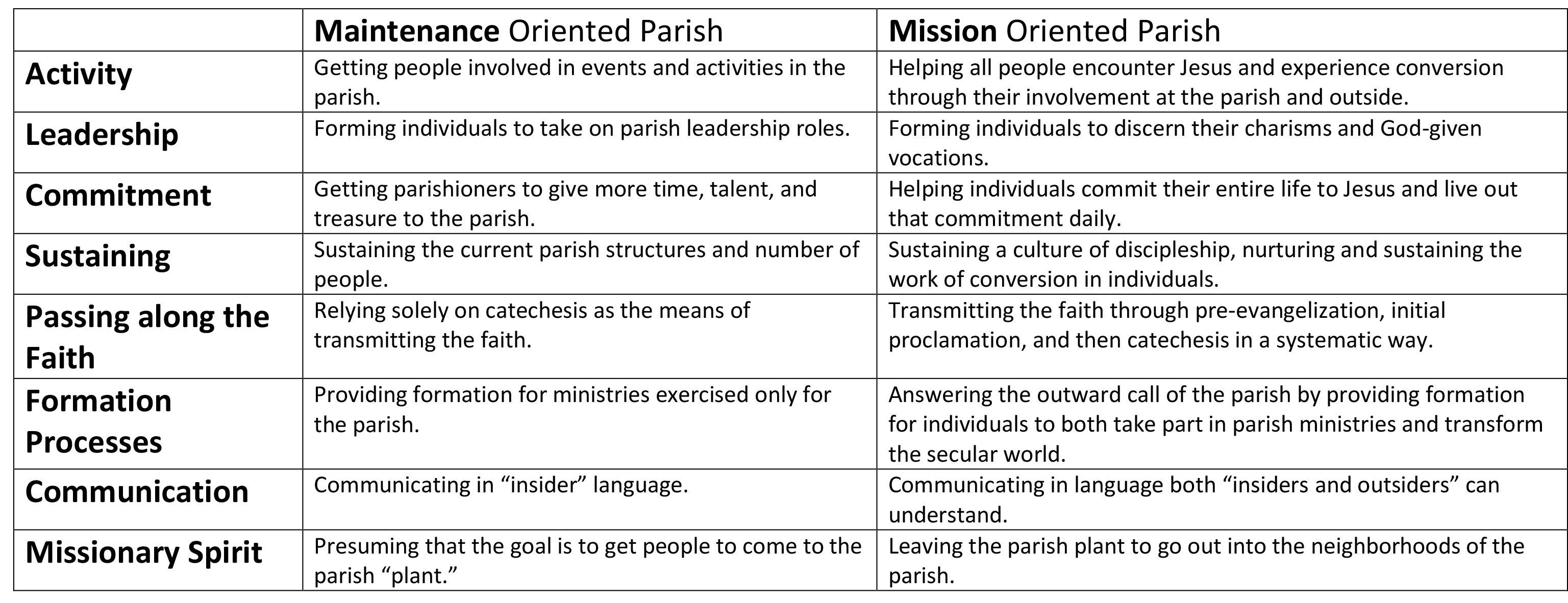
 The quote famously attributed to Saint Francis goes, “Preach the Gospel at all times. Use words if necessary.” These days, when so much of our communication takes place on keyboards and screens, words truly are necessary for sharing our faith online. In my own social media presence, I’ve struggled to strike the right balance of piety and down-to-earth humor, inner peace and occasional doubt that will make my Catholic faith relatable to my friends and followers who aren’t believers. So, how do we choose what to say in our posts, comments, and updates that attracts others to the Gospel? Here are a few do’s and don’ts I’ve learned along the way.
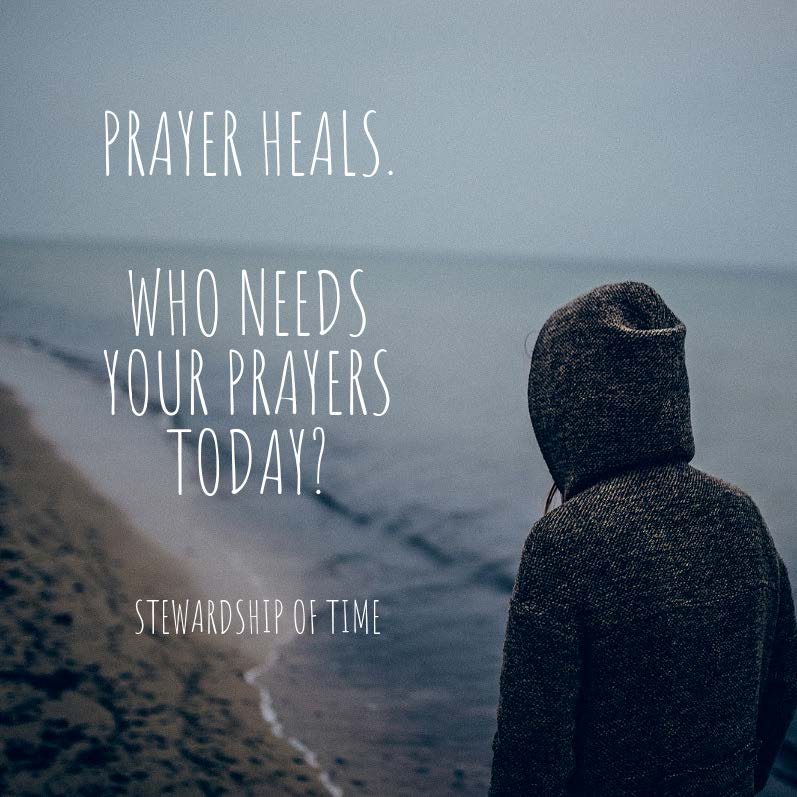 As Christians, we can find ourselves hiding behind our words. History, unfortunately, has shown us that our witness of action has not always been profound enough. The world will surely know whom it is we serve if we love like Jesus, we act like Jesus, and we serve others like Jesus. Our stewardship will bear witness to the transforming power of Jesus Christ, and we will bring others to him. Our love will be an instrument of our evangelization. Our words will become true, not because we said them enough, but because they are true.
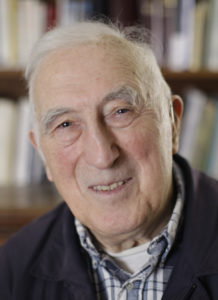 In the early 1960s, following a visit to his spiritual director in France, and at his urging, Jean started visiting asylums in France In seeing the horror of the conditions that many lived in and the inhumanity that they were subjected to on a daily basis in inadequate and underfunded institutions, he felt called to act. In beginning his work with the mentally and physically disabled, Jean said that he found those he served to be a “source of life and truth, if we welcome them and put ourselves in their service.” What started in a broken down home in north-east France turned into what today is known as L’Arche International with 154 communities around the world in 38 countries in the service of men and women with physical and mental disabilities. The community’s name comes from the French word for “ark,” specifically Noah’s Ark, which served as a refuge for Noah and his family amidst the destruction of the world.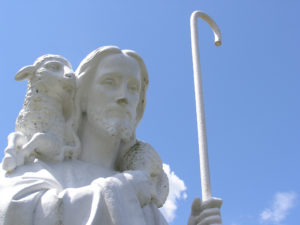
 I’ve always been a sucker for some good slapstick humor (growing up on Ace Ventura and Wayne’s World), and Wreck-it Ralph has been a welcome addition to our children’s movie library.
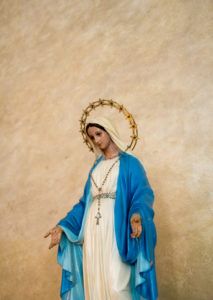 Scripture contains this prayer of Mary’s joy and wonder at her role in the mystery of the Incarnation.