 A few weeks ago, thirty-seven of us on the Cathedral pilgrimage to the Holy Land were able to visit Capernaum on the north shore of the Sea of Galilee. Capernaum was the home town of St. Peter and St. Andrew and became an adopted home of Jesus. We were blessed to stand in the ruins of an ancient church built on the foundation of Capernaum’s ancient synagogue. It was in this synagogue that Jesus gave one of his most famous teachings which is found in the sixth chapter of John’s Gospel and known as The Bread of Life Discourse. Jesus repeats himself several times in this discourse, commanding us to feed on him, to literally eat his flesh and drink his blood. This is not figurative language; this is John’s exposition on the Eucharist.
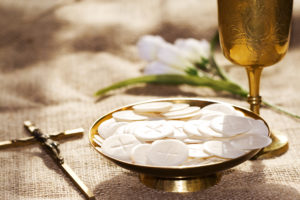
This weekend we celebrate the feast formally titled the Solemnity of the Body and Blood of Christ, but popularly known as Corpus Christi. Every time the Church gathers to celebrate the Mass, the Eucharist, which is the body, blood, soul, and divinity of our Lord, is at the center of our worship. We must avoid the danger of growing lax in our reverence and awe due to our familiarity with this great and wonderful sacrament, which is one reason why the Church dedicates a particular day of solemnity to focus solely on this mystery. The Eucharist is the life source of the Church, the ultimate manifestation of Christ’s presence among us, and it has been the strength of the faithful for the Church’s entire history.
It is not a sign or symbol, because a sign or symbol points to another reality; the Eucharist is the reality of Jesus’s real presence among us.
In this Sunday’s Gospel, Jesus’s feeding of the five-thousand is recounted for us which happened at another site a few miles from Capernaum called Tabgha and that the pilgrims were able to visit The transformation of those five loaves and two fish, meager as they were, reminds us that our simple gifts of bread and wine, when changed by the power of the Holy Spirit, become something new and wonderful in the Eucharist. In the Church of the Multiplication at Tabgha, there is a famous mosaic on the floor of two fish but only four loaves. The absence of the fifth loaf in the mosaic invites us to raise our eyes to the Blessed Sacrament present either on the altar or the tabernacle and to see that it is Jesus who is the true bread who continually comes down from heaven in the Eucharist.
This past winter, Father Stock offered a three-part series on the 20th century American Catholic writer Flannery O’Connor. Amongst her writings is a letter where Flannery recounted being invited to a dinner party and feeling out of place in a group of she termed “intellectuals.” She went on to say that she said nothing all night until the conversation turned to the Church and the Eucharist and that her hostess talked about that, even though she had left the practice of the faith, she still thought that the Eucharist was a wonderful “symbol.” Having heard enough, Flannery recounted: I then said, in a very shaky voice, ‘Well, if it’s a symbol, to hell with it.’ That was all the defense I was capable of but I realize now that this is all I will ever be able to say about it, outside of a story, except that it is the center of existence for me; all the rest of life is expendable.
May we have the same grace that Flannery O’Connor did to recognize just how vital the Eucharist is for us. The Eucharist has been the strength of martyrs, it has comforted the faithful over the centuries in the face of adversity, it is the source and summit of our life of faith, and the remedy for our mortality that will lead us to everlasting life. May we always approach the altar to receive this most precious gift with worthy hearts and lives.
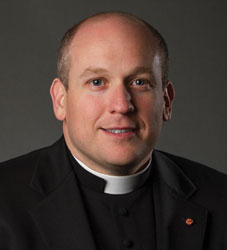
Father Christopher House is the Rector of the Cathedral and serves in various leadership roles within the diocesan curia, namely Chancellor and Vicar Judicial.
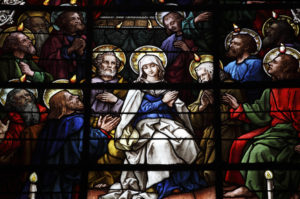 Today, we, the living stones of the Church, claimed by Christ in baptism and anointed with the Holy Spirit through confirmation, are called to carry on this mission begun by the Apostles some 2,000 years ago. We who profess the name of Christ are his disciples because we have come to believe in him, but our discipleship must be transformed into apostleship. The word apostle means “one who is sent.” The Apostles were the first to be sent but we are called to continue their mission. On this Pentecost Sunday and always, let us open our hearts to the gift of the Holy Spirit who continues to guide the Church. Let us cooperate with the grace of the Spirit that seeks to make us witnesses of the crucified and risen Lord so that through our lives others may come to know and believe in the Lord Jesus.
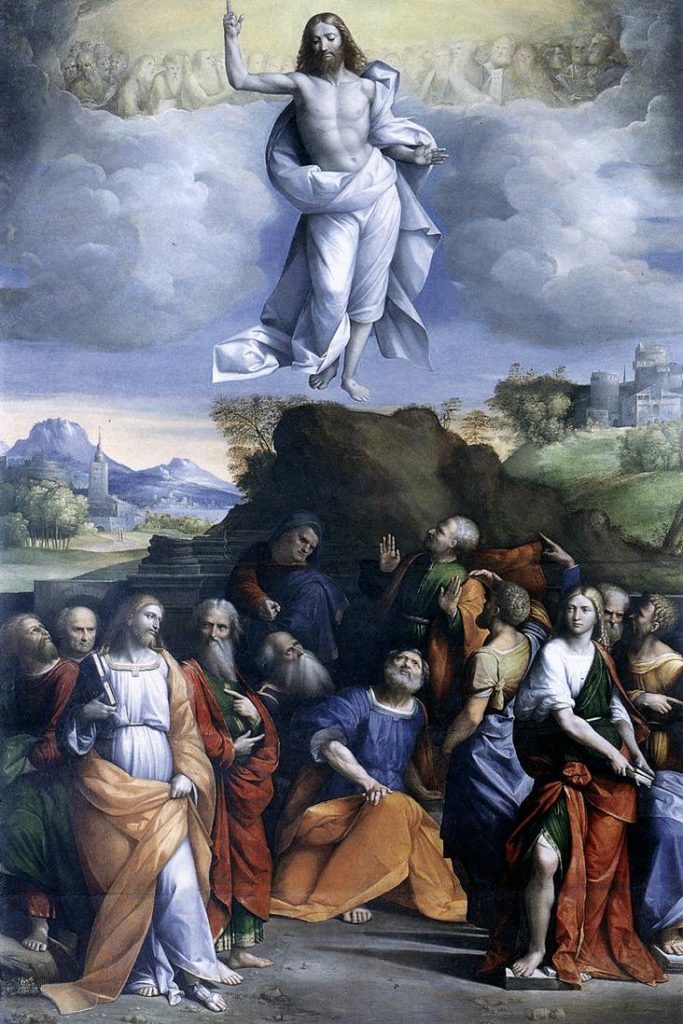
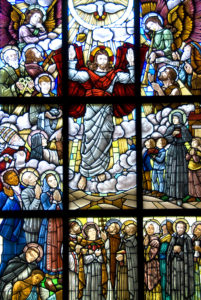 The Lord’s Ascension into heaven is the fulfillment of his mission to achieve our salvation; we might use the phrase that he has come “full circle” in his return to the Father. However, there is a marvelous new reality that makes all the difference for us. In his return to the Father, Jesus takes with him our human nature. When he first descended from the Father in the Incarnation, Jesus joined his divinity to our humanity in an inseparable bond. Jesus’s humanity was and remains real. It was not something that was an illusion nor was it discarded when his earthly ministry was completed. Jesus retains his glorified human nature beyond the boundaries of space and time in heaven. This fact points to the coming reality of the Resurrection of the Just on the last day when not just the soul but also the body will be redeemed and the two realities reunited forever in heaven.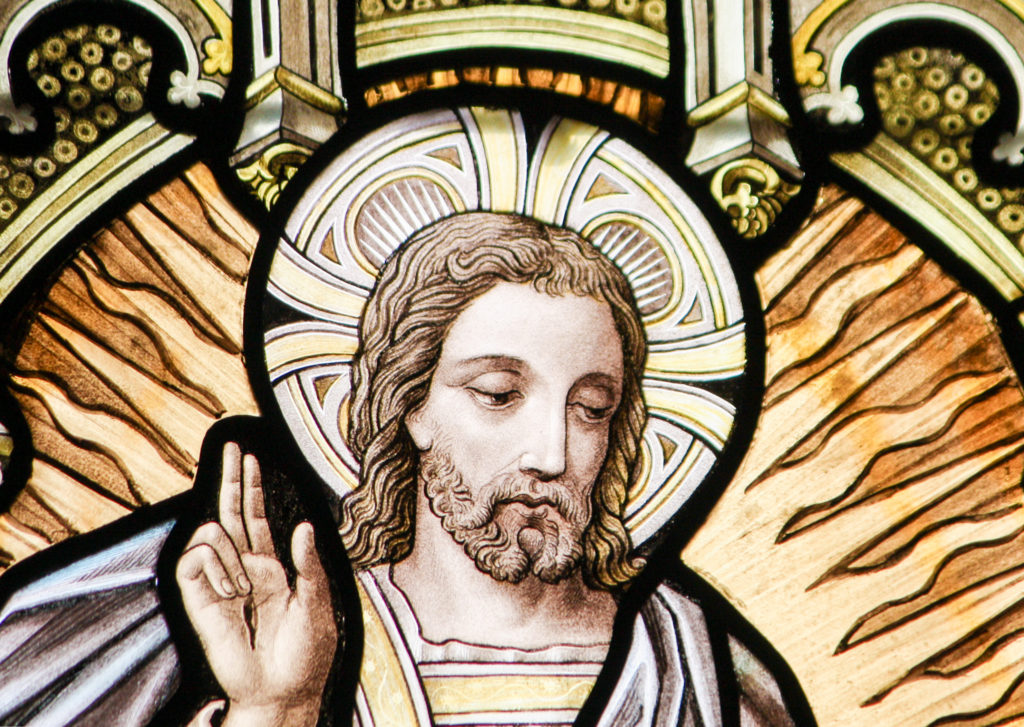

 The French philosopher and convert to the Catholic Faith, Fabrice Hadjadj, would, however, disagree with this summation. The Feast of the Ascension is the perfect occasion to reestablish a firm foundation and a better definition of how Catholics truly relate to the world. Fabrice comments that, in fact: