 My first experience with Eucharistic Adoration occurred in sixth grade at my Catholic elementary school when my homeroom teacher took my entire class to the church to pray in silence in the presence of the Blessed Sacrament. If you’re thinking it was difficult for 35 12- year-olds to sit still and pray in silence for an hour, then you’d be right. We squirmed and fidgeted and poked our neighbors to avoid giving our undivided attention to the Lord. Our behavior earned a mild scolding from our soft-spoken teacher, who reminded us of Jesus’ own words in the Garden of Gethsemane the night before he was crucified: “So you could not keep watch with me for one hour?”
After that, I didn’t go to Adoration again for many years. First, there was the challenge of carving out an hour in the middle of the week to get there, when so many other activities and errands felt more pressing. Secondly, I was worried that Adoration might only be for super holy people — ones who spend time with God in perfect, prayerful contentment. My mind is full of worldly concerns and distractions, so maybe Adoration wasn’t for me. Finally, my inner, fidgety sixth grader was concerned Adoration might be, well, boring. I assumed a Holy Hour would look like waiting for a big revelation from God and hearing nothing but crickets.
After moving to Colorado, though, I discovered that my new parish had a perpetual Adoration chapel, which meant I could sit with the Blessed Sacrament at any time of the day or night. And despite my years of doubts, I somehow found myself wanting to try again. Here are some things I that helped me commit to a weekly Adoration practice:
It’s not all about me
Like Mass, Adoration isn’t necessarily about what we will get out of it. True, the graces dispensed by God help us grow in holiness, but the primary purpose of Adoration is right there in the name of the act: to adore the One present to us in the Eucharist.
Just be
Remember that you don’t actually have to do anything. The Catholic faith recognizes that the greatest gift God gives us is himself, and Adoration is another way for us to recognize that gift outside of receiving the Eucharist at Mass. So, don’t overthink it. Just receive the gift.
Pray (with a little help)
If it’s been awhile since you’ve entered the Adoration chapel and you’ re wor r ied you might be a l i t t le bored ( that ’s understandable!), or you have no idea where to start (it’s okay!), I’ll offer the following suggestions:
- Pray the rosary. To contemplate the mysteries of Jesus’ life in the rosary is to contemplate the mystery of the Eucharist given to us and the Blessed Sacrament we praise in Adoration. So, pairing these prayers is a great habit to get into.
- Write in your prayer journal. Writing in a prayer journal is a great way of making your relationship with God seem more tangible, since we’re getting the words out of our heads and onto the paper. Think of the practice as writing a letter to God. Take all your worries of the day and lay them down during Adoration. Or write to him about everything that’s going well in your life right now.
- Listen to music. Music can be an extremely effective way to focus our thoughts on God. Just make sure you have headphones that will keep everyone else in your vicinity from hearing your music if they’d rather spend their time in meditative prayer. I usually find that slow, reflective melodies work best for this environment — anything by Audrey Assad usually does the trick for me.
- Read. While Adoration isn’t really the time to break out that thriller you’ve been working your way through, it is a great opportunity to pull out a book by one of the saints (such as “The Diar y of St . Faus t ina, ” St . Franc i s De Sales’ “Introduction to the Devout Life,” or St. Thérèse’s autobiography “The Story of a Soul.” Or prayerfully consider a few lines of the Catechism. You may also choose to read a set of devotional essays like Caryll Houselander’s “The Reed of God,” which is full of meditations on Mary. And of course, don’t forget the Bible!
You don’t have to sit still during your Holy Hour in order to make it count. It’s okay for it to be a natural extension of the rest of your prayer life. So, if there’s something that really helps you focus your prayer, bring it to Adoration. Most of all, remember to receive the gift of Christ in the Eucharist and just be present to God.
Sarah Zentner is a freelance writer and graduate student of literature at Colorado State University, who believes the written word can be an extraordinary place to encounter the grace and goodness of God. When she’s not ensconced in her studies, you can find her enjoying a steaming mug of tea, engaging in great conversation, or daydreaming about her next trip abroad. You can learn more about her at www.sarahzentner.com.
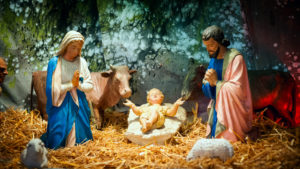
 The time has come for us to move beyond the manger; for white and gold to give way to green. This Sunday we come to the end of the Church’s celebration of Christmas with the feast of the Baptism of the Lord and we prepare to enter into the liturgical season of Ordinary Time. This feast jumps us about thirty years forward in the Lord’s earthly life and is understood as the event that inaugurates his public ministry. The Scriptures that the Church has chosen for this feast bring us full circle from where our pre- Christmas journey began in Advent, to Christmas Day, and now to the end of this holy season.
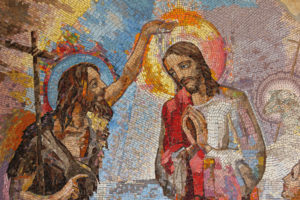
 Some six weeks ago we began our Advent journey and over the course of that journey we heard those familiar words of the Prophet Isaiah that are proclaimed to us again this Sunday. The second reading for this feast, from the letter of Titus, is the same second reading that was proclaimed at the Mass at Night on Christmas. We might say that in today’s feast we are given a recap of what has already been revealed and proclaimed: that God has heard the cry of his people and has responded to that cry in the coming of Christ his son. What was already made known to Mary & Joseph, the Shepherds, Simeon & Anna, and the Magi is made known to a wider audience by the Spirit at the Jordan River when the voice of God proclaims of Jesus “You are my beloved Son; with you I am well pleased.”
 Luke’s Gospel for today’s feast tells us that “the people were filled with expectation.” May it be the same for us. ay expectation of the good things that God wants to do for us each day be the fruit of our faithful discipleship. May we carry the light and joy of Christmas with us throughout the year and as this liturgical season of Christmas gives way now to Ordinary Time may we remember that, because of Jesus, there is nothing ordinary about who we are because we belong to him.
 The Mass is without a doubt one of the most privileged moments in the life of a Christian. It is there that we hear the Word of God proclaimed once again among the community of the faithful. It is there that we gather as a community around the altar of sacrifice, offering ourselves and our intentions and uniting them to the one true sacrifice of Jesus Christ on the Cross. It is there that we receive His very Body and Blood—the “source and summit of the Christian life”—which makes us united to God and to each other, giving us the strength and grace to live our mission as disciples in the world.
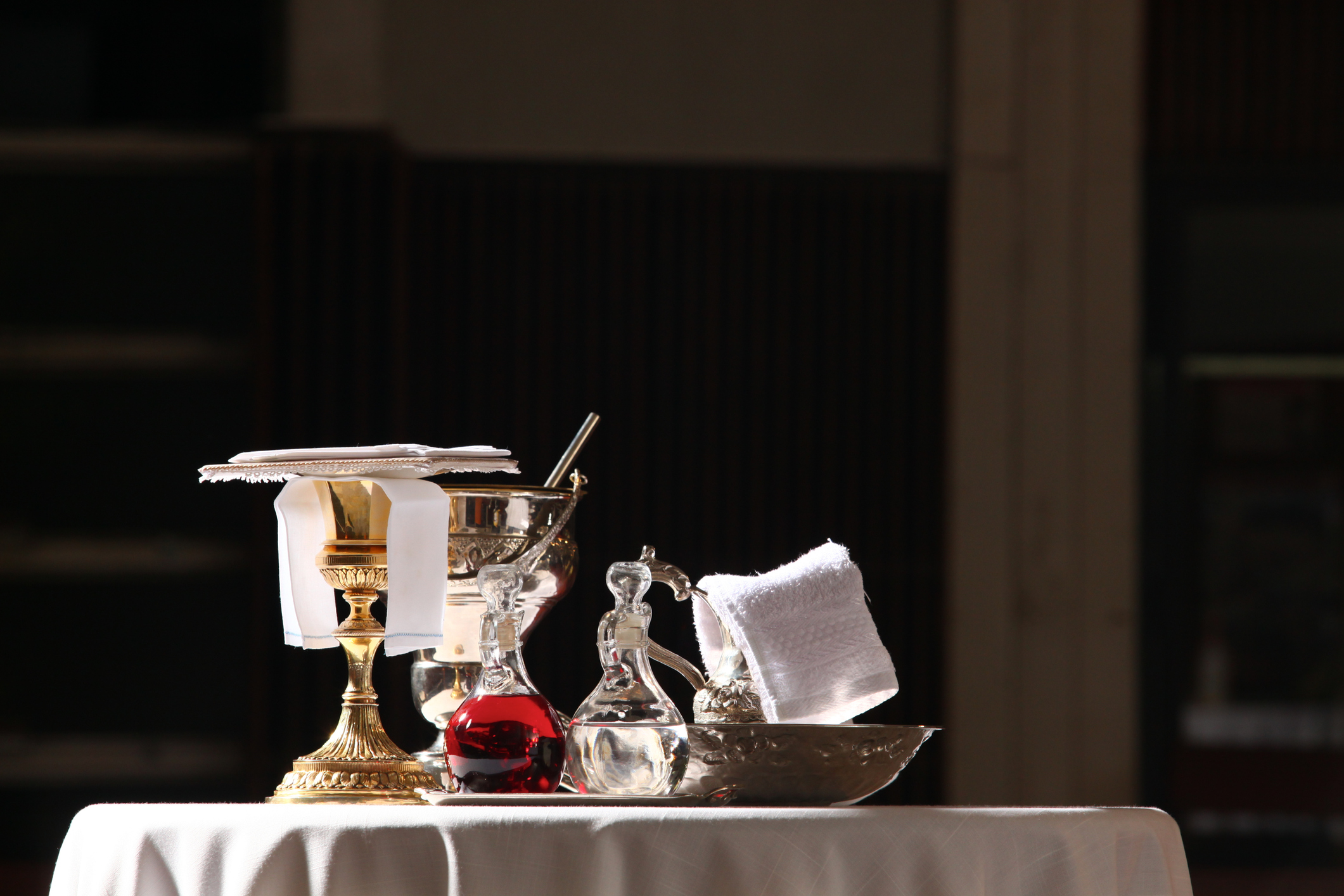 One of those ministries of service—and a privileged one at that—is altar serving. An altar server is entrusted with serving the priest in the act of sacrifice. This entails holding the book during the various prayers offered by the priest, helping to prepare the altar, receiving the offertory gifts alongside the priest or deacon, and carrying the cross, incense, or candles during the processions into and out of the Church. But more than the mere responsibilities of the altar server, the role is privileged because of its proximity and importance to the Mass. Altar servers have a unique opportunity to serve directly the Body and Blood of Christ, to be present in the sanctuary for the sacrifice of Calvary, and to aid the priest as alter Christus (an “other Christ”).
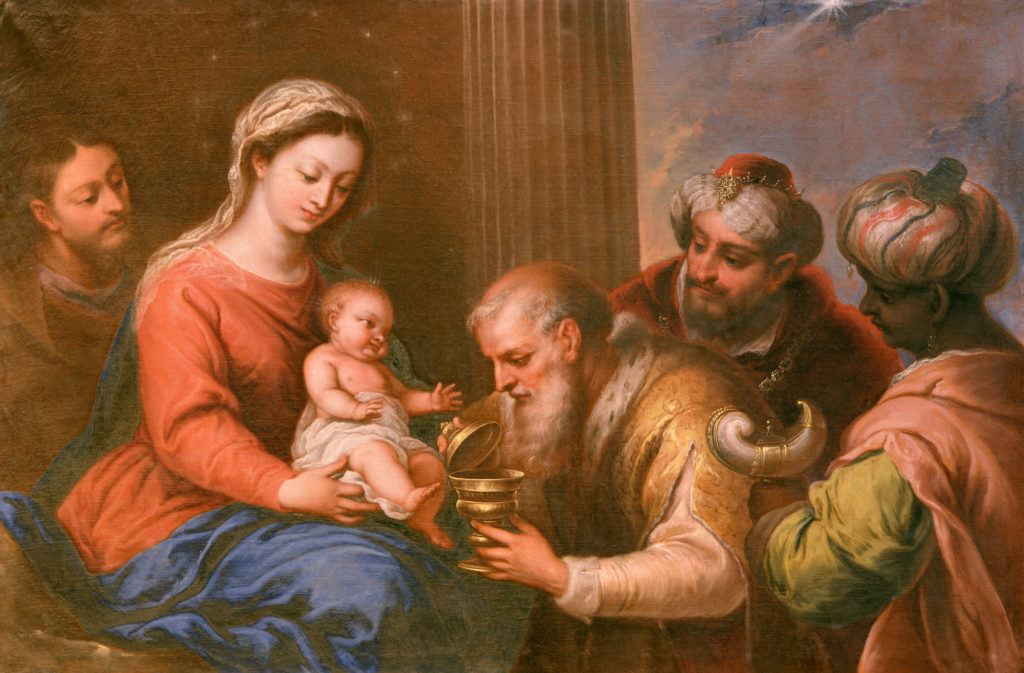
 “The Story of the Other Wise Man” by Henry Van Dyke was first published in 1895. It tells the fictional story of Artaban, a fourth wise man who began a journey to visit Jesus, the newborn King. Unlike his fellow Magi, he failed to make it there for the birth of Jesus because he kept pausing to help various people in need. In fact, it took him about 33 years of searching before his quest comes to an abrupt end when he is hit in the head with a falling roof shingle. His final breath takes place in Jerusalem near the place where Jesus is being crucified. As he lies dying, he hears the voice of Jesus telling him that the gifts he has given all along the way to “the least of these” he has actually given to Jesus himself.
 If you have never read this story or seen the made-fortelevision movie based on the tale, you really should seek it out. It is a story that reminds us of a profound truth: Jesus himself rests in the lives of all those around us in need. In the story, it was the wise man’s constant response to a stewardship call that prevented him from getting where he wanted to go. In the end, where he needed to go was more significant than where he thought he should go.
 One of the commonest observations made by opponents of religion is that we don’t need God in order to have a coherent and integral morality. Atheists and agnostics are extremely sensitive to the charge that the rejection of God will conduce automatically to moral chaos. Consequently, they argue that a robust sense of ethics can be grounded in the consensus of the human community over time or in the intuitions and sensibilities of decent people, etc.
 I confess: I’ve never been particularly successful at keeping New Year ’s resolutions because I’m more successful at finding excuses to ignore them. In years past I’ve been sidetracked by crowded gyms, the sniffles, and my general inability to resist temptation. This year, I decided I need some extra help, so I’m turning to the saints. I’m used to asking for the intercession of saints for big concerns, for example, laying my parenting woes at the feet of St. Monica, or asking for St. Peregrine’s support for a friend battling cancer. But what about intercession for life’s more mundane issues? Studies show we are more successful reaching goals when we enlist the help of a friend, and who better than our saint friends? Here are a few of my resolutions with the saints who will help me stay on track in 2018.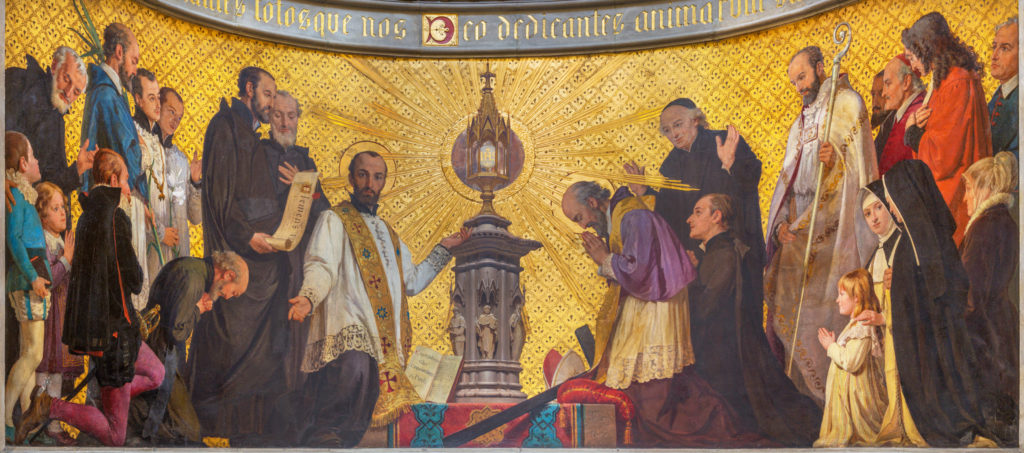
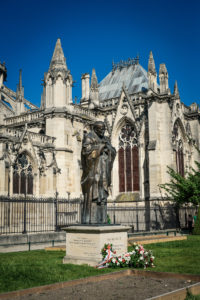 Getting more exercise is a perennial New Year’s resolution for me. I thought I’d turn to the patron of athletes, St. Sebastian, or Pope St. John Paul II, well known for his athleticism and love of the outdoors. But my gym time flailing doesn’t quite rise to the level of athleticism and John Paul II surely has more important intercessions and Sebastian is also the patron of those wishing a saintly death. (While I feel like dying when I exercise, I don’t think I’m likely to actually meet my demise and certainly not in a saintly way.) Honestly, my real issue is one of procrastination and lack of motivation. So, I think I need to turn to St. Expeditus, patron of procrastinators. In the early days of the Church, Roman soldier Expeditus, when about to convert to Christianity, was tempted by the devil (in the form of a crow) telling him to “wait until tomorrow.” Expeditus wouldn’t be swayed from his goal saying, “No. Today I will become a Christian.” That’s just the determination I need on those mornings when I’m tempted to say to myself, “Maybe I’ll just go to the gym tomorrow.”