The season of Lent begins this year on Ash Wednesday, March 6th and ends just prior to the Mass of the Lord’s Supper on Holy Thursday, April 18th, when the Easter Triduum begins. Lent is the principal penitential season of the Church year.
Lenten Regulations
Catholics who have celebrated their 14th birthday are bound to abstain from meat on Ash Wednesday, each Friday in Lent, and on Good Friday. Catholics who have celebrated their 18th birthday, in addition to abstaining from meat, should fast, i.e., eat only one full meal on Ash Wednesday and Good Friday. Small quantities of food may be taken at two other meals but no food should be consumed at any other time during those two days. Liquids do not break the fast and nourishment needed for special needs (such as illness or pregnancy) should always be taken. The obligation of fasting ceases with the celebration of one’s 59th birthday.
Almsgiving: Second Collections During Lent
March 10th: St. Martin de Porres Center
March 17th: Catholic Charities (envelope in packets)
March 24th: Helping Hands of Springfield
March 31st: Catholic Relief Services (envelope in packets)
April 7th: The Pregnancy Care Center
April 14th: Cathedral Angel Fund (tuition assistance for students from Cathedral parish who attend local Catholic schools)
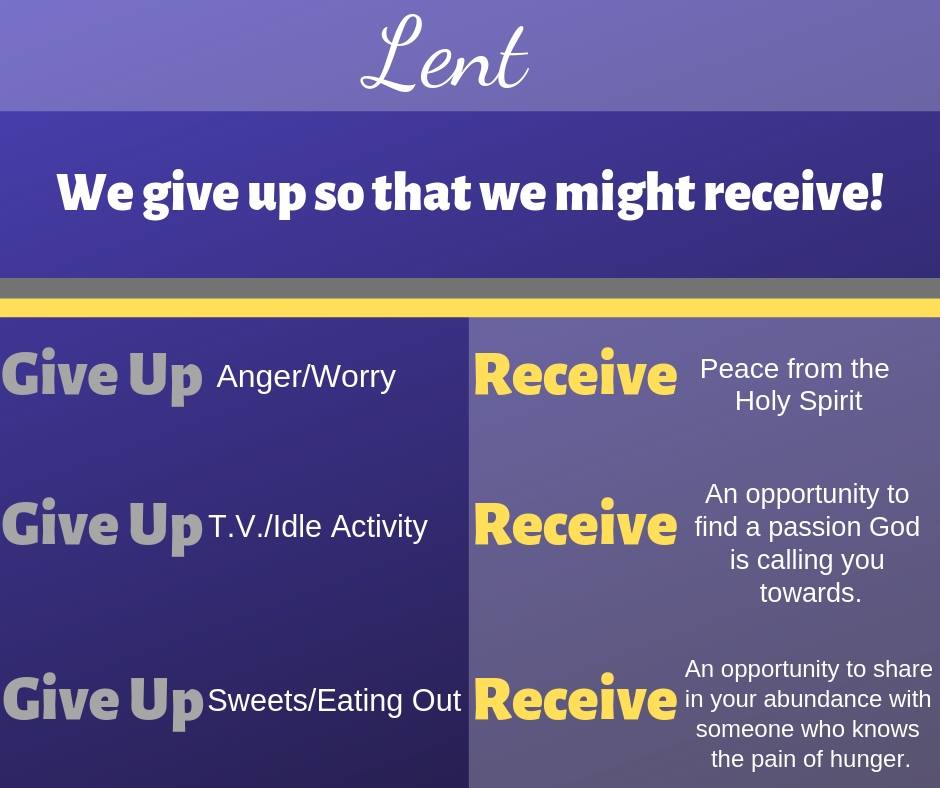
Resources provided by the Cathedral to help you along the Lenten Journey! Available at the Church entrances.
Open Your Heart to God, Lenten Reflections from Pope Francis, Thomas Merton and Henri JM Nowen Daily Prayer Booklet
Christ has called us to be his disciples, but we must always work to make the relationship better. Since Lent offers us a chance to grow in friendship with God, we turn to three experienced friends of Jesus—Pope Francis, Thomas Merton and Henri J.M. Nouwen to share their insights about how to open our hearts to God in reflection and prayer, in our encounters with others and in our work for God’s kingdom on earth. Each daily reflection includes a related scripture quote and a prayer starter question.
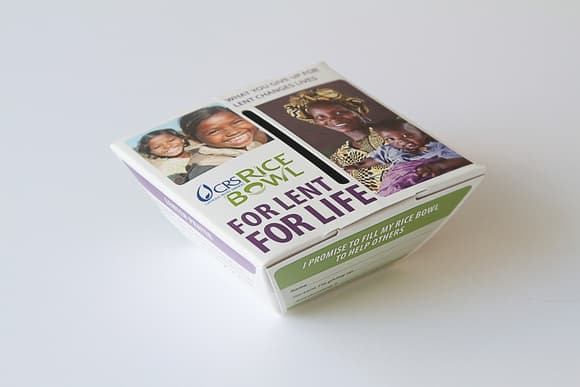 Catholic Relief Services Rice Bowl and Calendar
During Lent our parish will participate in a faith-in-action program that invites us to encounter the needs of the world with the hope of the Resurrection. During this holy season, it is important to reflect on the crosses of hunger, poverty and war that our brothers and sisters carry. Please take a rice bowl and calendar and use them to guide your daily meal, prayer, fasting and almsgiving. Visit crsricebowl.org to watch videos of the people and communities you support through your Lenten gift to CRS Rice Bowl.
Lenten Faith Formation Programs
A Historical, Theological, and Liturgical Look at Lent- 3/11
Ashes. Fasting. Veiled Images. Join Fr. House for a look at the "Why's" behind the do's and don'ts of the Lenten Season. Cathedral Atrium, Monday March 11th at 7 PM.
Catholicism: The New Evangelization- Starts 3/5
This video and discussion series, hosted by Bishop Robert Barron, explores the Church's mission within the challenges of contemporary culture. Cathedral School basement, Tuesdays, March 5-April 9, at 10 AM.
The Passion Narrative in the Gospel of St. Luke- 4/3 & 4/10
In preparation for the celebration of Holy Week, join Father Fridel for a study of our Lord's Passion as recorded by St. Luke. Cathedral Atrium, 7 PM Wednesday April 3rd & 10th.
Novena for Life
Join us in prayer March 17th through the 25th at 7PM. Due to the recent legislation proposed at the Illinois House and Senate, we must act. One of the most powerful ways in which we can act is through prayer. All are welcome!
Scripture Reflections by Fr. House
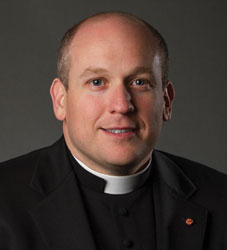 Fr. House will be sharing daily scripture reflections throughout Lent. You can find these daily videos on the Diocesan Facebook page: https://www.facebook.com/diospringfield/ or you can go to the spicathedral.org/lent-2019 webpage and SIGN-UP to receive the Scripture videos in your email inbox everyday!
Lenten Online Prayer Wall
Fr. House will be sharing daily scripture reflections throughout Lent. You can find
these daily videos on the Diocesan Facebook page: https://www.facebook.com/diospringfield/ or you can go to the spicathedral.org/lent-2019 webpage and SIGN-UP to receive the Scripture videos in your email inbox everyday!
Lenten Discipleship Challenge
As disciples we are called to journey together and accompany each other during our challenges and joys. This Lent, let us model that call by sharing the Lenten journey with a friend.
Find a friend and join the Lenten Discipleship Challenge with us!
Each week we will post a spiritual challenge from the Cathedral Lenten prayer booklets or the CRS Rice Bowl challenge. You and your partner will accompany each other by discussing the challenge and holding each other accountable to completing the challenge. We are often more successful at reaching goals when we have a partner to keep us accountable. The first challenge will be shared on Ash Wednesday and each subsequent Sunday.
If you are serious about growing your relationship with Jesus this Lent, find a partner and journey together. If you do not have a partner, please reach out to Katie Price at [email protected] or 217-522-3342. The Cathedral staff are committed to journeying with you and will offer to be your partner if you do not have one.
 Have you come across the 40 Day Generosity Challenge? Last year I came across this Lenten resource, and wanted to find a way to introduce something like it at Cathedral. You can find out more information here,
  It may not seem to be so on the surface but what is the season all about? If we first focus on sacrifice, self-denial, and penance, then we will be placing our focus in the wrong area. Lent is a great love story because it is about a God who has a love for us that is unbreakable, unrelenting, and inexhaustible, even though we are guilty of rejecting his love time and time again. The selections that the Church gives us from the Scriptures demonstrate this. We are reminded that God has chosen us to be his own and that he has done this in a wonderful way in his only Son through baptism. Through sin, we have squandered the grace that God has given us through this sacrament, but Lent is about a call to return to that grace again. This is what the first four and a half weeks of the season speak to, from Ash Wednesday until the Fifth Sunday.
 I have a brochure entitled, “Why do we ‘have’ to go to Mass?”. The cover photo portrays a young child facing backwards in the pew and looking bored. My husband, a convert, long ago also asked the same question about the “obligation” of going to Holy Mass. Each question came from a different orientation, i.e., boredom versus obligation. Of course, the answer is because it is one of the Ten Commandments to Keep Holy the Lord’s Day! It is not an obligation so much as it is a commitment to honor the Lord’s Day.
 Last weekend at each of the parish Masses I preached on the subject of abortion. Abortion is the most brutal act that is allowed in our “advanced society” because abortion targets the most innocent and the most defenseless among us. This heinous act also arouses strong passions in people, passions both good and bad. Sadly, we have allowed this satanic act against the sanctity of human life to become a political football. Human rights, of which the right to life is paramount, should not be political issues as they, along with human dignity, are the gift of God and not the purview of the state except that the state is morally obliged to protect these gifts of God. In an 1864 letter to the editor of the Frankfort Commonwealth,
 From a very young age we’re taught the value of accruing knowledge , relationships, popularity, and success—a storing up and clutching onto good things that can help us sail effectively toward a happy life. We’re groomed not to dispense of anything we own or acquire that has value, but instead to cultivate it, protect it, hold onto it with tireless resolve. What we have and collect—our education, gifts and talents, intellect, possessions—we are expected to use strategically to our advantage. We become hoarders so we can navigate the world and be victorious within it.


 Crusaders for Life