Cathedral of the Immaculate Conception

Springfield, IL

  • About
    • Contact Us
    • History of the Cathedral
    • Liturgical Schedules
    • Parish Staff
    • Register with Cathedral
    • Subscribe to the Cathedral eWeekly
  • Sacraments
    • Baptism
    • Becoming Catholic
    • Matrimony
    • Vocations
  • Ministry List
    • Adult Faith Formation
    • Cathedral Meal Train
    • Cathedral Online Prayer Wall
    • Cathedral Concerts
    • Family of Faith
    • Grief Share
    • Health and Wellness
    • Spiritual Resources
  • Stewardship
    • Stewardship: A Disciple’s Response
    • Stewardship Form
  • Support
    • E-Giving Frequently Asked Questions
    • Give Online
  • Sunday News
    • Announcements
    • Cathedral Weekly
    • Livestream Feed
    • Submit a Mass Intention Request
    • Weekly or Announcement Submission

Thank you Knights!

The Fr. Augustine Tolton Knights of Columbus Council 16126 donated a check for $660.27 during their telethon today with funds collected from our annual Individuals with Disabilities Campaign, AKA, “Tootsie Roll Drive” which we held in the fall at White Oaks Mall. Thank you to everyone who supported from the Cathedral community!

In the photo from the council is Grand Knight Kevin Keen and Trustee Stephen Williamson.

Faithful Friendship with the Poor and Service as Community

How we do something is just as important as why we do it. As Christians, we are well aware of the injunction to serve the poorest and the most vulnerable. The prophets of Israel continually challenged the Hebrew people with this message and berated them for ignoring it. Our Lord Jesus himself makes it the criteria for judgment and distinction between the “sheep” and the “goats” in the twenty-fifth chapter of Matthew’s Gospel. “…when I was hungry … thirsty … a stranger … naked … sick … in prison …”

In a general sense, we have the “why” down. It is important to serve the poor. God wants us to. We will be judged on how we treat others. O u r awareness of the dignity of the human person calls us to service. We have received so we, in turn, must give. Christ has a love for the poor so we, as his disciples, must also love the poor. There are blessings and life to be found in serving the poor. These and many more reasons make up the “why” of service.

The “how” is of more debate. Are the poor best served by advocating for justice, lobbying Congress, developing programs, volunteering at a soup kitchen, requiring service hours, helping people to help themselves, attending a fundraiser or adopting a child for a Christmas Angel Tree? Should we stick with just immediate needs or, as the moral tale goes, head upstream in order to determine the source and font of the unease and violence of poverty? When it comes to the “how” things seem to quickly get very complicated – even political and partisan.

I do not pretend a full answer to the “how” of serving the poor. But I would like to propose two helpful principles in guiding service to the poor that I, personally, have learned from the Community of Sant’Egidio; both of which, I believe, are firmly rooted in the gospel message. The first is faithful friendship with the poor and the second is service as a community.

It is a truism that there are unintended consequences to all actions we take, even the most altruistic and kind-hearted. More and more often, I find myself wondering if many of our common approaches to service to the poor might actually have the effect of highlighting the poor as a “means to an end” rather than as a person and therefore, a possible friend. We go to the nursing home to get our service hours. We participate in a Thanksgiving Day meal or a Christmas gift program in order to feel and understand what the season is about. We serve the poor to get God’s favor. Clubs, fraternities, schools, organizations and businesses get recognition for what they do for the disadvantaged.

I do not mean to downplay the great good that is occurring and also the sincere effort but I would like to raise a simple question: “Why not the possibility of simple friendship with the poor?” Is it so strange a concept? When the poor are viewed solely as a means to an end then, yes, it is a strange concept and one that a right thinking person would not even bother with. When it is recognized that friendship is possible well, then that changes things. Friends have expectations, friends make demands, true friendship takes time, commitment and faithful presence to grow yet friendship also fulfills a deep yearning of every human heart and true friendship affords a unique and important dynamic in helping oneself grow in authentic personhood. In the Community of Sant’Egidio it is said that the only thing the poor have to give is their desire that we return. Is this not the human condition before God?

Service to the poor that affords, encourages and even “structures in” the possibility of friendship should be a guiding principle of all Christian service. The term “structures in” might need some development. Let me do so by sharing an example. Every Christmas, the communities of Sant’Egidio are encouraged to offer a Christmas Day Meal or “Pranzo” for the poor. The community in Johnson City, TN has done this for a few years now. After the first year I proudly reported that we had offered a nice buffet style dinner for a good number of people. A little later Paola, the community president in the U.S., gently encouraged me to consider for the next year a sit-down style dinner with the poor being served as if they were at a restaurant – probably a common experience for many people but not so common for the poor. How we do things is important. Can we look at what we do, can we tweak it in such a way that dignity is acknowledged and therefore friendship is possible? It may take a little more effort, a little more creativity on our part to “structure in” for the possibility for friendship but this little bit extra does set a truly important tone and perspective.

As far as I know, Jesus never sent any person out alone on mission. When disciples went out on mission, sent by our Lord, they went out as at least two. There is value in community and there is value in serving the poor as a community. When I serve with others I have someone to share my thoughts with, I have someone to share a word or an insight when I might be lacking, I have another to share concern with and think new possibilities – other sets of eyes and ears, other hearts to care and minds to imagine. When I am alone in my service I have none of this. Recognizing how our Lord himself sent out his disciples in community, Sant’Egidio encourages service and friendship with the poor to be lived as community and not alone and individual. On our own we are too easily lost and too easily disillusioned. Service can easily become rigid and perfunctory. My experience is that a moment with the poor often has an Emmaus dynamic to it – the Lord is present but we often only recognize him in hindsight as our hearts burn within us and as we share together. It is good for disciples to serve together and it is good for disciples to share together. Apparently, Jesus thought so.

How we do something is just as important as why. Faithful friendship with the poor and serving as community are two truly important components of the “how” of Christian service.

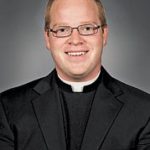
Fr. Michael Cummins is a priest of the Diocese of Knoxville, TN. Ordained in 1995, he has served in a variety of roles within his diocese. Currently he is serving as pastor of St. Dominic Church in Kingsport, TN. Fr. Cummins holds a Masters of Divinity and Licentiate in Sacred Theology from the University of St. Mary of the Lake (Mundelein Seminary) in Chicago.

5 Psalms for When You’re Sick

For many of us, as we move through the new year, our thoughts turn to getting healthy by watching what we eat and hitting the gym. But the reality of winter presents us with some health challenges, as contagious illnesses like colds and the flu make their annual rounds. When we get sick in the winter months, darker days and colder weather can compound the misery of the experience.

Whether you’re laid low with something acute, like the flu, or something chronic you struggle with all year long, it can be tough to find comfort for your soul when your body feels so wretched. Thankfully, the Bible offers a wealth of encouragement for such times. If you’ve ever read the Book of Psalms, you know that these ancient prayers of praise (and sometimes even anger or despair) resonate on a deep level even today. Though you may have read the psalms in the midst of other trials in the past, perhaps it’s time for a fresh look at how they can serve as a source of hope and comfort for illness. Here are five psalms to turn to when you’re sick.

Psalm 6: God hears us

Sometimes when you don’t feel well, don’t you just want someone to commiserate with you? If you can’t call upon loved ones to share the pain of your illness, try praying along with David, the author of Psalm 6. This biblical “man after God’s own heart” knew well the burden of unrelenting affliction. In this totally relatable cry for mercy, he pleads with God, “O Lord, heal me, for my bones are in agony. My soul is in anguish. How long, O Lord, how long?” The psalm ends with the helpful reminder that “the Lord has heard my cry for mercy; the Lord accepts my prayer.” We, too, can rest in the knowledge that no matter how God may choose to answer, he does hear and accept our prayers.

Psalm 38: You’re not in this alone

Though most psalms point to God’s enduring faithfulness and eventual deliverance, they don’t all end neatly tied up with a bow. But that doesn’t mean they don’t still bring comfort. I personally find enormous amount of encouragement in Psalm 38, where David offers up a litany of his sufferings. “There is no health in my body,” he laments. His wounds “fester and are loathsome,” his back “is filled with searing pain.” To me, it’s good to read that my suffering is not unique. There’s solidarity in remembering that even (or especially) God’s beloved saints have endured illnesses just as bad—or far worse—than mine.

Psalm 41: God is Healer

Psalm 41 contains perhaps the most comforting verse in all of Scripture for anyone struggling with sickness: “The Lord will sustain him on his sickbed and restore him from his bed of illness.” While we know that God doesn’t heal every illness—and when he does, it’s always on his own timeline—this psalm testifies to the sustaining grace he offers our souls when our bodies fail us.

Psalm 35: Fight back against illness

In Psalm 35, David asks the Lord to “contend with those who contend with me”—meaning King Saul’s army that pursued David as he fled through the desert. But in my own life, I like to use this psalm as a rallying cry against the invading agents that assault my body during a sickness. I picture the “attackers gathered against me when I was unaware” as the bacteria or virus that’s making me sick. And I pray that, like David’s pursuers, they may they be scattered far away. In a final, beautiful affirmation, this psalm ends by declaring that God loves it when his children are healthy: “The Lord delights in the well-being of his servant.”

Psalm 73: Don’t compare and despair

When I’m sick, it’s all too easy to look at others who feel fine and get jealous or resentful. Why am I the one stuck here suffering?, I wonder. It’s not fair! The writer of Psalm 73 apparently felt the same way. “They have no struggles; their bodies are healthy and strong,” he notes about those around him. Still, by the psalm’s end, he circles back to the truth of God’s perpetual presence: “Yet I am always with you; you hold me by my right hand.” He even finds peace in detaching from the comparison trap: “But, as for me, it is good to be near God. I have made the Sovereign Lord my refuge.”

The psalms not only offer encouragement for recovery from sickness, but remind us that suffering is part of the human condition. God’s understanding of—and compassion for— sickness comes through loud and clear in these ancient poems. May you find comfort and healing as you read them during an illness.

Sarah Garone is a Catholic wife, mom, nutritionist, food blogger, and freelance writer in Mesa, Arizona. When she’s not cooking up something healthy and delicious in the kitchen (or cooking up ideas for writing), you can find her sharing recipes and reflections at “A Love Letter to Food.” (http://alovelettertofood.com/)

An Acceptable Time

Last Sunday, the 2nd Sunday in Ordinary Time, presented us with the Gospel of the wedding feast at Cana, particularly the miracle of the water made wine. This first miracle by our Lord, as reported by John, points to the dawning of a new age, a new time: the time of the Messiah. These days of the Messiah are a time of grace and mercy, when God has opened up his own divine life to us in and through Jesus Christ. The good news for us is that these days are still upon us as the world continues to live in them until the Lord Jesus returns in his glory.

These days were heralded in many ways and times. This Sunday’s Gospel continues the theme of Epiphany which has been presented to us for four Sundays now through the star and the Magi, the voice of the Father at Jesus’s baptism, the water made wine, and now this Sunday with Jesus’s proclamation in his home synagogue in Nazareth of the words of the Prophet Isaiah. Jesus proclaims, The Spirit of the Lord is upon me, because he has anointed me to bring glad tidings to the poor. He has sent me to proclaim liberty to captives and recovery of sight to the blind, to let the oppressed go free, and to proclaim a year acceptable to the Lord. At the end of the proclamation, Jesus announces that today this Scripture passage is fulfilled in your hearing. He is the one of whom Isaiah spoke. He is the fulfillment of the promise of the prophets and the manifestation of God’s grace in the world.

To bring sight to the blind, liberty to captives, glad tidings to the poor, and freedom to the oppressed, is monumental task, one that is fit for the Messiah…and for us. We cannot do any of these things as Jesus did and continues to do, but, as disciples, we are called to carry Christ into the world each and every day. It is the Lord Jesus who brings true freedom and sight, who lifts up the soul and fills it with richness. We are the vessels, the messengers by which he chooses to be continually made known in the world. We are called each day to be deliberate in our discipleship, to make the conscious choice for Christ every day so that we may be a means, an avenue through which Jesus can be known and touched by those whom we meet.

We are not tasked with this responsibility without any assistance. Luke tells us that in making this proclamation in Nazareth, that Jesus had returned to Galilee in the power of the Spirit. The same is true for us. Through Baptism and Confirmation we are imbued with power of the Spirit to proclaim Jesus Christ in every aspect of our lives. Let us avail ourselves to the power of the Spirit that, in and through us, the Lord Jesus may continually be made known in the world, a world that needs to know and accept his love, his grace, and his mercy. Now is the acceptable time for us to answer this call.

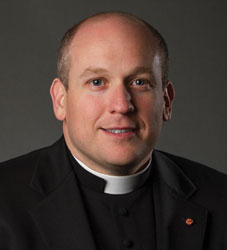
Father Christopher House is the Rector of the Cathedral and serves in various leadership roles within the diocesan curia, namely Chancellor and Vicar Judicial.
Leftovers

If there is time…if we can fit it in…if we feel up to it…if we have the spare change…each of us has probably used one of those excuses in our lifetime to avoid going somewhere or doing something. The excuses are abundant. When it comes to our faith life, there should be no excuses, right? An intentional disciple makes time, prioritizes time for service, gives abundantly. I get it, we are all busy. Between work, extracurriculars, family obligations, the list goes on and on for where we spend our time, talents, and treasure. However, when we are in pursuit of intentional discipleship you intend to pray more, serve more, and give more. It’s priority #1.

I have often said it is easier to teach children about stewardship than us adults. Take this example, when I ask children what the first day of the week is they respond Sunday. Easy. They look up at the visual calendar posted on the wall and see Sunday all the way to the left. To kids, Sunday is the first day of the week. Ask adults the same question and you get a totally different answer. In a small poll I did with some adult friends of mine, I asked them the first day of the week. Monday. The first day of the week in many of our minds, without really thinking about it, is the day when we have to get back to work, get the kids loaded in the car, think about lunches, snacks, after school activities, the board meeting later….and again, the list goes on and on.

Interesting, isn’t it? If you were to ask yourself that question before reading this article, would you say that your week started on Sunday or Monday? Now, why is this significant? Because depending on if you are a Sunday or Monday person, your state of mind regarding stewardship might change. “First fruits” mentality is seeing Sunday as the beginning of the week. Your week begins with Sunday Mass. Your first “appointment” is time in prayer, your first “activity” is serving during Mass (Reader, Usher, Musician, etc.), your first “expenditure” for the week is your gift to the Church. Time, talent, and treasure- a stewardship way of life, completed by 9am Sunday morning. What a way to kick-off your week! In the leftover state of mind, you might miss Mass because you ran out of time this weekend, or didn’t have extra cash to contribute, or energy to serve. Do we give our leftovers or the first fruits?

Now, don’t feel left out if you attend Saturday evening. I am sure you get the idea. We must make choices that prioritize stewardship, if we are on a pathway to intentional discipleship.

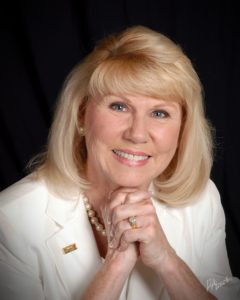
Katie Price is the Coordinator for Stewardship at the Cathedral and within the Diocese of Springfield. She can be reached at the Parish Offices or at [email protected].

Maintaining Inner Peace

A couple times a week I run along a small bay that neighbors my house. In the early mornings, if I’m able to get out at that time, I’m always struck by the stillness of that stretch of mirrored silver. The bay’s anchored tranquility brings me a sense of peace if I only take a moment or two to look at it. It’s an image that in some way sooths my soul.

In Father Jacques Philippe’s modest little book, Searching for and Maintaining Peace: A Small Treatise on Peace of Heart, he calls to mind this metaphor for the soul:

Consider the surface of a lake, above which the sun is shining. If the surface of the lake is peaceful and tranquil, the sun will be reflected in this lake; and the more peaceful the lake, the more perfectly will it be reflected. If, on the contrary, the surface of the lake is agitated, undulating, then the image of the sun can not be reflected in it.

It’s a deeply simple yet profound stroke of insight—our souls can only reflect God’s love and grace if they are calm and delicately moored. The peace promised to us by Jesus Christ two millennia ago only flowers in the soil of a serene heart.

What makes Philippe’s humble treatise so illuminating is its insistence that our highest priority when it comes to the spiritual life must be acquiring and cultivating this state of peace. If we don’t, though we may still do good works, we will be harried by the warring emotions and worries within us that keep us from experiencing God’s love. In other words, we won’t have the peace that God desires for us. There is a difference between serving and suffering accompanied with the balm of God’s peace, and doing so left to our own human—and tragically inadequate— devices.

When I was a little kid, I had this absurd fear that if I forgot to mention a certain family member in my prayers they would be left without the benefit of God’s grace. It’s funny now to look back on that, and though I’ve matured from such a grossly limited view of God these many years later, there is still a streak of that mindset tangled within my own spirituality. At times, I’ll still feel an overwhelming sense of obligation—an iced interior command—to do something, one spurred by fear, worry, or pride. And even though such an action may be good and well intentioned, it will cause me to lose something of immeasurable value—my peace.

What a premium we place on peace. We can easily spot a deep thirsting for peace within our culture—a desire to unplug from its charged pace—through the popularity of all types of activities with peace as their aim: meditation, mindfulness, yoga, tailored Spotify playlists, breathing exercises, and so on. As the human person yearns for food, sleep, affection, and purpose, it also yearns for peace. Speaking strictly of the body, we need time for peace and quiet—sleep, healthy exercise, and leisurely activities. But the same is true for our spiritual lives. The soul yearns for the respite that only comes from submersion into the cooling water of God’s grace. Jesus spoke about the soul’s desire for peace and fulfillment that exceeds the needs of the corporeal. After Jesus multiplied the loaves for the five thousand, the crowds sought him with unwavering determination. When they finally found him, Jesus addressed them in this way:

Amen, amen, I say to you, you are looking for me not because you saw signs but because you ate the loaves and were filled. Do not work for food that perishes but for the food that endures for eternal life, which the Son of Man will give you. (Jn. 6:26-27)

When we look at our own pleas for God to work in our lives—to gift us and our loved ones with good health, success, love, meaningful employment, etc.—when we’re honest, we don’t do it because we want simply the object of our intention. If we pray to be healthy, and God miraculously heals us, we soon find that it wasn’t enough. Not even close. The sign in and of itself is never enough. We don’t want miracles; we want fulfillment. We want to know complete love, peace, and union with the one who understands us perfectly, the one who created us for such an end.

And so this spiritual food—God’s love and peace—can only come from a commitment to following Christ and aligning our wills to God. In doing this, we acquire the peace of a clear conscience—a pure heart. Father Philippe highlights the necessity of our goodwill in order to experience God’s peace for our souls. He clarifies what he means by “goodwill” with encouraging language:

[Goodwill] is not perfection, nor sainthood achieved, because it could well coexist with hesitations, imperfections and even faults…it is the habitual disposition of heart which permits the grace of God to carry us, little by little, toward perfection.

A desire to love and know God is enough (despite our continued faults and weaknesses). It’s this desire that is necessary— something that must originate with God himself—for us to even have recourse to the peace Jesus promises.

We know, however, once we have allowed God into our lives and are taking seriously the spiritual journey, maintaining our peace is still difficult, especially in the face of suffering and temptation. But that is often the very goal of the battle—to keep our peace no matter our circumstances.

Therefore, maintaining this peace should be the priority of the spiritual life, more so than eliminating our faults and weaknesses. Obviously, we are to strive to eliminate these things as they keep us from loving God and others, though we should do so with a peaceful resolve that acknowledges we will not reach perfection in this life. Peace comes from knowing God loves us—and not just saying we know it, but knowing it in our flesh and bones.

On the contrary, the real spiritual battle, rather than the pursuit of invincibility or some other absolute infallibility beyond our capacity, consists principally in learning, without becoming too discouraged, to accept falling occasionally and not to lose our peace of heart if we should happen to do so lamentably, not to become excessively sad regarding our defeats and to know how to rebound from our falls to an even higher level.

If I’m honest, this idea was a major paradigm shift—a shattering realization. What if when we sinned, instead of allowing the spirit of unhealthy discouragement, vague despair, and gnawing worthlessness grab hold of us, we immediately sought to regain Christ’s peace by asking for forgiveness, accepting it with humility, and doing the best we can to do better next time? What if we didn’t do things for God because we felt we had to, or that we should in order to avoid punishment, or because our ego and the devil demand it, but because the peace of God dwelling within us desires nothing more than to serve others and God? Whereas fear coerces us to love, peace inspires us to.

Never be in a hurry; do everything quietly and in a calm spirit. Do not lose your inner peace for anything whatsoever, even if your whole world seems upset. (Saint Francis de Sales)

Let us not forget that Martha, the one who diligently labored for Christ, was told she had opted for the “lesser” part. Mary, the one sitting serenely at the feet of Christ, was extolled.

If we acquire peace, then we find that all the good we do pours out, even in the face of great suffering or hardship. The saints aren’t saints because they never sinned; they are saints because they harbored a peace laced with the understanding that they were loved infinitely by God—despite their own sins, sufferings, and temptations. When we accept our smallness with humility, we receive the light of his peace and presence.

We will still fail at times to maintain our peace. The lashes of suffering, trial, and hardship will jar us. But the battle won’t be over, and with grace, we will once again find peace. And as we do this more and more throughout our lives, like the thousands of saints before us, our peace will intensify and won’t be plucked from us as easily.

Peace I leave with you; my peace I give to you. Not as the world gives do I give it to you. Do not let your hearts be troubled or afraid. (Jn. 14:27)

Chris Hazell is the founder of The Call Collective, a blog exploring the intersection between faith, culture and creativity. (http://thecallcollective.com/stay-updated/) He holds bachelors’ degrees in English and Economics from UCLA and currently works as a Lead Content Strategist for Point Loma Nazarene University.

No Wine Before It’s Time

Some of you may remember TV commercials in the late 1970s and early 1980s with actor/director Orson Wells speaking for Paul Masson wine. Well’s tagline for those spots was “we will sell no wine before it is time.” The point of the line was stressing that Masson was not simply rushing out a product but that only when the time was right, when everything was ready, would a wine be released for sale. Today, with the wedding feast at Cana, the headwaiter is shocked because the best wine has been saved for a later time. Why? Because the time is right; the time is now.

This Sunday’s Gospel reading of the wedding feast at Cana is traditionally considered the Lord Jesus’s first miracle. Once again we find the theme of epiphany, of revealing or making known, in the Gospel this weekend, a theme that will continue over the next several Sundays. With that in mind, when we look at this Gospel selection, we may be naturally inclined to say that this passage in John is about marriage; yes, but to a lesser extent. Jesus is at the wedding feast with Mary his mother and his disciples. We can easily deduce that he sees marriage as something good and, naturally, our Lord in his plan of salvation raised marriage to the dignity of a sacrament, but there is something more here and its all about the wine.

There are two details about the water made wine that we need to note as recounted for us by John: its quality and its volume. As with any miracle, there are two realities at work: the actual miracle that takes place and a greater truth that the Lord is making known to us through it. It is clear from the testimony of the headwaiter that the wine made by the Lord is good, very good, and while other good wines have been served, surprisingly, and even better wine is offered later on. This wine is offered in superabundance, 120 to 130 gallons if you do the math in John’s account. That is MORE than enough wine for the celebration. Everyone can be satisfied without any worry that this new wine might run dry.

This miracle of the water made wine shows us that a special time has come. Now is the time of the Messiah. The quality and abundance of the new wine tells us that, while God’s grace has been made manifest in times past, it is being made manifest again in a new, wonderful, and abundant way in Jesus Christ. The time of the Messiah does not refer to the time only when Jesus walked on the earth. That time is now!

Here in the early days of 2019, this is the time of the Messiah and every day, month, and year will be until his glorious return. The grace of God continues to be offered to each and every heart freely and in superabundance. These are the days of redemption. Heaven has been flung open to everyone that will hear the word of Christ and strive to keep it, and the Lord will grant us the fullness of his grace to help us along the way.

Now is the time for the wine of God’s grace. He is lovingly and generously offering it to each and every one of us. Drink freely!

Father Christopher House is the Rector of the Cathedral and serves in various leadership roles within the diocesan curia, namely Chancellor and Vicar Judicial.

A Lesson in Stewardship

The other day I was asked to teach students about stewardship at one of our local Catholic schools. To get us started, I turned to the students to teach me something first. Have you heard about this “floss” dance? The “floss” is a new dance that has swept the social media networks and shows a person moving side to side with their arms moving in a similar fashion back and forth. At first glance, it looks easy, but don’t be fooled! In fact, the dance takes great coordination, which at one point in my life I probably had! When I asked for volunteers to help me with “the floss,” the kids were jumping out of their seats. I am not sure which was more appealing, the attention of doing the “floss” in front of their peers or showing “Church-lady Katie,” an adult, how to “floss.” Both probably sounded equally ridiculous and funny, which is perfect for a child! Once the students approached and I incredibly embarrassed my poor daughter in the audience, the laughter was contagious and we were “flossing!” Well, I was attempting, I wouldn’t say successfully.

As the students took their seats again and the laughter turned into “shhh” from the teachers, we regrouped and I asked if they could tell me what any of that had to do with stewardship. As you are reading this, you are probably wondering the same thing! The students responded with some great answers, “It’s fun,” “We did it together,” “We volunteered.” I asked them if they felt joy or laughed. All responded, nodding their heads. Then I said, “Perfect, that is the beginning of stewardship, acknowledging the gifts we receive.” Acknowledging that gifts are not just tangible, but often the grace filled moments of laughter, friendship, joy, and happiness.

Living a stewardship way of life is being intentional about prayer, service, and giving. But stewardship is not just sacrifice, it is acknowledging the many gifts around us. Because of the good stewards in the pews, we have many gifts at the Cathedral. The sacred space is maintained and beautiful. The ministries and formation programs are welcoming and plentiful. We celebrate daily Mass and have beautiful music ministry volunteers to enhance the Sunday Liturgies. We are grateful for the committed volunteers who serve the Alpha guests. We are truly blessed at the Cathedral and it is because of the stewards in the pews. Are you one of them? If so, thank you! If not, consider joining us in a stewardship way of life. Start by acknowledging the gifts in your life, spending time in thankful prayer to the Lord and giving the Cathedral your time and talents. Stewardship is the act of acknowledging these gifts and sharing them with others. It is the activity of the disciples and we are each called to respond!

Katie Price is the Coordinator for Stewardship at the Cathedral and within the Diocese of Springfield. She can be reached at the Parish Offices or at [email protected].

Altar Server Witness

You may have seen me serving the 5:15 daily mass at Cathedral. No, I’m not a seminarian, and yes I’m a working young adult. So, why do I serve? I moved to Springfield five years ago after graduating college. As I journeyed out into the “real world” I knew I wanted to continue the practice that I developed right after graduating college of attending daily mass. I started to go the 5:15 mass at Cathedral and after about a year of attending, Fr. Seth Brown contacted me and asked if I would be interested in serving daily mass there. Somehow growing up I was able to wiggle out of altar serving all together (unlike my two brothers). I decided to give it a shot however when Fr. Seth Brown asked and quickly grew to love donating my time to serving the holy sacrifice of the mass. Serving has given me a greater appreciation for the mass and helped me grow into a deeper relationship with our Lord. It allows me to give back to the Lord for all the blessings and love He has shown me. Being involved in the mass in a different way has also helped in my own discernment in both big and little life decisions. If you have the slightest interest in altar serving (no matter how young or old you may be) I encourage you to give it a shot. I think you’ll be surprised of the graces you will receive from your service to the Church.

-Nicholas Gray, Parishioner and Altar Server

The Privilege of Serving at the Altar

The Mass is without a doubt one of the most privileged moments in the life of a Christian. It is there that we hear the Word of God proclaimed once again among the community of the faithful. It is there that we gather as a community around the altar of sacrifice, offering ourselves and our intentions and uniting them to the one true sacrifice of Jesus Christ on the Cross. It is there that we receive His very Body and Blood—the “source and summit of the Christian life”—which makes us united to God and to each other, giving us the strength and grace to live our mission as disciples in the world.

In the reforms to the liturgy called for by the Second Vatican Council, the council fathers explicitly stated that their aim was to consider before all else the “full and active participation by all the people.” It’s a phrase which has been oft-misunderstood in the fifty years since the close of the council. But primarily, this “full and active participation” consists of every individual offering their entire selves in the Mass—by engaging themselves in the Mass in every aspect: praying with the priest, singing, and, where appropriate, serving the liturgy through various roles.

One of those ministries of service—and a privileged one at that—is altar serving. An altar server is entrusted with serving the priest in the act of sacrifice. This entails holding the book during the various prayers offered by the priest, helping to prepare the altar, receiving the offertory gifts alongside the priest or deacon, and carrying the cross, incense, or candles during the processions into and out of the Church. But more than the mere responsibilities of the altar server, the role is privileged because of its proximity and importance to the Mass. Altar servers have a unique opportunity to serve directly the Body and Blood of Christ, to be present in the sanctuary for the sacrifice of Calvary, and to aid the priest as alter Christus (an “other Christ”).

Our Cathedral parish has a faithful corps of men and women, girls and boys who assist the priests and deacons at the altar, and for that we are all very grateful. Nevertheless, we invite anyone who has considered this ministry in the past or who is currently interested to come forward and join our team. This new year of God’s grace is a perfect opportunity to offer your full and active participation in the liturgy by joining this ministry—or any of our other opportunities to sing, pray, and serve.

Please RSVP for training! New and returning altar servers should attend!

A training for all youth servers (5th grade and older, current and new) will occur on Monday, January 21 at 11 am, with a pizza party to follow. Parents are invited as well! Training for all adult servers (weekday and weekend, new and experienced) will occur on Wednesday, January 23 at 6 pm, with a dinner hosted in the Cathedral rectory (TBD) to follow.

For interest and to RSVP to the training, please contact Fr. Friedel at 522-3342 or email Vicki Compton at [email protected].

« Previous Page
Next Page »

Liturgy

Sunday Masses (unless noted differently in weekly bulletin)
Saturday Evening Vigil – 4:00PM
Sunday – 7:00AM, 10:00AM and 5:00PM

Weekday Masses (unless noted differently in weekly bulletin)
Monday thru Friday – 7:00AM and 5:15PM
Saturday – 8:00AM

Reconciliation (Confessions)
Monday thru Friday – 4:15PM to 5:00PM
Saturday – 9:00AM to 10:00AM and 2:30PM to 3:30PM
Sunday – 4:00PM to 4:45PM

Adoration
Tuesdays and Thursdays – 4:00PM to 5:00PM


CatholicMassTime.org

Parish Information

Parish Address
524 East Lawrence Avenue
Springfield, Illinois 62703

Parish Office Hours
Monday thru Thursday – 8:00AM to 4:00PM
Fridays – CLOSED

Parish Phone
(217) 522-3342

Parish Fax
(217) 210-0136

Parish Staff

Contact Us

Contact Us

Copyright © 2025 · Log in