Cathedral of the Immaculate Conception

Springfield, IL

  • About
    • Contact Us
    • History of the Cathedral
    • Liturgical Schedules
    • Parish Staff
    • Register with Cathedral
    • Subscribe to the Cathedral eWeekly
  • Sacraments
    • Baptism
    • Becoming Catholic
    • Matrimony
    • Vocations
  • Ministry List
    • Adult Faith Formation
    • Cathedral Meal Train
    • Cathedral Online Prayer Wall
    • Cathedral Concerts
    • Family of Faith
    • Grief Share
    • Health and Wellness
    • Spiritual Resources
  • Stewardship
    • Stewardship: A Disciple’s Response
    • Stewardship Form
  • Support
    • E-Giving Frequently Asked Questions
    • Give Online
  • Sunday News
    • Announcements
    • Cathedral Weekly
    • Livestream Feed
    • Submit a Mass Intention Request
    • Weekly or Announcement Submission

Living Stewardship – Service to Communities in Need

At the close of the Year of Mercy, Pope Francis suggested that the Church set aside one day each year for communities to “reflect on how poverty is at the very heart of the Gospel .” He designated this day as the World Day of the Poor, to be celebrated each year on the 33rdSunday in Ordinary Time.

It is right that during our Season of Stewardship and during the season of Thanksgiving that we take some time to reflect on how the Gospel is calling us as individuals and as a parish family to serve the poor. The widow who fed Elijah with the last of her flour and the widow in the Gospel of Mark help us understand that God is calling us to extravagant generosity. We are called to give all. Really, it’s ridiculous! And impossible. Except for those of us in whom Christ lives. And so it is not impossible. St. Teresa of Calcutta said that The Holy Hour before the Eucharist should lead us to a “holy hour” with the poor. Our Eucharist is incomplete if it does not make us love and serve the poor.”

The Cathedral parish, and its members, are active in a wide variety of service activities, and welcome the opportunity to serve people in need in our parish and beyond. There have been many opportunities over the years for parishioners to support the local community. Here is what we have been doing lately:

Catholic Charities Holy Family Food Pantry
A collection bin is in the Atrium for an ongoing food collection for the Holy Family Food Pantry. In the past, the CCCW members collected non-perishable food at their fall meetings to fill the Holy Family Food Pantry Thanksgiving and Christmas food baskets. Beginning this year, all parishioners are invited to participate in this giving opportunity. A list of suggested food items has appeared in the bulletin and cash donations are also accepted. Place a check or cash in an envelope marked “Food Pantry” and drop it in the collection basket.

Helping Hands Food Ministry
We are completing our 13th year of providing a home-cooked meal for the 50 men who seek shelter at Helping Hands. Teams provide a meal on the 4th Saturday of each month. Each January an organizational meeting is held to form teams and plan meals for the year. Volunteers prepare the food, purchase drinks and disposable dinnerware, deliver and serve the meal.

Christ Child Shower
The CCCW has coordinated the Christ Child Shower for many years. Generous contributions of items for babies, preschool children and pregnant/new mothers are accepted and divided between the Pregnancy Care Center and Mini O’Beirne Crisis Nursery for distribution to their client families.

Blessing Bags
Parishioners donate toiletries, personal care items, socks, etc. to make Blessing Bags for individuals who are homebound or who cannot afford them. In 2018, a group of CCCW ladies and their families prepared packages for 65 residents of a local nursing home as well as 18 home bound Cathedral parishioners in Sister Francella’s ministry. In past years, these bags were also provided to Helping Hands to provide needed items to homeless individuals.

Socktober
Borrowing this idea from other parishes, Cathedral parishioners donated almost 500 pairs of socks, hats and gloves for area shelters! We will make this much needed service an annual giving opportunity.

Breadline Sunday
Held annually on the Sunday before Thanksgiving, Breadline Sunday is an easy way to donate to St. John’s Breadline and get the bread for your Thanksgiving stuffing.

All these ways of helping are essential for vulnerable members of our community and the agencies who assist them. But there may be ways we can do more to address the root causes of homelessness or perhaps join with the Heartland Continuum to seek long-term solutions.

The Heartland Continuum is an organization of all agencies and individuals who serve the homeless population or are interested in helping. These agencies include shelters, soup kitchens, resource areas, and day services. To learn more about the Heartland Continuum and what is going on in Springfield to help people experiencing homelessness, visit heartlandcontinuum.com

If you are interested in helping our parish discern how to better care for those in need, please come on Monday, December 10, at 6 p.m. to the Atrium for a 45-minute presentation called “Healthy Spaces for Helping.” This is a session about the effects of trauma (abuse, neglect, living in poverty) on children and adults. We’ll learn about why being trauma-aware is essential to responding to the needs of our community, particularly people and populations who are homeless or who live in poverty. If you are interested, please contact Vicki Compton at [email protected] or by calling 522-3342. All parishioners and friends of the Cathedral are welcome!

 Vicki Compton is the Coordinator of Faith Formation and Mission at the Cathedral. She can be contacted by calling the Parish Offices or emailing her directly at [email protected].

A Letter From Bishop Paprocki

The Four Last Things

The winds of the last Sunday in October took many leaves with them but the colors of the season are still in full bloom. The beauty of creation in autumn is also a harbinger of the coming of winter when much of creation will enter into its deep sleep. While the winter may be cold and dark, we know that light and warmth will return again as springtime will call creation back into new life, yet we still must face the winter. The same is true in our lives that this earthly life must come to an end. As we begin the month of November, the month of All Souls, it is good for us to be reminded of what the Church terms the Four Last Things: death, judgement, hell, and heaven.

They say that there are two unavoidable realities in life: death and taxes. That statement is only half true. You can avoid taxes, I don’t advise it, but people do try and some are successful. Some people try to avoid death but no one has succeeded there. Life is the time and opportunity for us to accept God’s grace and to cooperate with it. While death is perceived as the natural course of life, death is also understood from a religious perspective as an aberration, as a consequence of sin, that was not made nor intended by God (see Wisdom 1:13 & 2:24). A disciple should be able to see a distinction between death and Christian death. For the faithful Christian death has been transformed into nothing more than a doorway to a new and greater life with God in Christ.

This year on the Solemnity of Christ the King (two weeks from now) we will hear the Gospel of the Last Judgment proclaimed to us at Mass. While the Scriptures speak of this general judgment the Church also speaks of particular judgment that all of us will face at the moment of death. Our own innate sense of justice moves us to believe that there must be some final reckoning concerning what good, or lack thereof, that we did in our earthly life. This judgement is not so much about God rendering a decision regarding us but rather fulfilling the choice we made by how we lived, as St. Paul teaches us “for we must all appear before the judgment seat of Christ, so that each one may receive recompense, according to what he did in the body, whether good or evil” (2 Cor 5: 10). From this judgment, we then enter into one of two destinies: eternal life or eternal damnation.

For those who live and die in God’s friendship, they can be assured of everlasting life with him in heaven. This eternal destiny may be entered into immediately for those who die without any attachment to sin or after a period of purification for those who die, not in mortal sin, but with an attachment to venial sin. This process of purging is known as purgatory. Every soul in purgatory is destined for union with God in heaven. The pain of purgatory is not an intentional punishment inflicted by God but rather it is the result of the pain of separation experienced by the soul until it achieves perfect union with God.

For those who die in a state of mortal sin, having made a clear, manifested choice against God, the Church teaches that those souls suffer the eternal torments of hell. The suffering of hell is not one of fire and brimstone, but one of complete and everlasting separation from God with full knowledge of what has been lost. The Church teaches that hell does indeed exist and the Lord Jesus warns us of it in the Scriptures. While the Church affirms hell’s existence, she does not formally teach that anyone is there except the devil and his fallen angels.

Death and judgment are realities that all of us must one day face, but for those who strive daily to live in God’s friendship, sinners though we are, we have nothing to fear for we have a loving and merciful God. Let us keep our hearts open to that love and mercy every day. If you would like to learn more about the Four Last Things, I invite you to two upcoming faith formation sessions on the subject with Fr. Stock on November 19th and 26th at 7PM in the Cathedral Atrium.

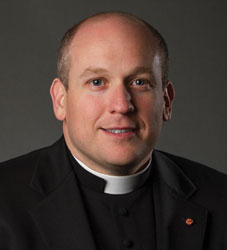
Father Christopher House is the Rector of the Cathedral and serves in various leadership roles within the diocesan curia, namely Chancellor and Vicar Judicial.

Lessons from St. Teresa: How to Be the Eyes, Hands, and Feet of Christ

Christ has no body but yours,
No hands, no feet on earth but yours,
Yours are the eyes with which he looks
Compassion on this world,
Yours are the feet with which he walks to do good,
Yours are the hands, with which he blesses all the world.
Yours are the hands, yours are the feet,
Yours are the eyes, you are his body.
Christ has no body now but yours,
No hands, no feet on earth but yours,
Yours are the eyes with which he looks
compassion on this world.
Christ has no body now on earth but yours.
— St. Teresa of Ávila

When I first read the words of this beautiful prayer by St. Teresa of Ávila, I felt they truly summed up how I wanted to live my life — by sharing God’s love with those around me. My own prayer became focused on finding ways to love the people I meet, even in the routine circumstances of my day.

He was perhaps 5 years old, standing in my open doorway and waiting for me to notice him. When I greeted the little boy, he whispered in his best English: “My mother asks you give her painkillers. Her tooth is hurting.” Because my husband and I run a tourist lodge in Gambia, I spend the winter months in this tiny West African country. Many people live hand-to-mouth, and finding money to go to a health clinic is beyond them. Our neighbors know I keep a basic first aid kit and painkillers on hand, so it’s a rare week when someone doesn’t appear at our door asking for help. It’s one small way I can show love to my community. Jesus said that the greatest commandment was to love God and to love your neighbor as yourself, and he lived out that commandment daily. He brought God’s love to those on the margins of society, stood up against injustice, and showed compassion for those he met.

St. Teresa was born in Spain in 1515. As a young woman, she became a Carmelite nun, but for many years she found it difficult to devote herself as fully to God as she wanted. But eventually, after a series of visions, she felt herself becoming closer and closer to God, founding her own religious order despite much opposition. She focused on living a life of simplicity and experiencing God’s love, motivating her to show that love to those around her. This famous prayer sums up her attitude. It’s become a very real inspiration for me here in one of the poorest countries in Africa. Here are a few ways you too can bring this prayer to life:

Yours are the eyes that look with compassion

When Jesus looked at people he met, he didn’t judge them by the standards of the day. He looked beyond the outward circumstances of their lives — circumstances that sometimes invited condemnation from the religious leaders and the community — and showed love toward them. Think about his compassionate exchange with the woman caught in adultery or his interactions with Zacchaeus, the tax collector reviled in his community. With these examples in mind, I’m trying to look at others with the same compassion, without judging or condemning, even those who perhaps don’t invite it easily.

Yours are the hands with which he blesses all the world

Jesus used his hands to work as a skilled carpenter. We, too, have skills we can use to help others, such as helping a friend fix their car, using your gifts to update the church website, or cleaning up a neighbor’s yard after a storm. Jesus also blessed people with his hands, like the children who were brought to him despite the disciples’ disapproval. In the past, I’ve cooked a meal for an elderly neighbor, sewed drapes for a friend’s new home, and soothed a fretful baby so a new mom could steal some sleep. These are all practical ways we can use our hands to bless others. Jesus also used his hands to heal. He spread mud on a blind man’s eyes, lifted Jairus’ daughter from her deathbed, and even touched lepers despite the fear and revulsion of most people at the time. We can all hold the hand of a sick friend when praying for their healing, console a teen who’s disappointed after not making the team, or hug a grieving friend.

Yours are the feet that walk to do good

Jesus walked everywhere, crisscrossing the region constantly because walking was the only way to travel unless you were rich. During his journeying, Jesus reached out to others. He talked with the woman at the well and taught those who walked miles and sat for hours just to listen to him speak. He even walked to Bethany, knowing that his friend Lazarus had died, to comfort Martha and Mary and ultimately raise Lazarus to life again.

Use your feet to do good by doing a walk or run for charity. A few years back, I raised money for Cancer Research UK by taking part in a 5K run. The thought that I was helping others was a great motivation when I was training! By extension, drive a friend to a doctor’s appointment or take a neighbor to the grocery store. You might travel yourself to visit a friend in the hospital or volunteer at a shelter for the homeless. Some might even feel called to travel worldwide, perhaps to serve on a hospital ship or volunteer their medical expertise.

Learning to live St. Teresa’s prayer means looking for opportunities to bring God’s love to others, including small acts of compassion in our daily lives. Praying St. Teresa’s prayer has made me much more aware of God’s compassion toward people I meet every day — in line at the grocery store, waiting for the bus, or simply someone I pass in the street. I feel closer to God because I’m learning to see others through his eyes. So every day, I’m trying to look for ways to use my hands, feet, and whole body to show God’s love to everyone.

Elizabeth Manneh is a freelance writer, sharing her time between the UK and The Gambia, West Africa. This article is used with permission from Busted Halo and can be found here: https://bit.ly/2zhfZ4l

Weeds and Wheat: Getting Rid of What We Don’t Need

I recently went on a four-day silent retreat at a local abbey. My friend made me promise her that I would sing “Climb Every Mountain” on a hill. I did not. Not because I didn’t want to, but because I couldn’t. It was a silent retreat. Also, the hillside terrain was rocky and cliffy, less for twirling in delight and more for falling to imminent death.

So, what did I learn while I was out there? A few things: 1. Four days of silence and complete seclusion from the material world is life-changing. 2. The material world is in a huge hurry for no reason whatsoever. 3. My life is unnecessarily cluttered for no reason whatsoever. 4. I’d do okay as a cloistered nun. (I love the idea of not having to do my hair. Ever.)

But, most importantly, I learned the difference between weeds and wheat. Yes, weeds n’ wheat, which would make an excellent name for a line of bagged salads. During my retreat, a Benedictine nun much wiser than me explained the parable of the man who sowed good wheat seed in his field, but later his enemies came and sowed weeds among the wheat (Matthew 13:24-30). The weeds and wheat grow together until the harvest when the weeds were separated and burned. For all the times that I’ve heard this parable, I’ve always assumed that non-faithful folks were the weeds and the ones who served God were the wheat. And that’s correct. But Sister shared that there’s a more personal aspect to this parable. Sometimes, we grow wheat within ourselves and other times we grow weeds. We go through life with both good and bad traits and find at some point we have to pick and choose what we’ll keep to shape our future. The life we live, the choices we make, the company we keep, can all be weeds and wheat. So, how can we discern the weeds from wheat so we know what to pick and what to leave?

Fill up time with things for God

As you nurture and grow your relationship with God, you want to make changes in life. And often that begins with getting rid of habits and traits (the weeds) that aren’t beneficial. For me, that was my pride, selfishness, and fear of what others would think. In time, as I continued to work on that relationship, I found those things became less important until they were completely gone.

Put energy into the most important places and forget the rest.

By using energy to foster the things in life that bring us closer to God, it becomes easier to remove the things in life that we don’t need. For me, I find that I get sucked into the daily routine of my family life. I place too much significance on the sink full of dishes and the never-ending to-do list until I’m completely stressed out. Rather, my energy needs to be on work that must get done and spending time with my family and maybe squeeze in a few minutes for prayer.

Confess

There is probably no better way to see your weeds and your wheat than going into a confessional and laying it all out to see. Often, I’ll go into confession with a few things on my mind, and I’ll walk out with a greater understanding of my flaws. Over the course of a few weeks, the root always starts to show itself. If you want a fast way to change your life, the confessional is the place to make it happen.

Volunteer

Humble yourself to serve others in need. I did some volunteer work at a local hospital in their chemotherapy room. I spent my shift getting drinks and warm blankets for people undergoing therapy. Occasionally, someone would feel like visiting, but it wasn’t often. What I did there wasn’t any kind of super-heroic thing, but it showed me that these people were battling something that was bigger than anything I’ve ever had to face in my life. Very little in life has brought me the same joy as those weeks I spent warming towels and hustling back and forth to the cooler for ice water for everyone who needed it.

Find uplifting people to befriend

When you situate yourself around people who are spiritually fulfilled, it’s contagious. Likewise, if you situate yourself with people who have the wrong agenda, it’s also contagious. I try to challenge myself to be around people who have a greater grasp of their faith. It challenges me to better my own.

Limit your exposure to social media

The wrong websites and the wrong online “friends” can be a waste of time and a distraction from the real things in life you should be focusing on. For example, finding pages that offer daily inspiration is a good thing. Taking quizzes on what kind of potato chip you are, not such a great thing. Falling into a rabbit hole of useless articles, tips, threads of angry disagreements are not good, but easy to get sucked into. So, be mindful of how you use social media. Also, cat memes are never a waste of time.

Pray

Pray. Praaaaaaaaaaay the day away. For me, the best time to pray is at night, when I can completely focus. Two years ago I gave up TV at night to pray the Rosary. During the day, I try to make an effort to talk to God at least five or six times about something specific happening in my day. It’s never anything exciting, but it reminds me that he is always there listening.

When the weeds are out, there’s an overwhelming sense of peace and sometimes a glimpse of the joy only God can give. When you weed correctly, it’s much easier to manage any new growth in your life, both positive and negative. In the two years I’ve been working on my prayer life and my relationship with God, I’ve found that my perspective on life is a lot more centered on him. I find myself noticing the small miracles every day. A random cool breeze while I’m jogging on a hot day, the person who held the door open for me at the dentist, or the woman who bought an item for me that the cashier didn’t see in my cart until after I had already paid.

I still grow plenty of weeds, and I don’t always notice them right away, but a majority of the weeds that I had in myself, the ones that kept me from being the person I know I can be, those are gone. Thanks to God. Now, it’s my job to be vigilant and make sure they don’t take over again.

Christina Atus lives with her husband and her three children. She is a writer for the Busted Halo Blog. This article is originally found here:https://bustedhalo.com/ministry-resources/weedsand-wheat-getting-rid-of-what-we-dont-need and used with permission from Busted Halo.

Gone Before Us in Faith: All Saints and All Souls

This coming week, November 1st, is the Solemnity of All Saints, the day when we honor all those in Heaven, especially the “small s” saints who are not canonized and whom God alone knows. The saints are not just our models; they are also our friends. They cheer us on in our earthly struggles and support us with their prayers so that we might eventually join them in the praise of our God in Heaven.

The veneration of the memory of the saints (not worship or adoration) goes back to the earliest days of the Church, to the middle of the second century. The early Christians honored the memory, as well as the bones, of St. Polycarp following his martyrdom. It was around the martyrs that the veneration of saints began and by the sixth century that veneration extended to other men and women who themselves did not die a martyr’s death, but who nonetheless lived lives that were models of holiness.

In the early seventh century, following successive attacks on Rome, during which the catacombs were raided by barbarians, the bones of the martyrs in Rome were all gathered together and buried beneath the Pantheon, a pagan temple dedicated to all the Roman gods. The Pantheon was then dedicated by Pope Boniface IV as a church to the honor of the Blessed Mother and all the Martyrs with the feast being celebrated on May 13. A century later, Pope Gregory III dedicated a new chapel in the first St. Peter’s Basilica that was dedicated to the Apostles and all saints on November 1, suppressing the former feast celebrated on May 13. Some have attributed All Saints Day being on November 1st because of the Irish pagan traditions of celebrating the dead at that time. This is historically dubious since the November 1 celebration of All Saints did not begin as a universal feast but started in Rome, then spread to Germany, and finally to the rest of the Church.

Immediately following All Saints Day, the Church remembers all the faithful departed on All Souls Day (November 2nd) as well as through the whole month of November. Mass vestments on this day, as at funerals, may be white, violet, or black. The Church is especially mindful of those souls who, while dying in the state of grace, died with some remaining attachment to venial sin and are experiencing a process of spiritual cleansing and perfection in purgatory. The custom of praying for the dead is found in the Scriptures with one of the primary references found in 2 Maccabees 12: 26, 32, which says “turning to supplication, they prayed that the sinful deed might be fully blotted out. Thus they made atonement for the dead that they might be free from sin.” Beginning on All Souls Day, the Book of Remembrance will be placed in front of the baptismal font so that you may inscribe in it the names of family and friends who have died and they will be remembered in prayer throughout the month of November.

All Saints Day is a holy day of obligation. Masses for All Saints Day are as follows: vigil (Oct. 31) 5:15PM; day (Nov. 1) – 7:00AM, 12:05PM, and 5:15PM. All Souls Day is not a holy day of obligation, but coming to Mass to pray for the faithful departed is one of the spiritual works of mercy and a commendable act of Christian charity. Masses on All Souls Day will be offered at the normal weekday times of 7:00AM and 5:15PM.

 Father Christopher House is the Rector of the Cathedral and serves in various leadership roles within the diocesan curia, namely Chancellor and Vicar Judicial.

Stewardship Form

Detachment, Humility, and the Rosary

James and John, the sons of Zebedee, don’t get it. In last week’s Gospel, Mark recounted for us the story of the rich young man who came to Jesus asking what he needed to do to inherit eternal life. James and John were there. The man had lived a relatively good life by all accounts by keeping the commandments, but the Lord asked him to surrender what was most precious to him: his wealth. The Lord asked the rich young man to place his treasure in the service of the poor, but the man was not able to detach himself from this one thing and thus left Jesus.

Detachment can be a very difficult virtue to master. It is something that I personally pray for on a daily basis. As disciples, we are called to live in this world without becoming entrenched in it through anything that it offers, material or immaterial. Detachment does not mean that we do not value people or things in this world but that we value God and life with him over anything and everyone else. This passage follows immediately after the story of the rich young man, both in the tenth chapter of Mark’s Gospel. While the story of the rich young man is a good example of the necessity for detachment from the material world, we see in the request made by James and John a good example for the need for detachment from immaterial things also.

“Grant that in your glory we may sit one at your right and the other at your left,” ask James and John. What then follows is our Lord’s admonition to his Apostles, and to us, not to seek glory as the world understands it. James and John most likely did not yet have an understanding of heavenly glory. For the disciple, ultimate glory is given through the cross: first through our Lord’s own suffering and death and, secondly, through our own willingness to accept our crosses daily as pathways to the Kingdom. The Lord invites his Apostles to humble themselves. Humility embraces the virtue of detachment. It seeks the good of self after God and neighbor. Humility moves us to rely on God’s goodness and grace, helping us to understand that this life is not about us and that our will must be united with God’s will.

If you want to grow in the virtues of humility and detachment, I recommend praying the Rosary. The cornerstone of the Rosary is meditating on the mysteries of salvation as presented in the Lord’s life and in the life of Mary our Blessed Mother. In between those mediations is the praying of the “Hail Mary,” the Rosary’s principal prayer. Mary is the model of humility and detachment and she remains for us, and the Church, a great intercessor to help us grow in those graces.

James and John continued to seek glory, but, through their own growth in discipleship, they came to understand that there was nothing earthly about the Lord’s glory. They ultimately chose the Lord’s glory through their own crosses and sacrifices for Christ, the proclamation of the Gospel, and the building up of the early Church. We are also invited to seek glory, but not in any form offered by this world. At the end of her life, Mary was assumed body and soul into the glory of heaven and given a share in the God’s glory by being crowned Queen of the Universe. By holding nothing back from the Lord and by offering everything to him and for him, Mary gained ultimate glory from her son; a glory that can never fade, be lost, or taken away. The Lord Jesus offers the same glory to us if we are willing to carry our own cross, united with him.

 Father Christopher House is the Rector of the Cathedral and serves in various leadership roles within the diocesan curia, namely Chancellor and Vicar Judicial.

Stewardship Reflection

I do not recall hearing about stewardship when I was growing up in the Church. In fact, it has been only in the past few years that I have noticed that word being used in conversations about faith and discipleship. But as I came to understand more about living as a Christian steward, I realized that I had been taught about stewardship years ago from the masters of grateful response.

Eighteen years ago, I moved to Haiti to become director of the Aid to Artisans program based in Jeremie. Aid to Artisans’ mission is to create economic opportunities for low-income artisan groups around the world where livelihoods, communities, and craft traditions are marginal or at risk. I hoped to be able to help local artisans escape desperate poverty by improving their technical and artistic skills as well as helping them access markets, so they could sell their handicrafts.

One November, an American artist/business woman came to host design classes for groups of women embroiderers. We decided to target the most remote artisan groups because they were in greatest need of assistance. We arranged for the women to be transported to Jeremie so they could enjoy a few days away from the rigor of daily life in rural Haiti.

The women were so excited to be away from home for a few days as they arrived with their babies strapped to their backs carrying their meager bundles of personal belongings. The women were thin, prematurely aged and dressed in faded and worn out clothes. Several of their babies had uncorrected cleft lips and other birth defects. Before we could begin the workshop, the group leader asked if she might start with a prayer on behalf of the group. In her prayer she thanked God for the many, many blessings they enjoyed as a community. She expressed gratitude that God would send them this wonderful opportunity to bless their lives. She asked God’s blessing on the facilitators of the workshop and thanked Him for sending Aid to Artisans to their community. The consultant and I were deeply moved by the gratitude and depth of faith possessed by these women, who by outward appearance had very little for which to be thankful. I tear up again as I write this and remember it was several minutes before the consultant and I could proceed with the training.

This scenario repeated itself over and over during my time in Haiti. Each time my team went to a village to meet with artisans, we were welcomed with a song of joy and gratitude and prayers of thanksgiving to God for his abundant blessings. I tried once to counsel my housekeeper to save money while she was working for us so that if we moved away and she didn’t have another job right away, she would still be able to care for her sons. She must have thought I was crazy. How could she save money when she had a niece who needed school fees and a father who had medical needs and a mother who needed to be buried in a style commensurate with the love her daughter had for her?

What did I know about the grateful response of a disciple? My friends and neighbors in Haiti knew that everything was a gift from God and meant to be shared with others. Resources were not meant to be saved for later, when there was a need for them now. And they weren’t calculating percentages to see how much they would share. My friends in Haiti tried to teach me to be grateful for every good thing in my life as a gift from a generous God, and to pit it all in service to others.

Christians are called to radically follow Jesus Christ. We are called to radical trust in  God’s provenance.

Radical means changing the fundamental nature of something. Our encounter with Jesus Christ should affect a fundamental change in who we are and how we live and act in the world.

Too often we allow our layers of wealth, possessions, power and status to separate us from encountering God in a transforming way. Too often, when we come face to face with Jesus, we, like the young man in last week’s Gospel, walk away sad.

This season of stewardship is reminding me to look to the example of my friends in Haiti and hold nothing back in expressing my gratitude by returning all that I am and have to God.

Vicki Compton is the Coordinator of Faith Formation and Mission at the Cathedral. She can be contacted by calling the Parish Offices or emailing her directly at [email protected].

Everyday Stewardship Thoughts

This past Father’s Day began with my youngest son asking me for money. As the day went by, he continued to ask me for things. It was actually quite humorous as it was supposed to be my day and I hadn’t asked him for one thing. It was all about what he wanted. Finally, after his latest request, I responded, “It’s Father’s Day! What I want from you is a day where you don’t ask me for anything.” I would have to say that he does not constantly ask me for things all the time and he is a good kid, but this day he did have me reflecting on how much a child asks from a parent.

We ask quite a lot from our Heavenly Father as well. I don’t think He begrudges us anything due to all our requests. However, like any human parent would, I think God would love it when He asks something of us that we can respond with a “yes.” We like to do all the asking, but too often we are not very responsive when we are being asked. It is an important aspect to reflect on in any relationship. If you seek to receive more than you are willing to give, what kind of lopsided relationship is that? God doesn’t want that type of relationship. Any father wants to give his son or daughter anything they ask for within reason, but offering the same back is what a real relationship is all about.

Tracy Earl Welliver, MTS is the Director of Parish Community and Engagement for LPI, Inc. He has a BA in theology from DeSales University and a MTS from Duke Divinity School.

« Previous Page
Next Page »

Liturgy

Sunday Masses (unless noted differently in weekly bulletin)
Saturday Evening Vigil – 4:00PM
Sunday – 7:00AM, 10:00AM and 5:00PM

Weekday Masses (unless noted differently in weekly bulletin)
Monday thru Friday – 7:00AM and 5:15PM
Saturday – 8:00AM

Reconciliation (Confessions)
Monday thru Friday – 4:15PM to 5:00PM
Saturday – 9:00AM to 10:00AM and 2:30PM to 3:30PM
Sunday – 4:00PM to 4:45PM

Adoration
Tuesdays and Thursdays – 4:00PM to 5:00PM


CatholicMassTime.org

Parish Information

Parish Address
524 East Lawrence Avenue
Springfield, Illinois 62703

Parish Office Hours
Monday thru Thursday – 8:00AM to 4:00PM
Fridays – CLOSED

Parish Phone
(217) 522-3342

Parish Fax
(217) 210-0136

Parish Staff

Contact Us

Contact Us

Copyright © 2025 · Log in