Cathedral of the Immaculate Conception

Springfield, IL

  • About
    • Contact Us
    • History of the Cathedral
    • Liturgical Schedules
    • Parish Staff
    • Register with Cathedral
    • Subscribe to the Cathedral eWeekly
  • Sacraments
    • Baptism
    • Becoming Catholic
    • Matrimony
    • Vocations
  • Ministry List
    • Adult Faith Formation
    • Cathedral Meal Train
    • Cathedral Online Prayer Wall
    • Cathedral Concerts
    • Family of Faith
    • Grief Share
    • Health and Wellness
    • Spiritual Resources
  • Stewardship
    • Stewardship: A Disciple’s Response
    • Stewardship Form
  • Support
    • E-Giving Frequently Asked Questions
    • Give Online
  • Sunday News
    • Announcements
    • Cathedral Weekly
    • Livestream Feed
    • Submit a Mass Intention Request
    • Weekly or Announcement Submission

Hide and Seek

When I was younger, I remember going to a friends’ house to swim in their pool during the summer months. All the parents were on the deck, enjoying the company, while the kids were splashing around gleefully in the pool. Once in a while we would play a pool game, called Marco Polo. It’s kind of like the game hide-and-seek, but in a pool. I never really liked playing this game, especially when I was Marco because I was afraid of never being able to find anybody while blindfolded in the pool. My fear was, for most part, often unfounded, but nevertheless it arose time and again when we would play this game.

I remembered this childhood event while I was meditating on this feast of the Ascension of the Lord. It had struck me as odd for the longest while that Jesus himself would say that he was going to go away. After all, he had risen from the dead recently so it’s not like he couldn’t stick around for as long as he wanted. Even while trying to meditate on the second decade of the Glorious Mysteries of the rosary, I had a hard time trying to understand why this is a significant event in the life of Jesus. And when I was on pilgrimage to the Holy Land in 2017, we found ourselves in a small church which has a marbleized footprint on the ground, commemorating the last step of Jesus as he was lifted up into the sky. I was still confounded.

Maybe through a stroke of creative imagination, or inspiration, I decided to thumb through the pages of the Song of Songs in the Bible. It’s only eight chapters long and provided for me a muchneeded insight in understanding this feast a little more deeply. It’s clear from a reading of the text that there is a sort of hide-andseek game going on between the lovers. But it is also clear that the desire of the beloved increases in her search to find her lover, whom she thinks she has lost. And this single idea was so helpful as an interpretive key to help me understand the feast of the Ascension because it is almost as if the Lord is playing a game of hide-and-seek with us, because he knows that, in his temporary absence, the desire in our hearts will grow and intensify.

Perhaps many of you know this feeling because of what the coronavirus quarantine orders have done … since many of us are not able to go to church, we might feel lost or even abandoned by the Lord. All the creative measures that priests have come up with during this season are helpful, but it’s nothing like being able to go to the church, sit in the pew, alongside other members of the community, and celebrate the Mass. While that day is hopefully soon in coming, it is clear that our desire has grown and intensified during these months that we have not been able to go to church. It’s kind a like a game of hide-and-seek, but with one significant difference. In the game of hideand- seek, or as in the Marco Polo game of my childhood, there is a fear of not being able to find the others. This is not the case with our relationship Jesus. We don’t need to always look on the outside for him, because he already lives within us. Because of our Baptism and Confirmation, we are made temples of his living presence. When we love others, especially sacrificially, Jesus is with us. When we read the text of the Scriptures, Jesus is with us in his Word. When we share in healthy Christian fellowship with others, Jesus is also there.

I have one more ‘secret’ to share: if we look at the feast of the Ascension in light of next week’s feast of Pentecost, we see that Jesus has not really left us as all! Our Baptism and Confirmation ensure sacramentally that Jesus and the Holy Spirit are with us always (Mt 28:20). St. Paul even says, “Who can separate us from the love of Christ Jesus?” (Rom 8:35). So, while it may seem as though Jesus is hiding from us, he really is never farther away as we are able to open up our hearts to his presence already living within. Maybe all we need to do is close our eyes, breathe deeply, and learn to recognize the Divine Presence in our hearts amid the jungle of strong emotions, sharp thoughts, and inflamed passions.

Brother John-Marmion Villa, BSC is an author for Liturgical Publications, Inc. and writes reflections on the Sunday readings.

Scripture & Tradition: From Jewish Roots

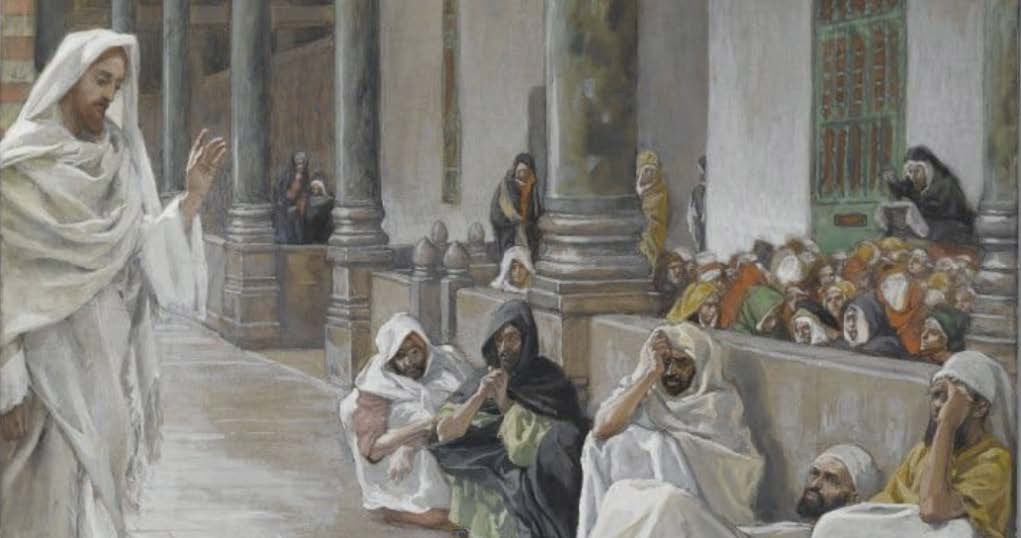
It is an all too common occurrence, Catholics leaving the Church because one well-intended Bible-believing Christian challenged their faith by asking one question, “Where is that in the Bible?” Suddenly, the scope of truth has been confined to a single book, the Bible, without either party realizing that they have bought into a collection of unexamined presuppositions. Namely:

  1. The Bible alone is the means of divine revelation
  2. The Bible-alone tradition is the way the Church has received revelation from the beginning, and…
  3. The individual Christian is the authoritative interpreter of the Bible.

And without even the slightest hint of defense or a discerning pause the unsuspecting Catholic allows his friend’s presuppositions to go unchecked and in many cases adopts them as his own. After all, one would think, if someone can quote that much Scripture, he must know what he is talking about.

Hydrogen and Oxygen
But are the above presuppositions true? Perhaps the greatest difference between Catholics and Protestants is the way the two groups view the means of receiving divine revelation. For most Protestants, the only reliable source of divine revelation is the Bible. This tradition of relying on the Bible as the sole means of receiving God’s revelation, however, is fairly recent as it was only introduced in the sixteenth-century Protestant Reformation. The Catholic Faith, on the other hand, is not a “religion of the book,” rather, it is the religion of the “Word” of God (Catechism of the Catholic Church, 108). The Church teaches that both Sacred Tradition and Sacred Scripture form one sacred deposit of the word of God (Dei Verbum, 10). The gospel of Jesus Christ is the source of all saving truth and moral discipline, and as such it must be conveyed to all generations. Therefore, Jesus commanded his apostles to preach the gospel. In the apostolic preaching, the gospel was handed on in two ways:

  1. Orally “by the apostles who handed on, by the spoken word of their preaching, by the example they gave, by the institutions they established, what they themselves had received – whether from the lips of Christ, from his way of life and his works, or whether they had learned it at the prompting of the Holy Spirit,”
  2. In writing “by those apostles and other men associated with the apostles who, under the inspiration of the same Holy Spirit, committed the message of salvation to writing” (CCC, 76).

Both means of the apostolic message, Sacred Tradition and Sacred Scripture, are bound closely together and communicate one with the other. They both flow from the same divine source, and share a common goal; to make present and fruitful in the Church the mystery of Christ (CCC, 80). I like the way Mark Shea put it in his book By What Authority?: An Evangelical Discovers Catholic Tradition. He describes the relationship between Scripture and Tradition as one—but not the same. “They were the hydrogen and oxygen that fused to form living water. They were the words and the tune of a single song. They were two sides of the same apostolic coin.” (p. 120)

Jesus Delegates Authority
But the question arises, how can the full deposit of faith remain intact and free from the fallibility of an individual’s whim? This is particularly important since there was no formal New Testament to guide the Church until 393 A.D. Who would preserve and teach with authority the gospel as it spread into various cultures and continents? To safeguard the gospel, the apostles appointed bishops as their successors, giving them “their own position of teaching authority” (CCC, 77). In the process of apostolic succession, we see the continuation of Jesus’ delegated authority down through the ages.

For it was Jesus who said to Peter, the first pope:

“I will give you the keys of the kingdom of heaven; and whatever you shall bind on earth shall have been bound in heaven, and whatever you shall loose on earth shall have been loosed in heaven.” Matthew 16:19

And to his apostles Jesus said, “All authority has been given to me in heaven and on earth. Go therefore and make disciples … teaching them to observe all that I command you” (Matthew 28:18-20) and “He who receives you receives me, and he who receives me receives the one who sent me” (Matthew 10:40).

What We Mean by ‘Tradition’
This idea of a living, continuing authoritative presence did not begin with the Catholic Church. In the Old Testament we see an ongoing authority in the Mosaic priesthood as well as the Royal dynasty of David and the Sanhedrin established just prior to Jesus’ birth.

Today, the bishops around the world in union with the bishop of Rome, the pope, constitute the teaching authority of the Church. This authoritative body is often referred to as the Magisterium. The Magisterium, Sacred Tradition, and Sacred Scripture are so closely “linked and joined together that one cannot stand without the others” (DV, 10).

This is the living Tradition of the Church. In defining what apostolic Tradition is we must first distinguish between social traditions, traditions of the Church and THE TRADITION. When the Church speaks of apostolic Tradition, she is not speaking of it in the sense that people traditionally open their gifts on Christmas Eve as opposed to Christmas day. Frankly, this is your own business and can be modified upon your grandmother’s approval. Nor is apostolic Tradition the numerous theological, disciplinary, liturgical, or devotional traditions developed in the local churches over the years. These traditions, (often referred to as “small t” traditions) can be modified or entirely dropped under the guidance of the Magisterium.

Manmade and Genuine Tradition
The apostolic Tradition, however, comes from the apostles as they received it from Jesus’ teaching, from his example, and from what the Holy Spirit revealed to them. It is this apostolic Tradition that is referred to when the Church speaks of Scripture and Tradition making up the deposit of faith. This apostolic Tradition must be preserved and taught by the Church.

Jesus’ criticism of the Scribes and Pharisees in Mark 7:13, “that you have invalidated the word of God by your tradition,” is not a blanket condemnation of all tradition, but rather, a correction regarding a tradition of man (Corban) that had choked the power of the Word of God. According to this tradition, a son could declare that what he had intended to give his parents was considered “Corban,” i.e., a gift devoted to God. Once a gift was considered “Corban” it could no longer be designated for the care of their parents. Wouldn’t you condemn a tradition like that? Joseph Cardinal Ratzinger pointed out that the “traditions were criticized in order that genuine tradition might be revealed” (Principles of Catholic Theology, p. 95).

Oral and Written
It comes as a big surprise to some to realize that at no time in the history of the people of God was the concept of the Word of God bound only to the written page. From the beginning of the Bible until Moses (1400 BC), oral tradition was the only means of passing on the words of God. And from Moses on through to the Catholic Church it was clearly understood by all in God’s covenant family (Israel) that the Word of God was to be understood in terms of both oral and written Tradition. It was also understood by Jesus and the early Church that the Word of God was transmitted by two means: orally and in written form. Paul clearly understood this to be true as we see in his exhortation to Timothy: “hold to traditions which you have learned, whether by word or by our letter.” (2 Thessalonians 2:14)

Cardinal Ratzinger noted: “Jesus did not present his message as something totally new, as the end of all that preceded it. He was and remained a Jew; that is, he linked his message to the tradition of believing Israel.” (ibid p. 95)

This dual meaning of receiving the Word of God in oral and written form is part of the tradition of Israel. Just weeks after the children of Israel were freed from Egypt, they settled for one year at the base of Mt. Sinai. It was there on Mt. Sinai that Moses received the written Torah (the first five books in the Bible), and during the forty-year period following the Exodus under the inspiration of the Holy Spirit Moses put the Torah into writing.

The Oral Torah
The fact that God put his will into writing does not come as a surprise to most Christians, but what does cause people, particularly Protestants, to theologically stutter is the fact that the Jewish community of the Old Testament as well as the people of Jesus’ time all believed that God gave to Israel an oral law (oral tradition) in addition to the written law. Rabbi Hayim Donin in his book entitled To Be a Jew explains: “we believe that God’s will was also made manifest in the Oral Tradition or Oral Torah which also had its source at Sinai, revealed to Moses and then orally taught by him to the religious heads of Israel. The Written Torah itself alludes to such oral instructions. This Oral Torah—which clarifies and provides the details for many of the commandments contained in the Written Torah—was transmitted from generation to generation until finally recorded in the second century to become the cornerstone upon which the Talmud was built.” p. 24-25

Jacob Neusner points out in his Introduction to the Mishnah, which is the codified oral tradition of the Jewish community, that the Oral Torah “bore the status of divine revelation right alongside the Pentateuch.”

An Ancient Current
The Jewish community, from which Christianity springs, has always understood Torah to be both written (Sefer Torah) and Oral (Torah She-B’al Peh). Along with the written Torah, the Oral Torah which Moses received at Sinai, was “transmitted to Joshua, and Joshua to the Elders, and the Elders to the Prophets, and the Prophets to the Men of the Great Assembly…” (Ethics of the Fathers 1:1). In nearly identical fashion the Catholic Church has continued in this tradition of the Word of God coming to his people in both written and oral form. It is fair to say that the new concept of God’s Word coming only in the written form (Sola Scriptura) was a foreign idea to the Jews both in Moses’ and Jesus’ day.

It must be made clear that the Catholic teaching that “Sacred Tradition and Sacred Scripture form one sacred deposit of the word of God” (DV, 10) is not some new cleverly devised system, but is a continuation of that ancient stream in which our forefathers stood. The very idea of the Word of God being both written and oral flows from our Jewish roots. It is part of the nourishing sap of the Olive Tree (Israel), and those who stand outside of this tradition stand on the shores of the still flowing ancient current.

Jeff Cavins is passionate about helping people understand Scripture and become disciples of Jesus Christ. Though he was born Catholic, Jeff went to Bible school and served as a Protestant minister for twelve years before reverting to the Catholic Faith. He then quickly became a leading Catholic evangelist and author. Jeff is best-known for creating The Great Adventure Bible study programs published by Ascension, which have been used by hundreds of thousands of people to engage in Scripture in a life-changing way. In addition to The Activated Disciple, some of his other recent projects include his podcast, The Jeff Cavins Show, and the Great Adventure Bible studies, Ephesians: Discover Your Inheritance, and Wisdom: God’s Vision for Life.

Calculating Love

Have you ever Googled the word “love”? If you did, you may have come across something called the Love Calculator. It is a website where you can supply two names, and the percentage chance of a successful relationship is calculated. Curious, I entered my name and my wife’s. Twenty percent! I hope my wife doesn’t read this!

I then decided to add my name and God. A whopping 13 percent! Then for the last attempt, I put in my name and Jesus. A very disappointing zero percent! Am I that unlovable? Of course, then I read the small print at the bottom of the page: “Please note that this site has no serious intention whatsoever.” Shocking!

The truth is, the modern world increasingly seems to have no real idea what love is or how to determine when love is real. That makes the seemingly simple words of Jesus about loving God and your neighbor very complex indeed. How can you love God with your all your heart, soul, and mind when you have no idea what the act of loving means? And then, what constitutes loving a neighbor? To make it more complicated, Jesus commands you to love them like you love yourself. I bet you can agree with me that there are a lot of people out there who do not even come close to loving themselves. Knowing what love is in modern times is just not that easy. How is a wellmeaning person able to find out the true meaning of love?

You don’t know what true love is? I think you do. Turn your eyes to that crucifix hanging in your church, home, or office. The answer was given over 2,000 years ago, and the image remains for the entire world to see.

Tracy Earl Welliver is currently the Director of Parish Community and Engagement for LPI where he manages the company’s coaching and consulting efforts. He has spoken on and coached dioceses, parishes, and individuals on stewardship, engagement, strengths, and discipleship all over North America, Australia, and New Zealand.

Pandemic Holy Communion Distribution

Dear Parishioners and Friends of the Cathedral,

Peace in the risen Lord! This weekend Bishop Paprocki announced that our parishes will begin distributing Holy Communion as a step to taking back our liturgical life as the Church in this diocese. Beginning this Sunday, May 17th, we will begin distributing Holy Communion as follows:

  • The distribution of Holy Communion at the Cathedral will take place from 8AM to 9AM and from 11:30AM to 12:30PM on Sundays until we are able to return to the celebration of Holy Mass. While some parishes are opting for sign-up times, this was judged logistically not beneficial for the Cathedral given the large number of the faithful who come to Mass at the parish. With everyone’s cooperation, this should be able to be done quickly, efficiently, and reverently.
  • Holy Communion will be distributed at three stations: in the vestibule of the Cathedral, at the Sixth Street entrance of the Cathedral atrium, and at the Fifth Street entrance of the Cathedral atrium. Being that the Fifth Street entrance is the most accessible for those who may have accessibility needs, those who physically able are asked to please consider using the vestibule station or the Sixth Street atrium station.
  • Holy Communion will be given to groups of nine persons, the minister making ten persons, so that the governor’s executive order is respected. There will be someone assisting with the groups, apart from the minister.
  • The distribution of Holy Communion will be a very short rite comprised of the Lord’s Prayer and the Dominus Non Sum Dignus (Lord I am not worthy…). After reception of Holy Communion, the faithful must return to their vehicles, as prayer will not be allowed in the Cathedral during these hours due to the potential for larger crowds than allowed by law at this time.

What is needed from those who wish to make use of this opportunity to receive our Lord in Holy Communion:

  • Patience and courtesy. This is by no means a convenient way to make Holy Communion available, but this have been judged the best option that we have at present while staying within the bounds of the civil law that is currently in effect.
  • Social distancing must be practiced while waiting for the opportunity to receive Holy Communion. Should it please God to bless us with favorable weather, this will be easier to do by spreading out on the property. Please be prepared for the weather as this will likely involve time waiting outside.
  • The minister will wear a mask during this time. Those wishing to receive Holy Communion are asked to do so as well, removing the mask only for the reception of the Blessed Sacrament.
  • There is no obligation to receive Holy Communion at this time and there is no penalty of sin for those who choose not to do so.
  • Please pray that we will be able to return to the public celebration of Mass soon as that is the ordinary way for the reception of Holy Communion and the most fitting expression of our shared faith as the mystical body of Christ.

Thank you for your attentiveness to the details of this letter. Again, this is by no means ideal but it is what we have at the moment and our attempt to make the best out of what has been a rather unpleasant situation, to put it mildly, over the past two months. I pray that this situation is short-lived and that we might return to fuller worship soon at Mass. May God continue to bless you and yours!

Sincerely yours in Christ,

Very Reverend Christopher A. House
Rector

Choosing Jesus and Choosing Our Own Good

Has anyone ever made a request of you by beginning with the caveat “if you love me?” Prefacing a request like this seems to be a form of emotional manipulation or a form of demand. I have had it done to me before and I really do not care for that approach. In this Sunday’s Gospel we hear Jesus doing exactly what I would prefer no friend of mine do in asking me for something.


Jesus gets a pass here, not just because of who He is, but because it becomes clear why He uses this turn of phrase when you understand what the statement entails. “If you love me, you will keep my commandments.” Honestly, how can one argue with that? Many times when people preface a request with “if you love me” it is because they are preparing to ask for something beyond a reasonable or agreeable request. Can we make an argument against what Jesus is asking? For the disciple, the only answer is no.

The answer is no because there is nothing unreasonable in the Lord’s request. There is nothing in the commandments that is contrary to our personal well-being. There is nothing in the commandments that will adversely affect us by our being faithful to what is asked. Here is our problem: many times we have a false notion of what is truly good; at times we want what is contrary to our ultimate good because sin has darkened our intellect and disordered our passions and appetites. Our ultimate good is in receiving God’s free gift of salvation. God wants that good for us and assists us with His grace to be able to receive that good. However, we have to want that good as well, and not act in ways contrary to it or in ways that will result only in obstacles to our receiving it.

This brings us to another aspect of Sunday’s Gospel: the promise of the Advocate. As Ascension and Pentecost approach, we are reminded that the Holy Spirit is the on-going gift of God’s presence with the Church, collectively and individually. It is the Spirit who seeks to cast light on our darkened intellect and passions so that we can see our choices for what they are; either a help or a detriment in deepening our relationship with God and keeping our focus on the things of heaven.

“If you love me, you will keep my commandments,” the Lord says to us. Dovetailing that we could also say “if you love yourself, you will keep His commandments,” since keeping the commandments will lead us to eternal life with the Lord in heaven. Loving God and keeping His commandments may seem to involve sacrifices but what are we really giving up? If anything is contrary to God then it is also contrary to our own good and we are not really “giving up” anything good.

May the Holy Spirit, the promised Advocate, continue to shine God’s light on our choices so that we may see the good and choose it daily. In choosing the good, we are choosing God and His promise of life with Him forever in heaven.

Father Christopher House is the Rector of the Cathedral and serves in various leadership roles within the diocesan curia, namely Chancellor and Vicar Judicial.

A Reason for Our Hope

When I was little, I came home from school one day after a lively lesson on saying yes to God in our lives and declared, “If Jesus were to come today and ask me to go with him, I would say yes and go right away!” My mother was rightfully cautious and explained that if anyone claiming to be Jesus wanted to take me, I should come ask her first. As a child, I was let down that she wasn’t as excited to say yes to Jesus as I was. As an adult, I can laugh and appreciate her response. She knew I could easily be deceived and the likelihood of Jesus coming to me in person was pretty low.

In the Gospel we hear Jesus say to us, “I will not leave you orphans, I will come to you…” It is so striking to me that this gospel is being read during our current times. During a time of confusion, suffering, uncertainty, and for many isolation and loneliness, God the Father is actively caring for us and telling each of us, you are not alone. The language of orphans and hope finds its answer in God’s plan for humanity when Jesus says, “I am in my Father, and you are in me, and I in you.” Despite all the failings of human history and our own failings, we are called to truly become part of God’s family as His children through Baptism. We are called to be able to emphatically say yes to God as his children, no matter where it takes us.

The disciples knew this well and lived it boldly as we see in the first reading. The Holy Spirit enabled them to rise above worldly sufferings and persecutions and work miracles in Christ’s name. In many ways, their courage is tied to their hope. St. Augustine once said that, “hope has two daughters, anger and courage; anger at the way things are, and courage to see that they do not remain the same.” The boldness of the disciples came from the love of the Holy Spirit that Jesus promised to give us all. The same Holy Spirit received at Confirmation. To be people of hope, we are called to be people of love and courage. I’m reminded of this when I read St. Peter’s letter in the second reading. We may not see Jesus face to face as I was expecting as a child, but we do experience his voice and truth through the Church he founded. St. Peter encourages the faithful to be ready to give an explanation to those who ask for a reason for this hope. We ought to be always ready, in love and gentleness, to proclaim the gospel, even if it is difficult. It helps us ask the question: Am I living a life rooted in hope to the point that I can declare boldly like a child that God is for us and not against us?

In a real way, we have the unique opportunity to be online disciples in our world today with so many facets of society moved to digital platforms. God may not send us His Spirit to raise the dead as He did with the early Church, and we may not experience persecution, but He is calling us to raise souls from the brink of despair by our words and presence today. We are marked as members of a divine family and no longer tied to this earth. He has promised we won’t be left orphans and has sent the Advocate to give us the strength to live in the hope of this promise. What will we do with it? Will those we interact with online, even in the small hidden ways, see this witness? Will they notice something different about us? The answers to our most profound questions about our situation have already been answered in the love of Christ. This saving love is the hope we are called to embody and share with the world. Let us do it boldly, and with the hope and trust of true children of God.

Angie Windnagle, BSC is an author for Liturgical Publications, Inc. and writes reflections on the Sunday readings.

God Shows up in the Sunrise

I’ve been trying to mark each day as different during quarantine life.


Friday nights, our family gets takeout to support a local business and watches a movie together. “Clueless” and “Roman Holiday” have been big crowd pleasers.

Saturdays, we take a laptop out on the deck and work out to a Zoom bootcamp together. We laugh hysterically when our burpees look nothing like our instructor’s.

And Sundays before Mass is streamed live into our living room, before I have my morning coffee and before the rest of my family wakes up, I walk the mile downhill to the edge of Lake Washington to watch the sunrise.

Of course, quarantine life hasn’t been all fun and laughs. Most of the time it feels like that Bill Murray film, “Groundhog Day,” and I wonder when it will end. There have been tears, confusion, and an ache of weariness in our bones.

And yet.

It’s dark on that walk down the hill. I watch lights turn on within houses as I walk past. I can smell coffee brewing and bacon caramelizing on the stove. The birds start singing on my way and I’ll see a family of raccoons scampering across the street further down the road. They notice me with their beady red eyes and disappear into the shrubbery. The sky starts to turn a shade of steel and I know it’s time to speed up my gate.

I don’t want to miss it.

I want to see the sunrise because like the Psalmist, I pray in the morning that God will hear my voice, I plead with him and I wait. (Ps 5:3-5) I want to feel that it is going to be different.

I want to see the sunrise because I want to remember that God is still in charge. The sun is still rising every morning. He’s taking care of the big things, like governments and viruses, and he’s taking care of the smaller things, like the health and safety of my little family and the unrest in my heart.

I want to see the sunrise because I want to see how God is going to show up, not just in the sunrise but in this mess of a pandemic. I feel as if I am almost daring him to show up. I know he’s here but I want something big.

The sky is still steely blue when I arrive at the lake. My heart calms as I watch the sky transform from azure blue to indigo purple.

A man with a fishing pole walks down the dock and baits his hook. We are the only two people out here on the lake before 6 a.m.. I find a small comfort that I am sharing this with him, even a stranger. I am not alone.

The sun begins to peek over the Cascade Mountain range and the sky pinks up. Orange reveals itself to meet pink and the sky resembles rainbow sherbet.

“This is lovely,” I pray, “But I want something even bigger. God, fix all of this.”

I know the answer even before I turn to walk back up the hill to home as I hear the words from Ecclesiastes ring in my heart:

The sun rises and the sun sets;
Then it presses on to the place where it rises.
What has been, that will be;
what has been done, that will be done.
Nothing is new under the sun!
Even the thing of which we say, “See, this is new!” has
already existed in the ages that preceded us.
(Ecc 1:5,9-10)

There is a strange comfort in that. I think it’s called Hope.

Shemaiah Gonzalez is a freelance writer who holds a B.A. in English Literature and M.A. in Intercultural Ministry. She thrives on moments where storytelling, art, and faith collide. A Los Angeles native, she now lives in Seattle with her husband and their two sons. For more of her writings, visit www.shemaiahgonzalez.com

Witnesses for Jesus

This journey of faith is not always easy. Sometimes the greatest wounds are those we suffer when family members and friends wander away from God and leave us behind. The faith they had when they were younger is now strained, or they see the daily walking with Jesus to be too difficult. For them, Jesus becomes what Peter wrote about when he described Jesus as the stone that causes people to stumble and the rock that makes them fall. Our journey is hard enough, but watching a loved one stumble and fall is heart-breaking.

What are we to do in such a situation? Most importantly, we pray. We must realize that God is more powerful than us, and even if we can’t make them see the truth, He can. Then we witness to the transformative power of Jesus by our own lives. We need to serve him in word and deed. We should let a joy of being a disciple enlighten our faces. Allow Jesus to work through us so that others may be drawn to him. Lastly, we must never lose hope. Many have walked long journeys alone only to find God far down the road. What will it take to bring someone to Christ? It might be an action, a word, or an emotion. We never know how certain people will be touched. That loved one is a gift from God in your life. Place them back in God’s hands, and let Him pick them up if they have stumbled and fallen.

Tracy Earl Welliver is currently the Director of Parish Community and Engagement for LPI where he manages the company’s coaching and consulting efforts. He has spoken on and coached dioceses, parishes, and individuals on stewardship, engagement, strengths, and discipleship all over North America, Australia, and New Zealand.

Prayer Wall – 05/06/2020

Please pray for our friends Barb and Greg. Greg was recently diagnosed with stage 4 kidney and bone cancer, their daughter Mandy died unexpectantly in April and now today Barbs brother, David died unexpectantly! As you can imagine she is hurting.

Prayer Wall – 05/06/2020

Please pray for my friend Barb and husband Greg. Greg has recently been diagnosed stage 4 cancer, their was found dead April and Barbs brother died today. She is in a lot of pain.

« Previous Page
Next Page »

Liturgy

Sunday Masses (unless noted differently in weekly bulletin)
Saturday Evening Vigil – 4:00PM
Sunday – 7:00AM, 10:00AM and 5:00PM

Weekday Masses (unless noted differently in weekly bulletin)
Monday thru Friday – 7:00AM and 5:15PM
Saturday – 8:00AM

Reconciliation (Confessions)
Monday thru Friday – 4:15PM to 5:00PM
Saturday – 9:00AM to 10:00AM and 2:30PM to 3:30PM
Sunday – 4:00PM to 4:45PM

Adoration
Tuesdays and Thursdays – 4:00PM to 5:00PM


CatholicMassTime.org

Parish Information

Parish Address
524 East Lawrence Avenue
Springfield, Illinois 62703

Parish Office Hours
Monday thru Thursday – 8:00AM to 4:00PM
Fridays – CLOSED

Parish Phone
(217) 522-3342

Parish Fax
(217) 210-0136

Parish Staff

Contact Us

Contact Us

Copyright © 2026 · Log in