Cathedral of the Immaculate Conception

Springfield, IL

  • About
    • Contact Us
    • History of the Cathedral
    • Liturgical Schedules
    • Parish Staff
    • Register with Cathedral
    • Subscribe to the Cathedral eWeekly
  • Sacraments
    • Baptism
    • Becoming Catholic
    • Matrimony
    • Vocations
  • Ministry List
    • Adult Faith Formation
    • Cathedral Meal Train
    • Cathedral Online Prayer Wall
    • Cathedral Concerts
    • Family of Faith
    • Grief Share
    • Health and Wellness
    • Spiritual Resources
  • Stewardship
    • Stewardship: A Disciple’s Response
    • Stewardship Form
  • Support
    • E-Giving Frequently Asked Questions
    • Give Online
  • Sunday News
    • Announcements
    • Cathedral Weekly
    • Livestream Feed
    • Submit a Mass Intention Request
    • Weekly or Announcement Submission

Forward in Faith and Hope

For this Fifth Sunday of Easter this year, the Church provides for us a selection from the Gospels that takes us back to the night before Jesus died. These passages that are presented to us are from the fourteenth chapter of John’s Gospel, a section known as the Last Discourse. Jesus would have been speaking in a way that would have bewildered the disciples; they would most likely have been perplexed and confused, as we hear from Thomas’s question. Little did the disciples know that in a matter of hours their lives were “going to fall in” as one commentator puts it. They would find themselves turned upside down in chaos and uncertainty.

The Scriptures are timeless. We must never forget that the word of God is as apropos for us today as it was in the days when it was first heard/lived. Most of us can relate to the unfolding drama recorded for us by John. A few months ago (it is somewhat mystifying to say “months” now), we were living our lives but how quickly those lives were upended, not as quick for the disciples perhaps, but still quick for us, in about a week’s time. At times like these, it is easy to fall into the trap that Philip does in the Gospel when he says to Jesus “show us the Father and that will be enough for us.” We might be tempted to say “just manifest your power or glory in some undeniable way, Lord, and we will believe.” We do not need to ask God to reveal Himself in such ways since He is always present; it is up to us to recognize Him.

In these months, I have seen the face of God in the many, many parishioners who contacted the parish office early in the shutdown to let us know that they were prepared to help in any way those who were vulnerable and could not get out for food, supplies, or medicine. I have seen the face of the God in those who have generously and sacrificially continued to send in financial support to the parish. I have seen the face of God in those who continue to manifest small and large acts of kindness, compassion, and selflessness in these uncertain and sometimes frustrating times. I have seen the face of God in these days because God is always present, hiding in plain sight, wanting and waiting to be seen by us. I hope that you too have been able to see the face of God in these uncertain times.

Being able to see God present around us is vital to our moving forward because moving forward now involves a degree of uncertainty and maybe some apprehension or fear for some, just as it did for Thomas in the Gospel. As we look forward to the days ahead, with a desire to return to some normalcy, if we are able to see God in our midst, then we can look forward in hope, even if the path and the details are unclear.

Some much of who and what we are has become uncertain: our routines, how we view the world, and how we understand this life. In the end, there is still one certainty and that is our loving God revealed to us in Jesus Christ who is the way, the truth, and the life. St. Paul teaches us that He is the same yesterday, today, and forever and so is His love, His mercy, and His presence among us. Find Him present in your life so that, together, we might move forward in faith and hope to a better tomorrow. God bless you and yours!

Father Christopher House is the Rector of the Cathedral and serves in various leadership roles within the diocesan curia, namely Chancellor and Vicar Judicial.


Praying for Patience: What I’ve Learned from God’s Time vs. My Own

Patience. None of us have as much as we need. We all need it.

The lead singer of Guns N’ Roses, Axl Rose, even sang about it. Of course, he isn’t exactly the pinnacle of patience. If he were, he never would have sent a roadie on a plane from the U.S. to London moments before a concert to fetch the infamous yellow jacket he left behind. (And you thought you’ve had challenging bosses.)

Patience. I’m told it’s a virtue. Patience is exemplified mostly by saints who became saints because they were capable of said virtue. Saint Monica of Hippo patiently prayed for 17 years for the conversion of her son, Augustine — and we’re all thankful she did.

I don’t exactly put forth 100% into my practice of this virtue. I’ll be the first one to stand up and share that if there were a patience deficit, I would be the poster child for it. I am what-not-to-do for patience. Ask my kids, ask the cat, ask the countertop I vigorously tap while “patiently” waiting for everyone to start gravitating towards the door to leave for anywhere.

I struggle with patience in all aspects of my life, but specifically as a parent. I can only answer the same questions so many times before I want to bang my head on the wall. I can only imagine how I must make God feel when I do the same. I struggle with patience regarding my chores, my marriage, my work, my family, and people I run into in life. I am not always charitable. I allow myself to get frustrated, I get angry, I’m not friendly, I yell, I get short-tempered. I forget I make mistakes. I forget all the times that others have been patient with me in life. Most importantly, I forget God’s infinite patience with me.

Mother Angelica said that “patience is adjusting our time to God’s time,” and that’s a problem for those of us who have grown so dependent on an instant-gratification culture filled with Amazon Prime, good wifi, and remote voice commands.

As a parent, I’d like to be better at being patient with the Lord when I ask for something. On any given week, I tell my children “no,” “later,” or “another time.” All because their requests are either not timed right, not good for them, or simply not possible. The only difference is my response to my children is clear, immediate, and direct. If God is clear and direct, which I’m confident he often is, then I’m not being open to listening because I want what I want when I want it… instead of having faith and trusting God.

God gives us what he wants when he wants us to have it. Like any good parent, he knows when the best time is, or if there is a best time.

I once heard that the best way to understand God’s time is to understand his ability to see everything. God is above looking down on the entire locomotive we call time. All at once he sees the caboose, the engine, and every car in between (past, present, and future). The train moves slowly for us riding inside of it, and even if we’re walking around, it takes time to move a few cars up. God sets things in place for us in a certain car. It may take us several “cars” to reach the intended one, but we always get there. Even if our request isn’t in the car, I’m positive a lesson to be learned is along the way and we almost always understand his answer by the time we get there.

Patience is a “time” thing for us. We experience the waiting period that God doesn’t. I’m certain this is the way it is because in waiting, there can be suffering, but there is also always hope in this life. Every request is a trust fall exercise with a God we can’t see but one who is there and wants us to just let go. He’ll catch us. I think making us wait is his way of pushing us to trust in him. To ask and then let him do his job. God can see the whole train.

While I don’t always understand the “whys” in life, I know if I trust and stay patient, the wait is a lot easier. So, how do I make the wait bearable? Well, I don’t most of the time. Because I’m not patient. But I do try. I try to remind myself to trust God. It’s an hourly effort most days to remember that he is not ignoring me, but that he knows what’s best for me and he will take care of me.

I work towards patience daily (and fail hourly). I start and end the day with an Our Father and when I feel myself losing patience a quick Hail Mary. If it’s a really rough day I say multiple Hail Marys in rapid succession. When I’m frustrated and feel my tipping point is coming, I try to say, “Jesus I trust in you” in an effort to slow myself down. I also recently came across this prayer for the virtue of patience:

Patience is a virtue of the Lord: He awaits the return of His children. Forgive my trespasses Oh Lord Jesus, For many times have I tested You. I deserved the wrath of Your hand, But You saw greater things for me: Your patience has been enormous! Grant me a droplet of such endurance, That I may abolish my impious impatience, Refraining from using unpleasant words, And always reflecting Your serenity. Great is the Lord Jesus in His ways!

Patience is a virtue but it’s also a journey that takes a lot of dedication, humility, piety, perseverance, faith, and love. Most importantly, it takes trust that God’s got this. In the words of Axl Rose: “… take it slow, and it’ll work itself out fine. All we need is just a little patience.”

Christina Antus lives with her husband and her three cute, but noisy, kids. When she’s not writing, she’s running, reading, folding forever-piles of laundry, and probably burning dinner.

A Heart That Need Not Be Troubled

Promises have meaning and are typically not taken lightly. There is something about receiving someone’s promise that evokes peace in our hearts. While the present moment may be uncertain or trying, knowing there is something good on the horizon gives hope. In John 14, Jesus shares heavenly promises bound to bestow peace and hope.

Jesus comforts us, proclaiming that we should not let our hearts be troubled. He encourages us not only to have faith in God but also to have faith in him, an act of trust you will never find misguided. Faith, as Hebrews 11 tells us, “is the realization of what is hoped for and evidence of things not seen.” Most experiences of faith are something not seen but felt only in our hearts. Perhaps having faith is not always the simplest task, but God never asks the impossible; therefore, we can be assured of the grace necessary to accomplish it.

We can hold tight to other promises shared by Jesus in today’s Gospel as well; these are especially comforting in times of uncertainty. Jesus has gone before us and is preparing a place for us — meaning there is room in heaven for everyone. Furthermore, He promises to come back and take us there so that all we need to know of how to get there, is to follow the Way, Jesus himself. For Jesus is the Way, the Truth, and the Life — the model of faith and giver of peace.

Although Jesus has gone before us, he is still, and will always be, right here with us. As worries mount, so too does the tendency to feel God has forgotten us, but the Scriptures ask us to recall the promises of His presence. Hope is restored upon the assurance never to be forsaken nor abandoned (Hebrews 13:5); recalling Jesus remains with us always, until the end of the age, to be exact (Matthew 28:20).

It is precisely those moments when we struggle the most to see God amid our circumstances, that we should rely those promises. With the gift of hindsight, we can look back to the outcomes of other hardships or trials (especially those beyond our control), carefully and prayerfully recognizing all the graces bestowed. Possibly the situation didn’t resolve as wished, yet there is a discernable peace associated with that time and some greater good that came from it.

A family once prayed for a cure to their brother’s terminal illness. They longed for his healing. As the disease progressed, so did his once dormant faith. Before becoming sick, he was far removed from the Catholic faith. His illness brought forth completely different healing as he decided to embrace a relationship with Christ. The miraculous reception of the sacraments, after too many years to count, and the acceptance of God’s will; amazed the family, who likewise found great peace in this otherwise unwanted circumstance. In the end, the eternal promises of Christ resulted in a peace that was truly beyond understanding.

Like St. Thomas, we too can worry we’ll not know the path to the place Jesus has prepared for us. The road may seem confusing or beyond our reach. The promises, while trustworthy, may feel as though they are meant for someone else, and not for someone so filled with doubt, sin, or fear. Remember, out of great love for us, while we were still sinners, God sent his only Son to die for our redemption (Romans 5:8).

Jesus is truly the Way, the Truth, and the Life, and we don’t have to search far to find he is always with us. He journeys alongside our darkness and our joy. He is the embodiment of the unseen God; if we have seen him, then we have seen the Father.

We don’t need to search far to find signs and wonders of God. We can witness his almighty love in a sunrise, the sweet smile of a child, and the peace which comes in prayer. “Amen, Amen, I say to you, whoever believes in me will do the works that I do, and will do greater ones than these, because I am going to the Father,” (John 14:11). Amen, this is where hope prevails amid the most challenging and uncertain times.

Allison Gingras is the founder of ReconciledToYou.com — where she shares her Catholic Faith and Relationship with Jesus with laughter and honesty, and how it is lived in the everyday, ordinary of life! Allison hosts A Seeking Heart with Allison Gingras recorded on FB Live Mondays 12:30 pm et; and distributed through Breadbox Media. Her newest project is the Stay Connected Journals for Catholic Women, published through Gracewatch.Media. Allison works for WINE: Women In the New Evangelization. As their WINE Steward she oversees and facilitates the online aspect, aka the Virtual Vineyard, including WINE Book Clubs.

The Path to True Freedom

When I was in eighth grade (1989/1990), I saw the movie The Shoes of the Fisherman for the first time; it has since become one of my favorites. The 1968 movie stars Anthony Quinn as a Ukrainian archbishop named Kiril Lakota who has been imprisoned in a Siberian labor camp by the Soviet government. The movie begins with Lakota being brought to Moscow and face to face with Soviet Premier Kamenev, played by Sir Laurence Olivier. The crux of the meeting is that the Vatican has brokered a deal for Lakota’s freedom, but before Lakota finds this out, Kamenev asks him if has learned enough in his confinement to face freedom. Lakota responds that he has already been free for a long time because he has spiritual freedom.

This scene has been bouncing around in my mind lately because I have felt like a captive these past weeks due to the public restrictions in place because of the COVID-19 pandemic. I’m filling to bet that I’m not the only one in the parish who has felt that way. At the same time, in honest reflection, I know that I should not feel that listlessness inside because I have allowed my mind to err concerning what true freedom is and from where it comes. True freedom is not about the things of this world, nor is true freedom something that this world can ever give us.

The Fourth Sunday of Easter is traditionally nicknamed “Good Shepherd Sunday” because, you guessed it, the Gospel for this Sunday always speaks of Jesus being the Good Shepherd. When I envision a shepherd, two main qualities come to mind: one who protects and one who leads. The Lord Jesus seeks to do both for us. He offers us grace upon grace to aid us in the struggle against evil, sin, and temptation. The challenge for us is to open up and direct our lives to receiving these graces from the Lord. When we do, not only will we have divine aid in our struggle against sin and temptation but we will also find ourselves being led more and more to detachment from the world, and detachment leads us to true freedom in Christ.

If we find ourselves feeling like caged tigers these days, it’s a good time to ask ourselves how attached we are to the world and what belongs to it. Are the world and the things of it bad in and of themselves? No. However, if we seek to attach ourselves to the things of heaven and the life of grace then we will experience greater inner freedom in our lives, the freedom that Lakota knew in The Shoes of the Fisherman. If you have some extra time in these days of isolation, try and find the movie on-line, and, more importantly, ask the Lord Jesus, our Good Shepherd, to lead you to greater detachment. You will find that the grace of detachment will lead you to greater happiness and peace.

Father Christopher House is the Rector of the Cathedral and serves in various leadership roles within the diocesan curia, namely Chancellor and Vicar Judicial.
When the Suffering Becomes Too Great

Well, here we are in the “new normal” of COVID-19. And we don’t know how long it’s going to be before things change.

We have to strive to be strong and to be together (in spirit, of course). This indeed will test our character, our strength, and our coping mechanisms, and will really show what we’re made of. And the better we learn to handle ourselves in this time of isolation, the more bearable these days will be.

If, however, it seems our lives are beginning to unravel and/or spiral out of control, we would do well to remember that there is someone who can still be our Rock. His name is Jesus Christ. The blessing of having our Catholic faith is that we know this. But what about those who don’t? Perhaps this could be a significant moment in history for us to help people come to desire him more than ever before. This, of course, will be influenced by the degree to which we radiate peace and joy amid this time of great suffering and upheaval.

If our lives are seen as attractive (in the ways not of this world), people might be more open to Jesus, as a result of first becoming more open to us. Hopefully, authentic relationships may develop through which a person might choose to eventually take a leap of faith. And we want people to take that leap, for after doing so, what might seem like unbearable suffering can be seen in a new light.

How Faith Transforms What We “See”
In my own life, I was moved by the attractive example of others, opened my heart to Christ more, began to taste his love in a new way, and began to trust him more than I ever had before. This made it easier for me to cooperate with God’s grace, which brought about blessings beyond measure (and much healing). This brought me to realize that God’s plan for me was better than my plan, and that made me want to know God more intimately, and to cooperate with him (and his graces) more profoundly.

The after-effects of that journey, however, is that I can now see how I am handling myself during this isolation a lot better than if this were to have happened years ago, before my conversion. And today, not only am I able to make this time bearable, but I can also make it fruitful. And regardless of the degree of suffering, you can too.

Entering A New State
The reason for that is because I learned that I could use those experiences to enter more deeply into the Passion of Christ. With all due respect to the profound suffering that people are experiencing, in due time, and with due support, we can choose to enter his passion out of love for him. In doing so, we can more profoundly unite our hearts and our sufferings to his and can begin to walk with Christ in a more intimate way. This might be easier said than done, but it is still something we can set our sights upon as a target.

Through that, however, we can come to see our purpose in a whole new way. Ultimately, of course, our purpose is to work for the salvation of souls. But if we embrace suffering and unite our hearts to the Lord, we can gain a better understanding of what that actually will look like in our lives, and how our choice to do that might impact others in a positive way. Through that, over time, we can gradually shift from wherever we are, into a state of mission—befitting of furthering the Kingdom of God. In that state of mission, we can come to see the suffering is no longer just an occurrence, but rather is an occurrence that we can transform into something better. And that “something better” is penance.

Carrying Our Crosses
If we become engaged in this mission, we ought to not expect that the crosses we are carrying will just go away. Rather, we ought to expect to gain the strength to carry them, and to carry them well, not with resentment and or bitterness, but rather with interior joy and peace—hopefully eventually to the point where it attractively radiates outward from within us. How we get there isn’t to do with the type of sufferings we are faced with during our lives—or whether they become alleviated—but rather is to do with whether we are willing to change our thinking, such that we can willfully accept sufferings as penance instead of experiencing and wasting the suffering altogether.

In other words, if we change our thinking to see that our sufferings can be given as a gift to God by being transformed into a form of penance, then enduring those sufferings can be seen through that new lens; the lens of charity. And when we willfully endure penance with the joy of knowing we are giving the gift of our hearts to the Lord (not that we should seek out the suffering to bring this about), that penance can be used for the good of all humanity; for the eternal salvation of souls!

What a profound gift to give!

A Renewed Sense of Purpose
In transforming our way of thinking like that, we can become renewed with a sense of purpose that will last our entire lives. Also, it will give us the confidence to embrace future inevitable sufferings with courage so we can serve in even a greater capacity.

And that points us to greater intimacy with Christ—in a complete, consistent, and forever type of love.

So, when suffering seemingly becomes too great, or at any point leading up to that threshold, perhaps we can remember that complete, consistent, and forever love, and courageously embrace our sufferings as a penance.

If enough people strive to enact this degree of charity, the face of the entire world would be forever changed for the better.

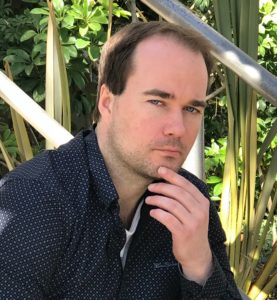
Hudson Byblow is a Catholic speaker and writer who presents at conferences throughout Canada and the United States. He shares his personal testimony to clergy, schools, and parishes and consults for various Catholic agencies, speakers, and educators. He focuses on his story of overcoming trauma while pursuing greater self-honesty and truth. Today he strives to elevate the conversation through clear language while revealing the joy of living chastely in his newfound freedom in the Lord. His website is www.hudsonbyblow.com.

In the Midst of Hardship, Anxiety & Suffering

Do you ever feel that life is unfair? Though we understand that injustice and inequity exist, there is an underlying assumption that if we believe in God, or better yet get God on our side, then the scales of justice and fairness will somehow be tipped in our favor. God will intervene to set things right. The image we often carry of God is one of an all-powerful and grand fixer. But, if we listen carefully to Sacred Scripture and study faith tradition, this is not who God is at all. Our second reading this weekend gives us a great perspective to pursue. “Christ also suffered for you, leaving you an example that you should follow in his footsteps. He committed no sin and no deceit was found in his mouth.” If we look to the passion of Christ, we clearly see a God who does not eradicate or sidestep injustice and great suffering but embraces them. If the idea is to somehow get God to remove these painful stumbling blocks from our path, then we would have been given this as the example to follow. Instead, we have been brought through insults, unjust accusations, intense suffering, ridicule and death.

Jesus kept himself intact as he went along the path of the cross. It was this anchored integrity, rooted in a relentless relationship he had with his Father that kept him from anger, bitterness, retaliation, defensiveness, and self-pity. His strong resolution to endure this pain brought him to the place where all pain empties into, the Resurrection. The abundant life Jesus desires us to have is our resurrected life! It is not the promise of an easy meal ticket through this earthly one but the glory of transformation and new life to come. This is where the Good Shepherd’s example leads us. It’s not about finding green and safe pastures here. Believing in Jesus as the Good Shepherd isn’t some form of spiritual “bubble wrap” we roll around ourselves to protect us from all of life’s evils and hardships. This is nowhere near the idea. It certainly was not how the original disciples saw things and the way their lives played out didn’t reflect a God who shielded them from all injury and harm. They encountered quite the opposite. But, they followed the example of their Good Shepherd.

Is your faith in God still strong in the midst of hardship, confusion, anxiety, and suffering? I think that there is a little child in all of us that secretly really wants God to make it all better. Sometimes, that little child is so forward in our personality that God’s response determines our level of faith. But, God is saying, “follow the example I gave you.” Listen to Him. “This is my beloved Son!” We have a hard time with this, and we fight it tug and pull with God all the way! We beg and plead, look for magical prayers, say the right things, storm the doors of heaven, and exhaust ourselves in the process.

Can you love a God who leaves you with your suffering? “The Lord is my shepherd; there is nothing I shall want.” This means nothing. Nothing includes a resolution to my problem, an avoidance of pain and suffering, the sheltering of someone I love from hardship or death, a tipping of the scales in my favor or anything else we believe we may want. Nothing. My only desire is God and God alone. If I can find this treasure, a relationship with my Creator, the essence and truth of life, then that is ALL that I need. Let God take care of the rest and let it go.

That’s what Jesus, our Good Shepherd, did. He let it go. After he pleaded with God in the garden, he let it go. He realized in the depth of his being that none of this was about his ego or selfpreservation. It’s not about us either and that’s one of the hardest lessons of life to learn. It’s not about us. It is about God and the fact that He lovingly chose to make each of us into the tremendously wonderful person we are, placing the very spark of His Divine Presence within us. All we need is God’s presence. It is enough.

Suffering and hardship are not the enemy but encounters that can bring us deeper into the mystery and wonder of life and of God’s presence. As we embrace every moment of suffering, work through every insult and injustice, find faith, hope, and love in every moment of life’s blessing, we kiss the eternal resurrected presence and life that awaits us. We kiss God.

If we listen deeply and distance ourselves from all the conflicting and distracting voices, this is the Good Shepherd we desperately want to follow. We want ultimately to live and not die. The labor pains we must endure until we get to our eternal destiny are well worth the sacrifice. We will welcome new life just as parents welcome the birth of their child. Suddenly, for the mother who endured all the pains of birth, the experience that seemed relentless and never-ending recedes as the joy and love of birth are ushered in.

Jesus wants to keep us focused. It is too easy to get distracted by this world, as if all that is around us is what is of ultimate importance. It is not. If we pray to keep our focus on Christ and the example he gave us, our loving Good Shepherd will always keep us in his care and never let anyone distract us or lead us astray. If we allow ourselves to be distracted and lured by pastures that may at first appear greener, we can quickly lose our way.

The world struggles with our Good Shepherd. It makes no sense to some why we would believe and pledge our devotion to a God who asks us to accept suffering, injustice, hardship, and death. Coming to a place of acceptance of this does not involve a satisfaction of our minds but a relationship that satisfies our souls and the truth of who we are. Are you willing to leave ALL worldly cares, anxieties and worries behind and return to the true shepherd and guardian of your soul?

Fr. Mark Suslenko is Pastor of the Community of Ss. Isidore and Maria in Glastonbury, CT. Fr. Suslenko publishes reflection articles regularly to his parish’s blog. To read more of Fr. Suslenko’s reflections, visit https://isidoreandmaria.org/category/pastor-reflections/.

CCCW Scholarships

The Cathedral Council of Catholic Women and the Knights of Columbus Council #16126 are offering scholarships to students who are:

(1) registered members of the Cathedral parish and
(2) attending a Catholic high school or entering 7th or 8th grade a Catholic grade school in the fall of 2020.

Scholarship applications will be processed electronically this year. Use this link to request an application: https://forms.gle/u2LvujZBbcHhmsBr7.

The deadline to submit completed scholarship applications is midnight on Wednesday, May 13, 2020. Late applications will not be accepted. Please email questions to [email protected].

Prayer Wall – 04/26/2020

Please pray for Keli Casper and Family. Her father passed away today.

Pastoral Changes

Dear Parishioners and Friends of the Cathedral,

Greetings in the risen Lord! These past several weeks have been challenging on many levels for many individuals; however, we look to the future with hope for a return to life beyond the days of this current pandemic, because, as Pope St. John Paul II taught the Church, we are a resurrection people. Part of that return means normal acts of governance in the life of our diocese and in our parish. Looking forward, it is time to announce the upcoming priest personnel changes in the diocese and these will greatly affect the parish. These changes will take place on July 1st.

Bishop Paprocki has asked Father Rankin to assume full time duties as Priest-Secretary to the bishop and master of ceremonies as well as becoming Associate Director of the Office for Vocations. Father Rankin will remain in residence at the Cathedral but he will no longer be serving as parochial vicar of the parish.

Father Friedel will complete his service as parochial vicar of the Cathedral Parish and as chaplain at Sacred Heart-Griffin High School, and become pastor of Our Lady of Lourdes Parish and St. Thomas Parish, and chaplain at Millikin University, all in Decatur. He will also continue to serve as an associate vocation director for the diocese.

Finally, I will be stepping down as Rector of the Cathedral and as Diocesan Chancellor. I will remain as Vicar Judicial of the diocese and Director of the Department for Canonical and Pastoral Services while also becoming pastor of Christ the King Parish here in Springfield.

I am happy to announce to you that Father Brian Alford, currently Pastor of St. Jude Parish in Rochester and Vicar for Priests, will succeed me as rector. Father Alford is no stranger to the Cathedral Parish, having lived here when he served as Bishop Paprocki’s priest-secretary and master of ceremonies from 2013-2016. Father Alford is a fine man and a holy priest who will serve you well. I am also happy to announce to you that Deacon Dominic Vahling and Deacon Peter Chineke will both be assigned as parochial vicars here at the Cathedral following their ordinations to the Priesthood.

These announcements are always made with mixed emotions, which are even more complicated this year by our physical separation from you due to the COVID-19 pandemic. God willing, we will soon return to prayer as a community in the Cathedral Church and to other aspects of parish life. Until then, I ask that you please keep us priests of the parish, and those who will succeed us, in your prayers and know that you remain in ours.

May God bless you and yours with the fullness of Easter peace. I remain

Yours in the risen Lord,

Very Reverend Christopher A. House
Rector

Walking into the Sunrise

On this Third Sunday of Easter, the Gospel keeps us on that first Easter Sunday, this time placing us on the road to Emmaus. We are not sure where the exact location of Emmaus was as there were multiple towns named Emmaus that are mentioned in the Scriptures. From St. Luke’s Gospel, we know that the town was outside of Jerusalem about seven miles, not too far since these two disciples were able to make it there in one day’s journey.

I am sure that most of us are familiar with story. Two disciples are walking to Emmaus. It is Sunday, two days after the Crucifixion. These disciples are heartbroken following Good Friday. Their world is further turned upside down because they have heard that Jesus has been raised from the dead. All of this they tell to the stranger who draws near to them on their journey and walks with them. The one who walks with them is no stranger, it is the Lord, but these two disciples are not able to recognize him.

There was an old interpretation of this story that said that the disciples were walking into the sunset, which obscured their sight. The Gospel tells us that it is the end of the day because the disciples invite this stranger to stay with them. While the setting sun may have obscured their sight, it was not what was preventing them from recognizing Jesus who was present to them. The disciples were grieving and rightly so, but their grief as well as possibly their own beliefs of who Jesus should have been or what He should have done was preventing them from seeing Jesus who was right in front of them. As these disciples pour their hearts out to Jesus, He in turn helps them to make sense of all that has happened, putting them back on the road to right spiritual vision which will be fully restored for them later that evening in the breaking of the bread.

The same can be true with us, maybe even right now as we push these days of uncertainty, frustration, fear and, yes, even grief. Life has a way of overwhelming us at times, not allowing us to see things or people clearly for what/who they are and this can happen in our relationship with the Lord. Just like with these disciples, Jesus is near to each and every one of us, whether we recognize Him or not. If we allow Him, our Lord will help us to approach the ups and downs of life with faith and hope. Making sense out of life doesn’t always mean that we will understand the things that happen, but, as disciples, we will be able to place our frustrations, our brokenness, our grief, our fears, and our “whys” into the Lord’s hands, trusting in His goodness.

May the grace of the risen Lord sustain us in these days until we are able to gather together again for the Breaking of the Bread, that is His true presence, when He will remind us in a very real way of the depth of His love for us. No matter what is happening in our lives or the world, if we are walking with Jesus, we are always walking into the sunrise.

Father Christopher House is the Rector of the Cathedral and serves in various leadership roles within the diocesan curia, namely Chancellor and Vicar Judicial.

« Previous Page
Next Page »

Liturgy

Sunday Masses (unless noted differently in weekly bulletin)
Saturday Evening Vigil – 4:00PM
Sunday – 7:00AM, 10:00AM and 5:00PM

Weekday Masses (unless noted differently in weekly bulletin)
Monday thru Friday – 7:00AM and 5:15PM
Saturday – 8:00AM

Reconciliation (Confessions)
Monday thru Friday – 4:15PM to 5:00PM
Saturday – 9:00AM to 10:00AM and 2:30PM to 3:30PM
Sunday – 4:00PM to 4:45PM

Adoration
Tuesdays and Thursdays – 4:00PM to 5:00PM


CatholicMassTime.org

Parish Information

Parish Address
524 East Lawrence Avenue
Springfield, Illinois 62703

Parish Office Hours
Monday thru Thursday – 8:00AM to 4:00PM
Fridays – CLOSED

Parish Phone
(217) 522-3342

Parish Fax
(217) 210-0136

Parish Staff

Contact Us

Contact Us

Copyright © 2026 · Log in