Cathedral of the Immaculate Conception

Springfield, IL

  • About
    • Contact Us
    • History of the Cathedral
    • Liturgical Schedules
    • Parish Staff
    • Register with Cathedral
    • Subscribe to the Cathedral eWeekly
  • Sacraments
    • Baptism
    • Becoming Catholic
    • Matrimony
    • Vocations
  • Ministry List
    • Adult Faith Formation
    • Cathedral Meal Train
    • Cathedral Online Prayer Wall
    • Cathedral Concerts
    • Family of Faith
    • Grief Share
    • Health and Wellness
    • Spiritual Resources
  • Stewardship
    • Stewardship: A Disciple’s Response
    • Stewardship Form
  • Support
    • E-Giving Frequently Asked Questions
    • Give Online
  • Sunday News
    • Announcements
    • Cathedral Weekly
    • Livestream Feed
    • Submit a Mass Intention Request
    • Weekly or Announcement Submission

PRO-LIFE Corner

Contacting Our Legislators

“Choose life, then, that you and your descendants may live…”

As Catholic Christians we cannot remain silent in the face of grave evil. We must let our legislators know that we do not support the increased attacks on human life. Next weekend you are invited to the atrium after all Masses to write a letter to your legislator asking him or her to vote no on upcoming legislation that would undermine a culture of life in our state. Computers, paper and pens will be provided for electronic and paper communication.

Cathedral Parish Pro-Life Committee

Our parish is looking for individuals who are interested in helping our community pray and advocate for life every day of the year. We need a chairperson or co-chairs who will work to inform and educate our parishioners on how to support a culture of life in our city, state and country. If you are passionate about respecting life, and have a little time to give, please consider stepping forward to serve I as a pro-life chairperson. Contact the parish office for more information or to volunteer, 522-3342 or [email protected]

Crusaders for Life

Calling all junior high and high school students! Are you an advocate for life? Want to get involved in the joyful message of life and meet new people in the Springfield area? Crusaders for Life are coming to Springfield! Come check it out as this chapter is launching on Feb. 23, at 7:30 p.m. at the Sacred Heart Church Parish Center (730 S. 12th Street in Springfield).

The Crusaders for Life work to educate ourselves on the issue of abortion so that we are better prepared to advance the prolife cause in our schools, workplaces, and families. By fully understanding what abortion does to the unborn and their mothers and fathers, we are less likely to become numb to the fact that it happens every day by the thousands. With this understanding we try to spread the truth everywhere we go by participating in rallies, marches, protests, and prayer vigils.

Life Advocacy

Mark your calendar to join Bishop Thomas John Paprocki on Life Advocacy Day Wednesday, March 20th to share our concerns for respecting life at all stages. We will meet at 10AM at the Howlett Building, Hall of Flats (501 S. 2nd St. Springfield). You may join us for lunch at 12PM, after meeting with legislators, lunch reservations are required. Please contact Donna Moore for reservations or questions at (217) 698-8500, ext. 161.

Rosary and Pro-Life Stations of the Cross

Saturday, March 9, 2019 – Rosary and Pro-Life Stations of the Cross, St. Agnes Parish, Springfield, 9:00 am. Come and pray for an end to abortion. For flyer and further information go to the following website: http://www.dio.org/plasm/events.html
A Blueprint For The Kingdom

Last weekend at each of the parish Masses I preached on the subject of abortion. Abortion is the most brutal act that is allowed in our “advanced society” because abortion targets the most innocent and the most defenseless among us. This heinous act also arouses strong passions in people, passions both good and bad. Sadly, we have allowed this satanic act against the sanctity of human life to become a political football. Human rights, of which the right to life is paramount, should not be political issues as they, along with human dignity, are the gift of God and not the purview of the state except that the state is morally obliged to protect these gifts of God. In an 1864 letter to the editor of the Frankfort Commonwealth,
 President Lincoln wrote, “if slavery is not wrong, nothing is wrong.” The same sentiment is even truer regarding abortion; if abortion is not wrong, nothing is wrong.

In my homily, I stated that ending abortion will ultimately not be achieved by legislative acts or judicial rulings; these things will only limit it. Abortion will only end when each of us, together, build a culture of life. This Sunday’s gospel gives a blue print for the Kingdom of God, for how to build the foundation of that culture of life. Jesus tells us in Luke’s Gospel to you who hear I say, love your enemies, do good to those who hate you, bless those who curse you, pray for those who mistreat you (6:27-28). He further states: Stop judging and you will not be judged. Stop condemning and you will not be condemned. Forgive and you will be forgiven. Give, and gifts will be given to you; a good measure, packed together, shaken down, and overflowing, will be poured into your lap. For the measure with which you measure will in return be measured out to you (6:37-38).

 We must be living billboards in every aspect of our lives concerning our Lord’s words in the Gospel. If we want a culture of life then each of us must do our part to build it; love begets love and mercy begets mercy.

The words of the Lord Jesus can seem like a tall order because they are, especially if we think that we can fulfill the Gospel command on our own. Saint Paul tells us in his First Letter to the Corinthians this Sunday just as we have borne the image of the earthly one, we shall also bear the image of the heavenly one (15:49). While we are earthly creatures, we have been adopted in Christ as heirs of the Kingdom of God through baptism. The grace of God is always seeking to be at work in us, to bring to perfection the image of God that we were created in. If we cooperate with the grace of God then we will more and more bear the image of the heavenly one and this will be made manifest in our thoughts, words, and actions. If we would build the culture of life, if we would fulfill the Gospel command, then we must allow the grace of God to work in and through us each day so that we might always be a new creation for both the glory of God and for his work of renewing the face of the earth.

Father Christopher House is the Rector of the Cathedral and serves in various roles within the diocesan curia, namely Chancellor and Vicar Judicial.

A Disciple’s Call

Today’s Gospel challenges us:

 love your enemies, do good to those who hate you, bless those who curse you, pray for those who mistreat you…and lend expecting nothing back.

We are presented with a challenge to live as disciples and stewards. An intentional disciple is one who doesn’t feed into their enemies agenda, rather finds mercy and grace. They are not interested in mediocre faith, rather they seek to pray more, serve more, and give more. When challenged they accept, take to the streets and talk the talk, but more importantly walk the walk of the Gospel message. This Gospel rings loud and clear the mission assigned to us. It is not easy. It is not one we can take lightly. However, it is a mission worthy of everything we’ve got.

In light of today’s culture, this challenge is ever-present in our day-to-day lives. It doesn’t take me long on Facebook to run into negative posts concerning human dignity and decency. Today, let’s take this Gospel as a challenge to live our faith courageously. What does courageous look like? Perhaps it is sharing a meal with someone who needs a friend, passing up the extracurricular activity to make it to Adoration, making the time everyday to pray as a family or perhaps it is simply sharing a piece of faith formation online with your friends.

If you remain silent, silent in your invitation to others, silent in your witness of the Gospel, silent in your own home…what credit is that to you?

 Katie Price is the Coordinator of Stewardship for the Cathedral and the Diocese of Springfield.

Why Is God So Demanding Of Us?

From a very young age we’re taught the value of accruing knowledge , relationships, popularity, and success—a storing up and clutching onto good things that can help us sail effectively toward a happy life. We’re groomed not to dispense of anything we own or acquire that has value, but instead to cultivate it, protect it, hold onto it with tireless resolve. What we have and collect—our education, gifts and talents, intellect, possessions—we are expected to use strategically to our advantage. We become hoarders so we can navigate the world and be victorious within it.
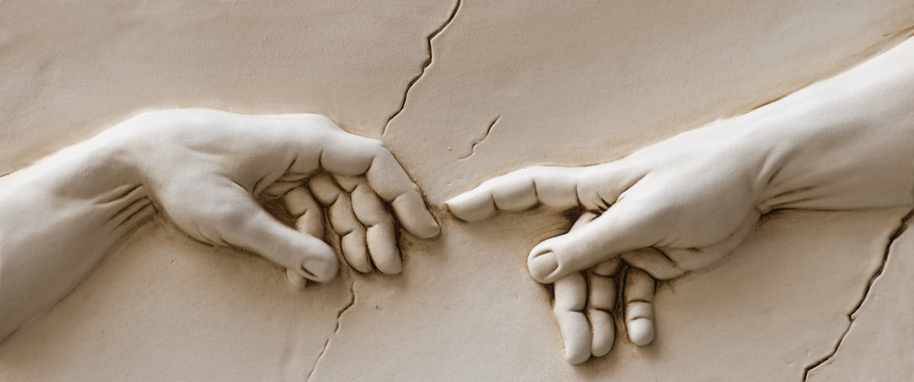
From a rational vantage point, it makes complete sense. It seems an absolutely necessary mindset to have in order to be successful in the world. These things, in their goodness, can point to God and allow for happiness. When I review the many good things in my life—my family, group of friends, job, health, home in San Diego, access to delicious food at will—sometimes I’m met with an overwhelming sense of comfort and contentment. For me, such a realization invites me to thank God, acknowledging that such things can work as refreshment on life’s journey. These moments, as good and nourishing as they can be, though, also have the capacity to dim my reliance on God. I can easily take comfort in the things around me, becoming resistant in handing them over to God should he ask for them.

 Take, Lord, and receive all my liberty,
my memory, my understanding
and my entire will,
All I have and call my own.

 You have given all to me.
To you, Lord, I return it.

 Everything is yours; do with it what you will.
Give me only your love and your grace.
That is enough for me.

 —The Suspice, St. Ignatius of Loyola

This prayer from St. Ignatius is one of the most difficult prayers to say. I can muster the effort to rattle off the words, half-heartedly and with shallow earnestness, but to pray them from the heart— to say and mean them in their fullest—is very difficult for me. I don’t know if I’ve ever been able to say those words and truly mean them. There is something inside me that tears when I say them, tempting me to rein in the words.

If we scramble to store up things in this world without a firm anchoring to God we begin to ironically lose these things anyways. Our memory can be held captive by regret and denial. Our understanding can become clouded, darkened by the ceaseless motion to grasp at our own notion of happiness. And our liberty and will—the very vehicles that allow for our freedom and autonomy—can become enslaved to anxiety, worry, and fear. We can replace our authentic selves—children loved by God—with a composite of excess possessions and shallow accomplishments. We may only become what we earned, what we were given by others, what the world says we are after a stringent accounting of our “assets.” The whole becomes buried by its parts.

An article in Psychology Today titled “Is the Intense Pressure to Succeed Sabotaging Our Children?” examines the stress placed on children to do well academically. The article serves as a somber warning against the unmitigated pressure placed on many students today to gain admittance to a good college in order to set themselves up for a successful career and life. Tragically, a failure to meet such a lofty goal can sometimes even result in suicide:

 There are so many alternative roads to happiness and fulfillment beyond acquiring wealth and driving a fancy sports car. Why do so many people in our society put a premium on the superficial value of material possessions and status symbols? Everyone knows that friends, family, being healthy, and having a sense of purpose are ultimately the most important things in life and the keys to fulfillment.

This article only highlights stress placed on students in regard to their schooling. Of course, this same mindset that idolizes a harrowing drive toward success spans across all ages and facets of our culture.

Yet Christianity stands athwart the blinded quest to accrue and collect. It speaks instead of returning back to a childlike state of dependence, offering up all we own to a loving Father. It calls for a radically different way of understanding our identity and place in the world.

But how can we expect to give away our liberty, memory, understanding, and will? Aren’t those the very things that constitute our unique being? They are the crux of our identity, the intersecting of those four aspects of our person literally makes us who we are—and give us the capacity to procure a self-directed and happy life. St. Ignatius’ prayer calls to mind the hard-to -swallow words of John the Baptist:

 “[Christ] must increase; I must decrease.”

Some in our culture may be familiar with the phrase—reading it and repeating it with a feathery understanding. However, entering into a state of decrease—a state of relinquishing our freedom, gifts, and very identity—for the sake of God is a monumentally countercultural thing. Of course, the God we proclaim does not exist within a zero sum paradigm. Our loss, for the sake of him, is never truly a loss. It becomes a gain. And as we concede our identity—at least the one we’ve clumsily crafted for ourselves—we learn that he puts the pieces of who we are back together in the right order. We begin to see ourselves as we are: we begin to see we are worthy simply because God says so, emphatically.

The question still remains: Why do many of us struggle to pray and mean the words of The Suspice?

 If we trust that God will reward us a hundredfold, then where is the holdup?

If I’m honest, it’s still a problem of trust. And when I do manage to say the words and mean them, as much as possible, I still struggle to allow God to do with my offering what he wills as opposed to what I will. I can be guilty of assuming that if I give up my understanding, then I’ll receive back my understanding times one hundred in return. It becomes a conditional relinquishing. I’ll do that God, only if you do this.

Of course, maybe he will reward us as we hope, and we can be certain by our faith and understanding of God that he will bless us in some way (as the phrase goes, God will never be outdone in generosity), but the blessing may not come in more understanding. That may only come in the life after this one. Or perhaps, it may come in the form of a deeper faith that doesn’t always question God’s ways—not a blind, irrational faith, but one that accepts the limits of human understanding and the lack of clarity to see what God is really up to.

Although we do not give everything to God and ask for nothing; we still always ask for his love and grace. We find that when we understand what it is we’re asking for, the eternal love of an infinite God and his manifestation in our lives, the exchange is quite unequal—infinitely so. We offer what measly gifts we can to God, measly gifts that we cling onto with furious might at times, in exchange for the whole of God’s being.

St. Ignatius’ prayer remains an invitation to let God bless us even more than he already has. In giving ourselves to him, we allow him to use us as he needs—as his divine instruments, his loving children. It may be in the way we had hoped, or it may come through suffering, but regardless, it will come with tremendous blessings. And as we all know, sooner or later, we all do give up our liberty, understanding, memory, and will at that hour of death. The question then becomes, as Henr i J.M. Nouwen reminds us in his book, The Only Necessary Thing: Living a Prayerful Life, this: When we do lose them and have nothing left to offer to God, will we stand before him with open hands of trust, or clenched fists of fear?

 “Dear God,

 I am so afraid to open my clenched fists!

 Who will I be when I have nothing left to hold on to?

 Who will I be when I stand before you with empty hands?

 Please help me to gradually open my hands

 and to discover that I am not what I own,

 but what you want to give me.

―Henri J.M. Nouwen, The Only Necessary Thing: Living a Prayerful Life

 Chris Hazell is the founder of The Call Collective (http:// thecallcollective.com/stay-updated/), a blog exploring the intersection between faith, culture and creativity. He holds bachelors’ degrees in English and Economics from UCLA and currently works as a Lead Content Strategist for Point Loma Nazarene University.

Pro-Life Resources

In light of the proposed pro-choice legislation in Illinois and sweeping pro-choice legislation around the country, we wanted to share with you some resources and events in which your support is encouraged! If you are looking to get more involved in fighting for the unborn, assisting women, and strengthening families, please consider joining us. We will be including more information in the coming weeks on how Cathedral will be working to support the pro-life movement.

Crusaders for Life

Calling all junior high and high school students! Are you an advocate for life? Want to get involved in the joyful message of life and meet new people in the Springfield area? Crusaders for Life are coming to Springfield! Come check it out as this chapter is launching on Feb. 23, at 7:30 p.m. at the Sacred Heart Church Parish Center (730 S. 12th Street in Springfield).

The Crusaders for Life work to educate ourselves on the issue of abortion so that we are better prepared to advance the pro-life cause in our schools, workplaces, and families. By fully understanding what abortion does to the unborn and their mothers and fathers, we are less likely to become numb to the fact that it happens every day by the thousands. With this understanding we try to spread the truth everywhere we go by participating in rallies, marches, protests, and prayer vigils. Through joy and prayer, we hope to re-establish the belief that there is beauty and sacredness in every life, born and unborn, and that each life needs to be cherished and protected.

Life Advocacy

Mark your calendar for Life Advocacy Day at the State Capitol on Wednesday, March 20, 2019, 10:00-1:00. Lunch will be provided. Check future bulletins for further information.

Rosary and Pro-Life Stations of the Cross

Saturday, March 9, 2019 – Rosary and Pro-Life Stations of the Cross, St. Agnes Parish, Springfield, 9:00 am. Come and pray for an end to abortion. For flyer and further information go to the following website: http://www.dio.org/plasm/events.html

Fr. House’s Homily from February 16th & 17th

Who is next? This question was posed by Father John Jenkins, president of the University of Notre Dame, in a February 8th statement from him regarding recent pro-abortion legislation in New York State. Father Jenkins writes that New York state legislators passed and its governor signed into law a bill sweeping away protections for unborn — and some born — children. New York law now allows abortions any time up until delivery for vaguely defined reasons of “health,” including social well-being. The legislators removed from law provisions that require the mother’s consent, that allow manslaughter charges against an abortionist who causes the woman’s death during an abortion, that discourage self-induced abortions and — shockingly — that require care for a child born alive during an attempted late-term abortion. The New York law has been described by abortion rights advocates as an ‘inflection point’ that will add momentum for expanded access to abortion in seven other states. We can also add our own state of Illinois to that number since in recent days four Illinois legislators have announced their intention to present legislation in this state similar to that in New York and our governor has stated that he wants Illinois to be “the most progressive state in the nation” when it comes to what he terms as “reproductive rights.”

Since this legislation was signed into law by the governor of New York on January 22, the anniversary of the Roe V. Wade decision, pundits from all aspects of the political spectrum have weighed in as well as others, including theologians and other personalities and so on. This matter was compounded by the remarks of the governor of Virginia who stated that children born alive could be killed in certain circumstances after consultation between doctors and families. In a sea of comments and opinions, let us not lose sight of what God has said on this issue through his holy word: the word of the Lord spoken through the prophet Jeremiah: “before I formed you in the womb I knew you (1:5);” the word of the Lord spoken through the prophet Isaiah: “can a mother forget her infant, be without tenderness for the child of her womb? Even should she forget, I will never forget you. See, upon the palms of my hands I have engraved you (49:15-16);” the word of the Lord spoken through the psalmist: “you (Lord) formed my inmost being, you knit me together in my mother’s womb. I praise you because I am wonderfully made (139:13-14).”

Too often, men and women have bought into the lie of “choice” because of the claim that this will make life better for some…that access to abortion is better for society…that it is “merciful.” In the latter half of 2017, several news stories appeared talking about how Down syndrome was vanishing in Iceland and Denmark, not because of any medical advancement, but because of prenatal screening and the use of abortion. The Gospel today warns us about settling only for the things of this world; of thinking that one can find a utopia here and now. It will not work. A truly perfect society can only be achieved by striving after the things of heaven and true perfection is something that our society fails to recognize. Have you ever been blessed to spend time with someone who has Down syndrome or with children with other special needs? Yes, there are lots of labors of love that must be given by those who care for them, but, if you want to see the face of God, if you want to experience his love in a profound and unconditional way, you will see and find it in these children of God. It is a profound tragedy that many in our society cannot see or understand this.

We have seen failed attempts at man-made perfect societies before. This June we will mark the 75th anniversary of the Normandy invasion, when brave soldiers, airmen, sailors, and marines fought to destroy the evil cast into the world by Hitler’s Germany. Our armed forces saw the full horror of the Nazis when Dachau, Auschwitz-Birkenau and other camps of the like were liberated. We like to assure ourselves that those are events locked in history, that it could never happen here…but it already has and is in abortion clinics around this country, at Planned Parenthood right here in Springfield.

The Nazi quest for a perfect and racially pure society began with the elimination of those who were unwanted, with those for whom others were willing to look the other way, but then it spread. The Protestant pastor Martin Niemoeller, himself a concentration camp survivor, stated in many lectures after the war, and in differing versions: “First they came for the communists, and I did not speak out—because I was not a communist. Then they came for the trade unionists, and I did not speak out— because I was not a trade unionist. Then they came for the Jews, and I did not speak out—because I was not a Jew. Then they came for the Catholics, and I did not speak out-because I was not a Catholic. Then they came for me—and there was no one left to speak for me.” If a society, our society, is willing to allow the murder of the most innocent and the most defenseless, what makes any of us believe that a time cannot or will not come when they might come for me or for you because we aren’t useful enough or look the right way or think the right way, or believe the right way. Some of you probably think that I am being extreme…time will tell.

As Catholics we must always stand for the unquestionable truth that human life is sacred and that it must always be defended, especially the life of the unborn who are the most innocent and the most vulnerable among us. Standing for this truth will not always be popular, but this is not about popularity or politics, about parties or agendas or personal philosophies, it is about a divine truth written into the natural law that life is sacred because life is the act and the gift of God. If you find in your personal life that the faith and politics are at odds with each other then, for the good of your salvation, let the faith win out; there is no political platform or agenda that is going to get any of us into heaven. Regrettably, if Catholic politicians who support the evil of abortion find themselves separated from the Church through a denial of Holy Communion or even excommunication because of their own actions then so be it; these are meant to be medicinal remedies to illicit a change in actions or behaviors and the hope is that these remedies do not remain permanent. Some may feel that this is harsh but there is no more sacred human right than the right to life, especially for the unborn, and abortion is a direct violation of that right. Let us pray for all in government, and for ourselves, to embrace the Gospel of Life over a culture of death.

Together we must build a culture of life. The Supreme Court cannot rule for it and the Congress ultimately cannot legislate it. Yes, the government can and must act in ways that will support a culture of life and strengthen it but human dignity and human rights are granted by God alone, not the state. This culture must be built by everyday ordinary people. This is done by recognizing and respecting the God-given dignity in each person, by seeing people for who they are as children of God and therefore our sisters and brothers – not as a means for our own use or pleasure or as an obstacle or burden. Concerning abortion, sometimes new life comes into the world because of horrific evils such as rape or other sins against human dignity, but allowing a second moral evil in the destruction of an innocent human life will not erase the first evil. For us to simply say no to abortion isn’t enough.

We as the Church must say yes to life and put that yes into action. We must make sure that we are giving people avenues and possibilities to make that same yes for life. If you or someone you know is considering abortion and feels there are no other alternatives, please come to me, or one of the Cathedral clergy, or someone on the Cathedral staff and we will find other ways. If at some point you have made the wrong choice concerning abortion or if you have helped someone to make the wrong choice, know that God has not stopped loving you and that you are not beyond his mercy and his forgiveness.

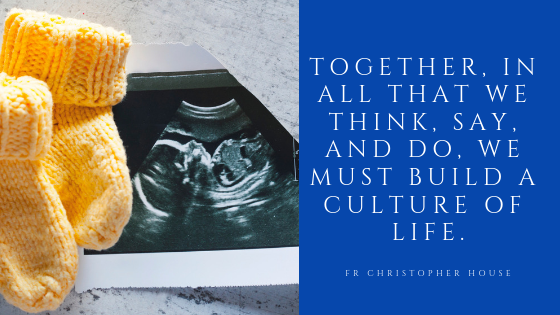
Together, in all that we think, say, and do, we must build a culture of life. In the Book of Deuteronomy, the Lord says to Moses and to the people “I call heaven and earth today to witness against you: I have set before you life and death, the blessing and the curse. Choose life, then, that you and your descendants may live, by loving the LORD, your God, obeying his voice, and holding fast to him (30:19).”

What Is Your “Why?”

When I was growing up, I somehow got it into my head that I really wanted to study at the University of Illinois at Urbana-Champaign. I didn’t know what I wanted to study or why I wanted to go there—I was just excited by the idea of it. My 8th-grade class at St. Kevin Catholic School in East Alton was nine students; at Marquette Catholic High School in Alton, my graduating class was 76. There was something about going to a university of over 40,000 students that made the extrovert in me leap for excitement.
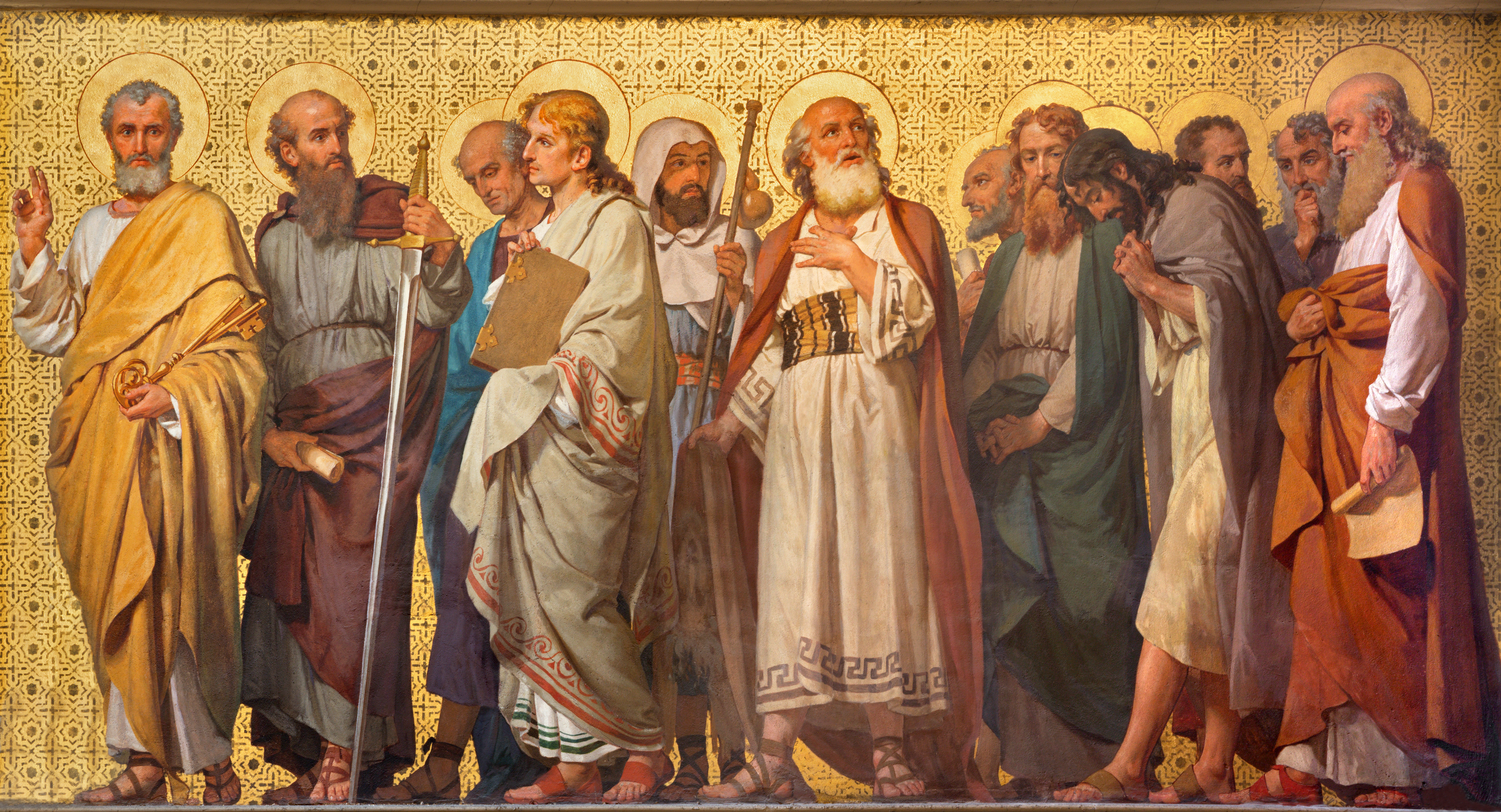
But at a university that size, a person needs a place of belonging —a place of encounter. For me, that was St. John’s Catholic Newman Center. It was there that I found a sense of community which I had never experienced, and if I’m honest, I’ve probably never experienced since. In the midst of a bustling, secular university, the chapel and common spaces of the Newman Center became my haven not just for prayer (the ultimate communion!), but for fraternity and mutual enrichment in the spiritual life. The friendships which were made and fostered in t hose walls were centered on Christ, and they bore fruit in my life in a way that I had never anticipated.

It was in the common bond of discipleship, much like the apostles’, amidst the challenges and rigors of university life that we were forged together as one.

And it was there that my vocation was born. In that experience of community, I felt the Lord calling me to share that experience with others—to give them an experience of authentic encounter with the Church which I had longed for but never knew, and which He blessed me with in a way that I never expected. For me, community—the common bond of friendship and fraternity, forged in discipleship and rooted in Christ’s call to communion with Him and with each other—community became my “why.”

By that I mean that community is why I witness to Christ; it’s what convinced me of the truth of God’s goodness contained in the Word and Sacraments. In my ministry, it’s what I hope people would come to experience in the Church: communion with each other and, ultimately, communion with God.

Community was the incontrovertible push that I needed to experience true and lasting conversion, and then to become convinced of Jesus’ call to become a disciple for others, tasked with the mission of sharing the Gospel with everyone I encounter.

I hope to spend my life sharing that gift that I received so many years ago, and which I continue to experience in all the places I go.

Ask yourself: what is your “why?” What in your past made you unswervingly convinced of God’s love, of His Church, of His call to discipleship?

It’s that which Christ calls you to share with others in a way that no one else can. If all of us tapped into our why —that moment of extreme conviction— there would be no doubt that the Church and the world around us would be on fire with the blessings of the Spirit. The apostles — I’m convinced—had their why, each and every one. What else would enable them to suffer so much for Christ and His Church?

If you can’t answer the question immediately, take it to prayer. You may be surprised by the answer, but it will no doubt resonate with your passions and desires. The Lord has a way of fulfilling us, even when we have no idea what we want or why we want it. That was certainly my experience.

Father Michael Friedel is a Parochial Vicar at the Cathedral.

Cathedral Parishioner Catholic School Tuition Scholarship Information!

The Cathedral Parish believes in the value of Catholic education and is committed to assisting parishioners who choose a Catholic education for their children by receiving a $500 tuition scholarship to each child enrolled in a Springfield Catholic school in grades K-12.

The scholarship is eligible to any parishioner household who is registered and active. An active parishioner is defined as someone who regularly attends Mass on Sundays, supports the parish financially, and is active in the life of the parish. While all three of these qualifications are important, Sunday Mass participation is of the greatest importance because faith formation begins with participation at Sunday Mass. To be eligible as a parishioner household, the family must be registered and active parishioners for a minimum of six months before the application is made for the scholarship.

The scholarship will be paid directly to the school that the student attends. The funds will be attributed toward the 2018-2019 school year. The application will be available at the Parish Offices and posted online (spicathedral.org/scholarship) starting this week. Applications are DUE by March 15th. Cathedral will notify you when the scholarship is being sent to the receiving school. If you have any questions, please contact the Cathedral offices.


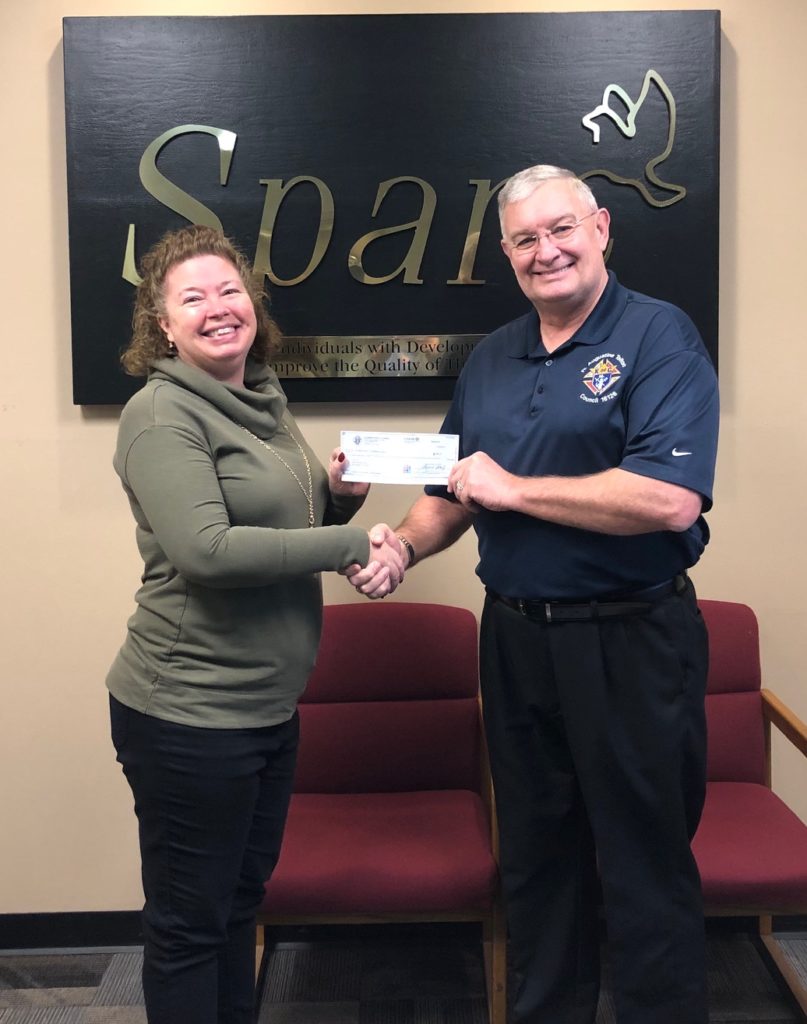
Jennifer Smith and SPARC receives a donation of $660.27 from the Cathedral Fr. Augustine Tolton Knights of Columbus Council 16126 with donations received from the Annual Individuals with Intellectual Disabilities conducted in the fall at White Oaks Mall. The funds will go to those with special needs who benefit from the many SPARC programs.

For more information about the Cathedral Knights of Columbus Fr. Augustine Tolton Council please check out their website at http://www.kofc16126.org.

What if Christ Appears as Suddenly as an Irish Beach?

“More than 30 years ago, a storm swept away a beachfront in Dooagh, Achill Island, off the County Mayo coast of Ireland. The entire beach was washed away, leaving a scenic but also craggy coast, treadable only by the hardiest of souls, wearing the hardiest of soles.

Around Easter of 2017, the beachfront reappeared overnight. A member of the Achill Island tourism board suggested that a cold snap and a steady north wind probably deposited the sand on its shores. Tourists immediately visited the beach, walking shoeless.

It’s an enchanting story and as it is situated in Ireland, it almost begs for an accompanying bit of freewheeling blarney — something about “the little people” being miffed at the locals for some reason and taking away their beach only to restore it when their pique had run its course.

But as I read about the reappearing beach, what struck me was what a working metaphor it was for our lives—both the material and the spiritual, the worldly life and the life of faith. It brings us a lesson about how the world and everything in it is continually in flux. What is alive is constantly in motion, sometimes obviously—like the waves pounding upon every ocean’s coast, or the wind bending a tree or raising a beach—and sometimes imperceptibly.

Right now, for instance, if your body is operating as it should, your red blood cells are collecting oxygen through your lungs and then transporting it throughout your body tissue by way of your heart, enlivening every bit of your tissue, but you don’t notice it.

Similarly, if your religious practices are being kept up, prayers and sacraments and devotions are, in a manner of speaking, bringing oxygen to your spirit in a strengthening and sustaining way. They are keeping your spiritual life alive, even as you attend to material things.

Thus, what is living is always changing in big and small ways, always resisting stasis and stagnation by living within the thrust and tension of a moment. It is adaptive. “A dead thing can go with the stream, but only a living thing can go against it,” observed G.K. Chesterton. That’s very true, of course, and only a living thing can evolve as needed, too.

Still, as the beach of Achill Island demonstrates, heavy weather will change things, cut new lines, expose new ground that must still be traveled, but always with an eye to the gauge of one’s sole, and of course, one’s soul.

It’s like that, right now, in Catholic evangelism. We are many decades away from the days of fully-enrolled Catholic schools giving instruction in the faith to children who had those lessons reinforced at home. That culture, which even featured a Catholic bishop, Fulton Sheen, hosting a show during network prime time, has become fundamentally and forever changed; those beachheads have been washed away. We are on newly exposed ground, requiring a new way to step.

The heavy storms of late have created a new mood too; people are not very open just now. They’re closing in on themselves and their secular – sociocommunities, tolerating fewer differences of thought, opinion, or practice, and religious instruction—or outright evangelism— they want not at all.

Mother Angelica once told a story about an agnostic visitor to her Abbey who refused a gift of one of the nun’s books. When asked why she didn’t want the book, the woman said, “If I read that, I might have to change, and I don’t want to.”

This is the challenge facing Christians who feel called to give witness to the life in Christ: evangelistic outreach invites others to consider Jesus of Nazareth and his teachings, which are all about becoming free in deep and authentic ways that cannot easily be imagined by those who see religion as a swampland of “No” when all they really want to hear is “Yes.” Many people fear giving any opening to an evangelist because they intuit that the True Yes they may find there, like true north, might navigate them away from what feels familiar and socially safe.

Like Bartleby the Scrivener, they would prefer not to.

But the life in Christ, particularly one lived with promise of sacramental graces, enriched by devotions and traditions and the whole communion of saints, is a life that is lived completely in “Yes,” and therefore in never ending possibility and potential—so alive that it leaps forward against the stream to find the next chance to say “Yes.”

It is the job of the evangelist to convey the excitement and energy that comes from understanding one’s gifts, discerning one’s mission within the plans of Christ, and then cooperating with the Creator for the furtherance of his purposes, which are—along with the Incarnation —“for all the people.”

And we cannot waste time bemoaning the loss of our comfortable earlier holdings because Christ is coming and—as with the beachfront in Dooagh—he may show up just that suddenly, and that unexpectedly, and asking us why we have permitted souls to be lost as we dithered about whether flip-flops or thick soles are the best way to manage the new landscape.

The living world, constantly in flux, is deeply in need of a living Church to walk within it in the hopes of rescuing some who’ve wandered too near a cliff, pulling others back from fast current or a dangerous riptide, inviting still others to rest in a light that will bathe but never consume, unless one asks it to.

Things being as they are, the living Church needs all of us to step up. The more I realize just how much she needs us—how much Christ needs us—in this work, the more excited I am to watch the continued growth of the Word on Fire Institute, and the communities of new lay evangelists beginning to be formed and made ready for the walking. It is a challenging time to be a Catholic. And an exciting one, as well. Do not be afraid.

Elizabeth Scalia is a Benedictine Oblate and author of several books including the award-winning Strange Gods: Unmasking the Idols in Everyday Life (Ave Maria Press) and Little Sins Mean a Lot (OSV). Before joining the Word on Fire team as a Editor at Large, she served as Editor-in-Chief of the English edition of Aleteia, and as Managing Editor of the Catholic section of Patheos.com. Elizabeth also blogs as “The Anchoress” at www.theanchoress.com. She is married, and living on Long Island.

Everyday Stewardship

When I was a child, I often thought of the Church as something mystical and supernatural. I wasn’t wrong in my understanding of the Body of Christ, for surely the Church has these characteristics. However, even though we speak about the foundation of all we are as Church being the “mystery of Christ,” Jesus became a man so that supernatural element could break into the natural world in a profound way. What we once could not see, we now see. What we saw as a God in a distant place now dwelt among us. It is one of the aspects of Catholicism that I have grown to appreciate the most as I have matured: for a Catholic, the supernatural is natural. The communion of saints is heavenly and earthly at the same time.

The Beatitudes instruct us about this reality. Pope Francis reminds us that holiness is “not about swooning in mystic rapture.” Holiness is about living in the real world and doing extraordinary things with our ordinary lives. Our stewardship way of life consists of actions in the natural world that have extraordinary repercussions.

Do not ever take your simple actions of generosity and love for granted. As disciples called to a life of stewardship, we participate in something more profound than what we can see. We are blessed to be called to follow Jesus, and we bring blessing to all those with whom we choose to share ourselves.

Tracy Earl Welliver is a Catholic author, speaker, consultant, and Gallup-certified Strengths coach with over 25 years experience in parish ministry. He is currently the Director of Parish Community and Engagement for LPI.

« Previous Page
Next Page »

Liturgy

Sunday Masses (unless noted differently in weekly bulletin)
Saturday Evening Vigil – 4:00PM
Sunday – 7:00AM, 10:00AM and 5:00PM

Weekday Masses (unless noted differently in weekly bulletin)
Monday thru Friday – 7:00AM and 5:15PM
Saturday – 8:00AM

Reconciliation (Confessions)
Monday thru Friday – 4:15PM to 5:00PM
Saturday – 9:00AM to 10:00AM and 2:30PM to 3:30PM
Sunday – 4:00PM to 4:45PM

Adoration
Tuesdays and Thursdays – 4:00PM to 5:00PM


CatholicMassTime.org

Parish Information

Parish Address
524 East Lawrence Avenue
Springfield, Illinois 62703

Parish Office Hours
Monday thru Thursday – 8:00AM to 4:00PM
Fridays – CLOSED

Parish Phone
(217) 522-3342

Parish Fax
(217) 210-0136

Parish Staff

Contact Us

Contact Us

Copyright © 2026 · Log in