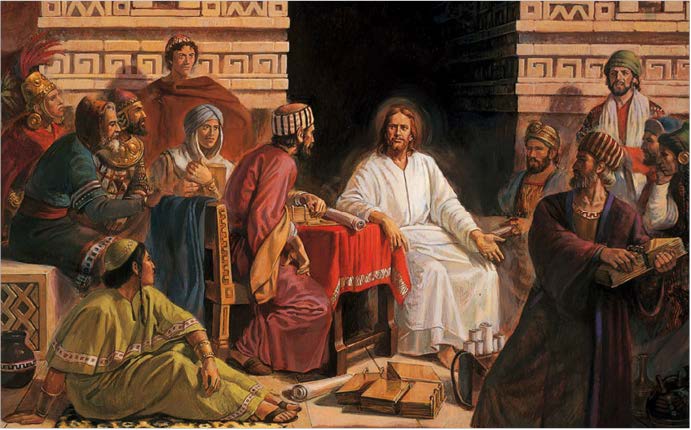
 If you have ever seen the 1964 Oscar winning movie Becket, you may recall a scene where Archbishop (Saint) Thomas Becket, played by Richard Burton, excommunicates an English nobleman as part of an epic clash between the Archbishop of Canterbury and Henry II, King of England, some 350 years before the English Reformation. The scene is masterful, showing the use of a ritual once nicknamed “Bell, Book, and Candle” for the elements used in the rite. However, the scene belongs more to Hollywood than to present use in the Church.
Recently, the governor of New York, a Catholic, has ignited a firestorm in the U.S. Church with his boisterous support of new sweeping pro-abortion legislation in New York State. The response of many among the faithful has been a call for his excommunication from the Church. For many, the notion of excommunication is a casting out, a spiritual condemnation as pronounced in the famous scene from Becket:
“We declare him excommunicate and anathema. We cast him into the outer darkness. We judge him damned with the devil, and his fallen angels, and all the reprobate to eternal fire and everlasting pain.”
That was our understanding several centuries ago, but not today.
Today, excommunication is a medicinal remedy in canon law and is used to bring about a hoped-for change in a person. Diocesan bishops do not have the authority to excommunicate members of their respective dioceses at will, but can only do so following a canonical investigation and procedure as to whether or not an act punishable by excommunication has been committed. Ultimately, neither a bishop nor the Church excommunicates anyone. Excommunication is a consequence of one’s own actions , whereby a person removes themselves from communion with the Church either by a grave act contrary to the life of the Church or by publicly holding a belief that is heretical. A bishop declares that an excommunication has taken place after, and only after, he has beseeched the person to repent of their actions and to return to the communion of the Church.
The effects of excommunication are threefold. First, a cleric (bishop, priest, or deacon) cannot celebrate or participate in any liturgical or sacramental celebrations. Second, a person who is excommunicated cannot receive any of the sacraments except Reconciliation as a part of the excommunication being lifted. Third, a person who is excommunicated cannot hold any office or exercise any function within the Church. What excommunication does not do is remove someone from being Catholic; belonging to the Church and being in communion with her are two distinct realities. An excommunicated Catholic remains a Catholic, but is formally forbidden from participating from any aspect of the Church’s life. This is only done in the hope that the one excommunicated will understand the gravity of their actions, repent, and return to the fullness of the faith.
Concerning the governor of New York and abortion, canon 1398 in the Code of Canon Law states that procuring an abortion is punishable with excommunication and some are calling for the invocation of canon 1329 that allows for accomplices to such an act to also be excommunicated. The challenge here with Catholic politicians is the debate over their involvement with abortion legislation, whether it is proximate to the act or remote, with many canonists arguing that it would be difficult to prove proximate cooperation in a canonical trial. Another area that some canonists are urging to be investigated is canon 1369, which calls for a just penalty for those who gravely harm public morals.
Whether or not either these arguments would hold up in a canonical trial is debatable, but what is already present is canon 916, which calls on all who are conscious of grave sin to refrain from receiving the Holy Communion, which itself is one of the consequences of excommunication. The average person, Catholic or not, knows the Church’s position on the evil that is abortion. The governor of New York, in an op-ed piece from the Wall Street Journal this past Wednesday, acknowledged his own understanding of the Church’s teaching on the matter as well as his own choice not to follow it.

So, what do we need to do? We need to pray that our country comes to a deeper understanding of the sacredness of human life. We need to pray that those in public office will have the courage to place what is right, good, and holy, over personal ambition. In our own lives, we need to be conscious of our own need for conversion and those acts or beliefs that may wound our own communion with the Church, which is the Mystical Body of Christ
Father Christopher House is the Rector of the Cathedral and serves in various leadership roles within the diocesan curia, namely Chancellor and Vicar Judicial.
 Have you ever participated in various trust exercises, where you have to place your faith in others around you? Maybe it was falling backwards with your eyes closed while the person’s voice speaking to you seemed to drift further away. Maybe it was jumping from a height into people’s arms that didn’t seem strong enough to catch you. These activities were supposed to show you the meaning of trust and help grow that trust in you for your comrades. Sometimes it worked. Other times, some prankster would actually let you fall, and then you learned to trust no one. So much for building up our ability to trust.
 “Does this item spark joy?” I asked myself for the hundredth time, holding an old but well-loved T-shirt in my hands. Like many people around the country, I have been swept up by the “KonMari” method, Marie Kondo’s process of decluttering your home that started a worldwide trend first with her book “The Life-Changing Magic of Tidying Up” and now with her Netflix show, “Tidying Up.”
 As perhaps most of you have seen in our Weekly, we are reintroducing Adoration to our parish, beginning Tuesday, February 5. These “Holy Hours” will take place from 4 pm to 5 pm on Tuesdays and Thursdays, concluding with Benediction before the 5:15 pm daily Mass (the Sacrament of Confession will still be offered from 4:15 pm to 5 pm).
 Hello. My name is Kevin Keen. I am a Lector at the 7:00am Sunday mass. I transferred to Cathedral as a parishioner many years ago from Sacred Heart Church in the St. Katherine Drexel parish. There, I served as a reader and thoroughly enjoyed my experience there.
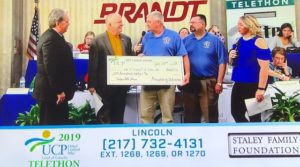 The Fr. Augustine Tolton Knights of Columbus Council 16126 donated a check for $660.27 during their telethon today with funds collected from our annual Individuals with Disabilities Campaign, AKA, “Tootsie Roll Drive” which we held in the fall at White Oaks Mall. Thank you to everyone who supported from the Cathedral community!
 How we do something is just as important as why we do it. As Christians, we are well aware of the injunction to serve the poorest and the most vulnerable. The prophets of Israel continually challenged the Hebrew people with this message and berated them for ignoring it. Our Lord Jesus himself makes it the criteria for judgment and distinction between the “sheep” and the “goats” in the twenty-fifth chapter of Matthew’s Gospel. “…when I was hungry … thirsty … a stranger … naked … sick … in prison …”
 For many of us, as we move through the new year, our thoughts turn to getting healthy by watching what we eat and hitting the gym. But the reality of winter presents us with some health challenges, as contagious illnesses like colds and the flu make their annual rounds. When we get sick in the winter months, darker days and colder weather can compound the misery of the experience.